Monthly Archives: August 2017

The Talmud on America’s Solar Eclipse

NASA image from the August 21st solar eclipse

Earlier this week, people across America experienced a unique event that has not occurred there in a century: a coast-to-coast, total solar eclipse. While partial solar eclipses are generally visible from somewhere on Earth twice a year, a total eclipse is harder to catch—the last one in the US was forty years ago, and the last to be visible across the entire span of the country was in 1918.

Despite the fact that a solar eclipse is a regular phenomenon, and one that can be predicted long in advance, the Talmud (Sukkah 29a) seems to suggest it is a sign of human misconduct:

Our Rabbis taught: When the sun is in eclipse, it is a bad omen for the whole world. This may be illustrated by a parable: To what can this be compared? To a human being who made a banquet for his servants and put up for them a lamp. When he became angry with them he said to his servant, “Take away the lamp from them, and let them sit in the dark”.

Our Sages suggest that God brings about eclipses (or more accurately, total eclipses, the only kind that would bring about the kind of darkness described above) when He is unhappy with man’s sinful ways. This apparently contradicts the notion that eclipses are a cyclical, recurring event. Yet, the Talmud is full of discussions illustrating the astronomical expertise of our Rabbis, who could perfectly calculate the arrival of new moons, knew the cosmos like the backs of their hands, and accurately estimated the number of stars in the universe centuries before scientists came up with the same numbers (see Berakhot 32b).

In fact, the current Hebrew calendar that we use was affixed by the Talmudic sage known as Hillel II (not to be confused with Hillel the Elder), who calculated the months far into the future, and was only able to accurately do so by taking into account the dates of predicted solar and lunar eclipses. That means that the sages of the Talmud were certainly well aware of the fact that eclipses are a regular, predictable phenomenon. This was also long known by Greek and Roman astronomers. So, how could the Talmud state that eclipses depend on man’s ways?

Map showing the paths of solar eclipses over a 25 year period. Most do not pass through inhabited areas.

To deal with this conundrum, multiple answers have been proposed. One of these is that the Sages are referring to visible eclipses only. The Torah tells us that the luminaries were created, in part, to serve as signs for humans (Genesis 1:14). If God wanted to make known that He is unhappy, we would obviously have to be able to see the eclipse. Although eclipses can happen multiple times a year, they are seldom visible from habitable locations. Some 71% of Earth’s surface is covered by water, so eclipses are most likely to be visible only from some marine location in the middle of the ocean. Further still, of the remaining portion of Earth that’s covered by land, only 10% is actually inhabited by humans. There could be other factors as well, like cloudy weather. Or, the moon simply does not cover enough of the sun for people to even notice. (As anyone not in the path of the total eclipse probably learned on Monday, when they were unable to look at the sun for more than a split second because it was still way too bright without eclipse glasses—which no one had in Talmudic times.) This is indeed what the Talmud later clarifies:

Our Rabbis taught: When the sun is in eclipse it is a bad omen for idolaters; when the moon is in eclipse, it is a bad omen for Israel, since Israel reckons by the moon and idolaters by the sun. If it is in eclipse in the east, it is a bad omen for those who dwell in the east; if in the west, it is a bad omen for those who dwell in the west…

An eclipse is a bad sign only for that specific place where the eclipse is visible. In His Infinite Wisdom, God pre-programmed Creation so that eclipses would be visible at the precise time and place where they are necessary to give people a wake-up call. As such, it isn’t surprising that America had a coast-to-coast eclipse precisely at this moment, with everything that’s recently been going on in the country.

What exactly is it that God is unhappy about when an eclipse occurs?

Our Rabbis taught: On account of four things is the sun in eclipse: On account of an av beit din who died and was not mourned properly; on account of a betrothed maiden who cried out loud in the city and there was none to save her; on account of sodomy, and on account of two brothers whose blood was shed at the same time.

The United States has been plagued with all of these things: fellow American citizens—brothers—at each other’s throats, “shedding” each other’s blood for silly ideological reasons; the rampant sexual immorality; the tremendous amount of injustice and apathy, where there is seemingly no one to save a “troubled maiden”.

And what of the av beit din? In early Talmudic times, the leader of the Jews was the nasi, the “president” of the Sanhedrin, and his “vice-president” was the av beit din, literally “head of the court”, the top judge of the land. (Appropriately, this week’s parasha is Shoftim, “judges”.) Last year saw the mysterious sudden death of Supreme Court Justice Antonin Scalia, whose death was unexamined and quickly swept under the rug, triggering a flood of conspiracy theories. This is a sign of far greater societal issues. All of the above is reminiscent of a famous Talmudic prophecy (Sotah 49b) describing the time before Mashiach’s coming:

In the footsteps of Mashiach, insolence will increase and honour will dwindle. The vine will abundantly yield its fruit, yet wine will be dear. The government will turn to heresy, and there will be none to offer them reproof. The meeting places of scholars will be used for immorality. Galilee will be destroyed, and Gablan desolate, and the “people of the border” will go about from place to place without anyone to take pity on them. The wisdom of the learned will degenerate, fearers of sin will be despised, and truth will be lacking. The youth will put the elders to shame; the old will have to stand before the young. A son will revile his father, a daughter will rise up against her mother, a daughter-in-law against her mother-in-law, and a man’s worst enemies will be the members of his own household. The face of the generation will be like the face of a dog; a son will not feel ashamed before his father. And upon whom is there to rely? Only upon our Father in Heaven.

With everything that’s happening around us right now, it certainly feels like there is none left to rely upon but our Father in Heaven. It is quite fitting that the solar eclipse happened at the end of the Hebrew month of Av, literally “father”, which is precisely meant to remind us of our “Father in Heaven”. As long as we recognize this, and take upon ourselves to be good “children”, there is no need to fear, as the Talmudic passage on solar eclipses concludes:

… When Israel fulfils the will of the Omnipresent, they need not have fear of all these [omens] as it is said, “Thus said Hashem: Learn not the way of the nations, and be not dismayed at the signs of heaven, for the nations are dismayed at them”—the idolaters will be dismayed, but Israel will not be dismayed.


Second edition of Secrets of the Last Waters (Mayim Achronim Chova) out now!
Click here to get the newly revised, expanded, and redesigned book. 

Why Physical Labour is a Spiritual Necessity

In this week’s Torah portion, Ekev, Moses tells the Israelites that if they follow God’s commandments, He will “give the rain of your land in its season, the former rain and the latter rain, and you shall gather in your corn, and your wine, and your oil.” The Talmud (Berakhot 35b) asks:

“And you shall gather in your corn.” What is to be learned from these words? Since it says, “This book of the law shall not depart out of your mouth,” I might think that this injunction is to be taken literally. Therefore it says, “And you shall gather in your corn”, which implies that you are to combine the study of them with a worldly occupation.

Although elsewhere the Torah states that one should always be meditating upon the Torah, here we are told that we should be working the fields. The Sages learn from this the importance of combining Torah study with some form of employment. This sentiment is expressed throughout rabbinic literature. Pirkei Avot (2:2) famously states:

Rabban Gamliel, the son of Rabbi Yehudah HaNasi, would say: Beautiful is the study of Torah with the way of the world, for the toil of them both causes sin to be forgotten. And all Torah study that is not accompanied by work will eventually be negated and lead to sin.

Rabban Gamliel goes so far as to say one who only learns Torah and does not combine it with labour will have their Torah learning nullified, and will be lead to sin. The Rambam (Hilkhot Talmud Torah 3:10) takes an even more hard-line approach:

Anyone who takes upon himself to study Torah without doing work, and derive his livelihood from charity, desecrates [God’s] Name, dishonours the Torah, extinguishes the light of faith, brings evil upon himself, and forfeits his life in the World to Come, for it is forbidden to derive benefit from the words of Torah in this world.

Our Sages declared: “Whoever benefits from the words of Torah forfeits his life in the world” … Also, they commanded and declared: “Love work and despise rabbinic positions,” and “All Torah study that is not accompanied by work will eventually be negated and lead to sin.” Ultimately, such a person will steal from others.

Rabbi Moshe ben Maimon, the Rambam (1135-1204)

In another place (Hilkhot Matnot Ani’yim 10:18), the Rambam further elaborates:

Even a dignified Sage who becomes poor should work in a profession, even a degrading profession, rather than seek public assistance. It is better to skin the hides of dead animals than to tell the people, “I am a Sage” or “I am a priest, support me.”

… Our greatest Sages were wood-choppers, porters of beams, water-drawers for gardens, blacksmiths, and charcoal-makers. They did not ask anything from the public and refused to accept anything that was given to them.

The Sages that the Rambam is referring to include the great Hillel, who famously worked as a wood-chopper, though just enough to support his family and pay the entrance fee to the Torah study hall (Yoma 35b), and Rabbi Yehoshua ben Chananiah who was a blacksmith and charcoal-maker (Berakhot 28a). Meanwhile, Rav Papa and Rav Chisda were beer brewers, and Rav Chanina and Rav Oshaia were cobblers (Pesachim 113a-b). The Rambam was himself a physician.

Of course, today we need rabbis who devote themselves full-time to the needs of the community, and to serve as teachers, judges, counsellors, and so on. Such leaders certainly deserve a good salary for their work. However, those adults that simply learn Torah most of the day, subsisting off of the community while giving little in return, are engaging in a tremendous transgression.

Humans are meant to be productive. From the very beginning, God made man His partner in creation, to complete what He started – asher bara Elohim la’asot. God explicitly instructed Adam to work the Garden and tend to it (Genesis 2:15). Physical work is part of man’s spiritual rectification. Amazingly, the Talmud (Nedarim 49b) records how Rabbi Yehuda would carry a huge pitcher of water over his shoulder on his way to the beit midrash, and Rabbi Shimon would similarly carry a heavy basket, both saying “great is labour, for it honours its worker”. Women are not exempt from this, and the Talmud famously states that a husband who forbids his wife from doing any work should better divorce her, since “idleness leads to promiscuity” and “idiocy” (Ketubot 59b).

The Rambam once again summarizes it best (Hilkhot Talmud Torah 3:11):

It is a great thing for a person to derive his livelihood from his own efforts. This attribute was possessed by the pious of the early generations. In this manner, one will merit all honour and benefit in this world and in the World to Come, as it is said: “If you eat the toil of your hands, you will be happy and it will be good for you.” [Psalms 128:2] You will be happy in this world, and it will be good for you in the World to Come, which is entirely good.


The above is an excerpt from Garments of Light, Volume Two. Get the book here

Tisha B’Av: The Untold Story of Napoleon and the Jews

Tisha b’Av is the saddest day on the Jewish calendar. This holiday commemorates many historical tragedies, most significantly the destruction of both Holy Temples in Jerusalem. One of the most common stories heard on Tisha b’Av is about Napoleon walking by a Paris synagogue on this day, hearing the lamentations and loud weeping of the Jews. In the story, he asks what the Jews are crying about, and after being told about the destruction of the Temple nearly two millennia ago, apparently remarks something along the lines of: “A nation that cries and fasts for 2,000 years for their land and Temple will surely be rewarded with their Temple.”

Hearing this story immediately sets off some alarms. Firstly, Napoleon was no ignoramus, and was certainly well aware of the destruction of the Temple (after all, the Temple is featured in the “New Testament” and plays an important role in Christian history as well). More notably, Napoleon was a military man his entire life; his biography is the very definition of a tough guy. This man lived by the sword—it is highly unlikely that he would praise people for sitting and crying about something.

In fact, the myth of Napoleon and Tisha b’Av has been debunked multiple times. One of the earliest known sources of the legend is a Yiddish article from 1912, later included in the 1924 American Jewish Yearbook, and similarly appearing in a 1942 book called Napoleon in Jewish Folklore. Here, we are given a far more logical version of the story: After hearing the weeping of the Jews in a synagogue in Vilnius, Napoleon points to his sword and says, “This is how to redeem Palestine.”

Napoleon and the Jews

An 1806 depiction of Napoleon emancipating the Jews

Napoleon would actually play a tremendous role in Jewish history, and might even be credited with starting the process of “redeeming Palestine”. It was Napoleon that ushered in the “emancipation” of Jews in Europe. Wherever he conquered, he would free the Jews from the ghettos, and give them equal rights. In France, he went so far as to declare Judaism one of the state’s official religions in 1807. Napoleon also famously sought (and failed) to re-establish the Sanhedrin.

These actions brought upon him the ire of many of his contemporaries, especially Czar Alexander of Russia, who branded Napoleon the “Anti-Christ” for liberating the despised Jews. Moscow’s religious authority at the time proclaimed:

In order to destroy the foundations of the Churches of Christendom, the Emperor of the French has invited into his capital all the Judaic synagogues and he furthermore intends to found a new Hebrew Sanhedrin—the same council that the Christian Bible states condemned to death (by crucifixion) the revered figure, Jesus of Nazareth.

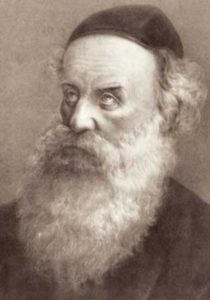
Rabbi Schneur Zalman of Liadi, the “Alter Rebbe” (1745-1812)

Of course, most Jews were ecstatic, and relished their newly acquired liberties. It became common for Jews to name their children “Napoleon”, or adopt the last name “Schöntheil”, the German translation of “Bonaparte”. Yet, not all Jews were happy about this development. The Alter Rebbe—founder of Chabad, who lived during the times of Napoleon—wrote the following in one of his letters:

If Bonaparte will be victorious, Jewish wealth will increase, and the prestige of the Jewish people will be raised; but their hearts will disintegrate and be distanced from their Father in Heaven. But if Alexander will be victorious, although Israel’s poverty will increase and their prestige will be lowered, their hearts will be joined, bound and unified with their Father in Heaven…

The Alter Rebbe thus fled from the approaching French forces, inspired his followers to do the same, and even supported the Russian military. He was right about Bonaparte. Napoleon had no interest whatsoever in seeing the Jews flourish as Jews, or practice their religion proudly. His intentions were clear: the complete assimilation of the Jews into European society. It was Napoleon that first permitted Jews to serve in the military, openly stating that “Once part of their youth will take its place in our armies, they will cease to have Jewish interests and sentiments; their interests and sentiments will be French.”

As it turned out, opening the doors for Jews to serve in the French military would lead to the proliferation of the Zionist movement, and the establishment of the State of Israel.

France and Israel

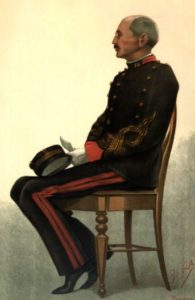
1899 Guth painting of Alfred Dreyfus for Vanity Fair

In 1894, Theodor Herzl was a young journalist working in Paris. He was covering the infamous “Dreyfus affair”, where a Jewish captain in the French military, Alfred Dreyfus, was wrongly accused of treason. During this time, Herzl witnessed the extreme anti-Semitism of the French firsthand. He realized that no matter how much the Jews assimilate, they would still never be accepted into European society, and reasoned that the Jews must have their own free state. Thus, it was a Jewish soldier in the French military—what Napoleon so dearly wanted—which catapulted the Zionist movement.

Interestingly, Napoleon himself seemed to have supported the notion of a Jewish state in Israel. In 1799, before he was emperor, and while besieging the city of Acre in Israel, Napoleon issued a proclamation inviting “all the Jews of Asia and Africa to gather under his flag in order to re-establish the ancient Jerusalem. He has already given arms to a great number, and their battalions threaten Aleppo.” Ultimately, the British defeated Napoleon’s forces, and the plan never materialized.

Nonetheless, Napoleon’s role in igniting the flames of Zionism cannot be overlooked. Zionism was primarily a secular movement, its most fervent supporters being assimilated European Jews who, like Herzl, were frustrated that they were still hated and unwanted in European society. This secularism was a direct result of Napoleon’s campaigns. Without his spearheading of the Jewish “emancipation”, it is doubtful that there would have ever been a Zionist movement to begin with.

And although there is much to criticize about Zionism, these mostly secular European Jews succeeded in re-establishing a free Jewish state in the Holy Land after two very long millennia. Yes, the Israeli government is unfortunately secular, and Mashiach has not yet come, and there is a great deal of work to do to restore a proper Jewish kingdom as God intended. However, the State of Israel allowed for the majority of Jews to return to their homeland, escape persecution, live openly as Jews, fulfil mitzvot only possible in the Holy Land, and travel freely to Jerusalem. Israel is undoubtedly paving the way for the Final Redemption, which is why many great rabbis of recent times have described it as reshit tzmichat geulatenu, the first steps of the redemption.

It is therefore fitting that the gematria of “France” (צרפת), where the whole process began, is 770, a number very much associated with redemption as it is equivalent to בית משיח, the “House of Mashiach”. Ironically, this number is most special for Chabad—the same Chabad that so resisted Napoleon and the French! (And at the same time, adopted the tune of Napoleon’s military band as their own niggun, still known as “Napoleon’s March” and traditionally sung on Yom Kippur!)

Most beautifully, it appears to have all been predicted long ago by the Biblical prophet Ovadia, who prophesied (v. 17-21):

And Mount Zion shall be a refuge, and it shall be holy; and the house of Jacob shall possess their heritage… And they shall possess the Negev, the mount of Esau, and the Lowland, with the [land of the] Philistines; and they shall possess the field of Ephraim, and the field of Samaria; and Benjamin with Gilead. And the great exile of the children of Israel, that are wandering as far as צרפת [France], and the exile of Jerusalem that is in Sepharad, shall possess the cities of the Negev. And saviours shall come upon Mount Zion to judge the mount of Esau; and the kingdom shall be God’s.


The article above is an excerpt from Garments of Light: 70 Illuminating Essays on the Weekly Torah Portion and Holidays. Click here to get the book!