
A conversation with Ollie Anisfield of J-TV on signs of the Final Redemption, the fulfilment of prophecy, and the identity of key figures and nations in the End of Days timeline.
Tag Archives: Mashiach
Cain and Abel: A New Understanding
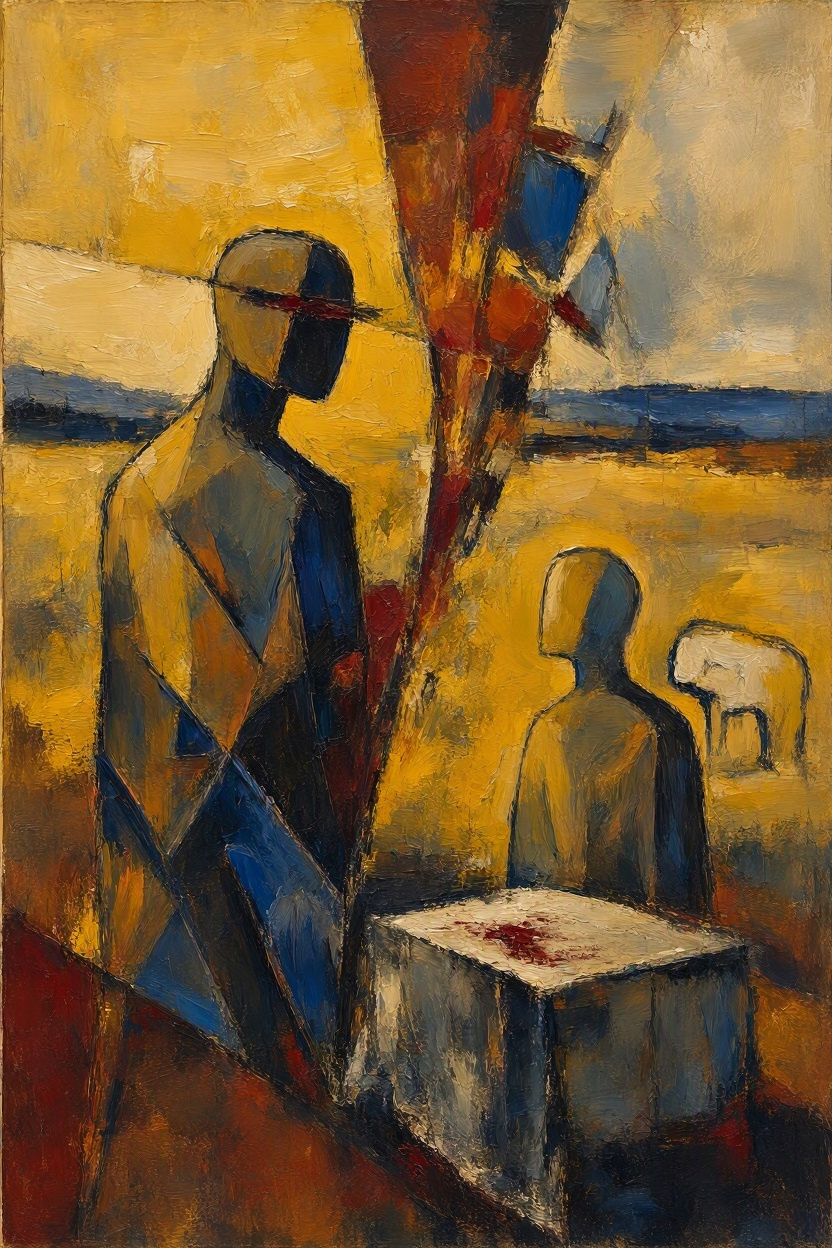 This week we restart the Torah reading cycle with Beresheet. One of the most complex, mysterious, and intriguing passages in the parasha is the story of Cain and Abel. The entire account gets only 17 verses total. First, Cain has a bright idea to bring Hashem an offering—the first time we hear of such a concept explicitly in the Torah. Abel then copies his brother, and gets rewarded for it, while Hashem seemingly ignores Cain’s offering. This upsets Cain and he is “greatly distressed” (Genesis 4:5). Hashem asks Cain why he is so upset. “Surely, if you do right, there is uplift. But if you do not do right, sin couches at the door; its urge is toward you, yet you can be its master.” (v. 7)
The next thing we are told is that Cain is speaking to Abel, and suddenly “rises up” to kill him. God questions Cain, points out the blood of Abel calling out, and then curses Cain to be a wanderer upon the Earth. Cain’s response is that “my sin is too great to bear!” (v. 13) Cain worries that once he becomes a defenceless wanderer, anyone who finds him will kill him. God promises to give Cain a protective mark. Cain then goes to live in the land of Nod, gets married, has a son called Hanokh (“Enoch”, not to be confused with the other, more famous Enoch who never died), and builds a city that he names after his son (v. 17). That’s the whole narrative, and it brings up numerous big questions:
- Why and how did Cain kill Abel?
- When God asks Cain “where is your brother?”, Cain answers that he doesn’t know. How could Cain blatantly lie to God? Is he not aware of the basic fact that God is omniscient? Did he learn nothing from his parents (Adam and Eve) who tried to hide from God?
- On that note, Cain is clearly on a high prophetic level, able to communicate openly and directly with God. He seemingly invents the concept of offerings to Hashem, and later admits that his “sin is too great to bear”. This does not sound like an evil person. On the contrary, it sounds like someone who deeply wishes to serve God, and who is remorseful and repentant. Which is it? Who was Cain really?
- Cain worries that if he becomes a wanderer, “hidden from God’s face” (4:14) and without God’s protection, anyone who finds him will kill him. If there are no other humans besides Cain, Adam, and Eve at this point, who is he worried about? And who, exactly, did he end up marrying?
- Finally, despite being cursed to wander, we are told that Cain did not actually become a wanderer at all and, on the contrary, build the first human city! Why was his curse not realized? And why did he build a city? Why is a whole city necessary for a single family? And why did he specifically name his city Hanokh?
To answer the first question, the commentaries provide several answers. Continue reading
Mysteries of 37
What is the significance of the number 37 in Tanakh and holy texts from around the world, as well as in nature and the universe at large? Where does 37 appear in the Torah and in Kabbalah, in biology and the sciences, and in the lives of history’s greatest people? Find out in this eye-opening class where we also explore resurrection and immortality; DNA, mitochondria and aging; the two messiahs and the “lonely man of faith”, and many other cosmic mysteries.