
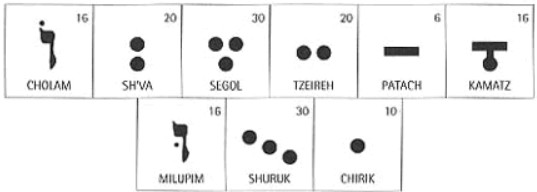
 This article is a follow-up to the previous one about the correct pronunciation of God’s name (יהוה), YHWH. Recall that our Sages teach that the nekudot vowels on God’s name are shva, cholam, and kamatz, meaning that the right way to pronounce the name would be “Yehowah”. A number of people reached out arguing that the letter vav is pronounced with a “v” sound, and therefore the name is “Yehovah”. Some referred to the work of Dr. Nehemiah Gordon, who makes the case for the vav being “v” partly based on words in Ezekiel (more on that below), and partly based on a poem by Elazar haKalir (c. 6th century CE) where he rhymes levi (לוי) with navi (נביא). The implication is that Jews as far back as the 6th century were pronouncing the vav as a “v” sound. Gordon himself notes that great rabbis like the Ibn Ezra were puzzled by this rhyme, because it was common knowledge then that the vav is really a “w” sound. Indeed, we find that the vav was a waw for most of Israelite and Jewish history. Below are ten big reasons for why the vav is a waw. Continue reading
Tag Archives: YHWH
How to Pronounce God’s Name
 This week’s parasha, Va’etchanan, contains a second reading of the Ten Commandments. The third commandment is the prohibition to take the name of God in vain. Some people mistakenly believe that this means we are not allowed to ever pronounce the Tetragrammaton, יהוה, commonly transliterated as YHVH or YHWH. This is not true at all, though it is true that later in history the Sages instituted using other words to be used instead of the Tetragrammaton (such as “Adonai” or “Hashem”) so that people do not accidentally take the name of God in vain, or misuse this powerful name of God. Since the Tetragrammaton is so sacred, it was thought too holy to invoke on a regular basis. Today, no one invokes the proper name at all. It’s gone so far that many believe we have forgotten how to properly pronounce the name. This is false. How can we be God’s people if we don’t even know His name? Continue reading
God of Gods, King of Kings
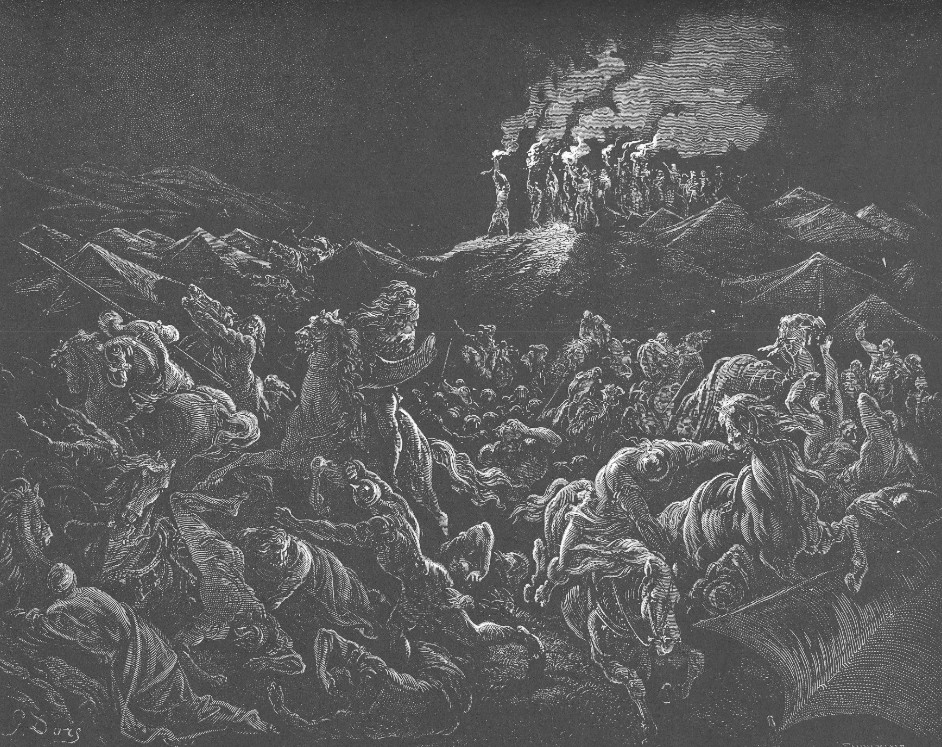
‘The Midianites Put to Flight’ by Gustav Doré
One of the difficult passages in this week’s double parasha, Matot-Massei, which closes the Book of Numbers, is where God seemingly commands a complete massacre of a neighbouring people, the Midianites. This is actually God’s final command to Moses, saying “Take revenge for the Israelites against the Midianites. Afterwards, you will be gathered to your people.” (Numbers 31:2) The next and final book of the Torah is Moses’ own account of his leadership, and was relayed over the last 37 days of his life.
The Israelites go on to slaughter every male Midianite (31:7), take the women and children captive (31:9), then burn down all the cities and take plunder (31:10-11). Still, the Israelites are chastised for letting the adult women live (31:15), as they were the very ones that tempted Israel into various sexual sins beforehand. Understandably, this is one of the most troubling passages in the whole Torah—how could a holy nation seem to behave in a manner more like the violent and bloodthirsty nations we condemn? Unfortunately, passages like this have also turned many away from the Torah, and generated numerous atheists. One such atheist is Richard Dawkins, who summarized it this way in his book, The God Delusion (ch. 2): Continue reading