
 This week’s parasha, Va’etchanan, contains a second reading of the Ten Commandments. The third commandment is the prohibition to take the name of God in vain. Some people mistakenly believe that this means we are not allowed to ever pronounce the Tetragrammaton, יהוה, commonly transliterated as YHVH or YHWH. This is not true at all, though it is true that later in history the Sages instituted using other words to be used instead of the Tetragrammaton (such as “Adonai” or “Hashem”) so that people do not accidentally take the name of God in vain, or misuse this powerful name of God. Since the Tetragrammaton is so sacred, it was thought too holy to invoke on a regular basis. Today, no one invokes the proper name at all. It’s gone so far that many believe we have forgotten how to properly pronounce the name. This is false. How can we be God’s people if we don’t even know His name? Continue reading
Tag Archives: Zechariah
Seven Names or Seven Messiahs?
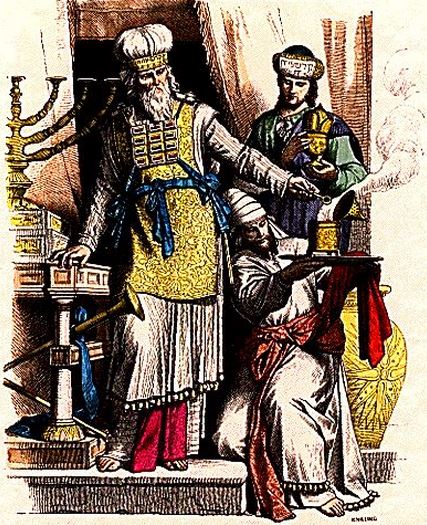
In this week’s parasha, Tzav, we find the interesting term hakohen hamashiach, the “anointed priest”, referring to the kohen gadol, “high priest”. This term appears a total of four times in the Torah; three times in last week’s parasha, and once at the beginning of this week’s parasha. These happen to be the only four instances of the term mashiach anywhere in the Chumash. Superficially, they do not refer to the Messiah, but rather to the high priest. The Chumash itself never explicitly speaks of hamelekh hamashiach, the anointed messianic king of Israel at the End of Days. However, it does allude to a messianic figure here in the parasha, because one of those future figures whose arrival we expect is the Kohen Tzedek, the “righteous priest” who will serve as the first kohen gadol in the rebuilt Jerusalem Temple.
At the start of the Second Temple era, the hope was that Zerubbabel would be Mashiach. Continue reading
Secrets of Sukkot
What is the real meaning of the mysterious holiday of Sukkot? What does it have to do with the End of Days and the Final Redemption? Why does the prophet Zechariah describe God as “touching down” on the Mount of Olives? And what does it all have to do with current events in Israel and the recent hostage deal? Find out in this class as we uncover the true meaning of Sukkot. Plus: What is the secret of the number 91? Where does the notion of the “Seven Shepherds of Israel” come from? And what role do the Shepherds play in the End of Days?
For more on the Ushpizin, see here.
For more on the Ketoret and its psychoactive ingredients, see here.