
As someone who has taught organic chemistry for the past 15 years, I have always been amazed at the mystical nature of this particular science. The field of chemistry is typically divided up into two general areas: organic and inorganic. Organic chemistry is centered entirely around the element carbon, which serves as the backbone and “skeleton” for all organic compounds. Everything else is deemed “inorganic”. Incredibly, the number of known organic compounds far surpasses the number of inorganic ones.

The Ten Sefirot
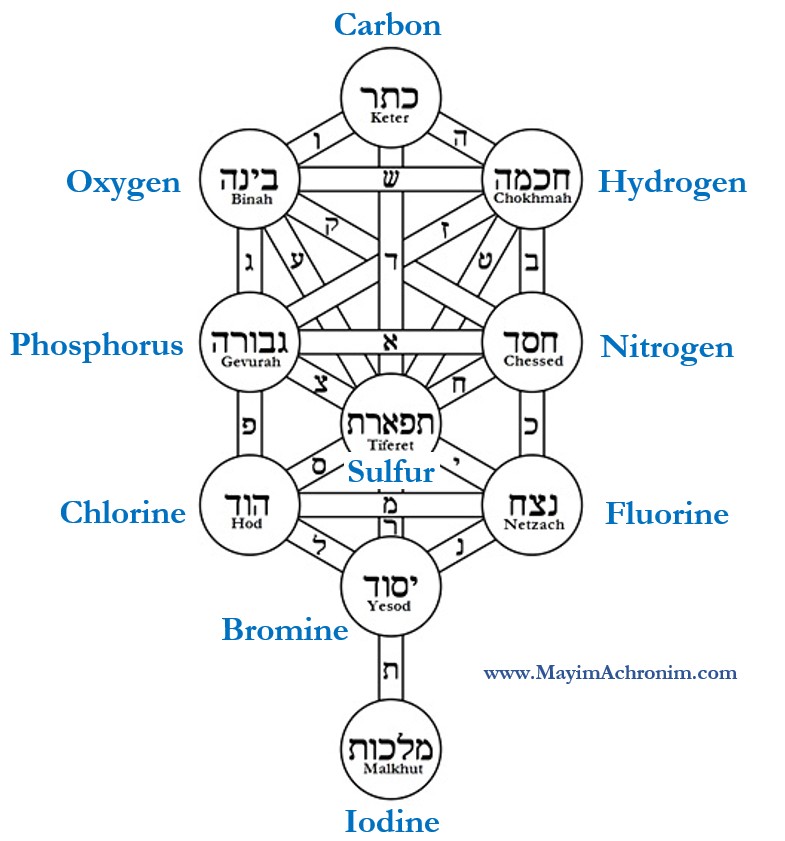
Organic chemistry is fundamental to the functioning of our biological bodies, and generates countless products that we use every day from plastic to polyester, as well as essentially the entire pharmaceutical industry. Organic chemistry is absolutely vital for understanding life in this universe. Not surprisingly, it has a tremendous amount of spiritual depth as well. What particularly stands out is that we find ten major elements in organic chemistry, and they neatly correspond to the Ten Sefirot of Kabbalah.
First, of course, is carbon. All of organic chemistry is centred around carbon, and its ability to make four relatively strong chemical bonds with other atoms. Carbon corresponds to the first Sefirah of Keter, the “crown”, the starting point of all things. Keter is also referred to as the “skull” of the Sefirotic “body”, likened to a skeleton that holds the body together. (Recall that within the bones of the skeleton and its marrow are undifferentiated stem cells, the core “essence” of a person, or etzem in Hebrew—which amazingly means both “bone” and “essence”!) In organic chemistry, we typically draw chemical structures with skeletal diagrams for convenience, where every point on the diagram is one carbon atom. Carbon is the foundational “skeleton” of organic chemistry, as is Keter for the Sefirot.
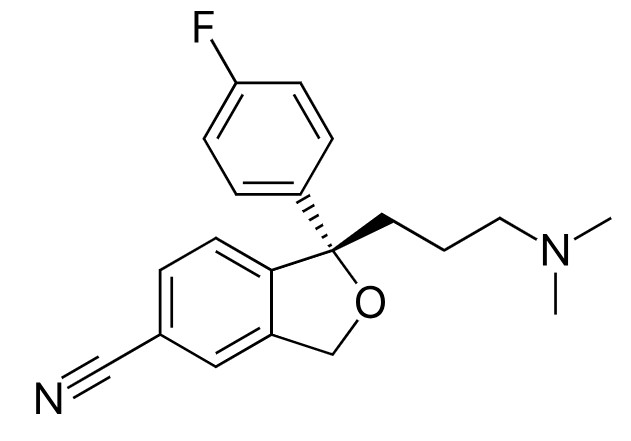
Skeletal diagram of a large organic compound containing nitrogen (N), oxygen (O), and fluorine (F), in addition to carbon and hydrogen. Each “point” on the diagram is a carbon atom. Hydrogens are not depicted.
The next most important element in organic chemistry is hydrogen. By default, hydrogen atoms “fill” the space around carbon, and we typically don’t draw them in skeletal diagrams at all—they are just assumed to be there, wherever carbon looks like it’s “missing” a bond. It isn’t missing, we just know that there’s a hydrogen there! The most basic organic molecule is methane, a single carbon surrounded by four hydrogens. When we go back to the beginnings of the universe, to the start of Creation, hydrogen was the first element to exist. It was the first element to form following the “Big Bang”, and served as the building block for all other elements that were generated once hydrogens started fusing together. Today, hydrogen remains the most abundant element in the universe.
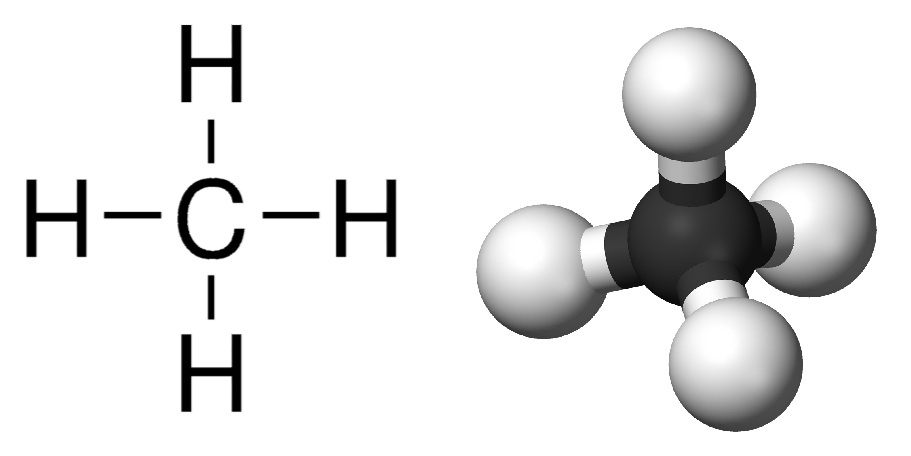
A structural diagram of methane, and a 3D model showing its actual “tetrahedral” shape.
From a mystical perspective, hydrogen is intertwined with the act of Creation, so it fittingly corresponds to Chokhmah, “Wisdom”, in which Creation is rooted. The ancient mystics taught that God created the cosmos through lamed-bet netivot chokhmah, 32 Paths of Wisdom (this is how Sefer Yetzirah, what is probably the oldest known Kabbalistic text, begins). Multiple times throughout Tanakh and later holy texts, God is described as bringing about Creation through His infinite wisdom, His chokhmah, which is a good analogy for how the chemical elements all came to be from primordial hydrogen. Moreover, hydrogen gets its name from the fact that it forms water (H2O), hence hydro-gen. The first thing that appears in the Torah, before God is even described as creating anything, is water, over which “the spirit of God hovered” (Genesis 1:2). On a chemical level, the gaseous “spirit” of God (literally the same word as “wind” in Hebrew, ruach) can be understood as an allusion to hydrogen gas.
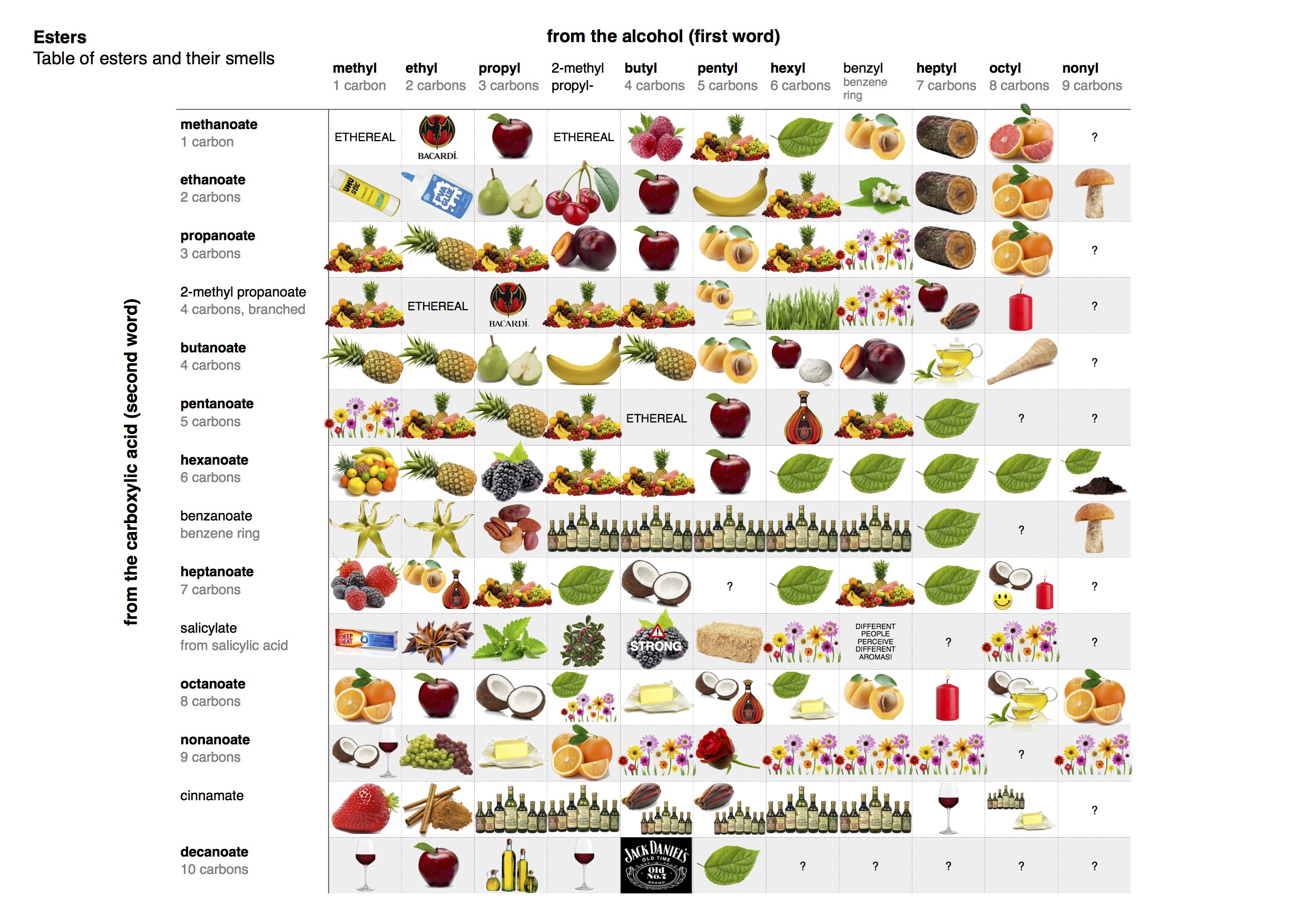
The other major element in organic chemistry is oxygen. Most of the “functional groups” in organic chemistry contain oxygen. For example, to make an alcohol, you need to add a “hydroxyl” group to a carbon, a hydroxyl being an oxygen bound to a hydrogen (-OH). To make a ketone, you need to add a double-bonded oxygen in the middle of a carbon chain (C=O), while to make an aldehyde, you do the same thing at the end of a chain (which we write in shorthand as CHO). Meanwhile, many of the products you use and foods you consume are carboxylic acids, including vinegar, citric acid, and multiple vitamins (designated with a COOH). Combine these carboxylic acids with alcohols and you make fun-smelling esters, which generate many of the scents you enjoy, including banana and coconut.
Oxygen is incredibly important in our internal biochemistry as well, of course. We need oxygen to serve as the “final electron acceptor” within our mitochondria (the famous “powerhouse of the cell”), in order to pick up the electrons we extract from food to make energy. Just like oxygen is needed for a fuel to burn, we need oxygen for our own inner “engines” to burn. In fact, the chemical equation for the burning of a hydrocarbon fuel is exactly the same as the equation for cellular respiration in our bodies which generates energy for us.
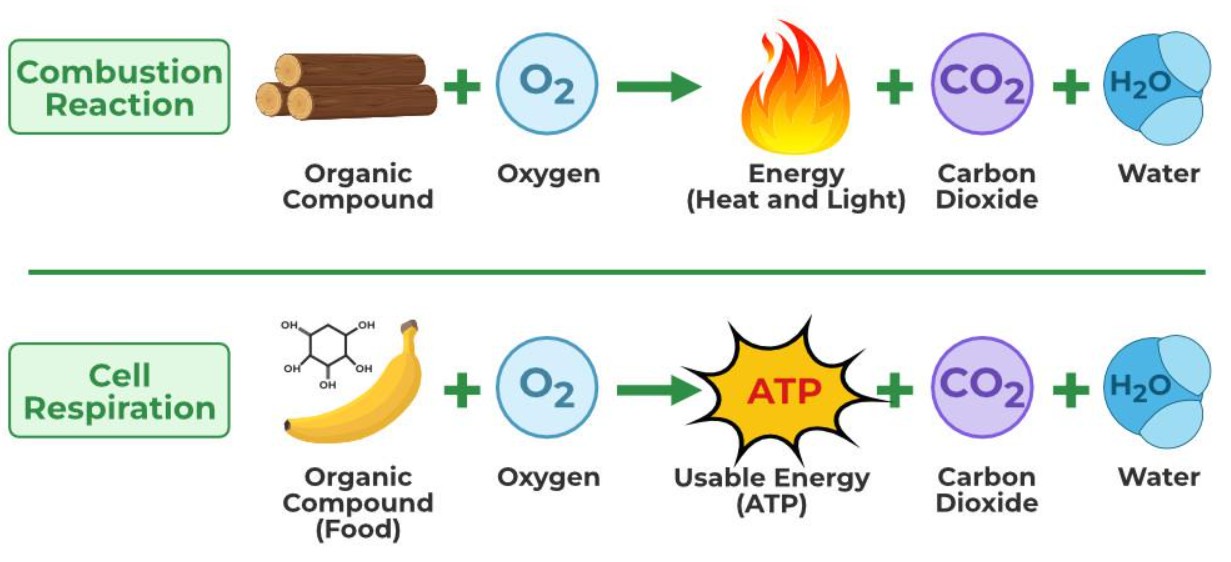
Comparing regular combustion (burning a fuel) with the energy production within our bodies. (Credit: geeksforgeeks.org)
On the map of Sefirot, the right pillar is associated with water while the left pillar is associated with fire, so it is all the more fitting to place hydrogen on the right and oxygen on the left. Thus, while hydrogen corresponds to Chokhmah, oxygen clearly corresponds to its opposite, Binah, “understanding”. Chokhmah is also called Aba, “father”, and Binah is called Ima, “mother”. Perfectly, all of our mitochondria (where the oxygen we breathe goes) are inherited only from our mothers! We will return to this below.
On the Sefirot, there is a hidden Sefirah between Chokhmah and Binah called Da’at, literally “knowledge” but described as the “unification” of the previous two. In the same way that Da’at fuses Chokhmah and Binah and plays a key background role that is concealed, the fusion of hydrogen and oxygen produces water, which is not an organic compound but plays a hugely instrumental role in organic chemistry. Most organic reactions take place in water, and water is necessary to facilitate them. One of the most common reactions in organic chemistry and biochemistry is hydrolysis—using water to split an organic chain—as well as the opposite reaction called condensation (or dehydration synthesis) where water is removed and generated to link together carbon chains.
Thus, the three elements of carbon, hydrogen, and oxygen neatly correspond to the lofty first three Sefirot, the Mochin. These three elements are not only the most important in organic chemistry, and found in nearly all organic compounds, but also the most abundant in our bodies. Oxygen makes up about 65% of our body’s mass, followed by carbon at about 18.5%, and hydrogen at about 10%. No other elements come close. The next element in our bodies by abundance is nitrogen, coming in at 3%, which is the next element corresponding to our Sefirot.
The Lower Seven
The first of the lower seven Sefirot is Chessed, “kindness”, also called Gedulah, “greatness” or “largesse”. This corresponds to the next most common element in organic chemistry, nitrogen. Nitrogen happens to be the most abundant element in our atmosphere, making up some 78% of the air we breathe—fitting for Gedulah. Our DNA is a string of nitrogen bases, which provide the code for our genomes. Nitrogen is also a major ingredient in our proteins. When our bodies metabolize these organic compounds, the product is urea, which we then pee out; another allusion to watery Chessed. Ironically, nitrogen is all around us in the air, yet we are unable to absorb it when we breathe. In one of nature’s great acts of Chessed, microbes in the soil are able to breathe in nitrogen from the air, and they “fix” nitrogen into compounds that we are able to use. Plants take up these nitrogen compounds from the soil, and from there it goes up the food chain to animals and humans.
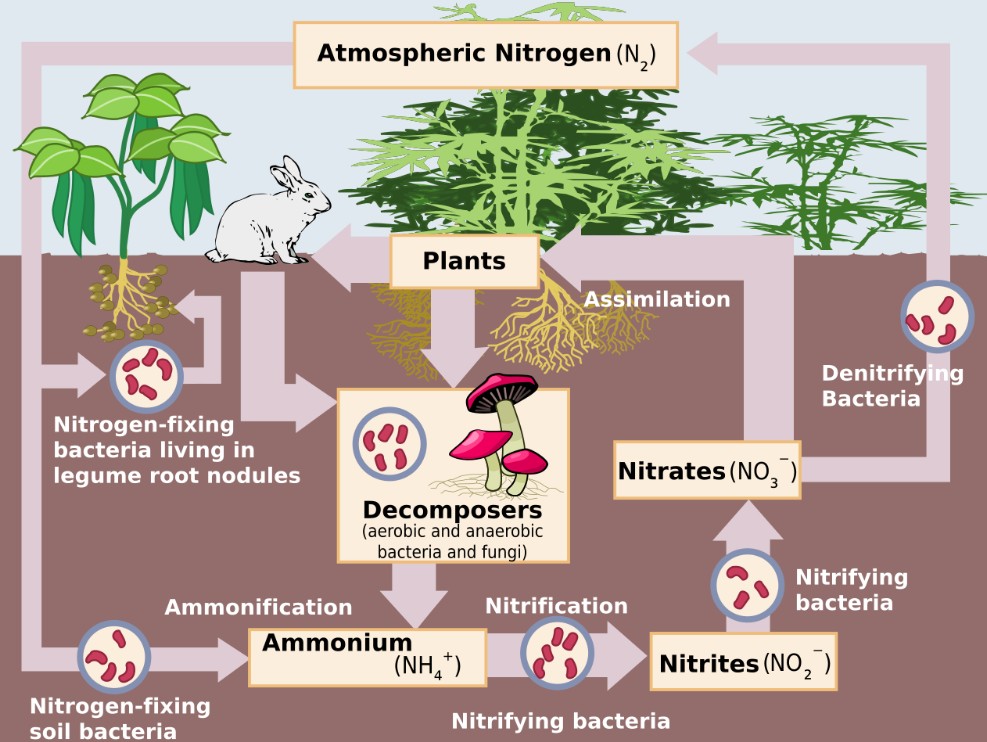
Nitrogen fixation: the process through which inert atmospheric nitrogen is converted into “bioavailable” nitrogen compounds that living things can use.
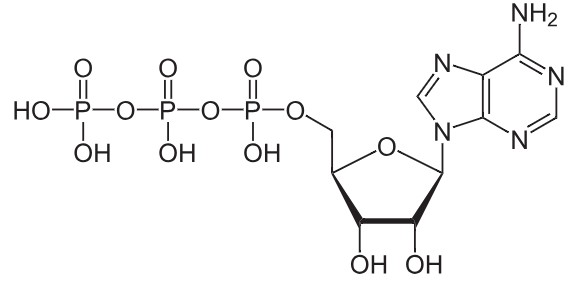
ATP, with three phosphate groups on the left.
On the other side, corresponding to Gevurah, “strength”, is the element that lies under nitrogen on the Periodic Table, phosphorus. Phosphorus is hugely important in our biochemistry because it is the “battery” of our bodies. The primary energy molecule in our cells is ATP, adenosine triphosphate. Adenine is the nitrogen base to which are added three high-energy phosphate groups. When the bonds between those phosphates break, energy is released, powering the activities in our cells. The energy from the food we eat is used to “recharge” the ATPs and reattach the phosphates to them, reversing those broken bonds. Without phosphorus, we would have no energy or “strength”. This is another reason why phosphorus fits beneath oxygen on the map of Sefirot. Both elements are vital for our energy; for the internal “fire” of our bodies.
The central Sefirah on the “tree” of Sefirot is Tiferet, literally “beauty”, but more like “symmetry” and “balance”. It is the only Sefirah that is intertwined with all the other ones. It bridges all 32 Paths of Wisdom. It is also the centre of the bottom seven Sefirot, called Middot, “qualities”, the balancing point. This perfectly corresponds to the next major element in organic chemistry, sulfur. One of sulfur’s main roles in biochemistry is to hold together molecules, particularly proteins, with strong “disulfide bridges”. Like Tiferet, sulfur is vital for forming bridges and holding large molecules together. Incredibly, the atomic mass of sulfur is 32, an allusion to the 32 Paths of Wisdom that Tiferet bridges.
More incredibly, sulfur is unique in that it is able to make a whopping six bonds (almost everything else tops out at four; phosphorus can occasionally make five, and there are several other exceptions). The six bonds of sulfur are a wonderful allusion to the vav ketzavot of Kabbalah (the “six directions” or “six edges” often represented by central Tiferet), and the fact that Tiferet lies at the centre of the bottom seven Sefirot, like sulfur sits at the centre of seven atoms in an octahedral molecular configuration. It is worth adding that sulfuric acid is an important catalyst in organic reactions and needed to form various bonds. This adds to the Tiferet-like quality of sulfur.
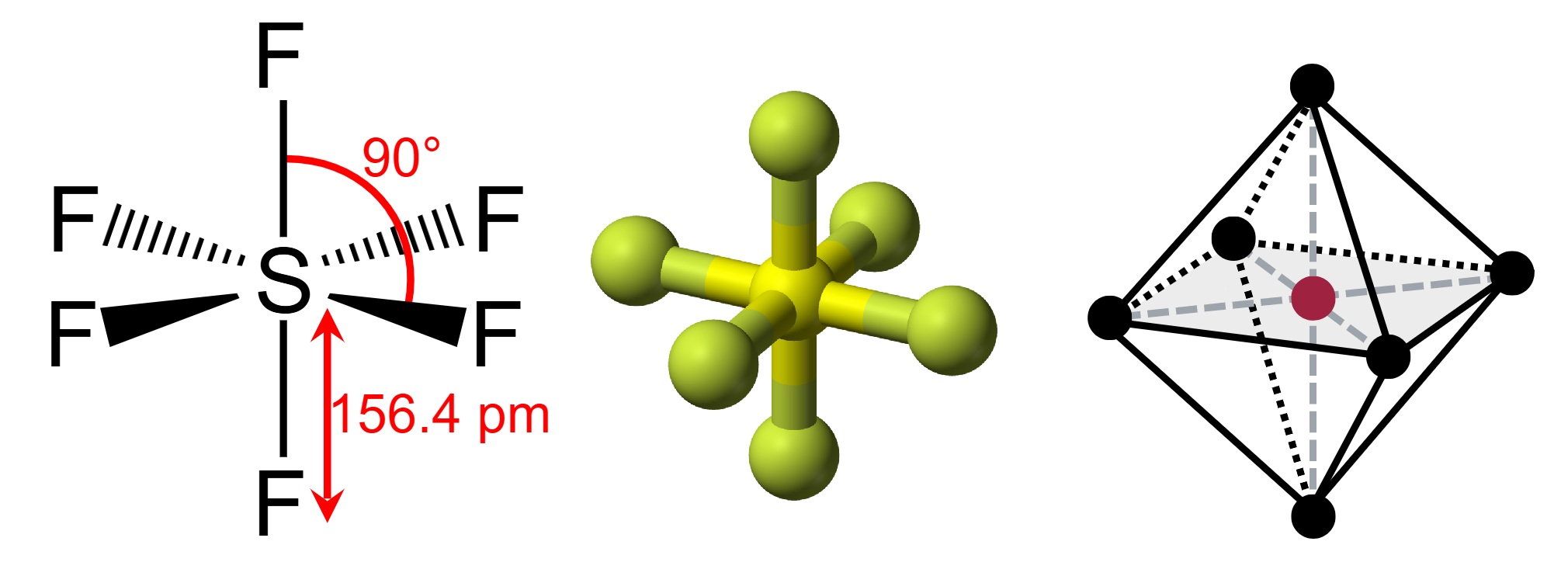
Sulfur hexafluoride is used extensively in various industrial and medical applications. It has an octahedral shape (visualized at right).
Tiferet also shares a root with refuah, “healing”. After all, healing usually involves restoring “balance” to a particular imbalance in the body. Sulfur, too, is vital to our body’s self-healing mechanisms. One of the key roles of sulfur is in the production of glutathione, a powerful antioxidant. Above, we saw how oxygen is needed to pick up electrons when our bodies generate energy. Sometimes, oxygen doesn’t pick up a pair of electrons like its supposed to, and instead becomes a reactive oxygen species, or “oxidant”. These oxidants can damage neighbouring molecules, including cellular components, organelles, and DNA. (All the more fitting to place oxygen on the left side of the Sefirot, which is associated with harsh din, “judgement” and “severity”.) Oxidants have been closely linked to aging and cancer, hence the need for antioxidants to neutralize those dangerous molecules. Sulfur-containing glutathione is one of the body’s most important natural antioxidants, keeping cancer in check and probably slowing our aging, too. It also helps to detoxify the liver.
Intriguingly, recent scientific discoveries have found that hydrogen sulfide gas (H2S) may have healing properties and increase longevity as well. The unpleasant downside is that H2S produces the characteristic “rotten egg” smell. This same smell exudes out of hot springs and mineral baths, as well as from Dead Sea mud and salts—all of which are famous for their healing effects. This leads us directly to the next set of elements.
The Halogens
Finally, the bottom four Sefirot neatly parallel the group of four halogens that also play a big role in organic chemistry, and in our biochemistry. First is the smallest and most reactive of the halogens, fluorine. Fluorine is infamous for being the culprit in “forever chemicals” like PFAS (polyfluoroalkyl substances), the most well-known being Teflon. Though useful, such chemicals can be very toxic and harmful for our bodies and the environment. The “forever” quality of these fluorinated organics is appropriate for the Sefirah of Netzach, literally “eternity”.
The next halogen is chlorine, which we use extensively in a variety of cleaning products and antiseptics. Chlorinated organics also make up PVCs for modern plumbing and piping. In our bodies, it is the main ingredient for hydrochloric acid in our stomachs. Chloride ions are also vital for transporting waste carbon dioxide out of our bodies. This is fitting for Hod, the Sefirah that is associated with cleanliness (as explained in depth in the class on health and longevity). Going back to our overall framework of the left pillar of the Sefirot being associated with “fire” and energy, we find that, again, chlorine is right where it belongs when placed on the left. It starts with hydrochloric acid in our stomachs breaking down the food we eat, then phosphates recharging our ATPs from the energy of that broken-down food, and finally oxygen picking up the leftover electrons to complete the process at the very end. Thus, the entire left pillar of the Sefirot-elements corresponds to energy production and generating our inner “fire”. From bottom to top, it goes from the macro to the micro, from the most revealed to the most concealed, just as the Sefirot do.
Then comes bromine, which corresponds to Yesod, “foundation”, the place of reproduction. The average atomic mass of bromine is 79.9, which we typically round to 80 for convenience. Amazingly, the gematria of “Yesod” (יסוד) itself is 80! A major use of brominated organics is to produce flame retardants. It is interesting that bromine is used to “quell” flames, similar to the task of each person to rectify their Yesod and keep their flaming reproductive passions and urges in check. Scientifically, brominated flame retardants have actually been implicated in damage to both male and female reproductive systems, and have been linked strongly to infertility. Bromine does have a natural use in the human body, in trace amounts, as a cofactor to assist the enzyme peroxidase. One of the functions of this enzyme is to help form sulfilimine bonds (S=N), so the placement of bromine in Yesod, under the sulfur of Tiferet, is all the more appropriate.
Those who fail to rein in their Yesod energies and sin in this sphere receive the most severe punishments. One key example of this is the destruction of Sodom, which was destroyed specifically with “salt and sulfur” (Genesis 19:24 and Deuteronomy 29:22). Chemically, salts are typically compounds combining a metal (like sodium) with one of the halogens we are discussing here. This is actually where the Greek name halo-gen comes from, halo meaning “salt” in Greek. In other words, these elements—fluorine, chlorine, bromine—are “salt-makers”. Regular table salt is sodium chloride (NaCl). Sea salts have other types of salt as well, but still mostly sodium chloride. What’s amazing about Dead Sea salt, which presumably destroyed Sodom, is that it contains a much higher amount of bromine salts (and only about 20% NaCl, as explored in depth in Secrets of the Last Waters). The salt that God used in the destruction of Sodom had more bromine, corresponding to their violation of Yesod! The sulfur, meanwhile, can be linked to the Sodomites’ infamous lack of compassion, which is another aspect of Tiferet, also called Rachamim, literally “mercy” or “compassion”.
Finally, the last of the halogens in organic chemistry is iodine. It has one major use in the human body: to make thyroid hormones. The thyroid is a tiny gland, but its hormones regulate the body’s entire metabolism. This is like the final Sefirah of Malkhut, which is described as an “empty vessel” and the place of “lowliness”, shiflut, but also the end-goal of the Sefirot and the embodiment of the Shekhinah—God’s manifestation in this lower world. Small and lowly, but the “vessel” that receives all the energy flowing from above. The small thyroid, too, regulates the energy flows throughout the entire body.
Malkhut is also called Nukva, literally the “feminine”. Here lies another incredible (albeit unfortunate) parallel, in that women are significantly more likely to have thyroid issues than men. According to the American Thyroid Association, women are up to eight times more susceptible to thyroid problems. Another important role of iodine in the body is for bone growth and for the proper development of the skeleton in babies and children. (This is one reason why iodine is commonly added to regular table salt, hence the term “iodized table salt” that you find on most salt packages.) This brings us right back to where we started: We saw above that Keter is the “skull” and the skeleton of the Sefirot. And Malkhut is a reflection of Keter, the “kingdom” beneath the “crown”.
There’s a lot more to add to the above, and this only scratches the surface of the mystical aspects underlying organic chemistry. But it is enough to see how the major elements in organic chemistry beautifully parallel the Ten Sefirot, which are the fundamental “chemistry” of the cosmos. Everything in Creation is a manifestation of these Ten, even down to the key elements in our bodies and within the biochemistry of our cells.
To summarize:
For lots more on this and other mystical insights into chemistry, see the class on Torah Chemistry.