
As someone who has taught organic chemistry for the past 15 years, I have always been amazed at the mystical nature of this particular science. The field of chemistry is typically divided up into two general areas: organic and inorganic. Organic chemistry is centered entirely around the element carbon, which serves as the backbone and “skeleton” for all organic compounds. Everything else is deemed “inorganic”. Incredibly, the number of known organic compounds far surpasses the number of inorganic ones.

The Ten Sefirot
Organic chemistry is fundamental to the functioning of our biological bodies, and generates countless products that we use every day from plastic to polyester, as well as essentially the entire pharmaceutical industry. Organic chemistry is absolutely vital for understanding life in this universe. Not surprisingly, it has a tremendous amount of spiritual depth as well. What particularly stands out is that we find ten major elements in organic chemistry, and they neatly correspond to the Ten Sefirot of Kabbalah.
First, of course, is carbon. All of organic chemistry is centred around carbon, and its ability to make four relatively strong chemical bonds with other atoms. Carbon corresponds to the first Sefirah of Keter, the “crown”, the starting point of all things. Keter is also referred to as the “skull” of the Sefirotic “body”, likened to a skeleton that holds the body together. (Recall that within the bones of the skeleton and its marrow are undifferentiated stem cells, the core “essence” of a person, or etzem in Hebrew—which amazingly means both “bone” and “essence”!) In organic chemistry, we typically draw chemical structures with skeletal diagrams for convenience, where every point on the diagram is one carbon atom. Carbon is the foundational “skeleton” of organic chemistry, as is Keter for the Sefirot.
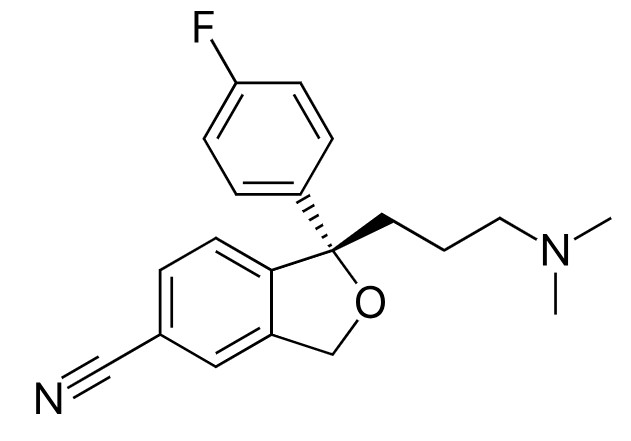
Skeletal diagram of a large organic compound containing nitrogen (N), oxygen (O), and fluorine (F), in addition to carbon and hydrogen. Each “point” on the diagram is a carbon atom. Hydrogens are not depicted.
The next most important element in organic chemistry is hydrogen. By default, hydrogen atoms “fill” the space around carbon, and we typically don’t draw them in skeletal diagrams at all—they are just assumed to be there, wherever carbon looks like it’s “missing” a bond. It isn’t missing, we just know that there’s a hydrogen there! The most basic organic molecule is methane, a single carbon surrounded by four hydrogens. When we go back to the beginnings of the universe, to the start of Creation, hydrogen was the first element to exist. It was the first element to form following the “Big Bang”, and served as the building block for all other elements that were generated once hydrogens started fusing together. Today, hydrogen remains the most abundant element in the universe. Continue reading