
In Part 2, we explore the origins, symbolism and significance of the phoenix, mermaids, and other hybrids like centaurs, satyrs, and werewolves, as well as vampires and golems. Also, an in-depth exploration of witchcraft and wizardry, the qualifications for being elected to the ancient Sanhedrin, and what does Frankenstein’s monster have to do with the Golem of Prague?
Tag Archives: Greek Mythology
Fantastic Beasts & Where to Find Them in the Torah
Unicorns, phoenixes, dragons, mermaids – what does the Torah (and other holy texts) say about these mythical creatures? Could they be real, and what spiritual significance do they carry? Find out in this fun class where we also explore narwhals and dugongs in the Tabernacle, the great battle of Behemoth and Leviathan, Greek myths of the Pegasus and the Chimera, dinosaurs in Tanakh, the Stone of Scone, and the true origins of King Arthur’s Excalibur.
God of Gods, King of Kings
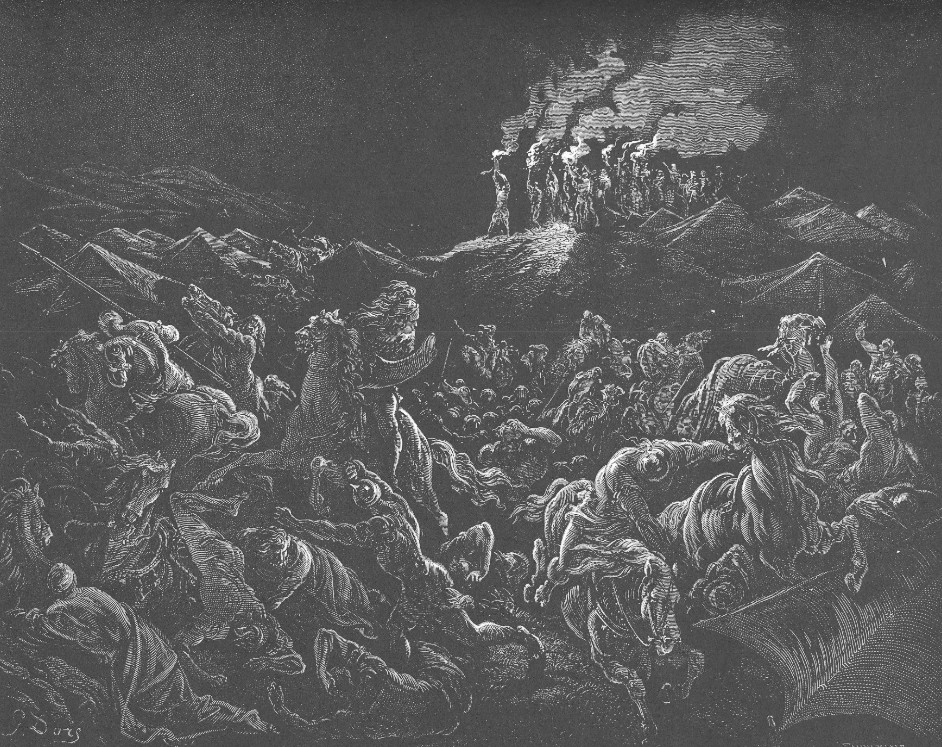
‘The Midianites Put to Flight’ by Gustav Doré
One of the difficult passages in this week’s double parasha, Matot-Massei, which closes the Book of Numbers, is where God seemingly commands a complete massacre of a neighbouring people, the Midianites. This is actually God’s final command to Moses, saying “Take revenge for the Israelites against the Midianites. Afterwards, you will be gathered to your people.” (Numbers 31:2) The next and final book of the Torah is Moses’ own account of his leadership, and was relayed over the last 37 days of his life.
The Israelites go on to slaughter every male Midianite (31:7), take the women and children captive (31:9), then burn down all the cities and take plunder (31:10-11). Still, the Israelites are chastised for letting the adult women live (31:15), as they were the very ones that tempted Israel into various sexual sins beforehand. Understandably, this is one of the most troubling passages in the whole Torah—how could a holy nation seem to behave in a manner more like the violent and bloodthirsty nations we condemn? Unfortunately, passages like this have also turned many away from the Torah, and generated numerous atheists. One such atheist is Richard Dawkins, who summarized it this way in his book, The God Delusion (ch. 2): Continue reading