
 This week’s parasha, Va’etchanan, contains a second reading of the Ten Commandments. The third commandment is the prohibition to take the name of God in vain. Some people mistakenly believe that this means we are not allowed to ever pronounce the Tetragrammaton, יהוה, commonly transliterated as YHVH or YHWH. This is not true at all, though it is true that later in history the Sages instituted using other words to be used instead of the Tetragrammaton (such as “Adonai” or “Hashem”) so that people do not accidentally take the name of God in vain, or misuse this powerful name of God. Since the Tetragrammaton is so sacred, it was thought too holy to invoke on a regular basis. Today, no one invokes the proper name at all. It’s gone so far that many believe we have forgotten how to properly pronounce the name. This is false. How can we be God’s people if we don’t even know His name?
The Torah tells us countless times that we should invoke God’s name, and we should be going around calling in the name of God, and teaching people the true name of God. This goes back to the very first Jew, to Abraham, of whom it is said that he “built an altar to YHWH and called in the name of YHWH” (Genesis 12:8), then again “called in the name of YHWH” (13:4), and then again “planted an eshel in Beer Sheva and there called in the name of YHWH, the everlasting God.” (21:33) Abraham’s mission was to introduce the ancient pagan peoples to the one true eternal God, YHWH. Everywhere he went, he specifically “called in the name of YHWH” so that everyone would know Hashem. Isaac carried on that mission and did the same (Genesis 26:25), as did all the prophets that followed. In his final song, Ha’azinu, Moses reminded us that “When I call the name of YHWH, ascribe greatness to our God!” (Deuteronomy 32:3)
Indeed, throughout the Torah we are told to invoke the Tetragrammaton. In this week’s parasha, we have the Shema, and the command to vocally declare that “YHWH is our God, YHWH is one”. Today, we don’t actually do this, and instead say “Adonai is our God, Adonai is one”. Are we technically reciting the Shema all wrong? “Adonai” literally means “my Lords” (in the respectful plural). It was not originally a name for God, but just a respectful title, first appearing in Genesis 15:2 where Abraham refers to God as Adonai YHWH, “my Lord YHWH”.
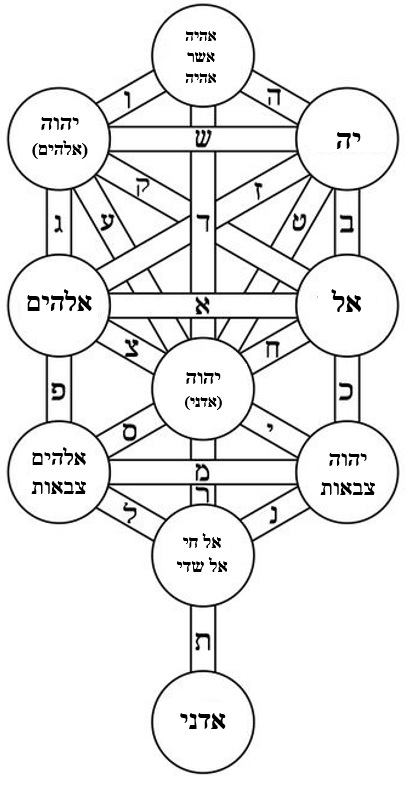
How the major names of God correspond to the Sefirot
Much later, “Adonai” (or “Adonoy”) became a bona fide name of its own, and one of the ten major names of God, paralleled to the Sefirah of Malkhut by the Kabbalists. Nonetheless, it was originally only a title, not a name. And because of that, we find cognates of it in other languages and pagan religions, including the Canaanite god Adon, the Greek idol Adonis, and the Egyptian deity Aten. It is worth remembering that the Torah forbids us from invoking the names of foreign deities (Exodus 23:13). We should only be invoking the name of the one true God, YHWH.
Elsewhere, God commanded the kohanim to specifically invoke His name when blessing the nation. The formula of the blessing is: “May YHWH bless you and protect you. May YHWH turn His face towards you and be gracious to you. May YHWH raise His countenance towards you and place peace upon you.” (Numbers 6:24-26) The very next verse is God saying “they shall place My name upon the Children of Israel and I will bless them.” It is absolutely necessary here to actually pronounce the name of God upon the people. Yet, we don’t do this today, and instead the kohanim use the placeholder title “Adonai”, and not the true name of God. One can argue that this kind of birkat kohanim is ineffective and practically useless. The name of God was not invoked or placed upon the Children of Israel, as the Torah requires! One can reasonably argue that God’s instructions were not carried out, and the mitzvah was not fulfilled.
Upon deeper contemplation, the reality in which we find ourselves today makes no sense at all. It is clearly contrary to the will of God, Who tells us countless times in Scripture to call in His name and invoke His name and spread knowledge of His name to the ends of the world. God tells us that “in every place where My name is mentioned I will come to you and bless you.” (Exodus 20:21, and Avot 3:6) He tells the prophet Jeremiah: “Thus said YHWH: YHWH is doing it, forming it, establishing the name YHWH; call to Me and I will answer you and I will tell you wondrous things, secrets you have not known.” (33:2-3) King David tells us to “Praise YHWH, call His name, proclaim His deeds among the peoples.” (Psalm 105:1) There are many similar verses throughout Tehillim and in Tanakh, and while we repeat them countless times, we totally ignore their instructions to call out God’s name.
At the “duel” on Mt. Carmel, Eliyahu told the idolaters to call the names of their gods, while “I will invoke YHWH by name; and let us agree: the god who responds with fire, that one is God.” (I Kings 18:24) Eliyahu calls on God by name and goes on to win the duel, and the Israelites now know the name of YHWH again, declaring: “YHWH is the God, YHWH is the God” (18:39) We recite this particular verse in our prayers, too, but yet again we replace the proper name of God with a placeholder title. Why have we stopped calling in the name of God? Why have we forgotten the name YHWH? Why did we abandon God’s explicit mission and command to us. How did we get to this point?
Persecution & Amnesia
In ancient times, God’s name was regularly invoked, even in mundane day-to-day speech. The common greeting was YHWH imakhem, “May God be with you”, to which the response was yevarekhekha YHWH, “May God bless you” (as we learn from Ruth 2:4). Today some have the custom to say this when getting an aliyah, before reciting the Torah blessings, but of course, the name of God is replaced with “Hashem”. Up through the end of the Second Temple era, using the actual name of God was common. The Talmud (Kiddushin 71a) says that only the more mystical and powerful “twelve-letter name of God” was concealed at the end of the Second Temple era so that people wouldn’t misuse it. The kohanim still did use it during the priestly blessing, and Rabbi Tarfon reports that he once stood really close to the kohanim during the benediction and heard the proper way to pronounce the twelve-letter name.
The same Talmud reveals that there is an even more powerful name of God, the “forty-two letter name of God”. This one, the Talmud says, can only be taught to “one who is discreet, and humble, and stands at least half his life [ie. over 35 years old], and does not get angry, and does not get drunk, and does not insist upon his rights but is willing to yield.” But what about the regular four-letter name of God, YHWH? That one was still taught to all rabbinic students in Talmudic times, either once or twice in seven years. Why was it done so infrequently? Rav Nachman bar Itzchak explains that it is based on Exodus 3:15, where God first reveals His name YHWH to Moses. God says “This is My name forever [l’olam]” where the last word can be read l’alem, “to hide”. In other words, the Torah is apparently hinting that the name of God should be kept hidden so that it is not misused. And how do we conceal it? The Talmud says we should pronounce it as “Adonai” instead of YHWH.
There is some precedent for this in Tanakh. For instance, Isaiah 6:1 refers to God simply as “Adonai”. Far more commonly, though, “Adonai” is only a title appearing before the proper name YHWH, as we saw previously with Abraham in Genesis 15:2. The appellation “Adonai YHWH” appears many times in Tanakh (including at the start of this week’s parasha, and in this week’s Haftarah), and ever since rabbis instituted saying “Adonai” instead of YHWH, it created an awkward problem where the expression would be read redundantly as “Adonai Adonai”! To avoid the issue, we customarily read it as “Adonai Elohim”, departing from the plain reading of the text, and exchanging the true name of God, YHWH, for another title, Elohim, which literally means “powers” or “gods” and sometimes generically refers to foreign deities as well.
This switch-up is clearly contrary to the Torah itself, which states countless times that we should vocally and often use the name of God, YHWH, and not conceal it, as we saw above. Whereas the Torah says we should invoke God’s name forever, l’olam, Rav Nachman in the Talmud flips the meaning and says it’s really l’alem, that we should conceal the name! So, we see that prior to the Temple’s destruction, use of the Tetragrammaton was common and relatively unrestricted. By late Talmudic times (in the 5th and 6th centuries), it was mostly concealed and rarely taught publicly. What happened?
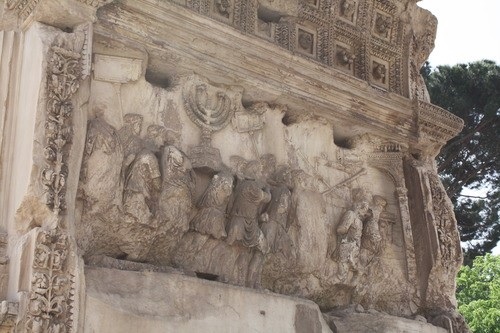
Arch of Titus depicting Jerusalem’s Temple treasures carried back to Rome
Many scholars believe the answer lies with the Romans. The Romans saw the Jews as a most-rebellious and difficult people. Jews revolted against Rome at least three times. The Great Revolt (which ended with the Temple’s destruction) was already devastating enough for the Roman Empire. The Romans were so happy they finally won that they built the Arch of Titus to commemorate it—along with the Coliseum, financed by loot from the Temple treasures. Yet the Jews were not defeated. They rebelled again during the Kitos War (117 CE), and then even more forcefully during the Bar Kochva Revolt (132-136 CE), when the Romans were initially defeated and expelled from Judea. Rome had to send half of their legions just to quell the revolt—in a tiny province on the outskirts of the empire. Worse still, Jewish migrants were successfully spreading their faith across the empire. It led the Roman statesman Seneca (d. 65 CE) to frustratingly declare: “The customs of this most base people have so prevailed that they are adopted in all the world, and the conquered have given their laws to the conquerors!”
And so, Rome did whatever it could to stem the tide and put an end to Judaism. They levied a heavy tax on the Jews (the Fiscus Judaicus), expelled Jews from the city of Rome on multiple occasions, made rabbinic ordination illegal and punishable by death, as well as public Torah teaching illegal and punishable by death. After Bar Kochva, they went so far as to dismantle the entire province of Judea and rename it “Palestine” to wipe it off the map. Among the many other restrictions and persecutions designed to obliterate Judaism, the Romans also banned mention of the God of the Jews.* Jews could no longer openly pronounce or mention YHWH. It appears that this is the real reason why Jews stopped pronouncing God’s name. (And it may even explain why the neutral sounding “Adonai” was used instead, since it so closely resembled the pagan Greco-Roman “Adonis”.) The result was that by the close of the Talmudic era, rabbis were teaching the proper pronunciation of God’s name only once or twice in seven years. A few centuries later, it was no longer taught at all. Eventually, the vast majority of the Jewish population did indeed forget (or were never taught to begin with), how to pronounce the name properly.
This trend was made worse by confusion due to another Talmudic teaching. In Avodah Zarah 18a we are told that Rabbi Chanina ben Teradyon was executed by the Romans for pronouncing “the name of God with its letters”. This should have been a simple (and tragic) historical fact that he was executed for violating a Roman restriction, but instead it was taught by some that he deserved to be executed for pronouncing God’s name. After all, the Mishnah (Sanhedrin 10:1) has a minority opinion of Abba Shaul that one who “pronounces the name of God with its letters” loses their share in the World to Come. However, the original meaning here is actually quite clear: it is not talking about a person who simply mentions the Tetragrammaton, but rather one who misuses the twelve or forty-two letter shem hameforash, the expanded name of God, “with its letters”. Over time, people started to think that any mention of God’s four-letter name is forbidden, and would cause a person to lose their share in the World to Come! This understanding is, obviously, completely mistaken and contrary to the Torah.

Pronouncing the name of God “with its letters” refers to the expanded name of God where each letter is “opened up” and spelled out twice, totalling 42 letters. This is the most powerful and concealed name of God, the shem hameforash. This slide is from the series of videos on Names of God.
As we saw above, the Torah commands that we should invoke the four-letter name of God often, and vocally. This is one of the key tasks of the Jewish people: to teach the world about the one true God, and His name. And to eventually bring the world to the point where, as Zechariah (14:9) says, all nations will know YHWH and His name.
So, what is the proper pronunciation of YHWH?
Pronouncing the Name
While some like to say that we have forgotten the proper pronunciation of YHWH, or no one knows for sure how to pronounce it, such statements are completely false. In fact, if such absurd statements were true, they would undermine the entire notion of mesorah and having a solid tradition going back to Sinai. How could we forget something as simple and fundamental as the very name of God? If that were true, Judaism would be a complete failure as a religion. The reality is that we know perfectly well how to pronounce God’s name.
First of all, it is important to remember that the letter vav was originally pronounced waw. (This is how it is still pronounced in some communities like the Yemenite.) The v sound is given by the letter beit or veit (without a dagesh) while vav should be w. This is further made clear from the fact that we still do pronounce the vav as an oo sound. The w and the oo are practically the same, and making a w sound requires making an oo (try it and note how your lips form the same shape). This is also why, in English, we call w a “double-U”, since it is really a uu or oo sound. (For more on this and other issues of letter pronunciation, see ‘Shabbat or Shabbos: What’s the Correct Pronunciation?’ in Garments of Light, Volume Two.)
Now, our Sages taught that the proper pronunciation of God’s name is actually embedded in that same Torah verse where God reveals His name to Moses, Exodus 3:15.
וַיֹּאמֶר עוֹד אֱלֹהִים אֶל־מֹשֶׁה כֹּה־תֹאמַר אֶל־בְּנֵי יִשְׂרָאֵל יְהֹוָה אֱלֹהֵי אֲבֹתֵיכֶם אֱלֹהֵי אַבְרָהָם אֱלֹהֵי יִצְחָק וֵאלֹהֵי יַעֲקֹב שְׁלָחַנִי אֲלֵיכֶם זֶה־שְּׁמִי לְעֹלָם וְזֶה זִכְרִי לְדֹר דֹּר׃
And God said further to Moses, “Thus shall you speak to the Israelites: YHWH, the God of your fathers—the God of Abraham, the God of Isaac, and the God of Jacob—has sent me to you: This shall be My name forever, this My appellation for all eternity.
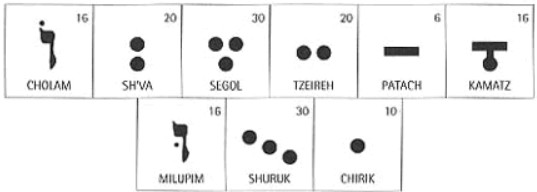 Our Sages revealed that the vowels on l’olam secretly encode the vowels for the name of God itself. Look at the Hebrew verses above and note how it is the same three vowels: a shva, a cholam, and a kamatz. The correct vowels are right there, recorded properly in just about every Chumash today! The Tziyuni (Rabbi Menachem ben Meir of Speyer, c. 1340-1410) comments on this verse succinctly that: “There is a received [or accepted] secret here, that the vowel points of ze shmi l’olam are also the vowel points for the Great Name, and a mnemonic for this is ki mi b’shahak ya’arokh l’YHWH, ‘Who in the Heavens is equal to YHWH?’” [Psalm 89:7] In other words, if you want to know the Heavenly vowels of YHWH, look at the word for “Heavens”, shahak, spelled shin-chet-kuf (שחק), which stands for shva, cholam, kamatz!

From the Tziyuni (Rabbi Menachem ben Meir of Speyer, c. 1340-1410) on parashat Shemot.
Putting it all together, the proper way to pronounce YHWH is the same as “l’olam”, with the vowels shva, cholam, and kamatz. So just like you pronounce le-oh-lam, you pronounce ye-ho-wah. Note again the w sound, and not the v sound. It very much resembles a deep breath, and comes out like an exhale. That’s partly the point; the word for “soul”, neshamah, is like “breath”, neshimah. God breathed a soul into Adam, to allow Adam to speak and call in God’s name. Amazingly, God’s name is not mentioned in the account of Creation (the first chapter of Genesis, which only mentions the more generic Elohim); rather, it is first introduced in Chapter 2, in the account of the creation of Adam, right before God blows a soul into him. One thing we learn from this is that we should have God on our minds with each and every breath.
Now, as we see all around us, we are quite clearly in the prophesied “End of Days”, standing on the cusp of the Final Redemption. It is therefore all the more important to revive knowledge of the name of God, and its proper pronunciation. This was foretold long ago by the prophet Yeshayahu, who noted how Israel forgot God’s name in their long exile, but will remember it yet again soon:
וְעַתָּה מַה־לִּי־פֹה נְאֻם־יְהֹוָה כִּי־לֻקַּח עַמִּי חִנָּם מֹשְׁלָו יְהֵילִילוּ נְאֻם־יְהֹוָה וְתָמִיד כׇּל־הַיּוֹם שְׁמִי מִנֹּאָץ׃ לָכֵן יֵדַע עַמִּי שְׁמִי לָכֵן בַּיּוֹם הַהוּא כִּי־אֲנִי־הוּא הַמְדַבֵּר הִנֵּנִי׃
Now, what therefore do I gain here?—declares YHWH—for My people has been carried off for nothing, their mockers howl—declares YHWH—and constantly, unceasingly, My name is spurned. Assuredly, My people shall learn My name, on that day, for I have spoken, here I am. (Isaiah 52:5-6)
And it will not just be Israel that will remember and once again invoke the name of God. The prophet Zephaniah (3:9) foresaw that God “will make the nations pure of speech, so that they all invoke YHWH by name, and serve Him with one accord.” All the nations of the world need to recognize YHWH and invoke Him by name. The prophet Zechariah (14:9) said the same, that “YHWH will be King over the whole Earth, on that day YHWH will be one and His name one.” The entire Earth will soon know and proclaim the name of God. The Talmud (Pesachim 50a) comments on this verse that while now we typically say “Adonai” instead of YHWH, when Mashiach comes we will pronounce the proper name YHWH. Elsewhere (Bava Batra 75b), the Sages go so far as to teach that in the Messianic Age, three will actually be called “YHWH”:
וְאָמַר רַבָּה אָמַר רַבִּי יוֹחָנָן: עֲתִידִין צַדִּיקִים שֶׁנִּקְרָאִין עַל שְׁמוֹ שֶׁל הַקָּדוֹשׁ בָּרוּךְ הוּא, שֶׁנֶּאֱמַר: ״כֹּל הַנִּקְרָא בִשְׁמִי וְלִכְבוֹדִי בְּרָאתִיו, יְצַרְתִּיו אַף עֲשִׂיתִיו״. וְאָמַר רַבִּי שְׁמוּאֵל בַּר נַחְמָנִי אָמַר רַבִּי יוֹחָנָן: שְׁלֹשָׁה נִקְרְאוּ עַל שְׁמוֹ שֶׁל הַקָּדוֹשׁ בָּרוּךְ הוּא, וְאֵלּוּ הֵן: צַדִּיקִים, וּמָשִׁיחַ, וִירוּשָׁלִַים. צַדִּיקִים – הָא דַּאֲמַרַן. מָשִׁיחַ – דִּכְתִיב: ״וְזֶה שְּׁמוֹ אֲשֶׁר יִקְרְאוֹ ה׳ צִדְקֵנוּ״. יְרוּשָׁלַיִם – דִּכְתִיב: ״סָבִיב שְׁמֹנָה עָשָׂר אָלֶף, וְשֵׁם הָעִיר מִיּוֹם ה׳ שָׁמָּה״, אַל תִּקְרֵי ״שָׁמָּה״ אֶלָּא ״שְׁמָהּ״.
And Rabba says that Rabbi Yohanan says: In the future, the righteous will be called by the name of the Holy One, Blessed be He; as it is stated: “Every one that is called by My name, and whom I have created for My glory, I have formed him, yea, I have made him.” (Isaiah 43:7). And Rabbi Shmuel bar Nahmani says that Rabbi Yohanan says: Three were called by the name of the Holy One, Blessed be He, and they are: The righteous, and the Messiah, and Jerusalem. With regard to the righteous, this is as we have just said. With regard to the Messiah, this is as it is written: “And this is his name whereby he shall be called, ‘YHWH is our righteousness.’” (Jeremiah 23:6) With regard to Jerusalem, this is as it is written: “It shall be eighteen thousand reeds round about. And the name of the city from that day shall be ‘YHWH is there’ [shamah].” (Ezekiel 48:35) Do not read the word as “there” [shamah]; rather, read it as: YHWH is its name [shemah].
Soon, every tzaddik will be called with God’s name. Indeed, many Jewish names already contain God’s name within them, whether Yirmiyahu, Yeshayahu, Eliyahu, Shmaryahu or Yehoshua, Yehoyada, Yehoshafat, Yehoyakim. Every Jew is a Yehudi, part of the people of Yehudah (יהודה). The name of God is literally embedded within each and every one of us. And the Talmud says it will be within the new name of Jerusalem, God’s eternal city, which will be renamed Yehowah-Shamah (as per Ezekiel), or more simply, “Yehowah” (as per the Talmud). And it will be within the name of Mashiach, too, who is called in Tanakh by the appellation Yehowah-Tzidkenu.
After describing Mashiach in Isaiah 11, the prophet continues: “And you shall say on that day: Praise YHWH, call His divine name, make His deeds known among the peoples; declare that the divine name is exalted!” (12:4) Again we are told to call God’s name and declare it to the peoples of the world. And the prophet Yoel (3:4-5) adds that it is precisely those who call in His name that will be saved on Judgement Day:
הַשֶּׁמֶשׁ יֵהָפֵךְ לְחֹשֶׁךְ וְהַיָּרֵחַ לְדָם לִפְנֵי בּוֹא יוֹם יְהֹוָה הַגָּדוֹל וְהַנּוֹרָא׃ וְהָיָה כֹּל אֲשֶׁר־יִקְרָא בְּשֵׁם יְהֹוָה יִמָּלֵט כִּי בְּהַר־צִיּוֹן וּבִירוּשָׁלַ͏ִם תִּהְיֶה פְלֵיטָה כַּאֲשֶׁר אָמַר יְהֹוָה וּבַשְּׂרִידִים אֲשֶׁר יְהֹוָה קֹרֵא׃
The sun shall be turned into darkness, and the moon into blood, before the great and terrible day of YHWH comes. And it shall come to pass, that whoever shall call the name of YHWH shall be delivered; For in Mount Zion and in Jerusalem there shall be those that escape, as YHWH has said, and among the remnant those whom YHWH calls.
Only those who call upon the name of YHWH will be saved at the End of Days and, in turn, YHWH shall call upon them, His true remnant.
We should not lose sight of this today, on Tisha b’Av, as we commemorate the destruction of our Temples. Why has Hashem still not answered us after two millennia of Tisha b’Avs? Maybe because we haven’t been calling Him correctly. God declares: “When My people, who bear My name, humble themselves, pray, and seek My favor and repent from their evil ways, I will hear in My heavenly abode and forgive their sins and heal their land.” (II Chronicles 7:14) If we want God to forgive us entirely and heal us, restore us to our land and our Temple, it’s not enough to pray and repent—we need to once again bear His name.
In Psalm 91, which we recite in times of trouble and sorrow, God promises that He will answer those who know His name: “Because such people yearn [chashak] for Me, I will deliver them; I will keep them safe, for they know My name. When they call on Me, I will answer them; I will be with them in distress; I will rescue them and make them honored.” Here, too, we see an allusion to pronouncing the vowels of God’s name in the word chashak (חשק), with that acronym for shva, cholam, kamatz. (The same unique word appears at the end of this week’s parasha, too, Deuteronomy 7:7, where God says He yearns for us.) Psalm 91 guarantees that God will answer and save those who know His name. God promises us that He will respond when we call His name properly. Maybe it’s about time that we start.
Wishing everyone a meaningful fast.
*Additional support for this comes from a line in the works of Josephus (c. 37-100 CE). Recall that Josephus wrote the history of the Jewish people after the Great Revolt and destruction of the Temple. In his Antiquities of the Jews (2.276), he writes of Moses’ encounter on Sinai, “Whereupon God declared to him his holy name, which had never been discovered to men before; concerning which it is not lawful for me to say any more.” This is strong proof that the Romans made it illegal to pronounce the name, which is why Josephus says he is no longer able to say it legally.