
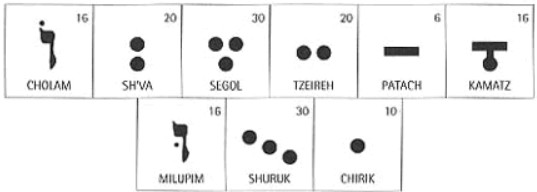
 This article is a follow-up to the previous one about the correct pronunciation of God’s name (יהוה), YHWH. Recall that our Sages teach that the nekudot vowels on God’s name are shva, cholam, and kamatz, meaning that the right way to pronounce the name would be “Yehowah”. A number of people reached out arguing that the letter vav is pronounced with a “v” sound, and therefore the name is “Yehovah”. Some referred to the work of Dr. Nehemiah Gordon, who makes the case for the vav being “v” partly based on words in Ezekiel (more on that below), and partly based on a poem by Elazar haKalir (c. 6th century CE) where he rhymes levi (לוי) with navi (נביא). The implication is that Jews as far back as the 6th century were pronouncing the vav as a “v” sound. Gordon himself notes that great rabbis like the Ibn Ezra were puzzled by this rhyme, because it was common knowledge then that the vav is really a “w” sound. Indeed, we find that the vav was a waw for most of Israelite and Jewish history. Below are ten big reasons for why the vav is a waw. Continue reading
Tag Archives: Latin
The Origins and Meaning of Sandak
In this week’s parasha, Lech Lecha, we read of God’s covenant with Abraham, which was sealed with a circumcision. For centuries, the most important honour given at a traditional brit milah is the role of sandak, or sandek, the person who holds the child during the circumcision. While everyone knows what a sandak is, few actually know what a sandak is! Where did this role come from? What does it mean? And what is the deeper spiritual significance behind it?