
Author Archives: Efraim Palvanov

The Secret of HaMotzi Lechem

This week’s parasha is Balak, named after the Moabite king who sought to curse Israel. The Zohar spends a significant amount of time on the mysteries of this parasha. Included within it is a distinct mystical text known as the Yenuka, the “Child”, describing some fateful encounters between the Sages and an angelic youth, who reveals to them profound Torah secrets. (The identity of this child and some of his teachings were explored in the second edition of Secrets of the Last Waters.) In the first encounter (Zohar III, 186a), Rabbi Yitzchak and Rabbi Yehudah are travelling and make a stop at the home of the famous mystic Rav Hamnuna Saba. They meet the Rav’s wife and child, then settle down to rest and eat. This sets the stage for the youth to reveal the secrets of things like netilat yadayim, mayim achronim, and zimun.

In another encounter (III, 188a), Rabbis Elazar, Abba, and Yose make a stop at the same home. The Yenuka senses that the Sages are perplexed by an issue regarding Ammon and Moav (which ties to this week’s parasha, Balak being the king of Moav). The youth segues into a discussion of the mystical secrets of grains and breads. These teachings help us understand why the hamotzi blessing is so powerful and “covers” all other foods. It also explains why the Sages described bread as the most wholesome food, and one that can save a person from many illnesses: In Bava Metzia 107b, for instance, we read that the gematria of “illness” (מחלה) is 83, while “bread” (לחמה) is its anagram, with the same value. This is to teach that eating a simple meal of bread and water—with the right blessings and meditations in mind—can cure a person of 83 illnesses. Continue reading
Bibi, Rebbe, and Israel’s Biblical Politics

This past Sunday, Benjamin Netanyahu was unseated from Israel’s premiership after twelve continuous years in that role. (Together with his earlier stint as prime minister in the 90’s, Netanyahu was Israel’s longest-serving leader.) The fact that this happened particularly this week is not coincidental. As Torah-observant Jews, we firmly believe that the Torah informs each week and each day of our lives, and the events of the world around us. The weekly parasha and Haftarah are not just repetitive stories, and the dates of Biblical events are not just ancient history, they affect the present reality. With that said, it is incredible to note that this week’s Haftarah tells us about Yiftach, the ninth Judge of Israel. In the official count, Netanyahu is Israel’s ninth prime minister. While this may seem insignificant at first glance, there is actual a profound connection there. Continue reading

The Kabbalah of Hillel and Shammai

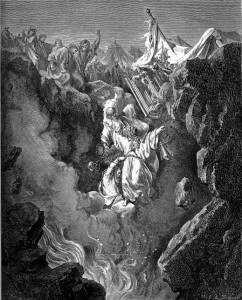
“Death of Korah, Dathan, and Abiram” by Gustave Doré

In parashat Korach, the Torah recounts the eponymous leader’s rebellion against Moses and Aaron. Korach’s rebellion was two-fold: both against the leadership of Moses, and against the priesthood of Aaron. Regarding the latter, Korach tried to bring the holy incense offering that only a kohen was allowed to do, and he failed miserably. The tremendous sin of Korach and his several hundred followers—along with the many Israelites that they had, at least temporarily, won over to their side—left a stain on the Jewish people for centuries afterwards. This stain was only rectified by another great dispute between two Jewish leaders and their schools: Hillel and Shammai. In fact, the Zohar says some incredible things about these disputes, which originate all the way back on the Second Day of Creation. Continue reading