
How can we better understand both the physical and spiritual worlds through the Periodic Table of the Elements? What can we learn about our own lives from the structure and anatomy of the atom? What is so special about the elements mentioned in Tanakh, including iron, copper, silver, and gold? And what is “God’s Element”? Find out in this fascinating class where we explore the profound connections between Torah and chemistry.
Tag Archives: Periodic Table
The Tribe of Ephraim
Who was the Biblical Ephraim and why did he merit to become the most powerful tribe in ancient Israel? Find out in this class as we take a journey through Ephraim’s past, present, and future. Along the way, we uncover the fascinating stories of the great Ephraimite Judges and Kings of the Holy Land (including Joshua, Deborah, and Samuel) and explore who might be the descendants of the Ephraimites today. Plus: Why does the Tanakh connect Ephraim to Amalek? Is the Messiah supposed to be a Judean or an Ephraimite (or both)? And has the prophecy of Ezekiel 37 been fulfilled in our days?
See also ‘The Truth About the Lost Tribes of Israel’.
For more on the spiritual significance of iron, see ‘Israel and the Iron Age’.
Israel and the Iron Age
In this week’s parasha, Ekev, Moses describes the rich land of Israel and says it is “a good land, a land with brooks of water, fountains and depths, that emerge in valleys and mountains, a land of wheat and barley, vines and figs and pomegranates, a land of oil producing olives and honey…” This first part of the description is well-known, and the source for the Seven Species of Israel. These are the seven plants that are particularly praiseworthy, and are native to the Holy Land: wheat, barley, grapes, figs, pomegranates, olives, and dates (which were used to make the honey that Moses is speaking of). The Zohar explains that all other species of plants have various angels appointed over them, but God alone oversees the growth and flourishing of the Seven Species (see Zohar Chadash on Ruth, 106a).
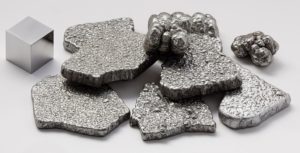 What we often overlook is the next part of Moses description: “a land in which you will eat bread without scarcity, you will lack nothing in it, a land whose stones are iron, and out of whose mountains you will hew copper.” Moses promises the Israelites a land full of iron and copper. This statement is actually just as significant as the Seven Species! What is so special about iron and copper that it was so enticing for Israel? Continue reading