Tag Archives: Science

Jacob’s Sheep: Genetics and Epigenetics in the Torah

geneticsThis week’s parasha is Vayetze, where we read of Jacob’s arrival in Charan and the details of his twenty-year sojourn there. During this time, Jacob married (twice), had a dozen children, and toiled for his cruel father-in-law Laban. Laban recognized that he had been blessed exceedingly on account of Jacob’s presence, and offered him a new wage for his labour. By this point, Jacob knew not to trust the sly Laban, and asked simply for ownership of all the speckled and spotted sheep. Since these imperfect-looking sheep were few in number, Laban readily agreed. It appears that both Laban and Jacob were well aware of the basic principles of genetics. Today, we know that sheep have 17 or so different colour alleles, and white colour is the dominant one.

For those who have forgotten high school biology: An allele is a variation of a gene. So, for example, all humans have a gene for eye colour, but have different alleles that code for the varying colours: some have alleles for blue eyes, while others have brown eyes, etc. Each person has two alleles for every gene – one from their mother, and one from their father. Certain alleles are “dominant”, while others are “recessive”. Dominant alleles are far more likely to be expressed. In humans, brown eye colour is dominant to blue eye colour, which is why some 55% of people have brown eyes, while only about 8% have blue eyes.
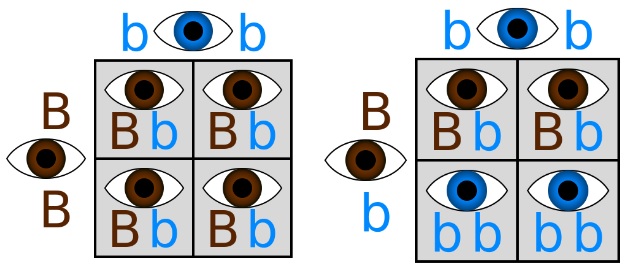
Basic "Punnet squares" showing the probabilities of eye colour for the children of fully brown-eyed and blue-eyed parents, and a brown-eyed parent who carries a blue allele.

Basic “Punnet squares” showing the probabilities of eye colour for the children of fully brown-eyed and blue-eyed parents, and a brown-eyed parent who carries a blue allele. (Courtesy: The University of North Carolina at Chapel Hill)

White is the dominant allele for sheep colour, so Laban assumed he was getting a terrific deal from Jacob, who was apparently ignorant of sheep genetics. In reality, Jacob knew sheep genetics quite well, and had something else up his sleeve. He only offered Laban this deal because he knew the greedy Laban would readily agree to it. So, how would Jacob outwit his father-in-law?

A Brief Introduction to Epigenetics

Jacob was evidently a far more knowledgeable geneticist than Laban, as he was aware of a concept that has only come to light in recent decades, called epigenetics. Epigenetics refers to various layers of heritability and genetic effects which are above, or outside of (hence the Greek prefix epi), the actual genetic code. In 2008, scientists defined an epigenetic trait as “stably heritable phenotype resulting from changes in a chromosome without alterations in the DNA sequence.” In simple terms: the chromosome that contains the genes is altered in some way without affecting the DNA sequence (the genetic code) itself. That alteration is heritable, too, and passed down from one generation to the next.

A number of epigenetic mechanisms have been discovered. The most common are methylations and acetylations, where small molecules are attached or removed from the DNA strand, causing it to coil either more tightly or less tightly. When the DNA coils more tightly, the gene is rendered inaccessible, and cannot be expressed. If uncoiled, the gene is exposed, and can be translated into the protein it codes for, thus expressing the trait.
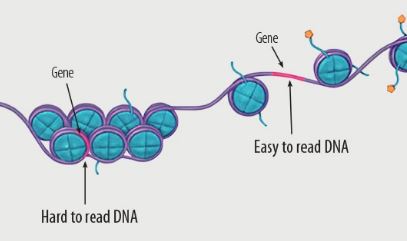
Coiling of DNA and gene expression. (Courtesy: National Institutes of Health)

Coiling of DNA and gene expression. (Courtesy: National Institutes of Health)

While epigenetics is quite complicated, its implications are tremendous. What it means in practical terms is that even though a person has a certain gene, that gene does not necessarily have to be expressed, as it can be silenced through epigenetic mechanisms. For example, a person who has a gene that predisposes them to cancer, God forbid, could potentially have that gene suppressed, thus eliminating their increased cancer risk. (Though they don’t work in this precise fashion, epigenetic cancer drugs are now available.) This also applies to people who might be genetically predisposed to obesity, diabetes, Alzheimer’s, or theoretically, any trait at all. A person who has both brown and blue alleles does not necessarily have to have brown eyes (which is what we would expect based on principles of classical, or Mendelian, genetics). The brown eye allele can be silenced, allowing the blue allele to be expressed fully.

The same is true for Jacob’s sheep. While the alleles for speckled and spotted sheep are recessive, the dominant white allele can be suppressed, resulting in more speckled and spotted sheep. In the Torah, we read how Jacob took tree branches and stripped away some of their bark to expose the inner white layers so that their pattern resembled that of the speckled and spotted sheep. He then placed these branches in front of the white sheep that were mating, and this resulted in the white sheep producing more speckled and spotted offspring. In this way, Jacob was quickly able to multiply the number of irregular-looking sheep in the flocks, increasing his own wealth, and leaving Laban in utter surprise.

What does science have to say about this? Is it really possible for the white sheep to produce speckled and spotted offspring just by looking at speckled and spotted tree branches? Which factors actually affect epigenetics?

The Epigenetics Revolution

In northern Sweden lies a small, isolated town called Överkalix. This town kept detailed historical records, including births, illnesses, and deaths, as well as harvests and food prices. Researchers started poring over this data and noted a number of emerging patterns. Surprisingly, those who grew up in times of relative abundance tended to live shorter and sicker lives, while those who grew up in times of relative famine were healthier and lived longer! Even more shocking was that these traits passed on to their children and grandchildren. The grandsons of those who grew up in times of abundance lived roughly six years less than grandsons of those who grew up in times of famine!

The Överkalix study opened the door to much more research on the subject, and today we know that not only does food impact our epigenetics, but so does smoking, alcohol, exercise, and just about every lifestyle choice we make. Moreover, recent studies find that not only do our actions impact our epigenetics, but even our thoughts do! In 2013, scientists discovered that meditation affects epigenetic mechanisms and results in, among other things, less inflammation in the body, better stress responses, and faster mental processes.
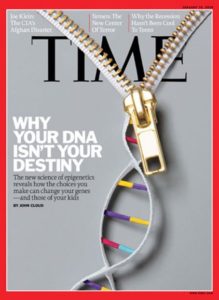
TIME Magazine Feature on Epigenetics

TIME Magazine Feature on Epigenetics

Epigenetics has brought about a revolution in biology, and a new realization that we are not slaves to our genome. We are very much in control of how our genes operate, and seemingly every choice we make affects our health and wellbeing, as well as the health and wellbeing of our children and grandchildren, since these epigenetic patterns are heritable. This is one of the most enlightening and liberating scientific findings, putting each person in the driver’s seat of their biological fate. It should also motivate us to make healthy lifestyle choices because, even if we might not care so much about our own health, the health of our offspring is directly impacted by our choices.

The Return of Jacob’s Sheep

If meditation plays a role in how our genes are expressed, there is no reason why other mental processes cannot do the same. By visually exposing his sheep to speckled and spotted images, Jacob may very well have triggered an epigenetic change resulting in suppression of white alleles. Neurologists have long known that there is essentially no difference in brain patterns when a person is literally seeing something versus when they are simply visualizing the same thing. If mental visualizations like meditation can affect the epigenome, then why not actual visual displays? Armed with this knowledge, Jacob outwitted his father-in-law and became an exceedingly wealthy man.

Of course, one cannot deny God’s role in the process, as Jacob himself explained to his wives (Genesis 31:7-9):

…your father mocked me and changed my wages ten times, but God did not permit him to harm me. If he would say, “Speckled ones shall be your wages,” all the animals would bear speckled ones, and if he would say, “Ringed ones shall be your wages,” all the animals would bear ringed ones. Thus, God separated your father’s livestock and gave it to me…

Changing one’s epigenetics is not so simple! As with everything else, a little help from Above is always needed. Jacob put in his effort by exposing the animals to stimulating sights, and God took care of the rest.
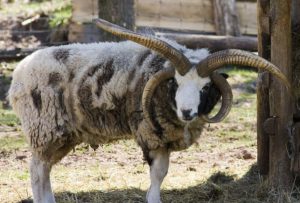
Jacob's sheep are unique not only in their colour, but also in that the rams have extra horns.

Jacob’s sheep are unique not only in their colour, but also in that the rams have extra horns.

Interestingly, this week saw the arrival of 119 “Jacob’s sheep” to Israel. This ancient breed of sheep originated in the Middle East approximately 5000 years ago. They were extirpated from the land of Israel long ago, but thankfully some survived and were brought across North Africa to Europe and finally America. The rare speckled and spotted sheep are in the Holy Land once more, perhaps a sign of the forthcoming return of all of Jacob’s children to their ancestral home.


The above is an excerpt from Garments of Light: 70 Illuminating Essays on the Weekly Torah Portion and Holidays. Click here to get the book! 
Are There Really Just Four Non-Kosher Animals With One Sign?

This week’s parasha is Shemini, “eighth”, referring to the eighth day of the Mishkan’s inauguration ceremony. On this day, the sons of Aaron, Nadav and Avihu, brought an unsanctioned incense offering, and perished because of it. The Torah goes on to describe various sacrificial and priestly laws before going into the rules for kosher food.

When it comes to land animals, those that have split hooves and chew cud are kosher. Animals that do not have both signs are not kosher. The Torah then goes on to give four examples of animals that have one of the signs, but not the other: the camel chews cud, but does not have a completely split hoof; the pig has a split hoof, but does not chew cud; and the shafan and arnevet (unknown species often described as rabbits, hyraxes, or badgers), who chew cud but do not have split hooves.

The Torah uses these as examples of non-kosher animals that were present in Israel and surrounding regions in those days; animals that were familiar to the Israelites. The Torah does not state anywhere that these must be the only four non-kosher animals in the entire world that possess one sign, and not the other. Yet, somehow it became popular for Torah lecturers, particularly in the world of kiruv (Jewish outreach), to suggest that thousands of years ago, the Torah predicted there are only four such animals in the whole world, and to this day, no other animals have been found that only offer one sign. While ancient Jewish literature has plenty of amazing foresight into scientific matters – which may be used to show people its deep wisdom and divinity – this particular argument is highly flawed. The truth is, there are other animals that have one of the two signs, and not the other. Let’s take a look at a few examples.

Hippos & Llamas

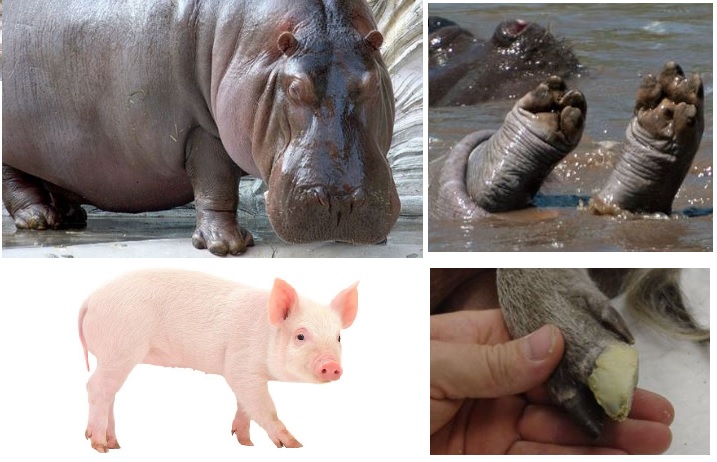
A famous problem was the case of the hippopotamus. A hippo has the same foot structure as a pig, and like a pig, does not chew its cud. (While it is herbivorous, eating mostly grass and aquatic plants, hippos have been noted to even eat meat on occasion.) A hippopotamus is thus a perfect example of another animal that has split hooves but does not strictly chew cud.

Hippo and Pig Hooves

Hippo and Pig Hooves

Despite this, people will still go out of their way to insist that the Torah’s four animals must be the only four. Some even suggest that the hippopotamus must really just be another type of pig! Of course, hippos are no more pigs than they are cows, or any other animal. In fact, today scientists know that hippos are most closely related to whales (and DNA analysis confirms this).

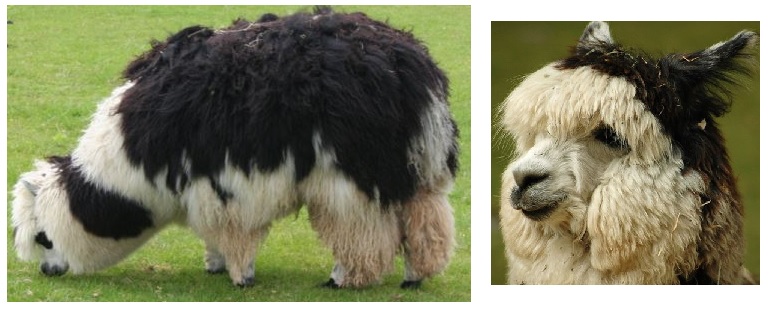
On the other side of the spectrum are the animals that chew cud but do not have fully-split hooves. The llama and alpaca are good examples. Once again, there are those that will insist these must be just another type of camel – even though they have wool, and no humps, are commonly used for their meat, and were once thought to be closer to sheep.

Huacaya Alpaca

Huacaya Alpaca

Some might argue that since camels and llamas are officially grouped by scientists in the same family of ‘camelids’, they can be thought of as being basically the same. In reality, a zoological ‘family’ could be a vast group with very different species. For example, donkeys and horses are in the same family, yet no one in Biblical times (or today) would consider them “the same”. In fact, a donkey has a totally different status in Judaism than a horse, and a firstborn donkey is required to be redeemed in Jewish law. No rabbi would permit a horse to be redeemed in place of a donkey!

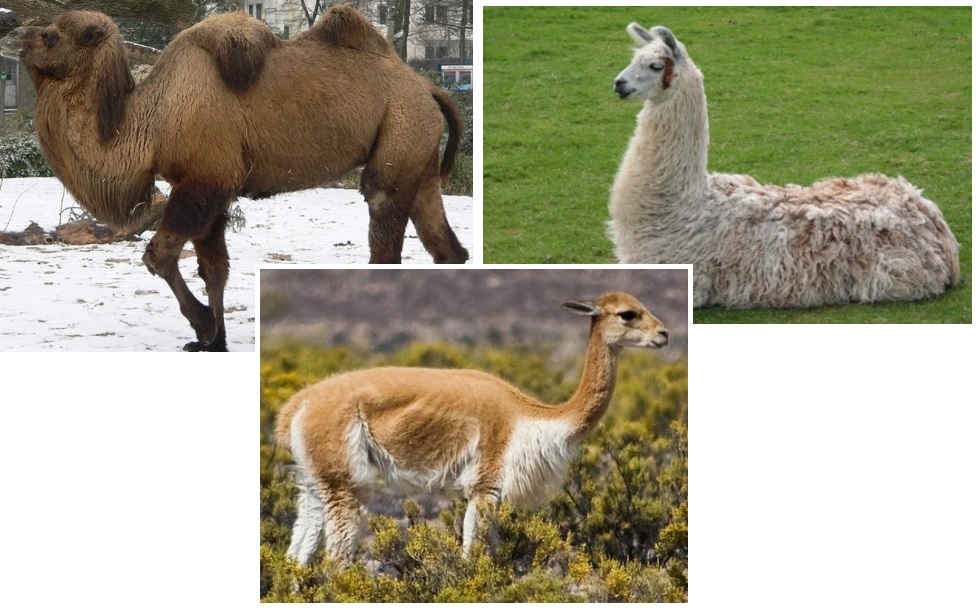
Camelids: Bactrian Camel, Llama, and Vicuana

Camelids: Bactrian Camel, Llama, and the deer-looking Vicuna

Truth in Kiruv

At the end of the day, the debate over the four animals listed in the Torah matters very little. The Torah does not claim these are the only four animals, so there is no need to make that conclusion. The problem is when people do make that conclusion, then use it as a proof to convince others of the divinity of Judaism. Those victims might be convinced initially, then go on to do their own research and discover that the “proof” was actually false, which may then serve to push them away from Judaism altogether.

Besides, there are many more solid arguments from ancient Jewish literature that can be used instead. Here are a couple of much better ones:

בְּשַׁעְתָּא דִּסְתִימָא דְכָל סְתִימִין בָּעָא לְאִתְגַּלְּיָא, עֲבַד בְּרֵישָׁא נְקוּדָה חֲדָא, וְדָא סָלֵיק לְמֶהֱוֵי מַחֲשָׁבָה. צַיֵּיר בָּהּ כָּל צִיּוּרִין חָקַק בָּהּ כָּל גְּלִיפִין… וְרָזָא דָא, בְּרֵאשִׁית בָּרָא אֱלֹהִים. זֹהַר, דְּמִנֵּיהּ כָּלְהוֹ מַאֲמָרוֹת אִתְבְּרִיאוּ בְּרָזָא דְאִתְפַּשְׁטוּתָא דִנְקוּדָה דְּזֹהַר סְתִים דָּא

זוהר חלק א (בראשית) דף ב/א, טו/א

“When God began to create, He first made a singular point, with which he then formed all formations, and carved out all things… And the secret of ‘In the beginning, God created…’ [Genesis 1:1] is radiance [zohar], from which all Utterances were created, in the secret of the expansion of the point of radiance.”

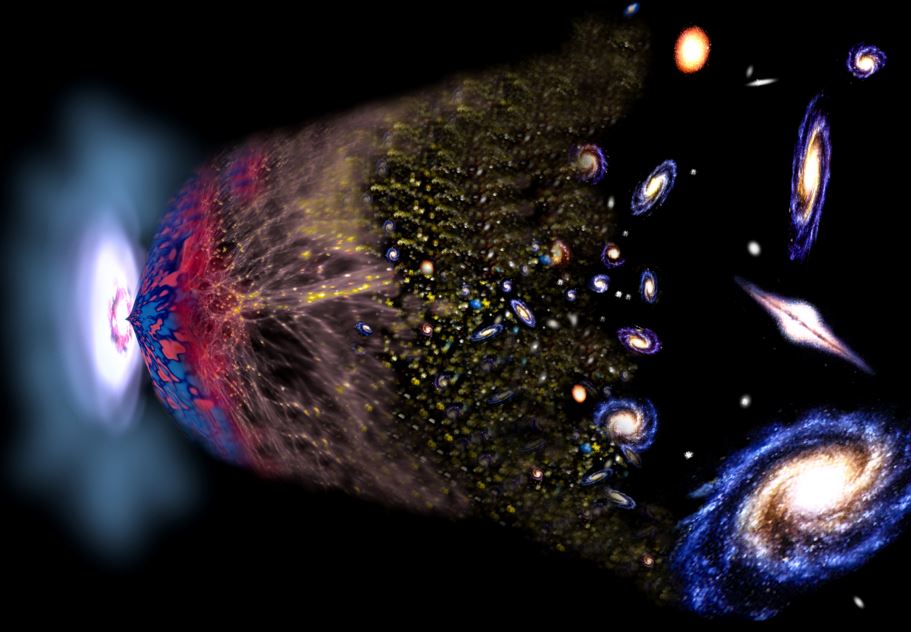
The Zohar, a mystical commentary on the Torah first published in the 13th century (based on much older teachings) describes that creation began from a singular point of radiation that expanded to give rise to all things. This is precisely what science tells us today with the Singularity that spawned the Big Bang, and the cosmic expansion and cooling that followed, giving rise to all matter. (See ‘Torah on the Big Bang and the Age of the Universe’ here for more.)

The Zohar also tells us:

דהא כל ישובא מתגלגלא בעגולא ככדור, אלין לתתא, ואלין לעילא, וכל אינון בריין משניין בחזוויהו משנויא דאוירא, כפום כל אתר ואתר

זוהר חלק ג (ויקרא) דף י/א

“… The entire planet is rotating in a circle like a ball. There are people below, and people above, all different in appearance due to the different atmospheres of each land.”

At least seven centuries ago, the Zohar already taught that the Earth is spherical, and more significantly, that it is rotating (which scientists only confirmed in the 19th century – see Foucault’s 1852 pendulum experiment). The Zohar also states that despite the Earth’s spherical nature, people live above and below, without falling off the planet, and that people living in different lands have different features because of different environmental conditions, hinting at biological adaptation.

Credit: Dailygalaxy.com

Credit: Dailygalaxy.com

What Are the Jewish People “Chosen” For?

This week’s very powerful Torah portion is Va’etchanan. In it, Moses continues his farewell speech to the nation before his death. Among other important points, he recaps the Ten Commandments, and proclaims the text of the Shema. Included in this speech are a number of significant prophecies and statements.

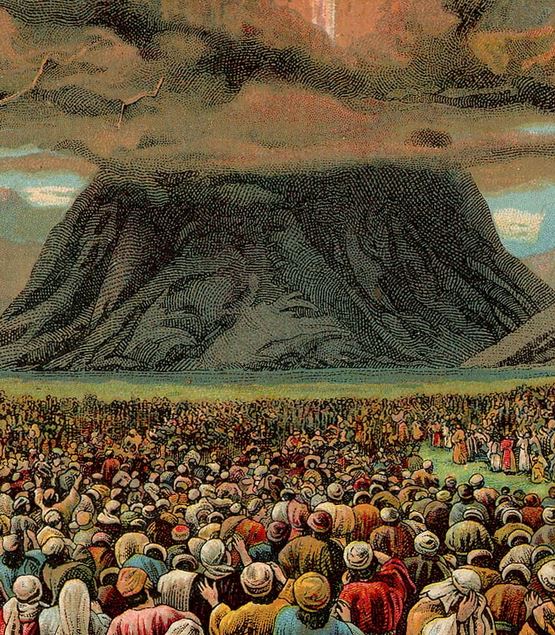
Moses reminds the people that what they witnessed at Mt. Sinai was a totally unique, once-in-history event, where God brought forth a divine revelation to the entire nation, with every single individual experiencing a prophetic vision. Moses tells us to always remember that this has never happened elsewhere in history (Deuteronomy 4:32-34). Although modern Biblical critics will immediately point out that there is no proof that such a national revelation ever took place, Moses tells us that no other people has ever even claimed such a thing! To this day, there is no nation or religion that claims to have started with a national revelation. Strangely, only the Jewish people make such a claim.

National Revelation at Sinai (Providence Lithograph Company, 1907)

A 1907 Illustration of the National Revelation at Sinai

(Although some point out that the Aztecs seem to have a similar story of their god guiding them through a Wilderness to their very own promised land in Mexico, most modern scholars agree that this myth is very recent, adopted from the Jewish story in the Torah. The Aztecs picked it up from Christian missionaries and made it their own.)

Another prophecy in this week’s portion is that the Jewish people will be scattered around the world, and will always remain small in number (4:27). Three thousand years later, the prophecy still holds true, with just 0.2% of the world’s population being Jewish. That’s quite amazing, as it defies normal growth patterns. There are roughly two billion Christians in the world, and their religion emerged over a thousand years after Judaism. The number of Muslims is also steadily nearing two billion, and they came around even later, roughly 1400 years ago. Hindus, Buddhists, Sikhs, and virtually all other major religions outnumber the Jews. Even the Bahai faith, which started just 160 years ago is quickly catching up, and will soon outnumber Judaism, too.

Moses suggests that it is precisely because we are small in number that God chose us (7:7). Perhaps this can be explained with simple economics of supply and demand. The more of something that there is, the less value it is perceived to have. (Note the word perceived; all human life is of course equal.) The sworn enemies of the Jews seem to agree: Hamas thought it was totally fair to demand 1000 Palestinians to be freed in exchange for one Jew – Gilad Shalit!

The big question is: why did God “choose” us?

The Chosen People

To understand why God chose the Jewish people, and what exactly we are chosen for, one must look back to the beginning of the whole story. Originally, there were no Jews and no Torah. There were only Adam and Eve, in a perfect world, living with God’s revealed presence. The problem of this “perfect” world was that Adam and Eve were essentially unable to truly enjoy it. Having never experienced anything “bad”, they had no concept of what is “good” either. Life was just bland.

In the middle of Eden, God placed the Tree of Knowledge of Good and Evil. By consuming of its fruit, Adam and Eve would be introduced to these new concepts. They would now have to experience hardship and confront evil, but measure for measure, they would now also be able to enjoy goodness and pleasure. After all, it is only because we have had negative experiences that we can truly understand, appreciate, and strive for the positive ones.

Adam and Eve had a choice. They chose the Tree of Knowledge. With that, their perfect world was over. However, this was only temporary. God’s intention was for mankind to live in a world of goodness, not one of suffering. Yet, in order to make the most of the Garden of Eden, mankind first had to experience evil, overcome it, and transcend it. Ever since Adam and Eve were banished from the Garden, their mission has been to remove evil from their midst, restore goodness, and finally return to that Garden.

Adam and Eve were unable to do this, and neither were their children, or grandchildren. As humans multiplied, they only become more and more sinful, pushing themselves further away from Godliness and goodness. After ten generations, God hit the “restart” button to try again with Noah. Noah ultimately failed as well, and once more each passing generation only fell further into immorality. It took another ten generations before things started to change.

Abraham’s Revolution

Abraham was the first person to properly recognize what the universe was all about. He understood that the current state of the world was wrong. Life was never meant to be this way. Abraham thus made it his life’s mission to repair the world. He travelled across the Middle East and spread monotheism, righteousness, and Godliness wherever he went. Abraham embodied all of the traits necessary to restore the world to a state of Eden. And so, it wasn’t so much that God chose Abraham, but rather, that Abraham chose God.

To complete the task of repairing the world would require more than just one man. This huge mission would require a nation. Thankfully, Abraham’s son Isaac continued in his father’s path, as did Jacob the grandson, and his own twelve sons. From these twelve sons an entire nation was born – a nation whose mission would be to restore the world to the Garden of Eden.

History shows that the Jewish people have indeed done so. The Jews’ moral contributions to the world have been vast, and described in books like Ken Spiro’s WorldPerfect – The Jewish Impact on Civilization and Thomas Cahill’s The Gifts of the Jews, among others. The Jews’ contributions to science, medicine, and technology may be even greater. Some of the most important minds behind breakthroughs like the personal computer and the internet, the cellphone and lasersvaccines and automobiles were Jews, as were some of the greatest figures in biology, chemistry, mathematics, and physics. It is also important not to forget the immeasurable spiritual contributions of the Jews to the world.

Of course, Jews are not perfect. The Torah itself attests to this many times, even in this week’s parasha that admonishes the nation on multiple occasions. At the end of the day, the name of our nation is Israel, which literally translates as “struggles with God.” Our history has been a difficult one, full of struggles and challenges. It is clear, though, that we are nearing the end of this period, and we will soon see the restoration of the Garden of Eden, as God originally intended.


The article above is adapted from Garments of Light – 70 Illuminating Essays on the Weekly Torah Portion and Holidays. Click here to get the book!