
This week we begin reading the fifth and final book of the Torah, Sefer Devarim. This book has a total of 955 verses, an important number in Judaism. It is said that there are 955 levels to the Heavens (see Ma’aseh Rokeach on Mishnah, Kinnim). This is based on a verse in Devarim where Moses says: “Behold, to Hashem, your God, belong the Heavens [hashamayim], and the Heaven of Heavens [shmei hashamayim], and the Earth and all that is on it!” (Deuteronomy 10:14) The numerical value of “Heavens” (השמים), when counting the full mem sofit, is 955. Meanwhile, the word “behold”, hen (הן), has a value of 55, to teach that the top 55 levels of Heaven are reserved solely for God. (Ma’aseh Rokeach says that the angel Metatron has access to 900 levels, but it is only Hashem beyond that.)
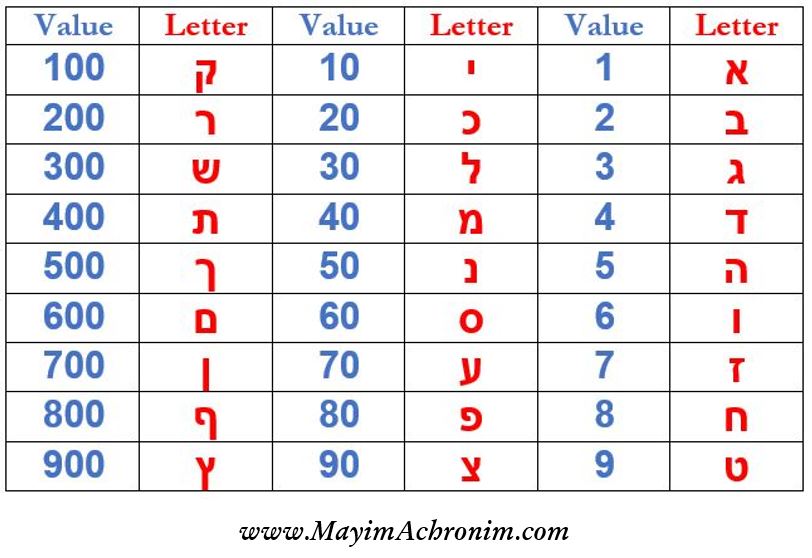
It is most fitting that Devarim has 955 verses, like the levels of Heaven. Indeed, the “Heavens” are a constant motif throughout the final book of the Torah, more so than in any other book. By my count, I found 39 instances of the word shamayim (and its variations) in Sefer Beresheet, 12 in Shemot, none in the next two, and 40 in Devarim. Included in the latter are some of the most critical and famed verses of the Torah, including lo b’shamayim hi, that the Torah “is not in Heaven” (Deuteronomy 30:12) and the Shema passage that we recite multiple times a day saying that God will “stop up the Heavens” if we do not fulfil his commandments (Deuteronomy 11:17), and that He will bless us greatly “like the Heavens” if we do (Deuteronomy 11:21). There’s also Hashem’s promise that He will ingather us back to the Holy Land from the “ends of the Heavens” (Deuteronomy 30:4), and Moses’ final divine song that starts Ha’azinu hashamayim (Deuteronomy 32:1).
Another interesting phenomenon that has been pointed out about Devarim is that its verses seem to allude to the historical years that they would correspond to. We are currently in the Jewish year 5786 AM (Anno Mundi, “year of the world”), and the Torah has a total of 5845 verses. (The Talmud says the Torah should have 5888 verses, and for a solution to that problem, see ‘The Torah’s Missing Verses’ in Garments of Light, Volume Two.) It’s not clear exactly where this concept comes from. Some bring it down in the name of the Vilna Gaon; I believe I first heard it years ago from Rabbi Benjamin Blech.
Before we get into it, it is important to mention that doing this kind of analysis requires lots and lots of counting and a good calculator, along with precision and persistence. I spent hours counting and recounting verses to make sure it’s all lined up correctly. I have found that others who have written or spoken about this have slightly different parallels, sometimes off by a verse or two or three. Part of the problem is that there are variations in chapter and verse numbering. In fact, it is relatively well-known that the delineation of chapters and verses was not historically a rabbinic invention at all. It was actually pioneered by Karaites and Christians!
That said, the chapter and verse delineations did become universally accepted, and are now regularly used by our rabbis and in our sefarim. It says in Psalms that God Himself “counts in the register of peoples” (87:6). Meaning, whatever conventions humans developed to count and organize our works and our society—Hashem follows those same conventions! Of course, it was all foreseen by Hashem long before Creation anyway, so there is no reason to outright discredit the verses-years theory because of this. When lining up the verses to the years properly, we do indeed find some striking (if not prophetic) parallels.
The verses corresponding to the years from the rise of the Nazis (in 1933, or 5693 AM) to the end of the Holocaust (in 1945, or 5705 AM) are Deuteronomy 29:19-30:3. This passage is speaking about a case where a particular clan or tribe within Israel strays from God and Torah. What will Hashem do with this wayward segment of the Jewish people?
God will not forgive them. Rather, God’s anger and passion will rage against them, until every curse recorded in this book comes down upon them, and God blots out their name from under the Heavens. God will single them out from all the tribes of Israel for misfortune, in accordance with all the curses of the covenant recorded in this book of Torah. And later generations will ask—the children who succeed you, and foreigners who come from distant lands and see the plagues and diseases that God has inflicted upon that land, all its soil devastated by sulfur and salt, beyond sowing and producing, no grass growing in it, just like the upheaval of Sodom and Gomorrah, Admah and Zeboim, which God overthrew in fierce anger. And all the nations shall say “Why has God done this unto this land? What is this awful wrath?” Then men shall say: “Because they forsook the covenant of Hashem, the God of their fathers, which He made with them when He brought them forth out of the land of Egypt; and went and served other gods, and worshipped them, gods that they knew not, and that He had not allotted unto them; therefore, the anger of Hashem was kindled against this land, to bring upon it all the curse that is written in this book…”
We did indeed see the horrific destruction of Ashkenazi Jewry in the period corresponding to these verses, and tragically they did experience all the terrible curses of the Torah (as graphically described in Bechukotai and Ki Tavo). But the passage has a positive conclusion, with the verse corresponding to 1945 and the end of the war (and the migration of many survivors to the Holy Land) being: “Then Hashem, your God, will reverse your captivity, and have compassion upon you, and will return and gather you from all the peoples where Hashem, your God, had scattered you.”
Following the war, the next few years (1946-1949, or 5706-5709) saw the rise of the State of Israel, with mass Jewish aliyah, armament and training of the Haganah and its transformation into the IDF, the UN vote in 1947, then the exit of the British and the declaration of Independence in May of 1948. This was followed by a decisive Israeli victory in the War of Independence, the consolidation of its position and power in 1949, along with the establishment of the first Knesset that year. These years correspond to the verses Deuteronomy 30:4-7, which say:
Even if your exiles are at the ends of the world, from there Hashem, your God will gather you—from there you will be fetched. And Hashem, your God will bring you to the land that your ancestors possessed, and you shall possess it; and you will be made more prosperous and more numerous than your ancestors. Then Hashem, your God will open up your heart and the hearts of your offspring—to love Hashem, your God with all your heart and soul, in order that you may live. And Hashem, your God will inflict all those curses upon the enemies and foes who persecuted you.
The next key sequence of events was the years leading up to the Six-Day War, in which Israel finally liberated and reunified Jerusalem, recaptured its ancestral Biblical lands all the way up to the Jordan River (with all the many holy sites therein), and became the dominant superpower in the region. The plans for the Six-Day War were prepared some years in advance, and depended on vital information brought by Israeli spies, most famously Eli Cohen in Syria (tragically captured in 1965). Meanwhile, the Arabs were preparing their own plans to destroy Israel. It was in 1963 that Egypt, Iraq, and Syria formed the United Arab Republic, with a coordinated army that could destroy the Jewish state. Several weeks before the Six-Day War, Egyptian President Nasser declared: “We shall not enter Palestine with its soil covered in sand, we shall enter it with its soil saturated in blood.” Meanwhile, his partner Syrian President Hafez Assad said: “Our forces are now entirely ready not only to repulse any aggression, but to initiate the act ourselves… the time has come to begin a battle of annihilation.” Those critical years, 1963-1967 (or 5723-5727 AM), correspond to the verses of Deuteronomy 31:1-5, the start of parashat Vayelekh:
Moses went and spoke these things to all Israel. He said to them: “I am a hundred and twenty years old today; I can no longer go out and come in; and Hashem has said unto me: ‘You shall not go over this Jordan, Hashem your God, He will go over before you; He will destroy these nations from before you, and you shall dispossess them; and Joshua, he shall go over before you, as Hashem has spoken.’ God will do to them as was done to Sihon and Og, kings of the Amorites, and to their countries, when they were wiped out. God will deliver them up to you, and you shall deal with them in full accordance with the instruction that I have enjoined upon you.”
Amazingly, Hashem promises a miraculous victory like that which wiped out Sihon and Og, and in the Six-Day War the armies of Nasser and Assad were completely wiped out, too, in miraculous fashion. Moreover, Israel reclaimed all the lands up to the Jordan River, which is explicitly mentioned in this passage as well.
What about references to the “End of Days” and Ikvot haMashiach? As I’ve discussed countless times over the years (including the most recent shiur and this old essay), the Zohar has a famous prophecy about the final starting point for the End of Days, based on the notion of “Heavenly days”. The Sages taught (based on Psalm 90) that each millennium of human history is one “Heavenly day”. Thus, “Friday afternoon”, or history’s Erev Shabbat, begins six hours before the cosmic Sabbath, meaning the year 5750, which began in September of 1989. Beautifully, if we parallel the years to the verses once more, we find the following corresponding passage in Deuteronomy 31:28-29:
Assemble unto me all the elders of your tribes, and your officers, that I may speak these words in their ears, and call Heaven and Earth to witness against them. For I know that after my death you will deal corruptly, and turn aside from the way which I have commanded you; and evil will befall you in the End of Days; because you will do that which is evil in the sight of Hashem, to provoke Him through the work of your hands.
Back in Time
What happens when we go further back in time? Does the correspondence of verses and years still work?
Let’s say we go back to 1492 and the Spanish Expulsion. That would be 5252 on the Jewish calendar, matching up with Deuteronomy 12:21. This verse begins ki irchak mimkha hamakom, “If the place where Hashem has chosen to establish the divine name is too far from you…” One might find an allusion here to Iberia, which was historically considered the furthest possible Jewish community, being all the way on the western end of the Old World. When the prophet Ovadiah (1:20) refers to the most distant Jewish exile, he says they are as far as Tzarfat and Sepharad, traditionally understood as France and Spain, as Rashi comments here. Rashi also suggests that the northern tribes of Israel were exiled to France, while the Judeans were exiled to Spain.
Another extremely significant year in world and Jewish history is 1648 (or 5408). This is when the Thirty Years War (relatively, the deadliest conflict in human history) ended and when Shabbatai Tzvi declared himself the messiah and started to gain a massive following that made a permanent impact on the future of Judaism. The corresponding verse is Deuteronomy 20:12 which says that if a city does not want to make peace with Israel, and goes to war with Israel, then Israel should besiege and blockade that city to defeat it. Interestingly, Shabbatai Tzvi declared himself the messiah in his birthplace of Smyrna. At that time, the Ottomans were locked in a maritime war with Venice, referred to as the Cretan War (1645-1649). Throughout the conflict, Venice had blockaded and besieged various important Ottoman ports, including Smyrna! Tzvi revealed his “messiahship” amidst this crippling conflict, at a time when Jewish merchants in Smyrna were struggling. And it was shortly after the war (and the siege) ended that Tzvi was expelled from Smyrna by its rabbinate.

‘Battle of the combined Venetian and Dutch fleets against the Turks in the Bay of Foja [Smyrna] 1649’ by Abraham Beerstratenm (1656)
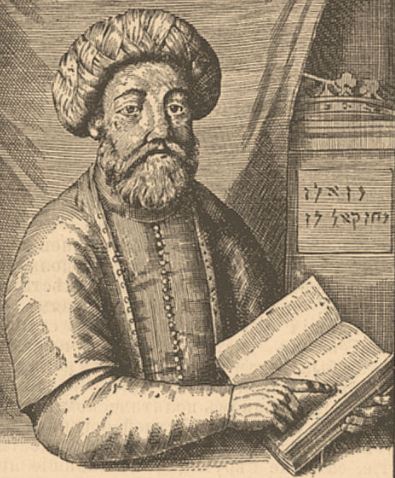
Shabbatai Tzvi (1626-1676)
Tzvi’s movement continued to grow until 1666, when he was captured by the Ottomans and threatened with execution. The coward and charlatan that he was, Tzvi converted to Islam to spare his life, proving to most of the Jewish world that he was a false messiah. This was 5426 on the Jewish calendar, corresponding to Deuteronomy 21:10, which says “When you take the field against your enemies, and Hashem your God delivers them into your power and you take some of them captive…” When the enemies of Israel are taken captive, and an Israelite wanted to marry a particular “beautiful captive”, she would have to first undergo a month-long process that involved, among other things, removing her “captive garments” (21:13). I believe this is alluding to the capture of Shabbatai Tzvi and his conversion to Islam, with the removal of his traditional Jewish garments and his adoption instead of Muslim dress and an Ottoman turban.
Now, when I tried looking up verses and years going further back, before Devarim, I did not find any successful parallels. For instance, the year 70 CE when the Temple was destroyed corresponds to Numbers 6:9, describing details of the nazir. The birth of Abraham in 1812 BCE (or 1948 AM in the traditional Jewish count) would be Exodus 16:1, describing how the Children of Israel arrived at the Wilderness of Sin following the Exodus. Nothing particularly salient about those. The Exodus itself in 1312 BCE (or 2448 AM) would be Exodus 32:13, which says: “Remember Your servants, Abraham, Isaac, and Israel, how You swore to them by Yourself and said to them: I will make your offspring as numerous as the stars of heaven, and I will give to your offspring this whole land of which I spoke, to possess forever.” This one is somewhat connected to the Exodus theme, but not particularly strongly.
Therefore, I think the verses-years correspondence works only for Sefer Devarim, and this is one of its unique elements. Granted, events and years in ancient history are difficult to pinpoint chronologically, and we don’t necessarily know exactly when certain events happened. This makes it all the more challenging to dig up years and verses prior to Devarim. The past is murky, but what about the future?
The Years Ahead
The current year 5786 would correspond to the verse in Ha’azinu: “Lo, I have it all put away, sealed up in My storehouses” (Deuteronomy 32:34). What is sealed up in God’s storehouse? Sforno comments by tying it to a similar verse in Isaiah 63:4 referring to the long-awaited Judgement Day, and to a verse in Daniel 12:9 that says that the End Times are sealed. The Vilna Gaon comments (in Aderet Eliyahu) that all the evils that were done to Israel are “stored up” and God will respond measure-for-measure on the forthcoming Judgement Day. When will this day of vengeance come? The following verse (corresponding to next year, 5787) is: “For My vengeance and recompense, at the time that their foot falters, as their day of disaster is near, and destiny rushes upon them.” And the verse that follows (for 5788) seals the deal: “For God will vindicate His people, and take revenge for His servants.” The passage ends seven verses later (corresponding to 5795, or 2035) with these words: “O nations, acclaim this people! For He will avenge the blood of His servants, wreak vengeance on their opponents, and cleanse His people’s land.” This is the last verse of the song of Ha’azinu, and then we are told that “Moses came, together with Hoshea son of Nun, and recited all the words of this poem in the hearing of the people.” (Deuteronomy 32:44)
Altogether, there are 5845 verses, meaning the final year allusion would be to 2045. Does that imply Mashiach has to come by 2045? Will history as we know it come to an end by then? We might draw further insight on this from another intriguing verses-years possibility. As mentioned in a recent class (on Trump & Iran), there is a striking correspondence between the 150 chapters of Psalms and the years starting in 1901, ie. Psalm 1 would parallel 1901, Psalm 17 would be 1917, and so on. We find that Psalm 48, corresponding to 1948, talks about neighbouring kingdoms uniting against Israel and trying to destroy it, but then fleeing in panic: “See, the kings joined forces; they advanced together. At the mere sight of it they were stunned, they were terrified, they panicked…” (v. 5-6) Meanwhile, the Jews celebrate: “Let Mount Zion rejoice! Let the towns of Judah exult, because of Your judgments.” (v. 12) The Zionists rejoice!
Psalm 67 is the famous “Menorah Psalm” that King David had emblazoned on his shield when he went to war. In the corresponding year 1967, Israel went to war and liberated and reunified Jerusalem, the City of David. Psalm 89, corresponding to 1989, speaks about the coming of Mashiach and his anointing (v. 21), and in 1989 archaeologists announced the rediscovery of the ancient anointing oil. Psalm 90 corresponds to 1990 and 5750. Recall that 5750 is the final starting point for Ikvot haMashiach, based on the notion that each Heavenly “day” is 1000 human years. What is the key proof-verse for the notion that 1000 human years is a Heavenly “day”? Psalm 90, which says “For in Your sight a thousand years are like yesterday that has passed”! Psalm 126 begins with “when God restored the captivity of Zion, we were like dreamers… Then shall they say among the nations, ‘God has done great things for them!’” This is just like 2026 began with the return of the last captive from October 7.
Looking ahead, Psalm 127 begins with God planning to rebuild His House: “Unless God builds the House, its builders labour in vain on it; unless God watches over the city, the guard keeps vigil in vain.” Psalm 145, which would correspond to 2045, and the final year of Sefer Devarim, is the powerful Ashrei that we recite thrice daily. It ends by saying that “all flesh shall bless His holy name forever and ever.” Remember also that Psalm 145 is an acrostic, but is missing the nun verse. Some say it will be restored with the coming of Mashiach. (On what that verse might be, based on ancient archaeological evidence, see this class.)
After Psalm 145, we only have five more “Hallelujah” psalms describing the incredible wonders of the forthcoming messianic age. This includes God “reigning over Zion forever” (146:10), “God rebuilds Jerusalem, gathering in the exiles of Israel— healing their broken hearts, and binding up their wounds.” (Psalm 147:2-3) The whole cosmos praising God (148), Israel singing a new song in joy at the End of Days (149), and finally God being praised in His rebuilt Sanctuary, and all souls coming there and singing Halleluyah! (150)
That would take us to 2050. This is a significant year for another reason: the Kabbalists taught that the generation of Mashiach is a reincarnation of the Exodus generation, and that the Final Redemption will mirror the First Redemption. Since the First Redemption ended 190 years earlier than expected (with the traditional count being that Israel spent only 210 years in Egypt, and not the full 400 that was originally decreed), one can posit that the Final Redemption will come 190 years before the deadline, too. So, going back 190 years from the 6000-year deadline brings us to 5810, or 2050. And if the verses in Devarim and Tehillim really do correspond to forthcoming years, we have much to look forward to very soon.