In honour of Yom Ha’Atzmaut this week—Israel’s Independence Day—let’s take a journey back into the ancient and little-known early history of Zionism. In the past, we have already explored how the Zionist movement did not begin with secular Jews in the late 19th century, as is commonly thought, but decades earlier with religious Jews. In fact, the history of Zionism dates back even further when we properly define Zionism simply as a movement to restore the Jewish people to their ancestral homeland. This did not begin in modern times, but all the way back in the 1st century. As soon as the Romans had destroyed the Jerusalem Temple in 70 CE and exiled a large majority of Jews, there has been a deep yearning to return to the Holy Land and rebuild.
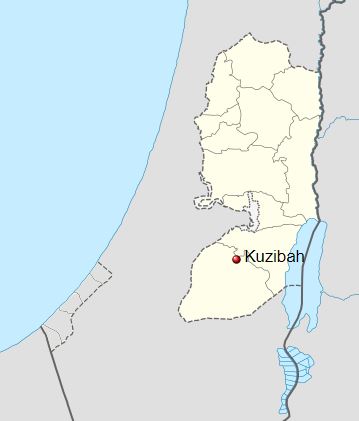 The first such “proto-Zionist” movement was that of Shimon bar Kochva (d. 135 CE). Shimon is believed to have hailed from the small Judean town of Koziba, and was originally referred to as Shimon bar Koziba. The Emperor Hadrian made plans to flatten Jerusalem and rebuild it as Aelia Capitolina, with a shrine to Jupiter on the Temple Mount. Jews were understandably incensed. Bar Koziba managed to organize and train a group of Jewish rebels that miraculously succeeded in expelling the Roman forces from the Holy Land. They cleared the Temple Mount and even began construction of a new Holy Temple. Jews started returning to Israel, and it appeared that the ancient prophecies were beginning to be realized. Continue reading