
The following is an excerpt from Garments of Light, Volume Two. Get the book here.
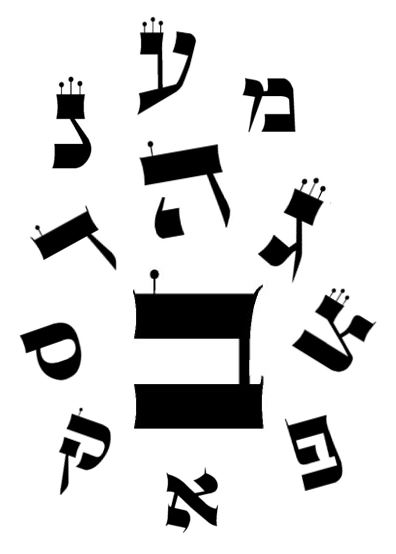 Vayigash elav Yehudah, “And Judah approached him…” The Zohar begins its commentary on this week’s parasha by briefly citing a well-known Midrash about how the letters of the Hebrew alphabet approached God seeking to be the letter through which God creates the universe. The account is presented in full in an ancient text called Otiot d’Rabbi Akiva, and is also referenced to in multiple places, including the first chapters of Beresheet Rabbah and Yalkut Shimoni. The Zohar itself provides a detailed account in its first pages (I, 2b-3b):
…when the Holy One, blessed be He, desired to create the world, the letters of the alphabet appeared before Him (in reverse order). First came Tav and said: “Master of the Universe, may it be Your will that You create the universe with me, for I am Your seal of Truth [emet], and You are called Truth. It would therefore be fitting for the King to start His Creation with the letter of Truth.”
The Holy One, blessed be He, replied: “You are right and worthy, but I shall not create the universe with you, for you will be the mark upon the foreheads of the faithful, who fulfil the Torah from Aleph to Tav. With your mark, they shall die, for you are the seal of death [mavet].”
Being the last letter of the alphabet, Tav is the “seal” of God, and God’s seal is Truth. Tav argued it should be the letter of Creation—and the first letter of the Torah—because it represents Truth. God responded that Tav also represents death. The Talmud (Shabbat 55a) states that when a person is “marked” for death, the mark is a letter Tav on their forehead. And so, the universe cannot be created with a Tav. Next came the letter Shin: Continue reading
 In this week’s parasha, Beha’alotcha, we read how a year had passed since the Israelites had left Egypt, and God was now reminding the nation to commemorate Pesach. However, some people were spiritually impure at Pesach time because they had handled a corpse and were unable to take part in the Paschal offering. They approached Moses and asked “why should we be excluded so as not to bring the offering of the Lord in its appointed time, with all the children of Israel?” (Numbers 9:7) Moses was not sure how to answer them, so he took the case up to God, after which God told Moses about Pesach Sheni, the “second Passover” that could be done a month later in Iyar for those who had missed Passover in Nisan.