
*Note: the discussion below may be of a sensitive nature for some. Please read with an open mind, and please commit to reading it all the way to the end.
When reading the Torah’s first portion, Beresheet, one inevitably thinks of the origins of this universe, particularly of cosmology and cosmogony, as well as of astronomy, biology, genealogy, and ancient human history. Some of the biggest questions of faith are intricately tied with this parasha: How exactly did the universe come about? How old is the universe? Where did life come from, and what force stands behind the marvelous biodiversity in nature? The former two questions have been addressed in the past (see ‘Torah on the Big Bang and the Age of the Universe’). Now we shall look at perhaps the most controversial subject within the “Torah vs. Science” debate, and a subject that is poorly understood both in the religious world and in the secular world—evolution. Continue reading
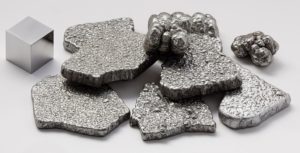 What we often overlook is the next part of Moses description: “a land in which you will eat bread without scarcity, you will lack nothing in it, a land whose stones are iron, and out of whose mountains you will hew copper.” Moses promises the Israelites a land full of iron and copper. This statement is actually just as significant as the Seven Species! What is so special about iron and copper that it was so enticing for Israel?