
Tag Archives: Lubavitcher Rebbe

Understanding Chabad and 770

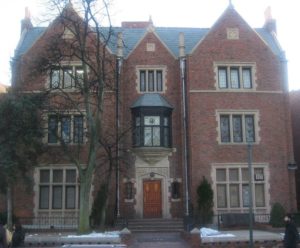
770 Eastern Parkway, global headquarters of Chabad

At the start of this week’s parasha, Vayetze, Jacob sees a vision of a Heavenly Ladder and receives a blessing from God. He is told: “you shall break out [u’faratzta] westward and eastward and northward and southward; and through you shall be blessed all the families of the Earth and through your seed.” (Genesis 28:14) The term u’faratzta, translated as “break out” or “gain strength” or “spread out”, is something of a slogan and rallying cry among Chabad Hasidim, who’ve made it their mission to bring Judaism to every corner of the globe, “westward, eastward, northward, southward”. It has further significance for Chabad because the verb faratzta (פרצת) has a numerical value of 770, as if alluding to Chabad headquarters at 770 Eastern Parkway in Brooklyn. It was the seventh and last Lubavitcher Rebbe, Rabbi Menachem Mendel Schneerson (1902-1994), who transformed Chabad from a small Hasidic group into an international phenomenon. What was his vision? Why did he want to put a “Chabad House” within reach of every Jew around the globe? And what does it really have to do with bringing Mashiach and the Final Redemption?
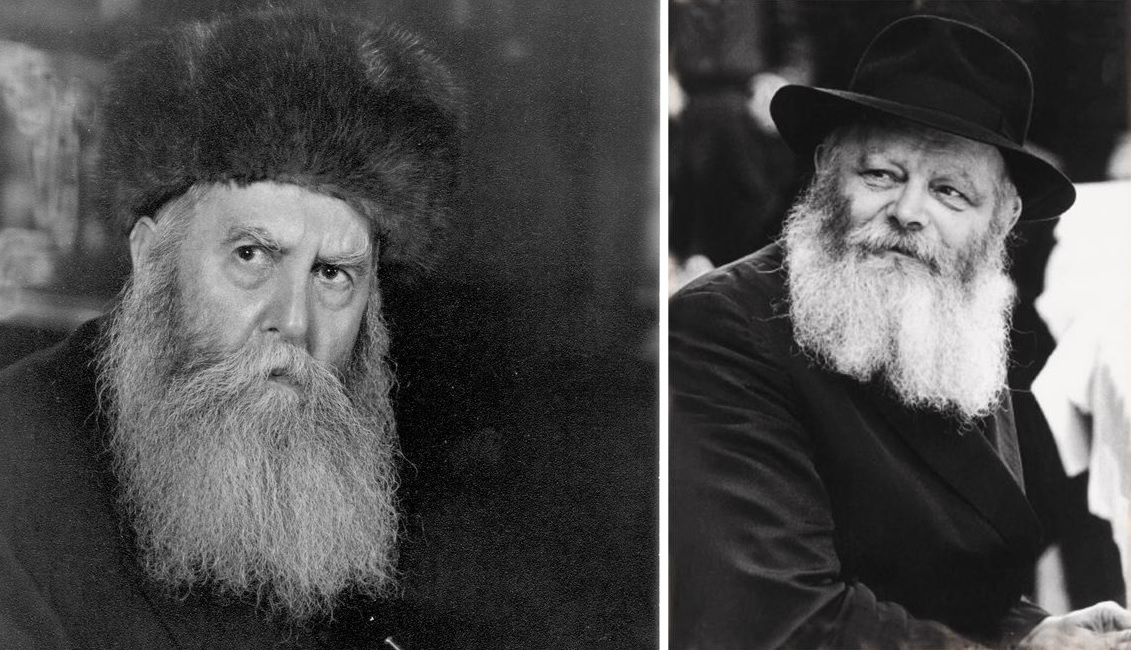
The sixth and seventh Lubavitcher Rebbes.

In 1940, the previous Lubavitcher Rebbe, Rabbi Yosef Yitzchak Schneersohn (1880-1950) arrived in New York City, having fled Warsaw following the Nazi invasion. As the Rebbe was in a wheelchair, he needed an accessible home. A former medical office at 770 Eastern Parkway was the perfect choice, and was purchased for him to live in and to serve as the Chabad main office. His son-in-law (who would become the next Rebbe in 1951) arrived the following year, was put in charge of Chabad’s educational arm, Merkos L’Inyonei Chinuch, and got some office space on the first floor, too. He would take over the movement in those critical years following the Holocaust and the founding of the State of Israel. While his predecessors were officially “anti-Zionist”, the new Lubavitcher Rebbe took a different approach, engaging closely with the State and advising its leaders regularly. While he never visited Israel, he actually never left New York at all from the time he became Rebbe. The groundbreaking events that took place in the years before he took on Chabad leadership had an indelible impact on his vision and philosophy. He was convinced that the time for Redemption had arrived, and he made it clear in his very first discourse, Basi l’Gani.

The Rebbe explained that the seventh generation of Chabad had begun, as he was the seventh rebbe since the Alter Rebbe, Rabbi Schneur Zalman of Liadi (1745-1812), the founder of Chabad. This was comparable to Moses, the seventh generation from Abraham. It was that seventh generation of Moses, the “First Redeemer”, that merited the divine revelation at Mount Sinai. So, too, the Rebbe said, this seventh generation of Chabad would live to see the final divine revelation with Mashiach, the “Final Redeemer”. In his first discourse, the Rebbe made clear that “The spiritual task of the seventh generation is to draw down the Shekhinah truly below…” The Divine Presence must be made manifest in this material world. How is this to be done? The Rebbe said we must remember that “the quality of the seventh of a series is merely that he is seventh to the first” so we must look to the initial mission of the first generation, and finish the job now in the seventh. We must be like the first generation, “like Abraham: arriving in places where nothing was known of Godliness, nothing was known of Judaism, nothing was even known of the alef beit, and while there setting oneself completely aside [to call in God’s Name, as Abraham did].” Torah, mitzvot, and knowledge of God has to be spread as far and wide as possible, u’faratzta!

The Rebbe saw the events of the previous years as being a fulfilment of ancient prophecies about the End of Days, and thus the time was ripe for Redemption. He concluded his discourse like this: “Since we have already experienced all these things, everything now depends only on us—the seventh generation.” Henceforth, his entire mission was centered around bringing that Redemption. A decade later, however, no Redemption had arrived. The Rebbe understood that we must not be doing enough, and need to double down our efforts. In a discourse on Lag b’Omer 1962, the Rebbe explained that we all must be like Rabbi Shimon bar Yochai (“Rashbi”, whose mystical teachings we celebrate on Lag b’Omer):

[Rabbi Shimon] did not wait until he saw a problem, and then set out to correct it. Instead, he sought out problems to correct, asking others: “Is there anything that I could rectify?” And when he was told that there was a place which priests avoided because of a question of ritual impurity, he set out to correct the difficulty. Although the question involved impurity contracted from a human corpse—the most serious form of ritual impurity—Rabbi Shimon was able to make the place suitable even for priests. (Likkutei Sichos, Vol. VIII, pg. 131)

The Rebbe explained that Rashbi was not afraid to go to places of great impurity in order to affect spiritual rectifications. Moreover, the Rebbe continued:

Our Sages also quote Rabbi Shimon as saying: “I can acquit every Jew from the attribute of judgement.” Although there are people who have committed undesirable acts, Rabbi Shimon was able to find grounds for their defense… Rabbi Shimon was willing and able to descend to such a low level because he was among “the superior men who are few in number.”

In other words, Rashbi was one of the first “kiruv rabbis” who went out of his way to reach out to wayward and unobservant Jews. He would see every Jew in a positive light, and find a redeeming quality within them. He would find sinners and help them get back on the right path. He could descend even to the lowest places on Earth without fear of being sullied by the impure surroundings. This has become a fundamental of Chabad philosophy, with Chabad emissaries showing unparalleled ahavat Israel and being widely beloved for their non-judgemental attitude and open arms, along with a willingness to connect with all kinds of Jews on every street corner. Finally, the Rebbe concluded:

… the stories about Rabbi Shimon’s conduct serve as a directive for every Jew in later generations. This has been particularly true ever since the teachings of Pnimiyus haTorah [inner mystical dimensions of Torah], the wisdom of Rabbi Shimon, were revealed. Following Rabbi Shimon’s example, it is necessary for us to “spread the wellsprings outward” to join the two ends of the spiritual spectrum… and spread the “water” to the most extreme peripheries. This will prepare the world for the coming of Mashiach, who will likewise join two extremes… the Redemption will come when the outlook of Rabbi Shimon—who stood above the destruction of the Beit HaMikdash—is spread throughout the world. Rabbi Shimon’s teachings must be spread everywhere, even in places which need correction, even in places which are ritually impure…

The Rebbe here was alluding to a well-known story about the Baal Shem Tov, Rabbi Israel ben Eliezer (1698-1760, founder of Hasidism), who described in a letter how he ascended to Heaven and met Mashiach. When the Baal Shem Tov asked Mashiach when he would come, Mashiach replied that he would come when the Baal Shem Tov’s “wellsprings”, his mystical teachings, would spread worldwide. In this discourse, the Rebbe took things a step further in saying that the wellsprings must spread not only to established Jewish communities around the world or to other receptive audiences, but everywhere, “to the most extreme peripheries”, to the most impure of places.

While the Rebbe had sent emissaries (“shluchim”) to various communities from the very start of his tenure, now he was going to send them even to places of impurity, immorality, and secularism. In 1965, he sent Rabbi Shlomo Cunin to Los Angeles to work specifically with university students, plunging him into the heart of the liberal world at the height of the hippie movement. Four years later, Rabbi Cunin established the first official “Chabad House” at UCLA. In 1972, on his 70th birthday, the Rebbe famously requested a gift from his Hasidim: to open up another 71 Chabad Houses before his 71st birthday! That same year, Rabbi Cunin expanded to UC Berkeley and UC San Diego. The model was quickly replicated around the world, and the rest is history. Today, there are over 5000 Chabad Houses and Chabad institutions in over 100 countries.

While each Chabad institution is really stand-alone and is expected to raise its own funds and manage its own activities, the overall movement is still centrally-run and guided from 770 Eastern Parkway. The headquarters has become something of a shrine and temple of its own. Replicas of the building have been built in other parts of the world, including Jerusalem and Australia. Of course, many within Chabad believe the Rebbe to have been Mashiach (a question we addressed before here), and find proof within the fact that 770 is the value of “Mashiach’s House” (בית משיח), and more support in that the house is in Brooklyn’s Crown Heights neighbourhood. Some within Chabad believe that when Mashiach comes, 770 will be miraculously transported to Jerusalem. A minority fringe has even associated it with the Third Temple itself!
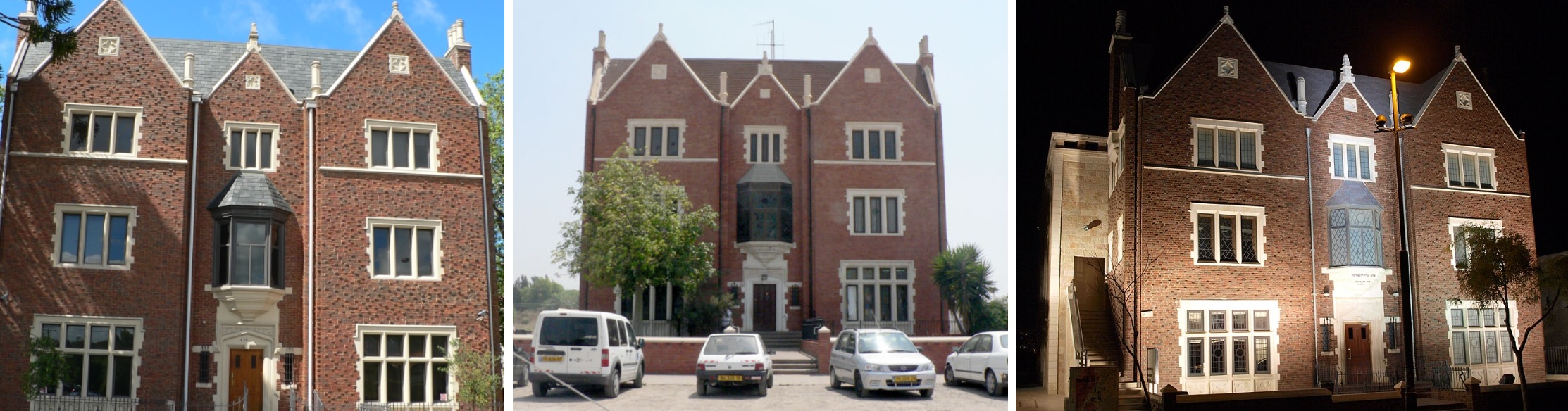
Replicas of 770 in Melbourne, Australia; and in Kfar Chabad and Jerusalem, Israel

Now, there is no doubt that the Lubavitcher Rebbe was a complete tzadik and did more for kiruv in absolute terms than anyone else in history. Nor is there any doubt that no one has done more to bring the Redemption than he did. It is pretty safe to say that while he was alive, he was probably the “presumptive messiah” of the generation, and it is clear from his own teachings that he hoped himself to be as well. Alas, it wasn’t meant to be. The Rebbe delivered a difficult speech in April 1991 where he seemingly “gave up”, and left his Hasidim totally confounded. Elderly and frail, just months before suffering a debilitating stroke that left him unable to speak and partially paralyzed, the tearful Rebbe said:

How is it that the Redemption has not yet been attained? That despite all that has transpired and all that has been done, Mashiach has still not come? What more can I do? I have done all I can to bring the world to truly demand and clamour for the Redemption…The only thing that remains for me to do is to give over the matter to you. Do all that is in your power to achieve this thing—a most sublime and transcendent light that needs to be brought down into our world… I have done all I can. I give it over to you. Do all that you can to bring the righteous redeemer, immediately! I have done my part. From this point on, all is in your hands…

Sadly, the Rebbe passed away three years later. Nonetheless, within Chabad there are still those who believe the Rebbe is somehow Mashiach, despite the fact that he has been gone for nearly three decades. Some go even further and hold him to have some kind of divine status. No one is quite sure how prevalent these beliefs are within Chabad, and whether they are subsiding or actually growing stronger. Some say it is only a vocal tiny minority that continues to believe, while others argue there is definitely a silent majority. This puts Chabad in a precarious position:

On the one hand, Chabad is the most successful Jewish organization of all time, with massive resources and many adherents, with branches all over the world touching just about every Jewish community. (A 2005 survey found that over a million Jews attend a Chabad service at least once a year.) Chabad is an absolute success, and has the potential to become the dominant form of Judaism worldwide.

On the other hand, if the messianic fervour does not dissipate, or if it gets stronger, Chabad risks following in the footsteps of other Jewish messianic sects that ended up splitting into their own religions over time, forever waiting for the “second coming” of their messiah. Much depends on Chabad leadership, and what will happen as the older generation passes on and is replaced by younger idealists. It remains to be seen which of the two possibilities materialize in the coming decades: will Chabad save Judaism, or will it fracture it? As someone who had his bar mitzvah at a Chabad synagogue, was married by a Chabad rabbi (alongside a Bukharian one), prayed with a Chabad minyan for many years, and still occasionally participates in Chabad services, I very much hope that it will be the former.

The Kabbalah of Solar

As we prepare to usher in a new year, we remember that while our calendar follows lunar months, it is still synchronized to the sun over the course of a 19-year cycle. Since a lunar month is 29.5 days, each month on the Hebrew calendar is either 29 or 30 days, resulting in a year that is typically just 354 days long. The solar year is a bit over 365 days long, meaning that a strictly lunar calendar will fall behind 11 days each year. To avoid this problem, we add an entire leap month, a second Adar, seven times in 19 years. This ensures that we stay in synch with both moon and sun. The upcoming year will be such a leap year, with 13 months instead of 12.
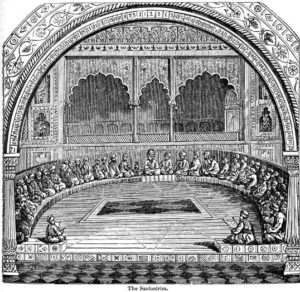
Although our calendar is lunisolar, and Jewish holidays, rituals, and halakhot generally follow this calendar, there are exceptions to the rule. In fact, there are a handful of Jewish laws and principles that follow not the lunisolar calendar, but the solar calendar of 365 days! We will explore some of the major ones below, and then look at the Zohar’s incredible revelations about the secrets of the solar calendar. Continue reading

The 18 Decrees of Beit Shammai

In this week’s parasha, Re’eh, Moses cautions the Israelites that they should observe every Torah mitzvah that he relayed to them, and not to add or detract from it (Deuteronomy 13:1). This always brings to mind the question of Rabbinic additions, expansions, fences, and stringencies that have been added to Jewish practice over the centuries. In light of the above verse, are such extras valid? Karaite Jews would argue with a resounding “no”, and this is why they stick to a strictly literal observance of the Torah.

The reality is that the Torah does also allow for the leaders and sages of future generations to make new rulings as necessary. Generally speaking, tough, such rulings must be based on something in the Torah itself, and rabbis are only attempting to extract the Torah’s true meaning and practice. Talmudic opinions are almost always supported by a Scriptural verse, even if it sometimes takes a lot of mental acrobatics to see how. We have 13 major rules of exegesis that the Sages followed in deriving rabbinic laws, and the general view is that the Sages did not invent anything new, but only rediscovered something lost:

In one passage, we are told that as soon as Moses passed away, some 3000 halakhot were forgotten (Temurah 16a). The Israelites asked Moses’ successor Joshua to get them back through prophecy, but he countered that no longer can laws be derived through prophecy—lo bashamayim hi! “The Torah is not in Heaven!” (Deuteronomy 30:12) Ultimately, Joshua’s successor Othniel was able to restore 1700 halakhot through the use of the 13 principles of exegesis. In other words, built into the Torah itself is the power to extract its true meaning, and to derive all laws, including rabbinical ones, from it.

That said, sometimes laws are introduced without a Scriptural basis, presumably out of necessity. The most infamous case of this is the time when Beit Shammai took over the Sanhedrin by force and voted in 18 new decrees (see Shabbat 13b-17b and Yerushalmi Shabbat 1:4). It isn’t clear what exactly happened, and how it transpired. It began when the Sages of the day all went to visit one of the leading scholars, Chananiah ben Hizkiya ben Garon, who was ill at the time. (Ben Garon’s greatest achievements were composing a text called Megillat Ta’anit, and ensuring that the Book of Ezekiel remained in the Tanakh at a time when many Sages wanted it removed. He was able to resolve all apparent contradictions stemming from the Book of Ezekiel.)

While in Ben Garon’s attic, it turned out that the disciples of Shammai outnumbered the disciples of Hillel. As this was a valid convocation of rabbis, it would be permitted to vote in new laws. Beit Shammai took advantage of the opportunity, and brought in armed guards to block the entryway to the attic so that Beit Hillel could not escape. Then, they proposed 18 laws and voted them in by majority. The Talmud Bavli says that Hillel was made to sit in submission before Shammai, and this was a most shameful event. The Talmud Yerushalmi goes even further and says things got violent, and disciples of Shammai actually killed disciples of Hillel! Many refuse to believe that Torah sages literally harmed each other, and say the Talmud must be speaking figuratively. Whatever the case, both Talmuds assert that this day was as difficult and terrible for the Jewish people as the day of the Golden Calf. In fact, there used to be a fast day observed in commemoration of this tragedy, on the 9th of Adar (see Shulchan Arukh, Orach Chaim 580).

When did this event happen? There are two possibilities: the first is that it happened in the time of Hillel and Shammai, and this is supported by the language of the Bavli which suggests Hillel and Shammai were themselves present. Hillel’s life overlapped with that of the cruel King Herod. We know from both Jewish and historical sources that Herod persecuted the rabbis, which might explain why they had to make new rulings in secret, in places like the attic of Ben Garon. The other possibility is that it happened during the Great Revolt, shortly before the destruction of the Second Temple. By that point, the Sanhedrin could not convene in its proper quarters on the Temple Mount, which might also explain why they had to gather secretly in an attic. Moreover, we know that at the time there were Kanayim, “Zealots”, a faction of Beit Shammai that did indeed take up arms and sought to violently rule the streets of Jerusalem. This is more fitting with the Yerushalmi’s violent account. In addition, the Yerushalmi does not say Hillel and Shammai were there, but does suggest Rabbi Yehoshua and Rabbi Eliezer were there. Recall that Rabbi Yehoshua and Rabbi Eliezer were students of Rabban Yochanan Ben Zakkai, the leading sage at the time of the Temple’s destruction.

Rabbi Eliezer, who was stringent and more of a Shammai at heart (even though his main teacher Rabban Yochanan was a disciple of Hillel), believed that the 18 decrees of Beit Shammai were a good thing. They had “filled the measure”. His more lenient colleague Rabbi Yehoshua believed it was a terrible thing, and not only did they not fill the measure, they “erased” the measure! He thought that more stringencies were counterproductive, and instead of being a fence that preserves Judaism, would make Judaism too difficult to observe and drive people away. Not only will the unlearned majority stop keeping rabbinic laws, they will throw off the yoke of Torah entirely and stop keeping even Scriptural laws. In short, the masses will “throw out the baby with the bathwater”. Rabbi Yehoshua’s observation was prescient, and it seems history has confirmed his fears.

With that long introduction, what exactly were those 18 decrees?

“A Nation That Dwells Alone”

There are vast differences in opinion regarding the nature of the 18 laws. Both Talmuds present multiple lists, with varying items. Most of them tend to focus on purity laws that applied in Temple times but are not so relevant today. The list that is most applicable for us is given in the Talmud Yerushalmi (Shabbat 1:4) by Rabbi Shimon bar Yochai, as follows:

Rabbi Shimon bar Yochai taught: On that day they decreed about [1] their bread, and [2] their cheese, and [3] their wine, and [4] their vinegar, and [5] their fish brine, and [6] their muries, and [7] their preserves, and [8] their parboiled food, and [9] their corned food, and [10] on split grain, and [11] on ground food, and [12] on peeled barley; [13] on their speech, and [14] on their testimony, and [15] on their gifts, [16] on their sons, and [17] on their daughters, and [18] on their firstlings.

First is the law of pat israel, to only consume bread that was made by Jews, or that a Jew participated in making at some point in the process. This is a stringency still observed by many today. Similarly, the second law was against gevinat akum, the “cheese of idolaters”. Until then, all cheese was considered kosher by default, since it can only be made from cow or goat milk (although there is a question regarding the kosher status of rennet). Henceforth, only cheese made by Jews or closely supervised by Jews would be kosher. This, too, is a law that is widely observed today. (Having said that, Italian Jews typically did not observe this stringency, and consumed all cheese.)

The related law of chalav israel—not consuming gentile-drawn milk—is derived by the Sages from this one about cheese, and the Talmud goes on to say that we are concerned cow or goat milk will be mixed with milk from non-kosher animals (like horses). For much of history, Jews in many locales were lenient with chalav israel, and typically did consume gentile milk, especially if it came from a trusted source. Today, because government bodies regulate milk in most developed countries, people have become even more lenient regarding milk and it is common to consume chalav stam.

The most widely accepted and well-known of the 18 is the prohibition against yayin stam, gentile-made wine. The Torah itself only forbids yayin nesech, wine that was used in idolatrous libations. (More accurately, the Rambam explains in his Sefer haMitzvot [Negative Mitzvah #194] that even the Torah itself does not prohibit idolatrous wine explicitly, but it is derived from a verse in parashat Ha’azinu where God admonishes the people for drinking idolatrous wine.) In that Ben Garon attic, Beit Shammai forbid all gentile wine. This has become standard halakhic practice today.

The Talmud Bavli concurs that gentile-made wine was one of the 18 decrees (Shabbat 17b). It also adds gentile-made oils. Oils are mentioned in the other Yerushalmi list, too. The oil ban is discussed in other places in the Talmud, where the Sages say that the prohibition on oils didn’t take effect because it was just way too difficult to keep (Avodah Zarah 36a). On the same page, the Talmud suggests that the ban on gentile wine and oil actually dates back to the prophet Daniel, though he had taken these stringencies only upon himself. Whatever the case, the one rule that all lists agree on without a doubt is the prohibition on “their daughters”, presumably meaning intermarriage. But wait, wasn’t intermarriage already forbidden from the Torah?

One minority opinion in the Yerushalmi suggests that the ban on “their daughters” is metaphorical, and actually just means on eating their eggs! In other words, there may have been a time when Jews only consumed eggs from Jewish-supervised hen houses. While intriguing, this is not the accepted opinion. Instead, the Sages explain that when the Torah banned intermarriage, it only meant specifically with the seven Canaanite nations. Beit Shammai decreed a ban on all intermarriage. In that case, what do we make of Ezra’s pronouncement for the Israelites returning to the Holy Land after the Babylonian Captivity to get rid of their foreign wives?

Some interpret the Torah to mean that it was originally forbidden to intermarry with Canaanites even if they converted to Judaism. All other nations were permitted to marry as long as they converted. Ezra’s pronouncement was against the wives that didn’t convert, or refused to convert. According to this view, Beit Shammai would have banned all intermarriage, even with converts. This really cannot be accurate. Bartenura (Rabbi Ovadia of Bertinoro, c.1445-1515) comments on Shabbat 1:4 that “their daughters” refers specifically to Samaritans, and it was intermarriage with Samaritans that was prohibited.

A different interpretation is given in the Talmud Bavli (Avodah Zarah 36b). Here we read that the ban on “their daughters” was not referring to marriage, but to any sexual intimacy with gentiles, even outside the context of marriage. In other words, before Beit Shammai’s decree, a Jewish man may have been allowed to be intimate with a gentile woman, and this is what was banned. The Talmud continues with a long series of back-and-forth arguments to show that truly, this was all prohibited already in the Torah itself. What Beit Shammai did was only to prohibit intimacy with gentiles even in private quarters and in secret—and this had already been instituted once before by the Hasmonean Maccabees, of Chanukah fame.

The Talmud adds here that the reason Beit Shammai made these decrees is to separate Jews from non-Jews and to lessen mingling between them. The ultimate goal was to prevent Jews from assimilating or falling to idolatry. (Keep in mind that at this time, two thousand years ago, “gentile” and “idolater” were basically interchangeable, since there were no other monotheistic religions around.) Beit Shammai banned gentile wine and bread so that Jews don’t go to non-Jewish parties. They made decrees on purity to further solidify the separation between Jews and idolaters. Perhaps Beit Shammai wanted Israel to live up to Bilaam’s words in the Torah that Israel is “a nation that dwells alone”. This was necessary because the Roman Empire was a huge melting pot, and many Jews were becoming Romans. (Including the Jewish-Roman general that destroyed the Temple, as explored in the past here.)

Having said all that, the rule in Judaism is that the law always follows Beit Hillel, so why were the decrees of Beit Shammai accepted at all?

“Halakhah K’Beit Hillel”

Presumably, the decrees of Beit Shammai were accepted because they were voted in by majority in a Sanhedrin-like council. However, the Talmudic narrative makes it quite clear that it was not a legitimate Sanhedrin. Beit Hillel were forced to vote, and perhaps were even violently suppressed. Beit Shammai took majority through an inappropriate ruse. How could such laws ever be passed or accepted? I think it is a likely possibility that they weren’t accepted.

If we date the event to the time of the Great Revolt—which makes more sense altogether—we can understand why Beit Shammai pushed these laws. Not only did they want to separate between Jews and Romans, but they also wanted to weed out Roman sympathizers and collaborators. They became uncharacteristically violent because they felt desperate times called for desperate measures. It is possible that this event led directly to Rabban Yochanan’s exit from Jerusalem. He got permission from Vespasian to establish a new school in Yavne. Rabban Yochanan was a Hillelite, as were his disciples. Now we can better understand why, henceforth, Beit Shammai basically ceased to exist.

However, there were among Rabban Yochanan’s students those who favoured more stringencies, like Rabbi Eliezer. They personally upheld the decrees of Beit Shammai, inspiring others to do the same. Over time, the stringencies became more and more commonplace, and some did become universally accepted. Since they became accepted, that became normative halakhah. The question for us today is: should we continue to observe these Shammaian practices, and should we encourage people to take on these stringencies? Do we side with Rabbi Eliezer, or with Rabbi Yehoshua? Shammai or Hillel?

The Talmud itself affirms that we never accept Beit Shammai (Berakhot 36b). In fact, the language there is that we don’t even consider their opinion to be valid! So why observe their decrees, especially in light of the horrible way they voted them in? It is intriguing to note the position of the Lubavitcher Rebbe, who spoke about this issue at length, explaining that Beit Shammai is all about potentials and not realities, and is rooted in the mystical side of Gevurah and Din, not Chessed—hence the reason for the complete rejection of Shammai (see, for instance, Likkutei Sichos, Vol. II, on Beshalach/Tu b’Shevat). Yet, Lubavitch is quite strict regarding things like chalav israel and gevinat akum! (Some explain it by finding other sources and explanations. However, it doesn’t change the fact that it is a Shammaian law!)

Another argument might be based on the oft-repeated idea that in the Messianic Age, the law will switch to follow Shammai. Since we are approaching that era, should we take these extras upon ourselves? Or should we do the very opposite, and rule on the side of Chessed at a time when the world clearly needs it.

A final note to keep in mind is that the Talmud (Avodah Zarah 36a) suggests that the 18 decrees of Beit Shammai actually cannot be repealed, even by the future Sanhedrin of Eliyahu! How could this be? (And, in that case, how was it that the prohibition on oils was rescinded?) And how do we make sense of all this in light of the famous Heavenly Voice that proclaimed, after three years of ceaseless debates, that the halakhah should always follow Beit Hillel? (Eruvin 13b)

I leave these questions unanswered, and will instead conclude with one more teaching of the Sages. A Tosefta in Eduyot 2:2 states that there are 24 instances where Beit Hillel is actually stricter than Beit Shammai. (The Jewish Encyclopedia counted 55 instances!) The Sages conclude by stating the following:

Forever the law follows Beit Hillel. One who wishes to take stringencies upon himself and follow the stringencies of both Beit Hillel and Beit Shammai, of him it is said: “A fool walks in darkness” (Ecclesiastes 2:14). However, one who takes on both the leniencies of Beit Shammai and the leniencies of Beit Hillel is wicked. Rather, one should either follow Beit Hillel—with their leniencies and stringencies—or follow Beit Shammai—with their leniencies and stringencies.

לעולם הלכה כדברי ב”ה והרוצה לעשות להחמיר על עצמו ולנהוג כחומרי ב”ה וכחומרי ב”ש על זה נאמר (קוהלת ה) והכסיל בחשך הולך התופס קולי ב”ש וקולי ב”ה ה”ז רשע אלא או כדברי ב”ה כקוליהן וכחומריהן או כדברי ב”ש כקוליהן וכחומריהן.

Shabbat Shalom!