
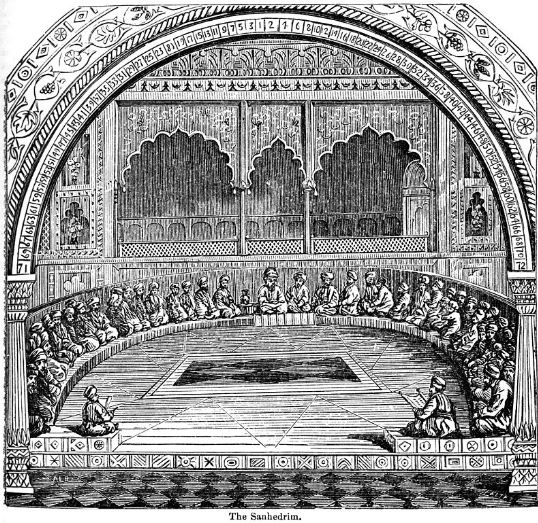
 In this fifth week between Pesach and Shavuot, it is customary to read the fifth chapter of Pirkei Avot. We read that “Every dispute that is for the sake of Heaven, will in the end endure; But one that is not for the sake of Heaven, will not endure.” (5:17) And then we are given an example of a dispute that was “for the sake of Heaven”, that of Hillel and Shammai. Recall that Hillel and Shammai were the leaders of the two main schools of Jewish learning roughly 2000 years ago in Judea. Hillel was president of the Sanhedrin, while Shammai was the deputy. Hillel passed away around the year 10 CE, and Shammai some time after that.
The Talmud (Eruvin 13b) states that the schools of Hillel and Shammai debated for 3 years about whose interpretation of Jewish law is correct, until a Bat Kol, a Divine Voice, resonated from Heaven to declare that the halakhah should follow Beit Hillel. The Bat Kol acknowledged that both interpretations are “words of the living God” or, more accurately, “the living Word of God”, but the scholars of Hillel’s school won. The Talmud explains why: “Because they were agreeable and forbearing, and would teach both their own statements and the statements of Beit Shammai.” And so, halakhah has generally followed Hillel ever since. That said, some things did come from Beit Shammai, most notably the 18 Decrees that include pat israel, gevinat akum, and by extension, chalav israel. Today, it is often repeated that in the forthcoming Messianic Age, the halakhah will switch to follow Beit Shammai entirely. Where did this idea come from, and does it have any validity? Continue reading