A short class on the complex issue of abortion, through the lens of both science and Jewish law.
For a written summary and more info, see ‘A Mystical Look at Pregnancy and Abortion’.

A short class on the complex issue of abortion, through the lens of both science and Jewish law.
For a written summary and more info, see ‘A Mystical Look at Pregnancy and Abortion’.
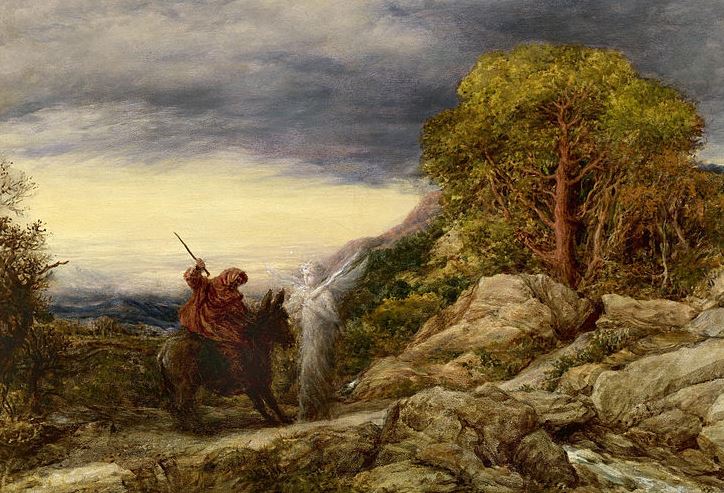
‘The Prophet Balaam and the Angel’ by John Linnell (1859)
This week’s parasha, Balak, features the infamous gentile sorcerer and prophet Bilaam. We see him riding a donkey, being confronted by an angel, and attempting to curse Israel. The Torah later states that Bilaam was slain by the sword when Israel warred with Midian (Numbers 31:8), and according to tradition he was killed by Pinchas. In the Book of Joshua (13:22) we are told again that Bilaam was slain, and here he is called hakosem, “the magician” or “the diviner”. The Sages ask (Sanhedrin 106a-b) why Scripture uses this language; after all, was Bilaam not a true prophet? The answer is peculiar and seemingly makes no sense: “This is in accordance with what people say, that she came from princes and rulers, but was licentious with carpenters.” What does this have to do with anything? More perplexingly, the Talmud goes on to make two more bizarre points about Bilaam.
First, our Sages stated that Bilaam was killed by Pinchas Lista (Sanhedrin 106b). The word lista means something like a “criminal” or “gangster”. There is certainly no way that our Sages could refer to the great and holy Pinchas as lista! Second, the same passage in the Talmud says that Bilaam was killed when he was 33 years old. This is absolutely impossible. We know that Bilaam was an advisor to Pharaoh back in Egypt when Pharaoh had decreed to drown the male children, and we know that Bilaam’s sons instigated the Golden Calf incident some 39 years prior to the events of this week’s parasha. Bilaam must have been a very old man at this point. How could our Sages say he was only 33? How do we make sense of this puzzling Talmudic passage?
Long ago, scholars had pointed out that the description of Bilaam above does not at all match the Torah personality of this week’s parasha, but it does seem to closely resemble another ancient figure. That last number 33 may have given it away, since it is often associated with a person who was killed at that age: Jesus. Could it be that the Sages were actually speaking about Jesus in code, to avoid alerting the Christian censors? Indeed, Jesus was executed at the command of the cruel Roman governor Pontius Pilate—whom the entire Jewish people at the time despised as we know from historical sources—and this is probably why the Talmud says Bilaam was killed by “Pinchas Lista”, ie. Pontius the criminal! And now we can understand the cryptic statement about the woman who “was licentious with carpenters”, since Jesus and his father were carpenters. It seems abundantly clear that the Sages were not actually speaking of Bilaam, but secretly alluding to Jesus.
The big question is: why would the Sages use Bilaam as a stand-in for Jesus? And what is all of this even supposed to teach us? Continue reading
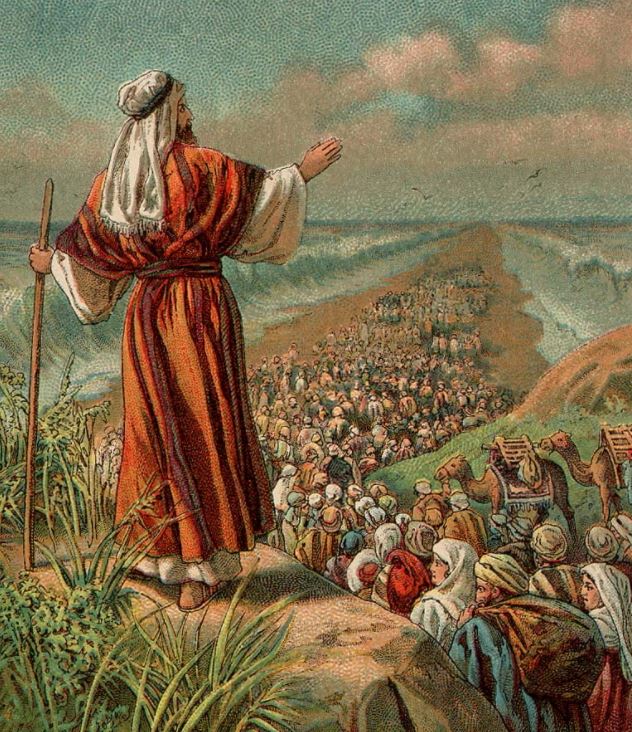
1907 Illustration of the Exodus from the Providence Lithograph Company
This week we begin reading Shemot, the second book of the Torah. Commenting on Israel’s rapid population growth (Exodus 1:7), Rashi famously cites the Midrash that each woman gave birth to six children in a single pregnancy! This is a classic Midrash in the sense that it probably should not be taken literally. One way to make sense of it is to suggest that perhaps each woman produced six Jewish souls per pregnancy. We know that while there was a limited number of Israelites physically present in Egypt and at the Exodus, we maintain that all Jewish souls that ever lived or will live (including those of converts) were there spiritually. Jewish souls from across history were liberated from slavery in Egypt and experienced the Revelation at Sinai. That’s one reason the Passover Haggadah reminds us that each and every Jew at the seder should feel like he or she personally came out of Egypt. You did!
Back in Egypt, the physical Jewish population did indeed grow rapidly. However, when we read the detailed genealogical lists in the Torah, we find that family sizes were not disproportionally large. Amram and Yocheved had three children, Aaron had four, Moses just two. In fact, throughout the Torah family sizes seem relatively small. Isaac had two sons, and Joseph had two as well (that we know of). Abraham was one of three sons. He went on to have a single child with Sarah, one with Hagar, and six more with Keturah (who may or may not be the same person as Hagar). There’s a tradition that Abraham had a daughter, too. Jacob had two children from Rachel, two from Bilhah, two from Zilpah, and seven from Leah—six boys and a girl (like Abraham). The reason for this, from a mystical perspective, is quite evident.
When it comes to the Sefirot, six are described as “masculine”, and the seventh is the feminine Nukva. Higher above, the Sefirah of Binah is called Ima, the “mother”, while Chokhmah is called Aba, the “father”. In this arrangement, the first and highest Sefirah of Keter symbolizes God Above. So, there’s God, father, mother, the six sons, and the daughter. This is a complete mystical “family”. Is this, then, the ideal family on the physical plane as well?
Not exactly. Continue reading