Category Archives: Holidays

Tisha B’Av: The Untold Story of Napoleon and the Jews

Tisha b’Av is the saddest day on the Jewish calendar. This holiday commemorates many historical tragedies, most significantly the destruction of both Holy Temples in Jerusalem. One of the most common stories heard on Tisha b’Av is about Napoleon walking by a Paris synagogue on this day, hearing the lamentations and loud weeping of the Jews. In the story, he asks what the Jews are crying about, and after being told about the destruction of the Temple nearly two millennia ago, apparently remarks something along the lines of: “A nation that cries and fasts for 2,000 years for their land and Temple will surely be rewarded with their Temple.”

Hearing this story immediately sets off some alarms. Firstly, Napoleon was no ignoramus, and was certainly well aware of the destruction of the Temple (after all, the Temple is featured in the “New Testament” and plays an important role in Christian history as well). More notably, Napoleon was a military man his entire life; his biography is the very definition of a tough guy. This man lived by the sword—it is highly unlikely that he would praise people for sitting and crying about something.

In fact, the myth of Napoleon and Tisha b’Av has been debunked multiple times. One of the earliest known sources of the legend is a Yiddish article from 1912, later included in the 1924 American Jewish Yearbook, and similarly appearing in a 1942 book called Napoleon in Jewish Folklore. Here, we are given a far more logical version of the story: After hearing the weeping of the Jews in a synagogue in Vilnius, Napoleon points to his sword and says, “This is how to redeem Palestine.”

Napoleon and the Jews

An 1806 depiction of Napoleon emancipating the Jews

Napoleon would actually play a tremendous role in Jewish history, and might even be credited with starting the process of “redeeming Palestine”. It was Napoleon that ushered in the “emancipation” of Jews in Europe. Wherever he conquered, he would free the Jews from the ghettos, and give them equal rights. In France, he went so far as to declare Judaism one of the state’s official religions in 1807. Napoleon also famously sought (and failed) to re-establish the Sanhedrin.

These actions brought upon him the ire of many of his contemporaries, especially Czar Alexander of Russia, who branded Napoleon the “Anti-Christ” for liberating the despised Jews. Moscow’s religious authority at the time proclaimed:

In order to destroy the foundations of the Churches of Christendom, the Emperor of the French has invited into his capital all the Judaic synagogues and he furthermore intends to found a new Hebrew Sanhedrin—the same council that the Christian Bible states condemned to death (by crucifixion) the revered figure, Jesus of Nazareth.
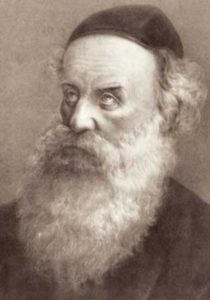
Rabbi Schneur Zalman of Liadi, the “Alter Rebbe” (1745-1812)

Of course, most Jews were ecstatic, and relished their newly acquired liberties. It became common for Jews to name their children “Napoleon”, or adopt the last name “Schöntheil”, the German translation of “Bonaparte”. Yet, not all Jews were happy about this development. The Alter Rebbe—founder of Chabad, who lived during the times of Napoleon—wrote the following in one of his letters:

If Bonaparte will be victorious, Jewish wealth will increase, and the prestige of the Jewish people will be raised; but their hearts will disintegrate and be distanced from their Father in Heaven. But if Alexander will be victorious, although Israel’s poverty will increase and their prestige will be lowered, their hearts will be joined, bound and unified with their Father in Heaven…

The Alter Rebbe thus fled from the approaching French forces, inspired his followers to do the same, and even supported the Russian military. He was right about Bonaparte. Napoleon had no interest whatsoever in seeing the Jews flourish as Jews, or practice their religion proudly. His intentions were clear: the complete assimilation of the Jews into European society. It was Napoleon that first permitted Jews to serve in the military, openly stating that “Once part of their youth will take its place in our armies, they will cease to have Jewish interests and sentiments; their interests and sentiments will be French.”

As it turned out, opening the doors for Jews to serve in the French military would lead to the proliferation of the Zionist movement, and the establishment of the State of Israel.

France and Israel
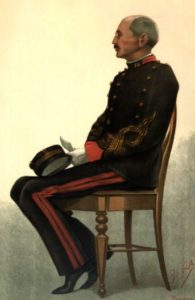
1899 Guth painting of Alfred Dreyfus for Vanity Fair

In 1894, Theodor Herzl was a young journalist working in Paris. He was covering the infamous “Dreyfus affair”, where a Jewish captain in the French military, Alfred Dreyfus, was wrongly accused of treason. During this time, Herzl witnessed the extreme anti-Semitism of the French firsthand. He realized that no matter how much the Jews assimilate, they would still never be accepted into European society, and reasoned that the Jews must have their own free state. Thus, it was a Jewish soldier in the French military—what Napoleon so dearly wanted—which catapulted the Zionist movement.

Interestingly, Napoleon himself seemed to have supported the notion of a Jewish state in Israel. In 1799, before he was emperor, and while besieging the city of Acre in Israel, Napoleon issued a proclamation inviting “all the Jews of Asia and Africa to gather under his flag in order to re-establish the ancient Jerusalem. He has already given arms to a great number, and their battalions threaten Aleppo.” Ultimately, the British defeated Napoleon’s forces, and the plan never materialized.

Nonetheless, Napoleon’s role in igniting the flames of Zionism cannot be overlooked. Zionism was primarily a secular movement, its most fervent supporters being assimilated European Jews who, like Herzl, were frustrated that they were still hated and unwanted in European society. This secularism was a direct result of Napoleon’s campaigns. Without his spearheading of the Jewish “emancipation”, it is doubtful that there would have ever been a Zionist movement to begin with.

And although there is much to criticize about Zionism, these mostly secular European Jews succeeded in re-establishing a free Jewish state in the Holy Land after two very long millennia. Yes, the Israeli government is unfortunately secular, and Mashiach has not yet come, and there is a great deal of work to do to restore a proper Jewish kingdom as God intended. However, the State of Israel allowed for the majority of Jews to return to their homeland, escape persecution, live openly as Jews, fulfil mitzvot only possible in the Holy Land, and travel freely to Jerusalem. Israel is undoubtedly paving the way for the Final Redemption, which is why many great rabbis of recent times have described it as reshit tzmichat geulatenu, the first steps of the redemption.

It is therefore fitting that the gematria of “France” (צרפת), where the whole process began, is 770, a number very much associated with redemption as it is equivalent to בית משיח, the “House of Mashiach”. Ironically, this number is most special for Chabad—the same Chabad that so resisted Napoleon and the French! (And at the same time, adopted the tune of Napoleon’s military band as their own niggun, still known as “Napoleon’s March” and traditionally sung on Yom Kippur!)

Most beautifully, it appears to have all been predicted long ago by the Biblical prophet Ovadia, who prophesied (v. 17-21):

And Mount Zion shall be a refuge, and it shall be holy; and the house of Jacob shall possess their heritage… And they shall possess the Negev, the mount of Esau, and the Lowland, with the [land of the] Philistines; and they shall possess the field of Ephraim, and the field of Samaria; and Benjamin with Gilead. And the great exile of the children of Israel, that are wandering as far as צרפת [France], and the exile of Jerusalem that is in Sepharad, shall possess the cities of the Negev. And saviours shall come upon Mount Zion to judge the mount of Esau; and the kingdom shall be God’s.


The article above is an excerpt from Garments of Light: 70 Illuminating Essays on the Weekly Torah Portion and Holidays. Click here to get the book! 
The Spiritual Significance of Sefirat haOmer

The Torah commands that each day between the holidays of Pesach and Shavuot be verbally counted (Leviticus 23:15). Along with this counting, a bundle of barley was brought as an offering in the Holy Temple. The barley was measured in units of omer, with one omer being equal to approximately 3 litres. Today, we no longer have a Temple or barley offerings, but the mitzvah of counting the days between Pesach and Shavuot remains, and is referred to as Sefirat HaOmer, “the Counting of the Omer”. Since there are exactly seven weeks between the two holidays, there are 49 days which need to be counted. What is the deeper meaning behind this seemingly mundane practice?

The Fifty Levels

There are a number of spiritual explanations for Sefirat haOmer. Perhaps the most popular is the idea that in Egypt, the Jews were so deeply mired in the immoral and idolatrous Egyptian society that they had descended all the way down to the 49th level of impurity.

It is said that there are 50 levels of impurity, rooted in (or at least suggested by) the numerical value of the Hebrew word for “impure” (tam’e, טמא) which has a gematria of 50. The Jews had stooped down to the 49th level, and had they reached the 50th, there would have been no hope of salvation for them. Thus, God cut short the 400 year period of slavery that was decreed upon them, and immediately took the Jews out of Egypt before they could fall any further.

Corresponding to these, the Jewish mystics teach that there are 50 levels of constriction in the world. Egypt represented these 50 constrictions. Again, this can be illustrated through Hebrew and gematria: Egypt is Mitzrayim (מצרים), the root of which is tzar (צר, meaning “constrict” or “narrow”) and the suffix of which is ים, numerically equalling 50. Egypt is the land of 50 constrictions.

Following the Exodus, the task of the Jews was to cleanse themselves of the 49 levels of impurity which they had acquired, and to break free from all those constrictions that were imposed upon them. This is why they needed a 49-day period – one for each impurity and constriction – before they were ready for the Divine Revelation and reception of the Torah at Mt. Sinai on Shavuot.

The Tree of Life

The Passover Haggadah reminds us that each Jew must envision themselves as personally coming out of Egypt. Though we are thankfully no longer literally slaves, the truth is that each of us is still mired in some kind of constriction, be it a constriction to time or work, money or health, stress, fears, and all those others things that “narrow” our lives and confine us into various forms of spiritual slavery. The Torah commands each of us to break free, to remove all of those impurities and boundaries, and to elevate ourselves over this special period of 49 days. Each day is associated with a unique energy to help us in this path.

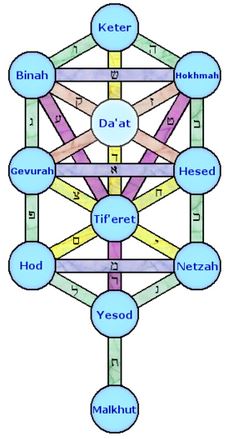
The 49 energies stem from the Kabbalistic “Tree of Life”. This Tree is composed of ten Sefirot (a term not coincidentally related to Sefirat HaOmer). These Ten Sefirot are regarded as the spiritual building blocks with which God created the universe (together with the twenty-two letters of the Hebrew alphabet). It is said that all things in existence are permeated with these ten energies, and all things that are “ten” in the Torah correspond to the ten sefirot: the Ten Divine Utterances of Creation, the Ten Trials of Abraham, the Ten Plagues, the Ten Commandments, etc.

The top three sefirot are called the Mochin – the mental or intellectual faculties. The bottom seven are referred to as the Middot – the emotional and practical elements. During the time of the Omer, we are meant to focus on the purification of the bottom seven sefirot. Meanwhile, on Shavuot – having received the Torah – we are then able to rise further to the upper three mental sefirot and focus on intellectual development.

Etz Chaim, “Tree of Life”, Showing the 10 Sefirot and the 22 Lines that Unite Them (Corresponding to the Hebrew Alphabet), as Depicted by the Arizal

Therefore, each of the seven weeks between Pesach and Shavuot is associated with one of the seven Middot. The first week of the Omer corresponds to the sefirah of Chessed – kindness. The second to the sefirah of Gevurah – restraint and self-control. The third to Tiferet – balance (also called Emet – truth). The fourth is Netzach – “victory”, or persistence (often associated with faith). The fifth, Hod – gratitude, and the sixth, Yesod – literally “foundation”, referring to sexual purity. Lastly there’s Malkhut, “kingdom”, which is associated with the faculty of speech.

Each of the seven days of the week is further associated with one of these seven sefirot. So, the first day of each week corresponds to Chessed, and the second day of each week to Gevurah, and so on. This gives each of the 49 days a totally unique quality which one should be meditating on, and more importantly, attempting to rectify.

For example, tonight we will count the third day, with the corresponding sefirah of Tiferet sh’b’Chessed, “Balance (or Truth) in Kindness”. This suggests developing a harmonious approach to kindness: being a more giving person; charitable, helpful, sympathetic, but also making sure not to be taken advantage of or tricked into false kindness. Unfortunately, misplaced kindness has become a staple of Western society. (How often do we see well-meaning liberals supporting the “poor and disadvantaged” terrorists?) Tonight’s sefirah might be summarized well by the old Midrashic teaching that “those who are kind to the cruel will ultimately be cruel to the kind.”

Similarly, each of the remaining 49 days has a powerful message to teach us, hence the tremendous importance of Sefirat HaOmer – counting and meditating upon each and every one of these very special days.


The article above is adapted from Garments of Light – 70 Illuminating Essays on the Weekly Torah Portion and Holidays. Click here to get the book!
The Problem With Kapparot

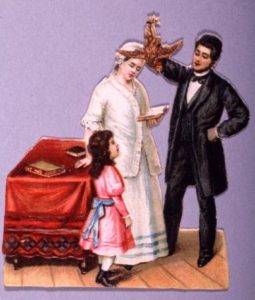
In the early morning hours before Yom Kippur, many Jews will seek to perform the custom of kapparot, which involves taking a live rooster (or chicken), swinging it over one’s head, and then having it slaughtered. In the process, the person states how the rooster will be their “atonement”, and while the rooster will die, the person will go on to live a good life. The rooster’s meat is typically donated. Others swing money over their heads instead of a rooster, and then donate the money to charity. Of course, this strange-sounding custom is not mentioned anywhere in the Torah or Talmud. In fact, throughout history many Jewish Sages tried hard to extinguish this custom, for a number of important reasons.

19th Century Lithograph of Kapparot

19th Century Lithograph of Kapparot

First of all, kapparot sounds much too similar to a korban, a sacrificial offering. In the days of the Temple, the kohanim sacrificed animals in order to atone for the people. The kapparot ritual explicitly states that the rooster serves as atonement, and the rooster is then killed. Despite some people’s claims that kapparot is not a true sacrifice, it clearly mimics the Temple’s sacrificial procedures, and intends to accomplish the same goal. The Mishnah Berurah (605:2) openly admits this, saying that kapparot is basically like a sacrifice. Indeed, an outsider would hardly be able to tell the difference. The problem is that the Torah forbids bringing sacrifices anywhere other than the place that God specifically designates (Deut. 12:5-6), which was the Temple Mount in Jerusalem. The Torah also commands that only kohanim are allowed to oversee sacrificial procedures. From this perspective alone, kapparot is contrary to the Torah.

Thirteen Years of Pain

Secondly, kapparot fits squarely under the category of unnecessary cruelty to animals. Commenting on the verse in Psalms (145:9) which states that God has mercy and compassion upon all of His creations, Rav Shimshon Raphael Hirsch wrote:

Here you are faced with God’s teaching which obliges you not only to refrain from inflicting unnecessary pain on any animal, but to help and, when you can, to lessen the pain whenever you see an animal suffering, even through no fault of yours.
(Horeb, Chapter 60, Section 416)

The Jewish Sages have always been concerned about animal welfare. The Talmud considers it a Torah mitzvah to treat animals with respect and prevent any harm to them (Bava Metzia 32b), so much so that one is allowed to violate various Shabbat prohibitions to help a suffering animal (Shabbat 128b). Let us not forget the story of Rabbi Yehuda HaNasi, who suffered excruciating pains for thirteen years. Why was he afflicted with such pain?

A calf was being taken to the slaughter when it broke away, hid its head under [Rabbi Yehuda’s] clothes, and lowed [in terror]. “Go”, he said, “for this you were created.” Thereupon it was said [in Heaven], “Since he has no pity, let us bring suffering upon him.”
(Bava Metzia 85a)

The great Rabbi Yehuda – the compiler of the Mishnah – made one uncompassionate remark to a fearful calf that was about to be slaughtered. For this, Heaven rained upon him tremendous pain – six years of kidney stones, and seven of scurvy, so unbearable that his cries could be heard over three miles away. When did his suffering end?

One day [Rabbi Yehuda’s] maidservant was sweeping the house; [seeing] some young weasels lying there, she made to sweep them away. “Let them be,” he said to her; “It is written, ‘And his tender mercies are over all his works.’” It was said [in Heaven], “Since he is compassionate, let us be compassionate to him.”

Rabbi Yehuda quotes the same verse (Psalms 145:9) that Rav Hirsch expounded upon, and has mercy on the young animals in his home. For this, his suffering is finally taken away. If even one little remark to an animal is worth thirteen years of suffering, how much more so if an animal is swung around wildly, then slaughtered needlessly – which is precisely what happens with kapparot. (It has also been pointed out that chickens used in kapparot are usually starving and thirsty, and often have their limbs dislocated or bones broken during the procedure.)

Idolatrous Practices

Lastly, kapparot appears to be connected with various idolatrous practices and non-Jewish customs. The Ramban, among others, considered it darkei emori, the way of idolaters. The Shulchan Arukh, the central halachic text of Judaism, is also staunchly opposed to kapparot, and its author, Rabbi Yosef Karo, called it a “foolish custom”.

Many modern-day authorities, too, from across the Torah-observant world, have been vocally against kapparot. Rabbi Joseph B. Soloveitchik and the entire Brisker rabbinic lineage before him opposed the custom, considering it irrational. The rabbi of Beit El and rosh yeshiva of Ateret Yerushalaim, Shlomo Chaim Aviner, a prominent authority within the Dati Leumi community, has described it as a “superstition”. And the former Sephardic Chief Rabbi of Tel Aviv, Chaim David HaLevy, beautifully wrote in his Aseh Lekha Rav:

Why should we, specifically on the eve of the holy day of Yom Kippur, be cruel to animals for no reason, and slaughter them without mercy, just as we are about to request compassion for ourselves from the living God?

Kapparot with Money

While it is clearly evident that one should completely avoid kapparot with chickens, some might argue that it is still worth doing kapparot with money. The problem is that the procedure and text are still the same: waving coins or bills over one’s head, stating that the money serves as an atonement, and that donating it will save one’s life.

The truth is that there is no need to do this at all, since any giving to charity automatically fulfils a mitzvah, assists in one’s repentance and atonement, and is said to be life-saving. The Talmud famously tells us (Bava Batra 10a) that charity is the greatest of all forces, and quotes the verse in Proverbs that “charity saves from death” (10:2).

Thus, any charitable contribution, at any time of the year, already does what kapparot claims to do. And so, awkwardly waving money around one’s head and reciting the kapparot verses is nothing more than a funny-looking waste of time, associated with a cruel, idolatrous, nonsensical, and nonJewish custom.

In his list of the 613 Torah mitzvot, the Rambam (who was also opposed to kapparot) lists the 185th positive commandment of the Torah as eradicating any traces of idolatry from Israel. Since many great Sages held the view that kapparot is associated with idolatrous ways, including the Ramban, Rashba, and the authoritative Shulchan Arukh, it is undoubtedly a mitzvah to not only avoid kapparot, but to encourage others to abandon this practice, and to expunge it from Judaism.


The article above is adapted from Garments of Light – 70 Illuminating Essays on the Weekly Torah Portion and Holidays. Click here to get the book!