
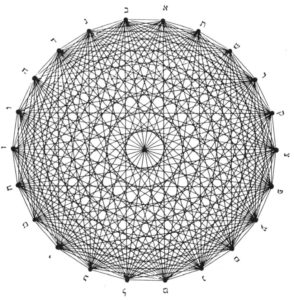
In this week’s parasha, Ha’azinu, Moses cautions the people in his final song to carefully fulfil “all the words of this Torah, for it is not an empty thing for you” (Deuteronomy 32:46-47). The Ba’al HaTurim (Rabbi Yakov ben Asher, 1269-1343) comments here that, on a deeper level, the words “for it is not an empty thing for you” are referring to gematriot, the numerical calculations and mathematical codes embedded in the Torah, that emanate from the divinity and precision of the Hebrew language. The general public often disparages gematria as being unreal or artificial in some way, a soup where anyone can find anything they are looking for. This couldn’t be further from the truth. While some have certainly abused gematria in unnatural ways, there is a legitimate foundation and system to it. Continue reading
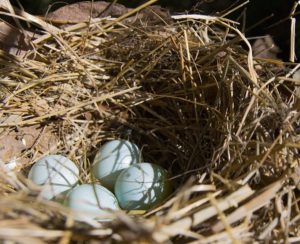 There are actually two mitzvahs here: not taking the mother together with her children (a negative mitzvah), and sending away the mother bird before taking the children (a positive mitzvah). The Torah does not explain the rationale here, but for most of history the message seemed quite obvious: don’t be cruel! It was so obvious that the Mishnah (Berakhot 5:3) states we should stop people from requesting in their prayers that since God has mercy on birds, He should also have mercy on us. The Rambam (Rabbi Moshe ben Maimon, 1138-1204) comments here that the reason one shouldn’t pray this way is because it is seemingly giving a reason for the mitzvah, yet we do not know the true reason for the mitzvah, except that it is God’s Will. Moreover, the Rambam points out that if it is a matter of mercy, then God should have commanded us not to slaughter or eat any animals at all!