Category Archives: Kabbalah & Mysticism

The Hidden Connection Between Lag b’Omer and Yom Yerushalayim

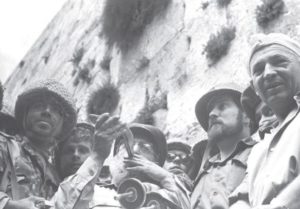
Rabbi Shlomo Goren blows the shofar by the Western Wall during the 1967 liberation of Jerusalem.

This Thursday evening, the 18th of Iyar, we mark the mystical holiday of Lag b’Omer. Ten days later, on the 28th of Iyar, we commemorate Yom Yerushalayim, when Jerusalem was liberated and reunified in 1967 during the miraculous Six-Day War. At first glance, these two events may seem completely unrelated. However, upon deeper examination, there is actually a profound and fascinating connection between the two. To get to the bottom of it, we must first clarify what actually happened on these dates in history to uncover their true spiritual significance. Continue reading

Origins and Mysteries of Shabbat Candles

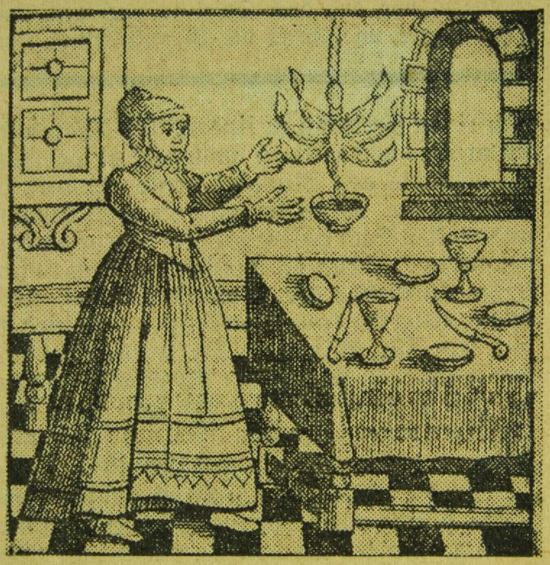
1723 Illustration of Shabbat Candle-Lighting

This week’s parasha, Tetzave, begins with the command to take “pure olive oil, crushed for lighting, to kindle the lamps continually.” (Exodus 27:20) This refers to lighting the “eternal flame”, ner tamid, of the Temple Menorah. Since the destruction of the Temple, we are no longer able to fulfil this mitzvah exactly. However, the Sages say we can still fulfil this mitzvah through the lighting of Shabbat candles. The Ba’al HaTurim (Rabbi Yakov ben Asher, 1269-1343) presents some mathematical proof for this as well: the gematria of ner tamid (נר תמיד) is 704, equal to “on the Sabbath” (בשבת), while the gematria of tetzave (תצוה) is 501, equal to “[God] commanded the women” (נשים צוה). In other words, God commanded women to light Shabbat candles as a way to keep the Temple’s eternal flame going.

This beautiful teaching actually helps us pinpoint the origins of lighting Shabbat candles, since the mitzvah is not explicitly mentioned anywhere in the Torah. Where exactly did it come from, why was it instituted, and why is it women specifically that are instructed to light these candles? Continue reading

Palm-Reading in Judaism

At the start of this week’s parasha, Yitro, Moses’ eponymous father-in-law (aka. Jethro) joins the Israelite camp in the Sinai. The Zohar (II, 69b) explains, as per tradition, that Jethro wished to convert to Judaism, along with his entire family. The Zohar then uses this as a segue into a much broader discussion:

Rabbi Itzchak and Rabbi Yose were sitting one day in Tiberias and delving into Torah study. Rabbi Shimon passed by and asked: “What are you studying?” They replied: “We are on that verse from which our master taught us…” [Rabbi Shimon] asked: “And which is it?” They said: “That which is written: ‘This is the book of the generations of man [ze sefer toldot adam], when God created man, He made him in the likeness of God…’” (Genesis 5:1)

This verse in the Torah is used to introduce the genealogy of Adam and Eve. The Zohar explains that God showed Adam all future generations of humans that would descend from him, including all the future great leaders and sages (Jethro being one of them). Now, Adam was only given a vision of these people, meaning he only saw their outward appearance. Yet, from their outward appearance alone he could deduce a great deal about their souls. This is the deeper meaning behind sefer toldot adam, ie. wisdom that can reveal a person’s inner qualities, referring “to the secrets of the physical features of human beings… their hair, forehead, eyes, face, lips, lines on the hands, and ears. Through these seven traits a person can be known.” (Zohar II, 70b) The Zohar here is clearly referring to the ancient practices of physiognomy and chiromancy: understanding a person—and perhaps even telling their future—through their facial features and palm-lines. Continue reading