Category Archives: Holidays

Mourning and Music in the Omer

As we count each day during Sefirat haOmer in the weeks between Pesach and Shavuot, we are conscious of the 24,000 slain students of Rabbi Akiva and observe a period of mourning. It is fitting to think of those victims as we ourselves focus on personal development and self-improvement during this time, in preparation for the Sinai Revelation on Shavuot—which didn’t just take place once some three millennia ago, but happens anew each year. Having said that, it is interesting that we seemingly have so many days of mourning to commemorate the tragedy, yet we don’t have such prolonged mourning for other terrible catastrophes in Jewish history (some of which are arguably much worse). Where did this extended mourning period come from?

If we look in our legal texts, we surprisingly find very little. The Talmud says nothing about mourning in these days. It is brought down that some of the Geonim (c. 600-1000 CE) may have mentioned mourning during this period, and that there was a custom not to hold weddings between Pesach and Shavuot (see, for instance, the collection of Geonic responsa published in 1802 under the title Sha’arei Teshuvah, #278). It is strange then that the Rambam (Rabbi Moshe ben Maimon, 1138-1204), who carefully codified the Talmud and the entire corpus of Jewish law up to that point (including the works of the Geonim!) makes no mention of mourning during the Omer in his monumental Mishneh Torah. The Rambam was Sephardic so one might argue that he may have omitted a custom that developed in Ashkenaz first. Yet, the Machzor Vitry, composed by Rashi’s disciple Rabbi Simchah of Vitry (in northern France) in the 11th century, fails to mention anything about mourning during the Omer either! Neither is it mentioned by great Rishonim like the Rif (Rabbi Isaac Alfasi, 1013-1103) or the Rosh (Rabbeinu Asher, c. 1250-1327).

Timeline of Rabbinic history and halakhic eras

Its first notable mention appears to be the Arba’ah Turim of Rabbi Yakov ben Asher (the “Ba’al haTurim”, 1270-1340), son of the Rosh, who was Ashkenazi but lived in Spain. In Orach Chaim 493, he says it is customary not to have weddings during the Omer, though engagements are permitted. He then states that in some places it is also customary not to take haircuts. No mention is made of abstaining from music, avoiding reciting shehecheyanu, or any other mourning rituals. Interestingly, other sources from this time period (like Sefer Asufot) argue that the mourning period arose not because of Rabbi Akiva’s students, but because of the devastation of the Crusades on Ashkenazi communities! Later sources would combine both reasons, and explain that the mourning is both for Rabbi Akiva’s students and for the Crusades.

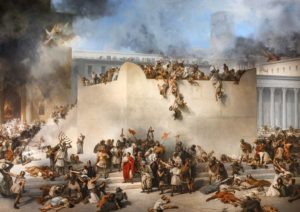
Massacres of Jewish communities around the time of the First Crusade (1096-1102)

It should be noted that there is an alternate, more mystical reason for mourning (or at least, for avoiding festivities) during the Omer: the Mishnah brings an opinion that the wicked in Gehinnom are judged specifically between Pesach and Shavuot (Eduyot 2:10). In truth, this is only a singular opinion of one Sage, contrasting an earlier statement that judgement in Gehinnom lasts a full 12 months. It is possible to reconcile the two opinions by saying that following a person’s passing, their soul is judged for up to 12 months, and then if the verdict is for the person to remain in Gehinnom, they are subsequently rejudged each year between Pesach and Shavuot. Since we know that the deaths of Rabbi Akiva’s students actually ended on Lag b’Omer and did not extend all the way to Shavuot (hence the mourning stops on Lag b’Omer), we might apply that same rule to the judgement in Gehinnom as well. In this case, we have yet another mystical reason for lighting bonfires on Lag b’Omer, as these would be appropriately symbolic of the “flames” of Gehinnom.

The above somewhat contradicts the notion that judgements take place specifically on Rosh Hashanah. We assume that all souls, both Jewish and non-Jewish, living and deceased, are judged on this day. Interestingly, the Arba’ah Turim (in Orach Chaim 581) explains that Jews customarily shave before Rosh Hashanah because, unlike gentiles, we don’t grow out our beards in fear of judgement! We are certain that God will judge us favourably. This notion presents something of a problem for the idea of not shaving because of the judgement in Gehinnom.

Haircuts and Music

Continuing our journey through halakhic history, the next major law code was the Shulchan Arukh (which was really only a summary of the larger Beit Yosef). Rabbi Yosef Karo (1488-1575) produced it by integrating the Mishneh Torah with the Arba’ah Turim, and the Rif, plus updating it with newer established customs, as well as the occasional Kabbalistic practices. It was meant to be a universal code of law, and something like the authoritative “last word”, satisfying the majority of opinions. In our times, Rav Ovadia Yosef famously argued that the Shulchan Arukh should be the supreme code of Jewish law, especially in the land of Israel where it always held primacy since its publication.

Regarding mourning during the Omer, the Shulchan Arukh again mentions only weddings and haircuts. It explains that, of course, the mourning ends on Lag b’Omer, and doesn’t extend all the way to Shavuot. The Rama (Rabbi Moshe Isserles, c. 1530-1572) adds in his gloss for Ashkenazim that some have the custom to allow haircuts until Rosh Chodesh Iyar, and only start the mourning period after this. That actually makes a great deal of sense, since we consider the entire month of Nisan to be a festive month, and we don’t recite tachanun at all throughout the month. This is stated clearly in Masekhet Sofrim 21:2-3, which also says that fasting in Nisan should be avoided (except for the firstborn before Pesach). For this reason, many religious authorities opposed the Zionists establishing Yom HaShoah—Israel’s Holocaust Memorial Day—in Nisan, because there shouldn’t be a mourning day within the festive month. It is therefore quite ironic that, at the same time, many religious authorities typically encourage mourning practices in the same Nisan days for the Omer!

It must be repeated that our ancient Sages did not actually institute such mourning, and it is a later custom. Rabbi David Bar-Hayim argues that the Sages did not institute mourning during the Omer because they understood we already have enough mourning days on the Jewish calendar, particularly on Tisha b’Av and the three weeks leading up to it. If we add several more weeks of mourning during the Omer, plus all the other fast days and sad days on the Jewish calendar, it can become quite depressing and psychologically unhealthy. Rabbi Bar-Hayim adds that while we may have a minhag to mourn during the Omer, it is certified halakhah to honour Shabbat and appear presentable and regal on the holy day, therefore it is entirely permitted to trim or get a haircut before Shabbat, even during the Omer.

For many today, the biggest question during the Omer is regarding listening to music. None of the ancient sources speak of abstaining from music, all the way up to the Shulchan Arukh, and beyond. So where did it come from? In his commentary on the Shulchan Arukh, the Magen Avraham (Rabbi Avraham Gombiner, c. 1635-1682) adds that dancing at parties during the Omer is forbidden. Based on this, Rabbi Yechiel Michel Epstein (1829–1908) argued in his Arukh haShulchan (first published in 1884) that if dancing is prohibited, then we must extend the prohibition to music as well, since it inevitably leads to dancing. This appears to be the first clear argument anywhere for avoiding music during the Omer. The position has been rejected by others, as there is no direct guaranteed leap from music to dancing. After all, many people listen to music just to relax, or while driving or cleaning, or to motivate themselves to work or exercise, and so on. For these reasons, some only prohibit live music, not recorded music.

Rav Soloveitchik argued that the Omer mourning should have a precedent from other mourning practices, like the shiva, shloshim, or the year-long mourning following the death of a parent. Since the Omer mourning is likened to the latter, the prohibition is only on going to parties or concerts, but not listening to music in private. His contemporaries, Rav Moshe Feinstein and Rav Ovadia Yosef, disagreed on this and prohibited all music during the Omer. (In the case of Rav Ovadia, this is somewhat inconsistent, since he always argued for the primacy of Shulchan Arukh, which makes no mention of abstaining from music! Nonetheless, it seems he was upholding a modern-day stringency, even if it isn’t mentioned in his go-to law code.)

To summarize, there is no doubt that forbidding weddings between Pesach and Lag b’Omer is based on a valid ancient custom that likely goes back as far as the Geonim. (Though some, even today, do permit and hold weddings up through Rosh Chodesh Iyar.) Abstaining from haircuts is a bit more recent, but still has a source going back some 700 years. It should be remembered that many authorities starting from the Rishonim and up to the present allow haircuts and trimming (or even shaving) to stay presentable, especially in honour of Shabbat, or if necessary for work purposes. This is particularly true if a person is accustomed to trimming or shaving daily.

Finally, regarding music, there is no ancient source for the prohibition. While it is true that one should ideally avoid parties and concerts during the Omer, not listening to music in private is a very recent stringency, perhaps just over a century old. For those who simply cannot go so long without music, there is definitely room to permit it. Either way, there is no need to worry about passively hearing background music in the elevator or supermarket, nor any concern for those who make a living working in the music industry. Nor should a person who has a birthday during the Omer feel condemned to never be able to have a festive birthday party in their life! (See also ‘Should Jews Celebrate Birthdays?’) Lastly, we shouldn’t lose sight of the fact that, despite the seriousness, the Sefirat haOmer period is simultaneously a time of great joy. The Ramban (Rabbi Moshe ben Nachman, 1194-1270)—who also said nothing about mourning during this time—described the whole period from Pesach to Shavuot as chol hamoed, like the intermediate days of a festival (see his comments on Leviticus 23:36). Sefirat haOmer is indeed a festive, positive, and happy time, especially because we have the opportunity to do a most-precious Torah mitzvah of counting the Omer, while eagerly anticipating a new year of Torah learning ahead starting on Shavuot.

Happy counting! 


Make your upcoming Shavuot all-night learning meaningful with
Tikkun Leil Shavuot – The Arizal’s Torah Study Guide

That Purim When Rava “Killed” Rabbi Zeira

‘Two ancient Jewish sages studying and ascending to Heaven’ an image generated for me (in just seconds!) by Midjourney AI (Artificial Intelligence) software.

The Talmud famously quotes the sage Rava as teaching that one should imbibe wine on Purim ad d’lo yada, until one does not know the difference between “cursed is Haman and blessed is Mordechai” (Megillah 7b). This is a bizarre statement, because a Jew is never supposed to be so heavily under the influence. Indeed, the Talmud continues right after to tell a story of how one Purim, that same sage Rava got so drunk that he seemingly “killed” Rabbi Zeira! All was well though because, great sage that he was, Rava resurrected Rabbi Zeira back to life. The short passage ends by saying that the following year, Rava invited Rabbi Zeira to another Purim feast, and Rabbi Zeira politely declined, saying “miracles don’t happen all the time!” Nothing more is said, leaving the reader scratching his head. What really happened between Rava and Rabbi Zeira?

The simplest reading suggests that the Talmud is trying to disqualify Rava’s opinion. It was Rava who suggested that one should get really drunk, so the Talmud right after describes how Rava himself got so drunk that he ended up murdering someone. Lesson: don’t get drunk on Purim! More ironic still, it was Rava who taught, elsewhere, that one shouldn’t even look at wine, since consuming wine could lead to bloodshed! (Sanhedrin 70a) It is most likely that he only taught this after that infamous Purim incident, when he learned his lesson.

The simple solution above works, but doesn’t answer the big mysteries: why did Rava phrase his teaching that one should not know the difference between Haman and Mordechai? To not be able to differentiate at all between good and evil seems almost impossible, even when totally under the influence. Second, how could a tremendously righteous and wise rabbi like Rava kill another person? This, too, seems impossible, even if he was completely drunk. Finally, if Rava had the power to resurrect another person, why did Rabbi Zeira fear to celebrate Purim with him the following year? Surely Rava wouldn’t make the same mistake again, and even in the extremely unlikely event that he did, couldn’t Rava just revive him once more anyway? To solve these problems, we have to look deeper.

As discussed in the past (see ‘The Secret Behind Wearing Masks and Getting Drunk’ in Garments of Light, Volume Two), the real reason to drink wine on Purim is only to be able to understand Torah on a more profound level. One of the effects of alcohol is that it increases levels of (and/or acts like) the neurotransmitter GABA, an inhibitor which shuts things off in the brain. When one drinks a little bit, GABA starts to shut down processes in the outer cortex and prefrontal cortex of the brain. This includes things like motor function, decision-making, and analysis, which serves to remove various inhibitions and restraints one has, often making a person “softer”, more open and more loving, and able to see things as being more attractive. When applied to Torah, a little bit of wine can help a person notice things they never did before, or come to new realizations. Indeed, GABA is also associated with the formation of new neural connections. And, with their normal analytical mind suppressed, a person may be able to think differently than their usual modes of reasoning, opening up the possibility to chiddushim. (With too much alcohol though, GABA levels start to go up deeper and deeper into the brain, and if it gets all the way to the brain stem—which controls vital functions like breathing—it can become fatal.)

This explains why Rava would teach that drinking wine in moderation can make a person wise (Sanhedrin 70a). Our Sages similarly taught that nichnas yayin, yatza sod: when one drinks wine, “secrets come out” (Sanhedrin 38a). The traditional way to understand this statement is that a person who drinks alcohol is likely to run their mouth and reveal embarrassing secrets. On a deeper level, however, it means that a person who drinks a little bit of alcohol may be able to uncover some new Torah secrets. They may be able to see things on a more profound level. For instance, within the phrase nichnas yayin, yatza sod is a mathematical secret where the value of “wine” (יין) is 70, as is the value of “secret” (סוד). Seventy comes in and seventy comes out!

In the same way, when Rava taught that one should drink until they don’t know the difference between “cursed is Haman” (ארור המן) and “blessed is Mordechai” (ברוך מרדכי), he really meant to look beyond the surface and see that, in gematria, these two statements are exactly equal! (Both add up to 502.) Mordechai is the force of goodness that perfectly neutralized Haman’s evil. So, it’s not that Rava said a person should get smashed on Purim, he meant that a person should drink just enough to learn Torah better and uncover its secrets. With this in mind, we can understand what happened between Rava and Rabbi Zeira that fateful Purim.

Basic Gematria Chart

Ascending to Heaven

As we might expect, when two sages get together on Purim, they are not getting together simply to party. They surely used it as an opportunity to pursue a higher spiritual endeavour. Purim, like all holidays, is when spirituality is heightened and the Heavens are more accessible. What Rava sought to do, with Rabbi Zeira’s help, is nothing less than ascend to the upper worlds. There is a long tradition of a pair or group of sages getting together to accomplish such feats. Surely the most well-known is the story of the Four Who Entered Pardes:

The Sages taught: Four entered “the orchard” [pardes], and they are: Ben Azzai, and Ben Zoma, Acher, and Rabbi Akiva… Ben Azzai glimpsed and died, and with regard to him the verse states: “Precious in the eyes of the Lord is the death of His pious ones” [Psalms 116:15]. Ben Zoma glimpsed and was harmed, and with regard to him the verse states: “Have you found honey? Eat as much as is sufficient for you, lest you become full from it and vomit it” [Proverbs 25:16]. Acher “cut the saplings”. Rabbi Akiva came out safely. (Chagigah 14b)

Long before Rava and Rabbi Zeira, Rabbi Akiva led a group of four to ascend to the Heavenly “orchard”. Through various Kabbalistic means, the souls of the four wise men went up to the upper worlds, and the Talmud even describes some of the incredible things they saw. It was so shocking that Acher, previously known as Rabbi Elisha ben Avuya, “cut the saplings” and became a heretic. Ben Azzai’s soul never returned, while Ben Zoma went mad. Only Rabbi Akiva survived the experience and came out whole.

In his Ben Yehoyada, the Ben Ish Chai (Rabbi Yosef Chaim of Baghdad, 1835-1909) explains that this is precisely what happened to Rava and Rabbi Zeira! They were learning some really deep stuff and Rava was teaching Rabbi Zeira such great mystical secrets that his soul literally left his body and ascended heavenward. Rava was able to then draw Rabbi Zeira’s soul back down to this world and revive him. The Ben Ish Chai connects this to what happened at Mount Sinai, when the entire nation “died” and was “resurrected”, because God’s revelation was so intense. With this in mind, I believe we can properly understand why the Talmud uses a unique word in this passage:

Another version of ‘Two ancient Jewish sages learning Torah and ascending to Heaven’ generated by Midjourney AI

The standard Aramaic term for “killing” in the Talmud is katal (קטל). Yet here, the Talmud doesn’t use that word, but uses shecht (שחט) instead. This word is, of course, the one used in reference to the kosher slaughter of an animal, for meat consumption. So, what does it mean that Rava shechted Rabbi Zeira? We must remember that the purpose of shechitah is not to just kill the animal. Rather, shechitah is the mechanism through which the animal’s soul is able to return to Heaven. On a Kabbalistic level, it functions as a tikkun for the animal’s soul, allowing it to ascend upward. This is precisely what Rava did to Rabbi Zeira, by extracting the soul out of his body and elevating it to the upper worlds, giving him an “out-of-body” experience. I think this is the real reason the Talmud uses the term shecht!

To go back to our three starting questions: 1) Rava did not say one should be drunk out of their minds, rather he taught that one should drink a little wine in order to learn better and be able to unravel Torah secrets. 2) Rava never literally killed anyone, God forbid, but simply elevated the soul of Rabbi Zeira through the depth and breadth of his Torah teachings. 3) Rabbi Zeira did not wish to have another “out-of-body” experience with Rava the following year simply because he knew how perilous such a journey might be. After all, Ben Azzai’s soul was so happy up there that he never returned to Earth. So, it’s not so much that Rava wouldn’t be able to revive Rabbi Zeira again, but that Rabbi Zeira worried he might not wish to return!

It must be mentioned here that there is an alternate way to read the Talmud’s concluding words in this passage. Since the Talmud does not identify who the “he” is, some people read it to mean that it was Rabbi Zeira who asked for another Purim party with Rava—having had such an awesome experience the previous year—and it was Rava who declined, since he was not sure if he could revive Rabbi Zeira again! Whatever the case, we must remember that a Jew need not resort to chemical substances for spiritual elevation; Torah study itself can be far more potent.

Chag Sameach!

Secrets of Tu b’Shevat (Video)

How did Tu b’Shevat go from a footnote on the Jewish calendar to an important mystical holiday? What are the true origins of the Tu b’Shevat seder? And what does it all have to do with the State of Israel and the coming of Mashiach?

Find out in this class where we also outline the proper steps of the Tu b’Shevat seder, explain the Kabbalistic meaning of the Tu b’Shevat fruits, explore the Book of Judges, and present an intriguing theory about the coming Final Redemption.

For a written summary on ‘Origins and Secrets of the Tu b’Shevat Seder’ see here.

For a detailed analysis on the ‘Prime Ministers of Israel and the Coming of Mashiach’, see the concluding chapter of Garments of Light, Volume One.