Tag Archives: Angels

Journey Through the Heavens

This week we conclude the fourth book of the Torah with a reading of the last two portions. In parashat Masei, “Journeys”, we are given a summary of the Israelites’ travels in the Wilderness. There are a total of forty-two trips and stops along the way. The Baal Shem Tov famously taught that these 42 journeys actually allude to the 42 journeys of every soul. His grandson wrote in Degel Machane Ephraim that “one’s birth and emergence from the mother’s womb is like the Exodus, as is known, and one henceforth goes from journey to journey until arriving at the supernal world…” The journey begins here on Earth with a person emerging from the waters of the womb, much like the Israelites emerged out of the waters of the Red Sea. It continues until the soul returns to its place in the supernal worlds. What do these supernal worlds look like and how long do journeys through those worlds take?

The Talmud outlines the supernal worlds, and states that the distance between each one is a “five hundred-year’s journey” (Chagigah 12b-13a). The first of the “Seven Heavens” is called Vilon, literally a “curtain”. The Talmud describes this simply as the atmosphere above Earth’s surface, and it has no particular spiritual significance. Then comes the Rakia, often poorly translated as “firmament”. The Talmud repeats what the Torah says in the account of Creation that within the Rakia are the sun, moon, stars, and constellations. In other words, Rakia is outer space. When the Sages used the term “fixed” (kevu’in) it does not mean that the stars are “fixed” into a solid firmament, but rather that the stars are all “fixed” in their orbits. (The same word is used when telling us to “fix” specific cyclical times for Torah study.)

AI-generated image of Seven Heavens

The third level is Shechakim, the “millstones” that grind manna. This region can be thought of as the interface between the “physical” world and the “spiritual” world. Indeed, when Rabbi Akiva led three other rabbis into the spiritual worlds of Pardes (recounted in the following pages in the same tractate Chagigah), he tells the others that they will pass by “pure marble stones” along the way. It is appropriate that manna would come from here specifically, as manna was a substance part physical and part spiritual, a blend of both dimensions.

The fourth Heaven is called Zevul, and this is where the “Heavenly Jerusalem” is found. The kohen gadol in its Temple is the angel Michael, who brings offerings upon the Heavenly altar. Most of the other angels dwell above in the fifth Heaven called Ma’on. The next Heaven is called Machon, the realm of the primordial elements. Apparently, here is found snow, hail, dew, rain, and fire, together with storms and whirlwinds. The Talmud then asks what any of us would ask: aren’t these elements here on Earth? The conclusion is that their original (spiritual) source is up in Machon. One might understand this place as God’s own “laboratory”, where He set forth the very foundations of the cosmos. This can be likened to the mystical dimension of Beriah, which serves as the “programming” and “back-end” for the universe. Similarly, the first two lower Heavens of Vilon and Rakia—typically described in very physical and mundane terms—would parallel the lowest realm of Asiyah, while the angelic Ma’on would parallel Yetzirah (perhaps Shechakim is in between, or bridges both).

Finally, the Seventh Heaven is called ‘Aravot. This is the place of souls and spirits, the source of all blessings, as well as the Dew of Resurrection that will revive the dead in the World to Come. Here are the highest classes of angels like Ofanim and Seraphim. And here, too, is the Throne of God. This region parallels the dimension of Atzilut. The Talmud then says there is one more Rakia above, an “eighth” Heaven, but it is so mysterious and sublime it is forbidden to speak of it at all. The source for it is Ezekiel 1:22, which speaks of a Rakia of “terrible ice”. This takes us right back to the beginning of the passage, where there is one opinion stating there are actually two types of Rakia, a lower and higher one (based on Deuteronomy 10:14). This neatly corresponds to the mysterious and highest mystical dimension of Adam Kadmon.
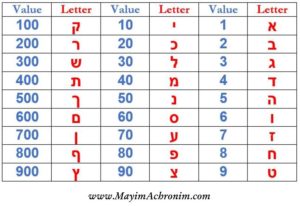
The Deuteronomy verse above mentions both hashamayim and shmei hashamayim, hence the implication of two distinct Rakias. Based on the word hashamayim (השמים), the numerical value of which is 955 (when counting with the mem sofit as 600), it is said that the Heavens are further divided up into 955 levels or compartments. The verse starts with the word hen (הן), “behold”, which has a value of 55, from which is derived that the top 55 levels are reserved for God alone, while the bottom 900 are accessible to souls, spirits, angels, and the like.

How Big is the Cosmos?

The Talmud (Chagigah 13a) states that the distance from Earth to the Rakia is a “five hundred-years’ journey”, that the Rakia itself is five hundred years-long, and that the distance between each level of Heaven thereafter is five hundred years. (The Talmud rightly excludes the atmospheric Vilon, which we know scientifically doesn’t extend so far away from Earth’s surface). So, with seven domains (including the upper eighth Rakia, but excluding the Vilon), each five hundred years large, and six spaces between them of five hundred years, that gives us a total size to the cosmos of about 6500 “years”. These are not light years, of course, so how big is the cosmos according to the Talmud?

In Talmudic parlance, a day’s journey (derekh yom) is equivalent to ten parsa, or parasangs. A parsa is four mil, and a mil is two thousand amot, or cubits. In other words, a parsa is 8000 cubits. There are varying definitions to the length of a cubit, the common answer being two feet. In that case, we are looking at 16,000 feet per parsa, or just about five kilometres. However, the Talmud (Pesachim 94a) states that the circumference of the Earth is 6000 parsas, and we know today that the Earth’s circumference is 40,075 kilometres. That would mean a parsa is about 6.68 kilometres, which actually makes more sense because the Sages define a parsa as the distance a person walks in 72 minutes (typical walking speed is about five to six kilometres an hour.) Putting it all together, a derekh yom would be about 67 kilometres, the maximum distance a person could cover if they walked an entire day at average speed.

We can take that number and convert it to “five hundred years” as follows: 67 kilometres per day x 365 days x 500 years = 12,227,500 kilometres. This would be the size of each Heaven, as well as the distance between each Heaven. At first glance, that works out to a total of about 159 million kilometres for the size of the cosmos around Earth, according to the Talmud. Intriguingly, this is roughly the same as a scientific Astronomical Unit (AU), which is about 150 million kilometres, based on the average distance between the Earth and the Sun.

However, the Talmud then goes on to state that each aspect of the angels and the Throne of God is so vast it is equivalent in distance to all of the Seven Heavens combined! The Talmud lists eleven items, so doing the math (159 million x 11) brings one to a cosmos nearly 1.8 billion kilometres wide. As mind-boggling as that is, it is still significantly less than the scientific estimate for the size of the Solar System at 287 billion kilometres. Meanwhile, the whole universe is estimated to be at least 93 billion light years wide (a light year is about 9.5 trillion kilometres). 

Perhaps the Sages did not mean that the distances are exactly a five hundred-years’ journey (and maybe not a walking journey), but just that the distances are so vast they are impossible for a human to traverse in one lifetime. Indeed, the Talmud here brings up the case of Nimrod, who sought to build the Tower of Babel to ascend to the Heavens. He was told that a human lifespan is only about 70 years, so how could he even think of attempting to travel to the highest Heavens when there are multiple distances of 500 years’ length?
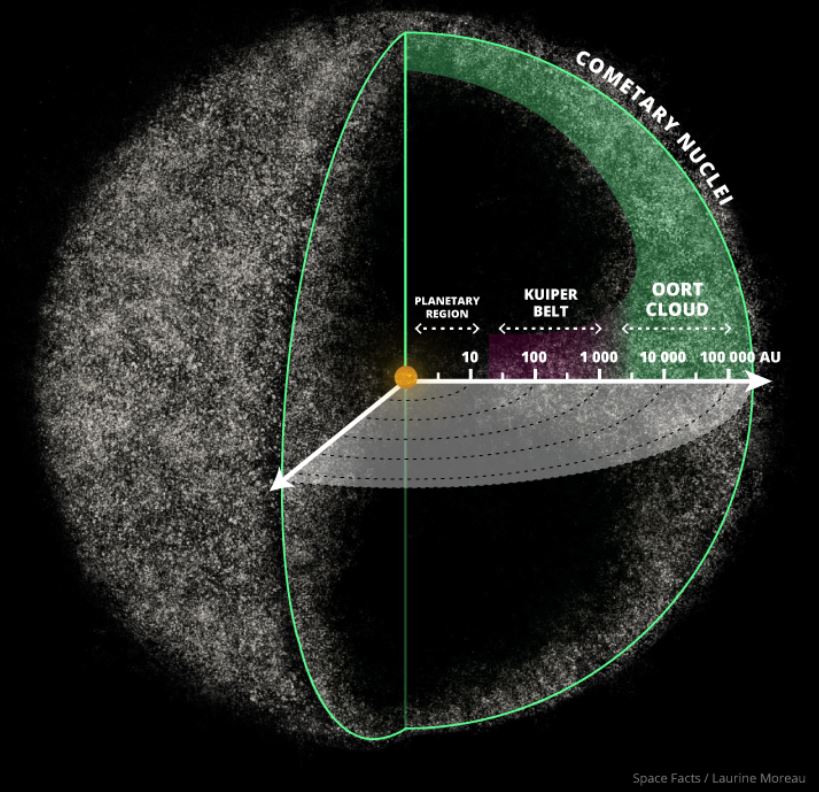
It is interesting to point out that today we know the edge of our Solar System appears to be a “bubble” of ice comets referred to as the Oort Cloud. This region may be related to the “millstones” (or “pure marble stones”) of the third Heaven, Shechakim, or perhaps the “terrible ice” of the mysterious eighth Heaven, the upper Rakia. Whatever the case, both Talmud and science describe vast distances that would be impossible for humans to journey through (at least with current technology). Angels, on the other hand, can traverse such distances. For example, the Talmud recounts Eliyahu once traveling four hundred parsas in one instant to save Rav Kahanah (Kiddushin 40a), while the Zohar (I, 4b-5a) describes Samael as traveling 6000 parsas in one instant. The angelic Merkavah “chariots” are said to regularly journey through 18,000 worlds (Avodah Zarah 3b; Zohar I, 24a; and based on Chagigah 12b, one can understand all of these 18,000 worlds as being within ‘Aravot, the seventh Heaven).

Then there’s Enoch, who went to “walk with God” (Genesis 5:24) and journeyed through the Heavenly worlds, as described in the apocryphal Book of Enoch and referenced many times throughout the Zohar. And we can’t forget the sages led by Rabbi Akiva who went up to Pardes, with Rabbi Akiva reminding them that they will pass through the “pure marble stones” (of the third Heaven), after which they saw various Heavenly beings and angels (most notably Metatron, identified as that selfsame Enoch) in the fourth, fifth, and sixth Heavens. Finally, in the World to Come, each righteous person will be able to traverse the cosmos, with a reward of 310 worlds (Uktzin 3:12) or perhaps even 400 worlds (Zohar I, 127b) to explore and delight in.

May we merit to see that day soon!


Lots More Information:

The Four Who Entered Pardes (Video)
Metatron & the Book of Enoch (Video)
Kefitzat HaDerekh: Wormholes in the Torah

For those who liked the essay on ‘The Strings That Hold the World’ from several weeks ago, there is an updated, revised, and expanded version here.

And since it’s that time of year, please review ‘The Right Way to Observe the Three Weeks’ here.
Calling in the Name of God

At the end of this week’s parasha, Chukat, the Torah tells us about the war between the Israelites and the Moabites. The Torah says woe to “the people of Chemosh” who will be lost and destroyed (Numbers 21:29). Chemosh is the name of the chief deity of the Moabites. It is interesting that the Torah names this idol, considering that there’s a clear mitzvah to completely obliterate the names of false idols and never so much as mention their names! (Exodus 23:13) The Talmud explains that if a name of a certain idol is recorded in the Torah, then we are obviously permitted to pronounce it in the course of learning and reading the Torah (Sanhedrin 63b).

Others comment that the prohibition of mentioning idol names is only if actually employing the names like idolaters might, such as in the form of worship or reverance, or by swearing on an idol’s name for business deals or in a courthouse. (See the Rambam’s Avodat Kochavim 5:10-11, and the Ramban on Exodus 23:13). It would even be forbidden for a Jew to make a gentile swear in the name of his false god, or for a Jew to tell a fellow Jew to meet him by the statue of a certain idol. That said, it is not prohibited to mention the names of idols for valid educational purposes and warnings about idolatry. (If you can’t clearly name and identify the idols, it might be difficult to educate people on avoiding them!)

The Haftarah for this week’s parasha builds on the same theme, with the hero Yiftach delivering a long historical speech, and telling the Moabites: “that which Chemosh your god gives you to possess, you may possess; and all that which יהוה [YHWH], our God, has driven out from before us, we shall possess!” (Judges 11:24) The Haftarah makes a point to specifically name Hashem multiple times, highlighting the greatness of YHWH over the false idol Chemosh. This reminds us of the mitzvah mentioned countless times throughout the Tanakh that the Jewish people should spread the name of God far and wide, to “call in God’s Name”—a practice that goes all the way back to Abraham himself, who “planted an eshel tree at Beer-Sheva, and from there called in the name of YHWH, the Everlasting God.” (Genesis 21:33)

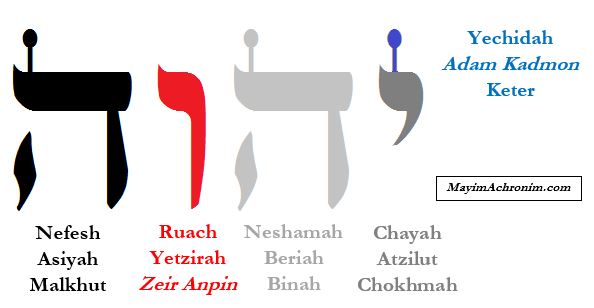
The parts of God’s Ineffable Name (the four letters and the “crown” atop the Yud) correspond to the five levels of soul, the five mystical dimensions or olamot, the five groupings or “faces” of the Sefirot, as well as the five books of the Torah.

This begs the question: what does it mean to “call in God’s Name”? And are we even allowed to pronounce the various names of God? It is common knowledge that we don’t pronounce the Ineffable Name, YHWH, but what of all the other titles for God, such as Elohim, Adonai, and El Shaddai? Can we utter these names outside of prayers and Torah readings?

The Evolution of Ineffable

Originally, the Ineffable Name of God was not “Ineffable” at all. In Biblical times, it was used freely by Israelites, and frequently embedded within people’s names (usually without the final letter Hei) like Eliyahu, Yeshayahu, Yirmiyahu, Yehudah, Yehoshafat, Yehoyada, and so on. In the Book of Ruth we read of the common greeting YHWH imachem, “God be with you”, to which the recipient would reply: yevarekhekha YHWH, “God bless you!” (Ruth 2:4) Even today there is a fairly widespread custom to say these phrases when a person gets called up to the Torah, before reciting the blessings, except that now YHWH is typically replaced with “Hashem”.

Meanwhile, the Torah commands the kohanim to pronounce the Name when blessing the congregation: “And they shall place My Name upon the Children of Israel, and I will bless them!” (Numbers 6:27) The Name itself is the conduit of God’s special blessing. We still do the priestly blessing today, but without the actual pronunciation of God’s Name, in which place the kohanim say Adonai or Adonoi. It makes one wonder if the blessing still has the same effect if the kohanim are not actually placing God’s Name “upon the Children of Israel” as the Torah commands. So, how did Adonai come to replace YHWH?

Clearly, the Tanakh does not prohibit pronouncing God’s Name, and only warns against pronouncing God’s Name in vain, which is one of the Ten Commandments. The Mishnah (Sanhedrin 10:1) presents a minority opinion that someone who pronounces God’s Name has no share in the World to Come. Again, this must be referring to someone who pronounces the Name in vain, since we know the Name was known and used even in Talmudic times. In one place (Avodah Zarah 18a), the Talmud speculates on the deeper reasons for why Rabbi Chanania ben Teradion was executed by the Romans, with one opinion suggests he may have been too careless with pronouncing the Ineffable Name in public, and should have been more discrete. In another place (Kiddushin 71a), the Talmud says the Sages would teach the Ineffable Name once or twice in seven years. It is here that the Talmud affirms to avoid pronouncing the Ineffable Name with its actual four letters, and instead to say “Adonai”.

The earliest origin of using Adonai in reference to God is Genesis 18:3, when God appears to Abraham. Three angels then show up, and Abraham says: “Adonai, if it please you, do not go on past your servant!” The classic question here is: to whom does Adonai refer? Was Abraham speaking to God, or to the three angels that suddenly showed up? At first glance, the latter makes more sense, and Abraham was referring to the three mysterious figures as Adonai, “my lords”, in the plural. Hospitable Abraham was asking the three to stick around and not pass him by.

Rabbinic tradition, however, concludes that Adonai refers to Hashem here, and Abraham was telling God not to “pass by” or leave while he goes off to assist the three unannounced guests. This is where Adonai is first linked to YHWH, and the fact that “Adonai” is plural is not an issue, the same way “Elohim” is plural. The plurality is a form of respect, as is still found in many languages (including Russian and French) to refer to an elder or authority figure. It used to be the case in English, too, where “you” used to be the plural and “thou” the singular. Over time, the respectful plural “you” became the standard singular, while the informal “thou” disappeared.

Interestingly, while Adonai was instituted in order to avoid pronouncing the Ineffable Name in vain, over time Adonai itself became a holy name that shouldn’t be said in vain! Today, it has become common for people to instead say Hashem, “The Name”. Sometimes people (especially musicians) will say “Amonai” instead of Adonai—but this is highly problematic because Amon was the name of a chief deity of the ancient Egyptians! Other times, people will refer to the Ineffable Name by saying the actual letters sequentially, as Yud-Hei-Vav-Hei. This is perfectly appropriate, and was the practice of the Arizal (Rabbi Yitzchak Luria, 1534-1572). Yet, as expected, people tend to add extra (unnecessary) fences and now many will say Yud-Kei-Vav-Kei.

In Sha’ar haMitzvot (on parashat Shemot), the Arizal’s primary disciple Rabbi Chaim Vital notes how “My master of blessed memory [the Arizal] told me that one should not pronounce the four letters of God’s Name unless he does so through a milui, as follows: Yud-Hei-Vav-Hei”. (אמר לי מורי זלה”ה כי אמיתות פי’ דבר זה הוא שלא יקרא ד’ אותיות ההוי”ה ככתבן בלי מילוי אבל אם גם יקראנו במילוי כזה יו”ד ה”י וי”ו ה”י.) Rabbi Vital goes on to explain that the Arizal was careful to avoid pronouncing the names of certain angels, so Rabbi Vital asked him: “If we are allowed to always pronounce names of God like Adonai and Elohim, why would we be forbidden from pronouncing names of created angels?” (ופעם אחת שאלתי למורי זלה”ה כי הרי שמות אדני ואלהים וכיוצא אנו מזכירים אותם תמיד ואם כן למה אסור להזכיר שמות המלאכים הנבראים.) In other words, the names of angels are obviously less holy than names of God, so why are we careful with the former and not the latter? The Arizal explained that names of God are pure and can never receive any impurity, while names of angels can be manipulated, misused, and attract impurity. Hence, we can use names of God freely, but we should be more careful with the names of certain angels. The passage concludes by saying that, of course, when it comes to the names of common angels which have also become people’s names (examples given are Michael and Gabriel), these are permitted to use freely and as necessary.

We learn from this that it is not necessary to replace Elohim with Elokim, like many today do, or to fear using titles like Adonai. Similarly, names like El Shaddai are not ineffable, and can be pronounced as is, assuming it is done in a respectful manner or in the course of education or recitation of verses (so there is no need to say “Shakkai” in place of “Shaddai”). In fact, it is actually inappropriate to do so: Over the years, I’ve spoken to many recent baalei teshuva, converts, new students, and the like, and oftentimes these well-meaning people do not realize that Shakkai or Elokim are not genuine names of God at all. Because they heard others speak this way, they were unaware of the true name of God—and this is highly problematic and unfortunate.

For God’s sake, we really must use the appropriate titles, and “call in God’s Name” as the Torah reminds us many times. Our mission is to spread Godliness and awareness of Hashem far and wide, and to do so we must use the proper names of God, or else we spread confusion and misinformation. This sentiment was echoed in a detailed analysis of the issue by Rabbi Yitzchak Ratzavi in his Olat Yitzchak (II, 74 on Orach Chaim). There, he argues that such distortions of God’s names were never used by our Sages or referenced in any early Jewish holy texts, and that this is a recent phenomenon which actually denigrates God’s holy names!

דע שהזכרת שם אלקים בקו״ף במקום ה״א כפי שנפוץ בזמנינו, וכן קל במקום אל, קה במקום יה [שק״י במקום שדי, צבקות בשם צבעות] וכיו״ב לא נזכר שמץ מנהו בדברי חז״ל והקדמונים… ואדרבה י״ל שהוא גנאי לכנות כך לשמו ית׳

Know that mentioning “Elokim” with a kuf instead of a hei, as is common in our days, and similarly “Kel” instead of “El”, “Kah” instead of “Yah”, “Shakkai” instead of “Shaddai”, “Tzvakot” instead of “Tzva’ot”, and the like – these are not mentioned at all in the words of our Sages of blessed memory or the early rabbis… on the contrary, one could say that it is a denigration of God’s Names!

One thing that Rabbi Ratzavi points out in his historical examination is that these name-distortions were innovated by Ashkenazim who sought more stringencies, but were unheard of in the Mizrachi world, including the Yemenite community from which he hails. Indeed, Sephardic sources have always been far more balanced and logical in this regard, and truer to the Torah’s call for Jews to invoke God’s proper names. Rav Ovadia Yosef, for instance, was known to use the proper names of God in reciting verses both while learning and teaching.

To summarize: the Tetragrammaton YHWH is not to be pronounced (and few know the proper pronunciation anyway!) Adonai is the proper replacement when reciting verses—and does have its own status as a genuine name of God as well, so should not be misused. In colloquial speech, Adonai is replaced by Hashem. Other titles and appellations of God may be used, too, respectfully and not in vain, of course. These include six more names of God that are considered especially holy and, like the Tetragrammaton, are forbidden from being erased if written down: El, Elo’ah, Elohim, Elohai, Shaddai, and Tzva’ot (see Rambam’s Yesodei HaTorah 6:2). On the point of “not in vain”: saying names of God while reciting verses during prayers or Torah study (including Talmud study) is obviously not in vain, nor is it in vain in the course of teaching Torah or in the context of a shiur. It is also not in vain when singing verses from Psalms, various piyyutim and Shabbat zemirot (and I would even add: kosher Hebrew songs by modern-day artists), since it is a legitimate shevach or praise of God, sung with positive and spiritual intentions. Plus, they help to spread knowledge of God’s names throughout the world, as the Torah instructs us to do.

On that note, everyone agrees that we are now in Ikvot haMashiach, the “Footsteps of the Messiah”, and are gradually transitioning into the long-awaited Olam haBa, the “World to Come”. It is therefore worth noting that the Talmud (Pesachim 50a) states in this current world, we pronounce the Ineffable Name as Adonai, but in the World to Come, we will go back to properly pronouncing the four letters YHWH as in ancient times. In fact, the Talmud (Bava Batra 75b) says that in the future, three will be called by the Ineffable Name: the four holy letters will be appended to the name of the holy city of Jerusalem, and to the name of Mashiach, and to all of the tzadikim that will merit to be alive then:

עֲתִידִין צַדִּיקִים שֶׁנִּקְרָאִין עַל שְׁמוֹ שֶׁל הַקָּדוֹשׁ בָּרוּךְ הוּא, שֶׁנֶּאֱמַר: ״כֹּל הַנִּקְרָא בִשְׁמִי וְלִכְבוֹדִי בְּרָאתִיו, יְצַרְתִּיו אַף עֲשִׂיתִיו״. וְאָמַר רַבִּי שְׁמוּאֵל בַּר נַחְמָנִי אָמַר רַבִּי יוֹחָנָן: שְׁלֹשָׁה נִקְרְאוּ עַל שְׁמוֹ שֶׁל הַקָּדוֹשׁ בָּרוּךְ הוּא, וְאֵלּוּ הֵן: צַדִּיקִים, וּמָשִׁיחַ, וִירוּשָׁלִַים. צַדִּיקִים – הָא דַּאֲמַרַן. מָשִׁיחַ – דִּכְתִיב: ״וְזֶה שְּׁמוֹ אֲשֶׁר יִקְרְאוֹ ה׳ צִדְקֵנוּ״. יְרוּשָׁלַיִם – דִּכְתִיב: ״סָבִיב שְׁמֹנָה עָשָׂר אָלֶף, וְשֵׁם הָעִיר מִיּוֹם ה׳ שָׁמָּה״…

In the future, the righteous will be called by the Name of the Holy One, Blessed be He; as it is stated: “Every one that is called by My Name, and whom I have created for My glory, I have formed him, and I have made him.” (Isaiah 43:7) And Rabbi Shmuel bar Nachmani says that Rabbi Yochanan says: Three will be called by the name of the Holy One, Blessed be He, and they are: The righteous, and Mashiach, and Jerusalem. The righteous, as already explained. Mashiach, as it is written: “And this is his name whereby he shall be called: YHWH-Tzidkenu.” (Jeremiah 23:6) Jerusalem, as it is written: “It shall be eighteen thousand reeds round about. And the name of the city from that day shall be YHWH-Shammah.” (Ezekiel 48:35)

One could therefore argue that it may be the task of Mashiach himself to re-teach the world the true pronunciation of God’s Ineffable Name, and to restore the primordial task of “calling in God’s Name” wherever we go. Indeed, right after describing Mashiach in chapter 11, the prophet Yeshayahu tells us that in that future era, “you shall say: thank YHWH, call in His Name, publicize His deeds among the peoples; keep it in remembrance, for His Name is exalted!” (Isaiah 12:4) And the prophet Tzfanyah adds: “For then I will make the peoples pure of speech so that they will all call YHWH by name, to serve Him together.” (Zephaniah 3:9)

May we merit to see that day very soon!

The Kabbalah of Fingers and Toes

The essay below is an excerpt from the newly-released third volume of Garments of Light, available here (and now on Amazon here). 


In parashat Tzav, we read about the many details of the sacrificial procedures. One of the strange practices described is that Moses took some of the blood of the sacrifices and smeared it on the right ear, the right thumb, and the right toe of the kohanim (Leviticus 8:23). This procedure was later replicated by the kohanim when purifying others (Leviticus 14). What is its significance? One beautiful explanation is given by Rabbeinu Bechaye (1255-1340).

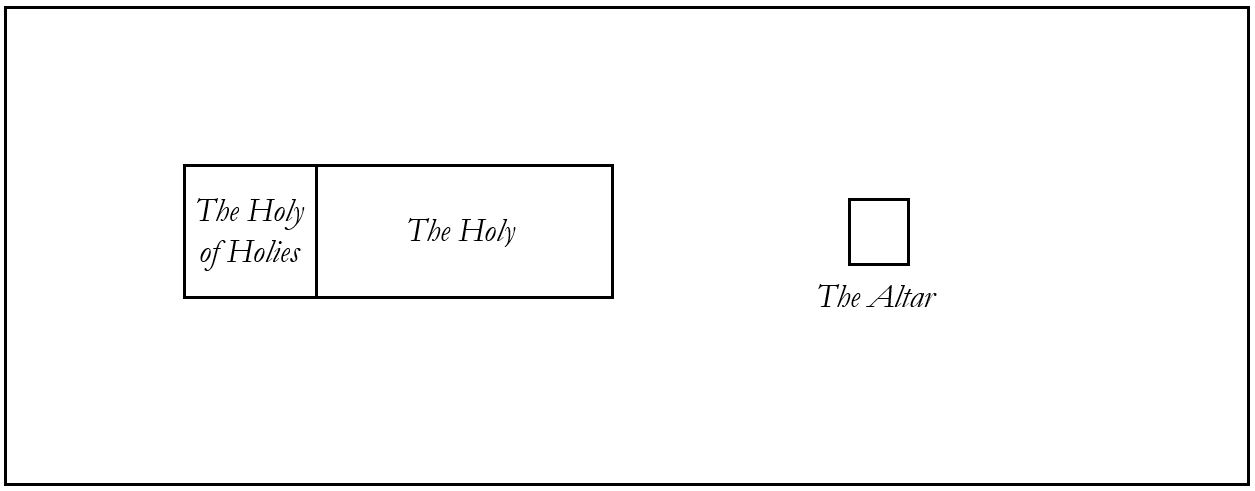
He begins by saying that the universe God created has three domains: the “world of angels”, the “world of spheres”, and the “lower world” which we inhabit. The highest world is mostly spiritual, while our lower world is mostly physical. In between is the cosmos, the “world of spheres”, referring to all the stars and planets. Moses constructed the Mishkan to mirror the three parts of Creation. The inner-most Holy of Holies corresponded to the world of angels; then the Holy space around it to the world of spheres; and the courtyard within the Mishkan to the lower world.

Outlines of the Mishkan, with the inner “Holy of Holies” (Kodesh haKodashim), the antechamber known as “the Holy” (Kodesh), and the outer courtyard (chatzer) with the sacrificial altar.

Similarly, since man is an olam katan, a microcosm of the universe, the human body also has three parts: head, upper body, and lower body. The head corresponds to the highest worlds, and hence this is where divine speech emerges from—speech containing the very powers of Creation, just as God spoke the cosmos into existence. The upper body, containing the heart that gives life to the whole body, corresponds to the world of spheres. Just as the heart is intertwined with the entire body, and circulates blood and nutrients all around, so too is the world of spheres entirely intertwined, with spheres orbiting around other spheres along precise paths in a dance held together by gravity (and other forces). Finally, the lower body from the waist down corresponds to the earthly world, as expected. With this in mind, we can better understand the procedure of the ear, thumb, and toe.

Rabbeinu Bechaye explains that the blood on the ear of the head corresponds to (and rectifies) the world of angels, the blood on the thumb of the upper body corresponds to the world of spheres, and the blood on the toe of the lower body corresponds to the lower world. He also mentions how these correspond to the soul. Recall that there are three major levels to the soul, the lowest being the animalistic nefesh, above it the more spiritual ruach, and the highest being the intellectual neshamah. The nefesh corresponds to the lower body, the ruach to the upper body, and the neshamah is seated in the brain. Thus, the sacrifice is able to atone for the entire soul, and for the entire body, as well as rectifying every aspect of the universe and of God’s Creation.

Souls and Senses

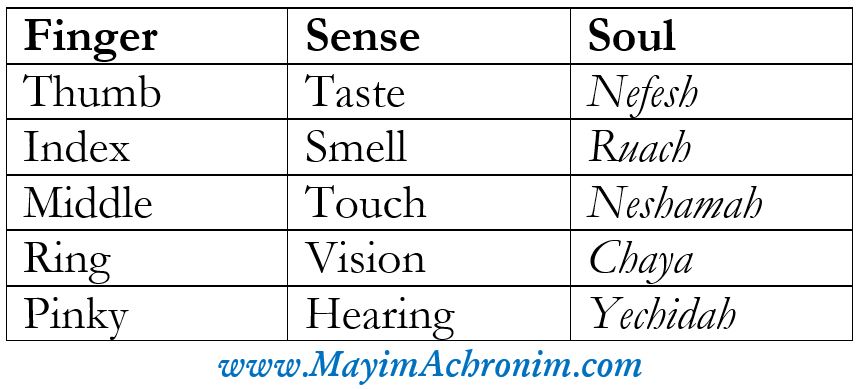
Rabbeinu Bechaye continues further on in his commentary to explain how the fingers are connected to the senses. He states that, of course, every organ and body part has a specific purpose, and nothing in God’s design is superfluous. (Classic case: for decades it was thought that the appendix is useless and an unnecessary “vestigial organ” that can be removed without a second thought. Today we know that the appendix does, in fact, play an important role in the digestive system.) The sense of taste requires the mouth and Rabbeinu Bechaye points out that people typically clean their teeth and mouth with their thumbs or thumb-nails. The sense of smell is in the nose, and people typically clean their nose with their index finger. The sense of touch is associated mostly with our hands, and people tend to feel things and sense textures by using their middle finger (or rubbing something between the thumb and middle finger). The ring finger is commonly used to clean and rub one’s eyes. Finally, the small pinky finger is the right size to clean the ear. In this way, every finger is connected to one of the five senses, and every finger can be used to clean the organ of that particular sense!

Rabbeinu Bechaye stops here, but there is more to be said. Although we typically speak of three main souls (nefesh, ruach, and neshamah), there are two more levels to the soul (sometimes described as the “neshamahs of the neshamah”) called chayah and yechidah. This complete array of five soul-levels further corresponds to the five fingers, and to the five senses. The short thumb is the lowest nefesh. As the lowliest “animal” soul, it sits separately from the other fingers. The nefesh is the one that always remains with the body, while the other parts are able to migrate. We learn, for instance, that when one is asleep the four higher souls can wander, while the nefesh always remains in the body (otherwise the body will not survive). Moreover, the Torah always says the nefesh is contained within the blood, and this is why meat must be drained of all blood before being consumed. We can now better understand why the blood of the sacrifice had to go specifically on the thumb of the person, and not any other finger.

The ruach part of the soul is the most “active”, and is the one that animates a person. Fittingly, it corresponds to the index finger, which is the most active and most-used of the digits. The biggest and longest of the fingers naturally corresponds to the biggest part of the soul, the neshamah. The ring and pinky fingers are the least-used, just as the chayah and yechidah are the loftiest and least accessible. The chayah is associated with one’s aura, the only part of the soul that might be perceived visually, so it neatly fits with the ring finger that is associated with eyes and vision. (The chayah plays an important, albeit subtle, role in the relationships and interactions between people so it is also appropriate that wedding rings are typically worn on this finger!)

The highest level of soul corresponds to the pinky finger and to the sense of hearing. That might explain why Moses’ final song to his people, the climax of his prophecy right before his passing, was Ha’azinu, literally charging the people “to listen”. And it might explain why the most powerful dictum in all of Judaism, the Shema, similarly commands the nation “to hear”. And it might further explain why the Talmud often introduces a new teaching with the words ta shma, “come and hear”. To summarize:

Left and Right

In Jewish thought, the right side is always associated with positivity and Chessed, kindness, while the left side is associated with Din and Gevurah, judgement and restraint. In mystical terms, the right side represents the realm of goodness and holiness, while the left side is commonly referred to as the Sitra Achra, the “other side”, the realm of impurity and evil. Indeed, we find that in many languages and cultures, the right side is associated with goodness and correctness (like being “right” in English) while the left is associated with evil. In Latin, for instance, the word for “left” is sinister! In Hebrew, there is a similar connection between the word “left”, smol, and the wicked angel that embodies evil, Samael. In Russian, something described as being “left” is a fake or a knock-off. Throughout history, being left-handed was perceived as somehow inappropriate, and left-handed people were often forced to use their right hands instead.

This is certainly unnecessary and, needless to say, there is nothing wrong with being left-handed! All humans were endowed with two hands, left and right, and on a mystical level they are simply meant to represent the two sides within Creation. This ties back to the gift of free will, with the hands standing as symbols of our ability to choose. The ultimate choice is whether to believe or not; whether to serve God and fulfil His commands, or not. Our Sages famously declare that “all is in the hands of Heaven [hakol b’yadei shamayim], except the fear of Heaven” (Berakhot 33b), while King Solomon taught that “death and life are in the hand of the tongue”, mavet v’chayim b’yad lashon (Proverbs 18:21). Over and over again, we see the hands used as symbols of choice between good and evil, between right and left, holiness and unholiness. Just as we have the power to use our hands, we have the power to subdue evil and act with goodness and kindness.

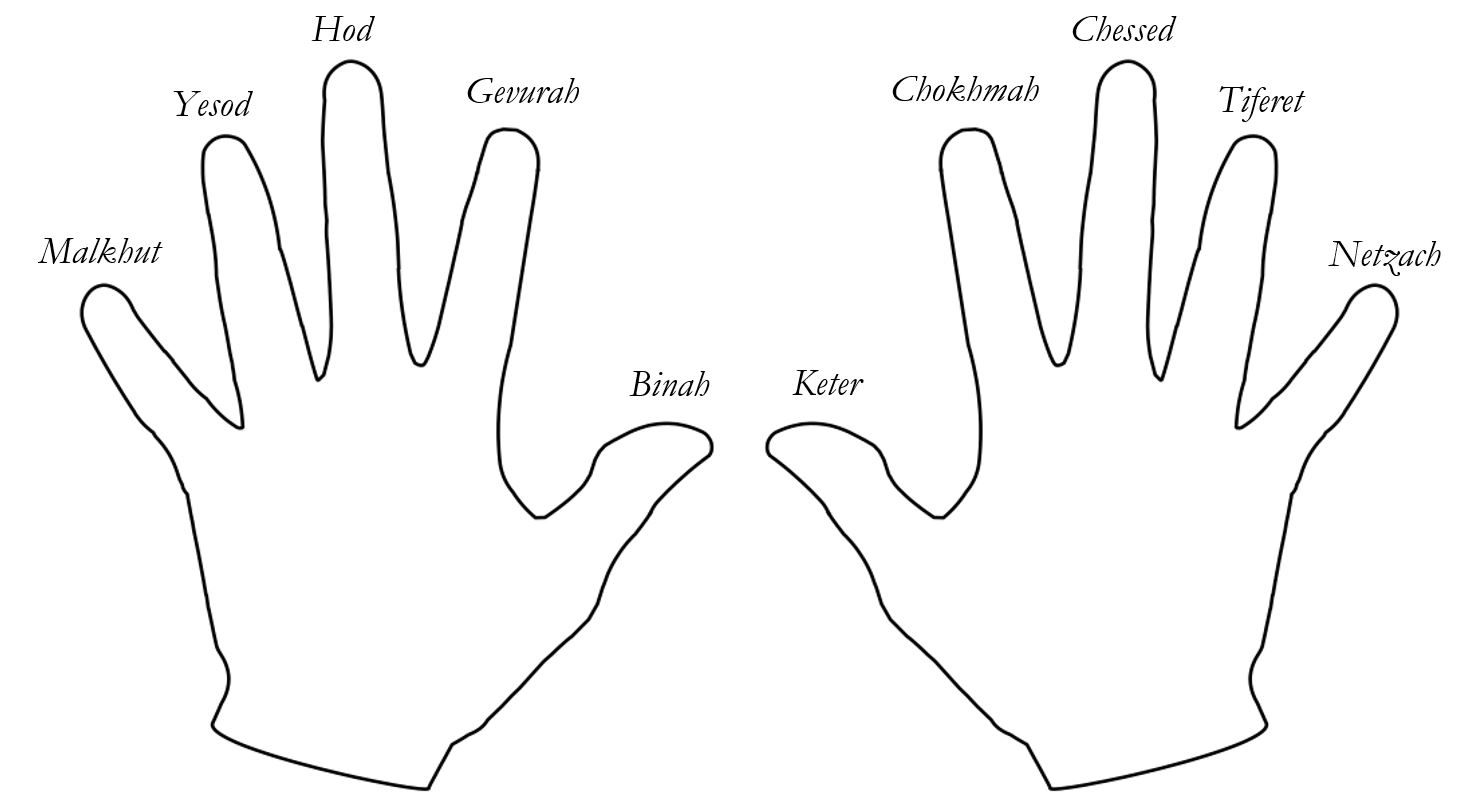
Thus, altogether the ten fingers of both hands embody all aspects of Creation. The ancient Sefer haBahir explains that the ten fingers correspond to the Ten Sefirot, as well as the Ten Utterances of Creation (see #124 and 138). Moreover, the Bahir says this is why kohanim have to arrange all ten fingers in that particular shape when blessing the congregation, thereby channeling all Ten Sefirot and activating all aspects of Creation. In later Kabbalistic texts, we are taught that the right thumb and index finger are Keter and Chokhmah, while the left thumb is Binah. The right middle finger is Chessed, the left index finger is Gevurah, the right ring finger is Tiferet, the left middle finger is Hod. The right pinky is Netzach, the left ring finger is Yesod, and the left pinky is Malkhut. The five Sefirot of Keter, Chokhmah, Chessed, Tiferet, and Netzach veer to the right, while the five Sefirot of Binah, Gevurah, Hod, Yesod, and Malkhut veer to the left. (We might learn from this yet another good reason for the common practice of wearing a wedding ring on the left ring finger, since it corresponds to Yesod, the domain of intimacy and reproduction.)

All of this can help us further appreciate the power of netilat yadayim and mayim achronim. The fingers link up to all aspects of our bodies, our senses, our souls, and even the cosmos at large. Thus, when we purify them correctly with life-giving waters, the unseen cosmic effects of these rituals are truly monumental.

What about the feet and toes?

Upper and Lower Worlds

The prophet Isaiah tells us that God created the upper worlds with His hands as He “measured the waters with a hand’s hollow, and established the Heavens with a little finger [zeret].” (Isaiah 40:12) The Earth, meanwhile, is described as God’s “footstool” (Isaiah 66:1). Thus, the hands and the “upper fingers” of the body represent the upper spiritual worlds, while the feet and the “lower fingers” of the body represent the lower material world. Indeed, the Zohar (I, 20b-21a) tells us that when we look at the reflection of the flame on our fingernails during Havdallah, we should meditate upon the higher spiritual worlds that the fingers of the hands represent. (More specifically, just as God told Moses that he could only see God’s “back”, but not His face, so too do we look only at the “backs” of the fingers, the fingernails!)

Interestingly, with this information we may be able to understand—from a mystical perspective—the difference in arrangement of fingers between the hands and the feet. On the hands, the biggest finger is the middle one, corresponding to the neshamah, while on the feet, the biggest finger is the toe, corresponding to nefesh. This further reinforces the notion that in this lower world (represented by the feet), the lower animalistic nefesh dominates. In the upper worlds (represented by the hands), it is the spiritual and lofty neshamah that is supreme. Unlike with the hands, the big digit on the feet is not separated from the rest of the toes—the nefesh seems to enjoy equal status with the other souls! On the hands, though, there is a clear distinction, mirroring the realities of the upper worlds.

Finally, the feet are grounded in the impurities of this lowly world. They are the coarsest parts of the body, and often the filthiest. The generation of Mashiach is compared to the feet, and the time before Mashiach is referred to as ikvot haMashiach, literally the “heels of the Messiah”. Like the feet, the people of this generation tend to be coarse and lowly, materialistic, lacking true spirituality. At the same time, however, the feet are among the strongest parts of the body, and can withstand tremendous weights and pressures. The feet can bear the greatest burdens, and only the feet can move us steadily onwards towards the final destination, the Messianic Age. Most beautifully, in the divine anatomy of the human body each foot contains exactly 26 bones, reminding us that God Himself is carrying us forward, as 26 is the exact numerical value of His Ineffable Name.