Tag Archives: Jerusalem

The Stones, Symbols, and Flags of the Twelve Tribes of Israel

Bamidbar is the fourth book of the Torah, and the name of its first parasha. It is known in English as “Numbers”, since it begins with a detailed census of the Jewish population in the wilderness. We are given a description of how the nation was organized in their camps: the tribes of Yehuda, Issachar, and Zevulun were positioned towards the East; Reuven, Shimon, and Gad to the South; Ephraim, Menashe, and Binyamin to the West; and Dan, Asher, and Naphtali to the North. The Levites and kohanim were in the centre. We are told that each of the tribes had their own flag, just as in a large military formation. What did these flags look like? Which colours did they bear, and what symbols graced them?
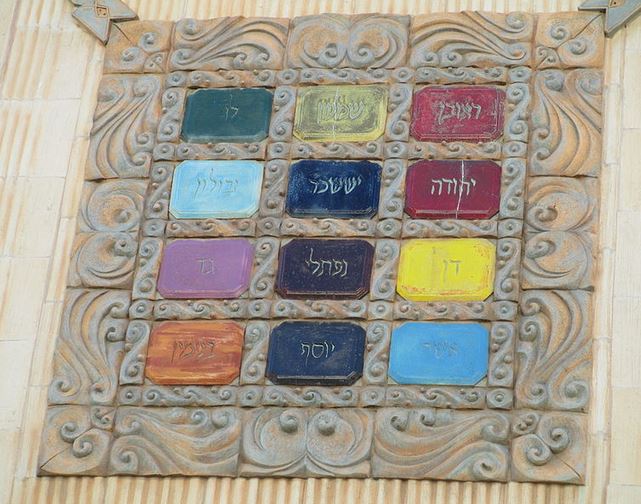
Modern Rendition of the Choshen, the High Priest's Breastplate

Modern Rendition of the Choshen, the High Priest’s Breastplate

In an intriguing passage, the Midrash (Bamidbar Rabbah 2:7) provides a summary of the flags’ appearance. It begins by telling us that the colours of the flags corresponded to the colours of the stones that were on the Choshen (or Breastplate) of the High Priest. The High Priest was commanded to wear a special breastplate that had twelve precious stones, one for each of the twelve tribes. Each stone had a symbolic meaning unique to that particular tribe.
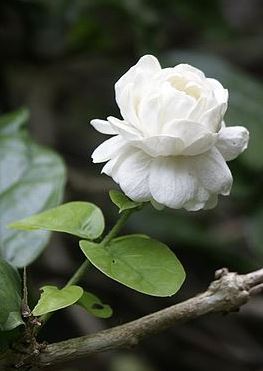
Jasmine flower

Jasmine flower


Reuven’s was the odem, a ruby, and so his flag was red. The symbol on the flag was the duda’im, flowers that Reuven had picked for his mother Leah (Genesis 30:14). It was on account of these flowers that Leah went on to have three more children. Duda’im is often translated as “mandrakes”, though according to Rashi they were of the Jasmine plant.

Shimon had the pitdah, probably topaz, and his flag was green. The symbol upon the flag was an image of the city of Shechem. This is in memory of the episode where Shimon (together with his younger brother Levi) took up swords to decimate the Shechem population after the abduction and rape of their sister Dinah (Genesis 34).

Levi’s was bareket, possibly an emerald or onyx, and the flag had three bands of colours: white, black, and red. Upon the flag was an image of the Urim V’Tumim, the mystical objects kept within the High Priest’s breastplate that were apparently used for communication with the Divine.
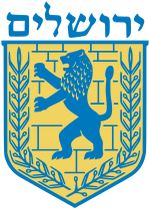
Modern-day Coat of Arms of Jerusalem, with the Lion of Judah

Modern-day Coat of Arms of Jerusalem, with the Lion of Judah

Yehuda had nofech, a stone more difficult to identify, with different opinions holding that it was either red, green, or blue. The Midrash here describes the flag as blue like the skies. Emblazoned upon it was the image of a lion. Before his passing, Jacob blessed each of his twelve sons, and in his blessing, he described Yehuda as a lion (Genesis 49:9). The lion would later become associated with the Davidic dynasty of kings (which hails from the tribe of Yehuda), and with the seat of their throne in Jerusalem, a city that goes by a number of names, including Ariel (“God’s lion”).

Issachar’s was a sapphire (or lapis lazuli) stone, and his flag was of a very dark blue colour. Upon it was the image of the sun and moon. The Midrash explains why, citing I Chronicles 12:33, which describes the people of Issachar as being wise in astronomical and chronological matters.

Zevulun had a yahalom, today’s Hebrew word for diamond, though there may be other possibilities. Zevulun’s flag was white, and bore a depiction of a ship, again based on Jacob’s blessing to the tribe to be successful sea-going merchants, and live along the Israeli coastline (Genesis 49:13).

Dan had leshem, amber, with a flag of a sapphire-like colour (despite the fact that amber is typically golden-red). Upon the flag was the symbol of a snake, once more based on Jacob’s blessing (v. 17). Likewise, Gad’s flag bore the image of a military camp (v. 19), on a black and white background, based on Gad’s stone of shevo, a black agate or obsidian.
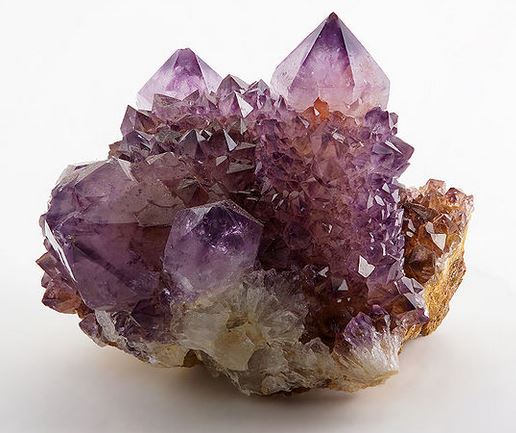
Amethyst, the Greek root of which is literally "not intoxicating"

Amethyst, the Greek root of which is literally “not intoxicating”

Naphtali had achlamah, the purple amethyst. His flag was of a similar colour, described by the Midrash as pure wine that isn’t too strong. It is interesting that the Midrash should compare it to wine, since amethyst was believed in ancient times to keep one sober and prevent drunkenness. Upon the flag was an image of a gazelle, also from Jacob’s blessing (v. 21).

Asher’s stone of tarshish is certainly the least identifiable of the dozen. Opinions range from chrysolite and coal to flint and hyacinth. The Midrash doesn’t help in clarifying the matter, describing the flag as similar to the colour of an expensive jewel stone worn by women. Whatever the case, the image upon the flag was that of an olive tree, since Jacob blessed Asher with fatty riches and delicacies (v. 20).

In the encampment, the tribes of Ephraim and Menashe were counted separately. On the breastplate, however, they were counted as one, under the banner of their father Yosef. This is because Ephraim and Menashe were not Jacob’s sons, but his grandsons, and on his deathbed, Jacob elevated their status to that of his own sons. Thus, we always maintain that there are twelve tribes: if we include the priestly Levites in the count, then Ephraim and Menashe are combined into one, Yosef, to ensure twelve. If we do not include the Levites since, after all, they are in a different class (and did not inherit any land for that matter), Ephraim and Menashe are counted independently of each other.
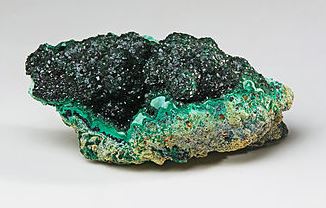
Malachite

Malachite

The stone of Yosef was shoham, which also has a number of opinions to its identity. The Midrash tells us that the flag was black, which supports the suggestion that shoham is malachite, a stone that has dark green and black colours. Ephraim’s black flag had a bull depicted on it. This is drawn from Moses’ final blessing to the tribes of Yosef (Deuteronomy 33:17), which the Midrash quotes. (Jacob’s blessing also mentions the word for a bull, but it is translated differently there.) The Midrash also tells us that the bull represents Joshua, who was of the tribe of Ephraim.

Based on the same verse in Moses’ blessing, Menashe’s black flag had a re’em, a horned animal sometimes translated as a unicorn, or perhaps an ox or even a rhinoceros. Again, the Midrash points out that this represented the Biblical judge Gideon, who was of the tribe of Menashe.

Last but not least, Binyamin’s flag famously depicted a wolf, based on Jacob’s description (Genesis 49:27). The stone of Binyamin was the yashfe, another unidentified one. The Midrash tells us that Binyamin’s flag had a mix of the colours of all the other tribal flags. This is likely due to the fact that Binyamin was the beloved little brother of the family, and all of his older siblings, though sometimes at odds with one another, always united to protect him. It is said that this is the reason why the Holy of Holies in the Temple was specifically in the territory of Binyamin (while the rest of the Temple was in the land of Yehuda), since the whole nation put aside their differences and united as one when it came to the smallest of their brothers.


This is an excerpt from Garments of Light: 70 Illuminating Essays on the Weekly Torah Portion and Holidays. Click here to get the book! 
An Honest Look at Death and the Afterlife

This week we once again read a double Torah portion, combining the parashot of Behar and Bechukotai to complete the book of Leviticus. The main themes of these parashas are the Sabbatical and Jubilee years, as well as God’s rewards and punishments for those who follow His ways and those who do not.

One interesting thing that the reader will note is that there is no mention of any kind of afterlife. All of the rewards and punishments that are listed are described in wholly physical terms: ample rains and abundant harvests, military victories and secure borders, good food and the feeling of God’s presence – and the opposite of these if the people are sinful. Why is it that the Torah does not mention any kind of reward and punishment in the afterlife? After all, we are accustomed to hearing that this world is nothing but a transient “hallway”, so to speak, while the next world is the real deal, where people receive what they deserve.

More puzzling is the fact that the Torah essentially never mentions the afterlife in explicit fashion. Everything appears to happen in this physical world. Yet, there is certainly a discussion of souls, and many spiritual entities. So, what is the real Torah conception of the afterlife?

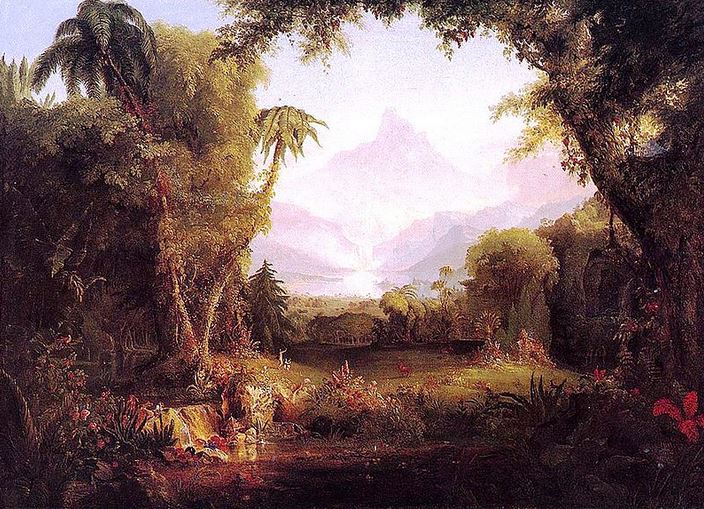
The Garden of Eden

'Garden of Eden', by Thomas Cole

‘Garden of Eden’, by Thomas Cole

Typically, it is common to think that those who have passed away are now in the “Garden of Eden”, and this is indeed how Hebrew-speakers often refer to the dead, wishing them menucha (rest) in Gan Eden. But where exactly is this “Gan Eden”?

The Torah is quite clear on the fact that God created the Garden of Eden right here on Earth. The Genesis account describes God’s creation of the world, and all of its inhabitants, and concludes with the planting of a garden in Eden, where the first man and woman are placed. After their sin of consuming the fruit, Adam and Eve are banished from the Garden, and continue their lives elsewhere on Earth. There is no mention anywhere in the Torah of a spiritual Garden of Eden located somewhere in the Heavens!

Conversely, it is common for people to refer to an afterlife of damnation in a place called Gehinnom, typically translated as “hell”. Again, there is no explicit mention of a “hell” in Scripture. Gehinnom itself simply means “the Valley of Hinnom” (or the Valley of the Son of Hinnom, Gei Ben Hinnom) which is discussed in the Tanakh as a place right outside the Old City walls of Jerusalem. This is described as a place of sinners and idolaters, outcasts that were expelled from the Holy City. Once again, we see that the place usually thought of as hell is simply a physical place here on Earth.

As Above, So Below

By the times of the Talmudic period, the Jewish Sages had developed a unique cosmic worldview. They saw this material world as only a reflection of the spiritual world. What happened down here reflected, in some way, much greater cosmic events that were happening in the Heavens. Thus, just as there was a Jerusalem down here on Earth, there was a Jerusalem shel ma’alah, a “Jerusalem Above” (see, for example, Ta’anit 5a).

Similarly, just as there was a Garden of Eden – a place of utmost peace and pleasure – here on Earth, there must be a similar one above in the Heavens. And just as there was a Gehinnom – a deep valley of evil – here on Earth, there must be such a place in the Heavens, too.

It appears that the idea of righteous souls moving on to a Heavenly Gan Eden, or wicked souls to a Heavenly Gehinnom, came from this view on the nature of God’s universe.

The Big Afterlife Problem

However, this brings about a very large problem: both the Garden of Eden and Gehinnom are described in physical terms. But, after the body dies and decays, only the soul lives on, and how can the soul experience physical pleasures or pains? Additionally, the soul is described as pure and eternal. Why is it the soul that must suffer for the sins accrued by the body? And why should the soul suffer infinitely for a body that had only such a short, finite existence?

This problem was presented to Rabbi Yehuda haNasi by the Roman Emperor Antoninus nearly two millennia ago (Sanhedrin 91a-b).

Antoninus said to Rabbi: “The body and the soul can both free themselves from judgment. Thus, the body can plead: ‘The soul has sinned, since from the day it left me I lie like a dumb stone in the grave.’ While the soul can say: ‘The body has sinned, since from the day I departed from it I fly freely in the air like a bird.’”

He replied: “I will tell you a parable. To what may this be compared? To a human king who owned a beautiful orchard which contained splendid figs. Now, he appointed two watchmen, one lame and the other blind. [One day] the lame man said to the blind, ‘I see beautiful figs in the orchard. Come and take me upon your shoulders, that we may procure and eat them.’ So the lame strode the blind, procured and ate them. Some time after, the owner of the orchard came and inquired of them, ‘Where are those beautiful figs?’ The lame man replied, ‘Do I have feet to walk with?’ The blind man replied, ‘Do I have eyes to see with?’ What did he do? He placed the lame upon the blind and judged them together. So will the Holy One, blessed be He, bring the soul, place it in the body, and judge them together…”

Rabbi Yehuda replied with a wonderful parable, and concluded that God brings the body and soul together again, and only then judges the person, and bestows upon them their due rewards or punishments.

So, if the body and soul go back together again after death, then there is no “Garden of Eden” or “Gehinnom” in the sense that we might commonly think.

Gate of Reincarnations

The only way that the body and soul can go back together again is if, following death, the soul returns into bodily form. This is the definition of reincarnation. Roughly 500 years ago, the great kabbalist Rabbi Isaac Luria, better known as the Arizal, revealed many secrets of reincarnation, and these teachings were recorded by his primary disciple, Rabbi Chaim Vital, in a text called Sha’ar HaGilgulim (Gate of Reincarnations).

This text describes reincarnations in great detail, and affirms that those who have lived sinful lives are reincarnated into new lives that are very challenging, and in this way have to make reparations for the mistakes of their past. The righteous, too, are reincarnated, since no one goes through life without making some mistakes, and even the most minute of these errors must be repaired. However, such people will enjoy much better lives, and be given the opportunity to fix those minor details from their past.

Of course, proper repentance can nullify any trials that a person must bear due to a mishap from a past life. Thus, free will ultimately trumps everything else. And what happens to those who have completely fulfilled their missions? In that case, there is indeed a “Garden of Eden” of sorts.

(For more on reincarnation, click here to read ‘Everything You Wanted to Know About Reincarnation in Judaism’.)

Resurrection of the Dead

One form of afterlife that Scriptures do mention explicitly is the Resurrection of the Dead. It is taught that sometime after the coming of Mashiach, all of the righteous souls will miraculously come back to life. They will then enjoy the world as it was always meant to be: a Garden of Eden.

Ultimately, this is the role of Mashiach: to return the world to that perfect, primordial state. It is interesting to note how the figure responsible for driving mankind out of the Garden was the Serpent, Nachash (נחש) in Hebrew, a word which has a numerical value of 358; and the figure responsible for returning mankind to the Garden is Mashiach (משיח), a word which also has a gematria of 358 – measure for measure. Thus, the final step for each soul, once its mission is complete, is to be resurrected in the restored Garden of Eden, right here in a new Earth, following the arrival of Mashiach.

We can now understand why Bechukotai does not speak of any spiritual rewards or punishments in an afterlife. All of the rewards and punishments are right here in this world, where body and soul unite as one, as Rabbi Yehuda told Antoninus. We can now also see why no “Heaven” or “Hell” is ever explicitly mentioned in Scripture, and why we never even mention them in our prayers. The Amidah prayer recited thrice daily makes no reference to souls in some Heavenly realm, but does have a blessing for techiyat ha’metim, the Resurrection of the Dead in a future, perfected world.

May we merit to see it speedily and in our days.


The article above is adapted from Garments of Light – 70 Illuminating Essays on the Weekly Torah Portion and Holidays. Click here to get the book!