
Tag Archives: Mashiach

Things You Didn’t Know About King Solomon

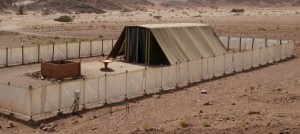
A Modern Replica of the Mishkan in Timna, Israel

This week’s parasha, Terumah, begins the Torah’s lengthy descriptions of the Mishkan, the “mobile sanctuary” or “tabernacle”. Fittingly, the Haftarah is a passage from I Kings describing King Solomon’s construction of the Jerusalem Temple, the permanent version of the Mishkan. Once the Temple was completed, it seems that Solomon actually brought the original Mishkan into the Temple and “parked” it there (I Kings 8:4-6). As per tradition, Solomon foresaw the future destruction of his own Temple, and made sure to build a secret chamber within the Temple Mount to hide the Ark of the Covenant and the original Mishkan vessels there, for safekeeping until the Final Redemption and the Third Temple.

The basic details of his biography are well-known: he reigned as king of a unified Israel for 40 years in a peaceful era (alluded to by his name, Shlomo, meaning “peace”); he had many wives and concubines; and he wrote three books of Tanakh: Mishlei (“Proverbs”), Kohelet (“Ecclesiastes”), and Shir haShirim (“Song of Songs”). What else do we know about this enigmatic king? Some of the lesser-known details will surely surprise you! Continue reading

Secrets of Tu b’Shevat (Video)

How did Tu b’Shevat go from a footnote on the Jewish calendar to an important mystical holiday? What are the true origins of the Tu b’Shevat seder? And what does it all have to do with the State of Israel and the coming of Mashiach?

Find out in this class where we also outline the proper steps of the Tu b’Shevat seder, explain the Kabbalistic meaning of the Tu b’Shevat fruits, explore the Book of Judges, and present an intriguing theory about the coming Final Redemption.

For a written summary on ‘Origins and Secrets of the Tu b’Shevat Seder’ see here.

For a detailed analysis on the ‘Prime Ministers of Israel and the Coming of Mashiach’, see the concluding chapter of Garments of Light, Volume One.

The Mystical Meaning of Snow

This week we begin reading Shemot, the Book of Exodus, and are reminded of some of the smaller details which are sometimes forgotten. One of these is when Moses asked God to provide him with signs that he could use to prove to the Israelites that he is really the redeemer (Exodus 4). God gives Moses three signs: the first is Moses’ staff transforming into a serpent, the second is Moses’ hand becoming “leprous like snow”, and the third is turning water into blood.

The first sign we later see expanded in the famous episode where Moses and Aaron go head-to-head with Pharaoh’s magicians and a serpentine battle ensues. The third sign would, of course, become the First Plague. But what of the middle sign? What is the meaning behind Moses’ hand becoming snowy? Even more intriguingly, the word “snow”, sheleg (שלג), actually appears for the very first time in the Torah right here. As a general rule, when a word appears for the first time in the Torah, it is there that we find its true significance. What is the spiritual significance of snow? Continue reading