Tag Archives: Midrash Rabbah

Can a Husband and Wife Speak Lashon HaRa To Each Other?

This week’s parasha, Metzora, is primarily concerned with the laws of various skin diseases. Jewish tradition holds that the main reason for a person to contract these skin afflictions is for the sin of evil speech. The term metzora, loosely translated as “leper”, is said to be a contraction of motzi ra or motzi shem ra, “one who brings out evil” or gives someone a “bad name”. The Sages described lashon hara, a general category referring to all kinds of negative speech (even if true), as the gravest of sins.

The Ba’al HaTurim (Rabbi Yakov ben Asher, 1269-1343) comments on the parasha (on Leviticus 13:59) that the word “Torah” is used in conjunction with words like tzaraat or metzora five times, alluding to the fact that one who speaks lashon hara is likened to one who has transgressed all five books of the Torah! The Talmud (Arakhin 15b) famously states that one who speaks lashon hara “kills” three people: the subject of the evil speech, the speaker, and the listener. The same page states that lashon hara is equal to the three cardinal sins: murder, idolatry, and adultery. Other opinions (all supported by Scriptural verses) include: one who speaks lashon hara is considered a heretic, deserves death by stoning, and God personally declares that He and the speaker of lashon hara cannot dwell in the same space.

Having said that, the Talmud’s definition of lashon hara is quite narrow. It doesn’t include general tale-bearing, but specifically refers to slandering another person. It also states that lashon hara is only applicable when two people are speaking in private, secretly. If one slanders before three or more people, then it is evident that he doesn’t care that the subject will know he said it. It is like saying it publicly, or to the person’s face directly, which does not constitute lashon hara. (It is still a horrible thing to do, of course.) This is why God says (Psalms 101:5) that “Whoever slanders his fellow in secret, him I will destroy.” It is specifically when done in secret that it is such a terrible, cowardly sin.

Since Talmudic times, the definition of lashon hara has broadened considerably. It has come to include rechilut, “gossiping”, saying negative things about another person that are true, saying them publicly, and even to suggest or imply something disparaging about another, without naming a person specifically. When it comes to gossiping, one can find an allusion to its severity from the Torah itself, which states “You shall not go as a talebearer among your people, neither shall you stand idly by the blood of your fellow” (Leviticus 19:16). In a single verse, the Torah juxtaposes gossiping with failing to prevent bloodshed. One can learn from this that one who listens to gossip (specifically where another person is spoken of unfavourably) without trying to stop it is like one standing idly while the “blood” of another is being shed.

One question frequently asked about this is whether lashon hara applies between a husband and wife. We saw that the Talmud states lashon hara is especially horrible when spoken in secret between two people. Does this include a married couple as well? On the one hand, we want to distance ourselves from negative speech as much as possible, at all times. On the other hand, we expect a married couple to be allowed to speak freely between one another as they wish. After all, they are two halves of one soul and considered a singular unit.
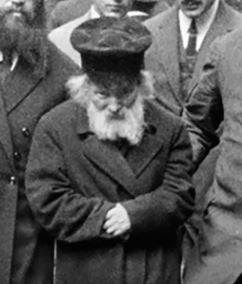
A still of the Chafetz Chaim from a rare, recently released video of the great rabbi. Click the image to see the video.

The Chafetz Chaim (Rabbi Israel Meir Kagan, 1839-1933), generally considered the greatest authority on lashon hara, forbids such speech even between husband and wife. However, many other great authorities before and after him (including Rav Shlomo Zalman Auerbach, 1910-1995, and the Chazon Ish, Rabbi Avraham Isaiah Karelitz, 1878-1953) ruled on the contrary, and permitted a husband and wife to speak about whatever is on their mind, particularly if something bothers them. Technically, even the Chafetz Chaim is lenient in a case where a spouse is in distress and needs to get something off their shoulders.

Still, all agree that we should limit negative words as much as possible, and certainly keep gossip to a minimum. Of course, when negative words have a constructive purpose, it is not considered lashon hara at all, whether between spouses or fellows. This is the case if a person undoubtedly knows, for example, that a particular contractor or salesman is dishonest, and tells a friend in order to protect them from harm.

Repairing Evil Speech, Repairing the World

In the days of the Temple, the kohanim would bring about atonement for the nation through sacrifices and various offerings and rituals. The most important time for atonement was Yom Kippur, and the greatest atonement ritual of the day was when the Kohen Gadol, the high priest, would enter the Holy of Holies (just once a year) and fill it with incense smoke. What was the ultimate purpose of this? The Talmud (Arakhin 16a) states that it served to atone for lashon hara! This was especially necessary because, elsewhere, the Talmud (Bava Batra 165a) states: “Many transgress the law of stealing, few transgress the prohibition of adultery, and all transgress lashon hara.” Everyone is guilty of negative speech, at least to some degree. How do we repair this sin, especially when we don’t have a Temple today?

The Talmud (Arakhin 15b) states that if one is a Torah scholar, they should learn more Torah, and if one is not a Torah scholar, they should strive to be more humble. Like all the other statements, support is brought from verses in Tanakh. King Solomon said “A healing tongue is a tree of life” (Proverbs 15:4). The Sages see the use of the word tongue (lashon) as alluding to lashon hara, and therefore if one wants to heal their lashon hara, they should cleave to the Tree of Life. What is the Tree of Life? King Solomon himself said in another place (Proverbs 3:18) that the Torah is a Tree of Life! Therefore, to rectify the sin of lashon hara one should study Torah.

Upon closer examination, we see that Torah study is actually the perfect remedy for lashon hara. When a person speaks lashon hara they are using their tongue in a negative way and infusing bad energy into the world. When a person learns Torah (which is traditionally done vocally), they are using their tongue in a positive way and infusing good energy into the world. The balance is thereby restored, measure for measure. On top of this, the purpose of Torah study is ultimately to make a person better. The Torah is the best tool to counter the yetzer hara, the evil inclination, as God Himself declared: “I have created the evil inclination, and I have created the Torah as its remedy” (Sifre Devarim, 45). Thus, a person who learns Torah simultaneously neutralizes the evil speech they have spoken and refines their inner qualities so that they will not participate in evil speech in the future.

On that note, there are two kinds of people when it comes to lashon hara: those that like to speak it, and those that love listening to it. The latter often quell their conscience by telling themselves that they never speak lashon hara, God forbid, but only passively, faultlessly, hear it. As we’ve seen above, the listener is almost as culpable as the speaker. Thankfully, there is a remedy for this, too. While many don’t necessarily learn Torah directly from a sefer or on their own, today we have unlimited potential to learn Torah by listening to lectures. These are shared widely on social media, and through digital devices, on apps, and over the radio. Every person today is a click away from Torah learning.

This takes us back to the Talmud, which stated that a Torah scholar can repair lashon hara by learning, while one who is not a Torah scholar should become more humble. The big question here is how can a person just “become more humble”? Humility is one of the most difficult traits to attain! We might even say that the Talmud should have required the Torah scholar—who is constantly learning, growing, and working on themselves—to “become more humble”, not the other way around! How can we make sense of the Talmud?

To prove the point about the non-Torah scholar, the Talmud uses that same verse from Proverbs: “A healing tongue is a tree of life, while perverseness through it will break the spirit.” The plain reading of the verse is that a person who uses their tongue for positive, healing purposes is likened to a Tree of Life, while one who uses their tongue for perverseness is destroying their soul. The Sages take the latter half of the verse to mean, on a simple level, that one who uses their tongue for perverseness should “break their spirit”, ie. become more humble, in order to rectify the sin. There is also a deeper way to read that same verse.

To solve the puzzle, one needs to re-examine what “it” (bah, in Hebrew) refers to. The simple meaning is that “it” refers to the tongue, and one who speaks perverseness through it (the tongue) will break their spirit. However, the verse can just as easily be read so that “it” refers to the Tree of Life. If so, the verse is read this way: “A healing tongue is a tree of life while perverseness, through it [the Tree of Life] will break the spirit.” What is it that will “break” one’s spirit and cause them to become humble? The Tree of Life itself!

Therefore, it is specifically the learning of Torah, the Tree of Life, that brings one to more humility. With this in mind, if we go back to the Talmudic statement of our Sages, what they are saying is: The Torah scholar should rectify their sin by learning more Torah, as they have yet to attain the proper level of holiness, while a non-Torah scholar should learn by listening to more Torah, for this will have the same effect of bringing a person to humility, and rectifying lashon hara.

At the end, this rectification is what will bring Mashiach. In Kabbalistic texts, the generation before Mashiach is in the sefirah of Yesod, which is concerned primarily with sexuality. It is not a coincidence that this is one of the major global issues today. The time following Mashiach’s coming is that of the final sefirah, Malkhut, “Kingdom”. One of the most famous passages from the Tikkunei Zohar is “Patach Eliyahu”, customarily recited before the prayers. There we are told that “Malkhut is the mouth, the Oral Torah.” While Yesod is the sexual organ, Malkhut is the mouth; it is Torah sh’be’al Peh, the Oral Torah, literally “Torah on the mouth”. The key path to realizing Mashiach, Malkhut, is by rectifying the mouth, which is done through the study of Torah.*

As we prepare for Pesach, we should remember the Midrash (Vayikra Rabbah, ch. 32) which states that the Israelites were redeemed from Egypt in the merit of four things: for not changing their names, not forgetting their language, not engaging in sexual sins, and not speaking lashon hara. The same is true if we wish to bring about the Final Redemption. Not engaging in sexual immorality is a direct reference to Yesod, while the other three all deal with the holy tongue, with proper speech and Malkut: using holy names, speaking the Holy Language, and making sure to speak only positive words.

‘Going Up To The Third Temple’ by Ofer Yom Tov


*More specifically, the first rectification is that of the “lower mouth”, Yesod, a tikkun that will be fulfilled by Mashiach ben Yosef. This is followed by the tikkun of the upper mouth, Malkhut, fulfilled by Mashiach ben David (of whom the Prophet says he will slay evil with his mouth, Isaiah 11:4) bringing about God’s perfect Kingdom on Earth.
Chanukah & the Light of Creation

As we begin celebrating Chanukah, we are reminded that Jewish law forbids using the light of the Chanukah candles for mundane purposes. At first thought, this is strange since all other holiday candles which we light may be used for mundane purposes. One can have a candle-lit dinner with the Shabbat candles on the table, yet the same cannot be done with Chanukah candles. This is actually why we light an additional (“ninth”) candle called the shamash, whose job is to “protect” the light of the Chanukah candles so that we do not inadvertently make use of them. Why is it that the Chanukah lights must not be used? To answer this question, one must go all the way back, long before the Maccabees, to the very beginnings of the universe.

The Light of Creation

When we open the Torah we read that God’s first act of Creation within an empty universe was light. God said “Let there be light”, and so it was. A few paragraphs later, we read that on the fourth day God created various luminaries to “give light”, including the sun, moon, and stars. If the things that naturally give off light were only created on the fourth day, what was the light of the first day? The Sages (Chagigah 12a) grappled with this apparent contradiction:

But was the light created on the first day? …This is [to be explained] according to Rabbi Elazar, for Rabbi Elazar said: “The light which the Holy One, blessed be He, created on the first day, one could see thereby from one end of the universe to the other; but as soon as the Holy One, blessed be He, beheld the generation of the Flood and the generation of the Dispersion, and saw that their actions were corrupt, He arose and hid it from them…”

Now the Tannaim [differ on the point]: “The light which the Holy One, blessed be He, created on the first day one could see and look thereby from one end of the universe to the other,” this is the view of Rabbi Yakov. But the Sages say: It is identical with the luminaries; for they were created on the first day, but they were not “hung up” until the fourth day.

On the simple level, the Sages agreed that the light of the First and Fourth Days were really the same thing: while God created the luminaries on the First Day, He only set them in their specific locations and orbits on the Fourth Day. This is in line with another opinion that God really created everything in one instant, on the First Day, and on the subsequent “days” He simply put everything in its place. (For an explanation of this, see Pardes Rimonim 13:5.)

On a deeper level, as expounded by Rabbi Elazar and Rabbi Yakov, the light of the First Day was an entirely different entity. Unlike the familiar, physical light of the Fourth Day, the light of the First Day was a special, mystical light which contained the power for one to see across the universe, through all of time and space. According to the Zohar, this is the special radiance of Creation, from which all things were fashioned (see ‘The Big Bang and the Age of the Universe’ in Volume One of Garments of Light). This idea is already noted in the Midrash (Beresheet Rabbah 12:6) which adds that “the light with which God created the universe [was given] to Adam, and with it he stood and gazed from one end of the universe to the other.”

Adam and Eve were given this Divine Light as a gift. However, once they consumed the Forbidden Fruit, that light disappeared. In fact, the Kabbalists explain that initially Adam and Eve saw the world entirely through this Divine Light, and themselves glowed with this light. When they looked upon each other, they saw only each other’s light, which is why they were unashamed. After consuming the Fruit, that light disappeared, and when they looked upon each other they saw frail skin, and all of its lustful trappings. This is why they were suddenly ashamed and wanted to hide.

The Kabbalists explain that this is the mystical meaning of the interplay between the words for “light”, or (אור), and “skin”, ‘or (עור), words that sound the same and are written with just one substitution: The singular, holy aleph replaced with the ‘ayin, which literally means “eye” and represents this illusory physical world. Before the Fruit, Adam and Eve saw light; afterwards they saw only skin. (See Beresheet Rabbah 20:12, Zohar I, 22b, and Pardes Rimonim 13:3)

This is the deeper meaning behind God’s first word to Adam and Eve after their fall: “Ayeka?” The term literally means “Where are you?” referring to the fact that Adam and Eve were hiding because they were ashamed. Of course, God knew exactly where they were. So what did He mean by Ayeka?

Ayeka

The Sages explain that the original Divine Light, called Or HaGanuz, the “hidden light”, only shone for 36 hours. There are two opinions as to how one reaches this number. The first (as in Beresheet Rabbah cited above) is that the Light shone for the entire 24 hours of the first Shabbat, as well as the 12 hours preceding that Shabbat, from the moment that Adam and Eve were created on the sixth day. The light disappeared at Shabbat’s conclusion, which is one reason why we perform Havdallah at the end of Shabbat, symbolizing our hope for the restoration of that Light. Alternatively, the Light shone for the first three days of Creation, before those physical luminaries were created on the fourth day. Since each day had 12 hours of light and 12 hours of dark, that means each of the three days had 12 hours of this Divine Light, totalling up to 36.

In reality, both opinions are correct. The Divine Light initially shone for those first three days—36 hours—and was then concealed by the new physical luminaries. On the sixth day, when God created Adam and Eve, He entrusted them with that Light, and they possessed it for 36 hours until the conclusion of the first Sabbath, neatly mirroring those 36 hours of the first three days. When Adam and Eve consumed the Fruit, the Light disappeared from them, and was taken back up to Heaven, stored beneath God’s Throne (Yalkut Shimoni, Isaiah 499). This brings us back to Ayeka. The gematria of that word (איכה) happens to be 36. When God called out to Adam and Eve and said Ayeka, what He meant was not “where are you?” but “where is the Light?”

Restoring the Light

While the Or HaGanuz has been hidden for now, it reveals itself in this world through several channels. We find that same number 36 in a number of important places. Most notably, when we look at the actual number of texts in our Holy Scriptures, we find that there are 36: Genesis, Exodus, Leviticus, Numbers, Deuteronomy, Joshua, Judges, Samuel, Kings, Isaiah, Jeremiah, Ezekiel, Hoshea, Yoel, Amos, Ovadiah, Yonah, Micah, Nahum, Habakkuk, Tzephaniah, Haggai, Zechariah, Malachi, Psalms, Proverbs, Job, Song of Songs, Ruth, Lamentations, Ecclesiastes, Esther, Daniel, Ezra, Nehemiah, and Chronicles. While we generally group these texts into 24 “books” of the Tanakh for convenience, there are exactly 36 independent works. This reminds us that the Holy Scriptures contain within them the Divine Light, and through the study of these texts we can receive a glimpse of it.

Similarly, the Bnei Issachar (Rabbi Tzvi Elimelech Shapiro, c. 1783-1841) points out that there are 36 tractates to the Talmud. Study of Torah—whether Written (Tanakh) or Oral (Talmud)—serves to restore that Divine Light little by little. Naturally, this parallels the idea of the 36 Perfect Tzaddikim. The Sages state that in every generation there are exactly 36 perfectly righteous people alive, and the world only continues to exist in their merit (Sanhedrin 97b). They contain a spark of that Divine Light within them. And on the calendar, too, there is a month in which finding the Or HaGanuz is particularly auspicious. This is the month of Kislev which, the Bnei Issachar points out, is a contraction of kis (כס) and lev (לו), the former meaning “hidden” and the latter having the value of 36.

That brings us right back to Chanukah, which begins on the 25th of Kislev. We light one candle on the first day, two on the second, and so on. The total number of candles lit over the course of eight days just happens to be 36. The Chanukah lights are symbolic of that special holy light of Creation. One should not for a moment think that these are just mundane, physical lights. And this is the mystical reason for why Jewish law forbids using the Chanukah lights for any purpose. One should constantly meditate on the fact that the light of the Menorah represents the Or HaGanuz, the light of Creation, the holy light with which Adam and Eve “saw from one end of the universe to the other.”

Jewish law also requires one to place their Menorah in a widely visible spot. We must “publicize the miracle” as much as possible, hence the many public Menorah-lighting ceremonies that take place around the world, and the many electronic chanukiahs found outside synagogues, in shopping malls, and on the roofs of cars. We are not just commemorating the Chanukah miracle, but the Jewish mission to bring light into the world (as Isaiah 42:6 famously states).

From a mystical perspective, we light 36 candles to remind ourselves that our mission is to rectify the cosmos and reveal the primordial holy light of God. We remind ourselves that we should strive to return to being like the original Adam and Eve, who glowed with this light, and who looked past the deceptive skin to see the pure light within each other. When we learn to recognize each other’s inner glow, then we will merit a return to the luminous Garden of Eden.


The above is an excerpt from Garments of Light, Volume Two. Get the book here

How Esau Became Rome

In this week’s parasha, Toldot, we are introduced to the twin sons of Isaac: Jacob and Esau. The Torah tells us that the boys grew up and Esau became a “man of the field” while Jacob was “an innocent man sitting in tents” (Genesis 25:27). In rabbinic literature, Esau takes on a very negative aura. Although the Torah doesn’t really portray him as such a bad guy, extra-Biblical texts depict him as the worst kind of person.

A 1728 Illustration of Esau selling his birthright.

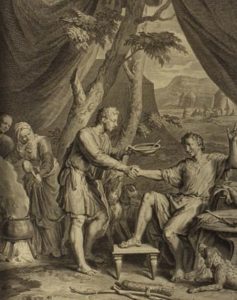
Take, for instance, the first interaction between Jacob and Esau that the Torah relates. Esau comes back from the field extremely tired. At that moment, Jacob is cooking a stew. Esau asks his brother for some food, and Jacob demands in exchange that Esau give up his birthright (ie. his status as firstborn, and the privileges that come with that). Esau agrees because “behold, I am going to die” (Genesis 25:32). The plain text of the Torah makes it seem like Jacob took advantage of Esau’s near-fatal weariness and tricked him into selling his birthright. This is later confirmed when Esau says that Jacob had deceived him (Genesis 27:36), implying that Esau never really wished to rid of it.

Yet, the Torah commentaries appear to flip the story upside down. When Esau comes back from the field exhausted, it isn’t because he just returned from a difficult hunt, but rather because, as Rashi comments, he had just come back from committing murder! When Esau says “I am going to die”, it isn’t because he was on the verge of death at that moment, but because he didn’t care about the birthright at all, choosing to live by the old adage of “eat, drink, and be merry, for tomorrow we die”. This is a very different perspective on the same narrative.

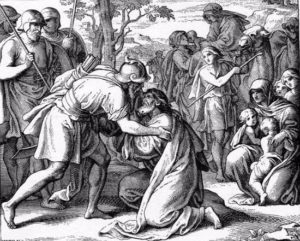
Another example is when, many years later, Jacob returns to the Holy Land and Esau comes to meet him. Jacob assumes Esau wants to kill him, and prepares for battle. Instead, Esau genuinely seems to have missed his brother, and runs towards him, “embracing him, falling upon his neck, and kissing him” (Genesis 33:4). Again, some of the commentaries turn these words upside down, saying that Esau didn’t really lovingly kiss his brother, but actually bit him! Rashi’s commentary on this verse cites both versions. He concludes by citing Rabbi Shimon bar Yochai in stating that although Esau, as a rule, hates Jacob, at that moment he really did love his brother.

So, how bad was Esau really?

Seeing the Good in Esau

Occasionally, we read about Esau’s good qualities. The Midrash (Devarim Rabbah 1:15) famously states that no one honoured their parents better than Esau did. This is clear from a simple reading of the Torah, too, where Esau is always standing by to fulfil his parents’ wishes. For instance, as soon as he learns that his parents are unhappy with his choice of wives, he immediately goes off to marry someone they might approve of (Genesis 28:8-9).

We should be asking why his parents didn’t simply tell him from the start that his original wives were no good? Why did they allow him to marry them in the first place? If Esau really was the person who most honours his parents, he would have surely listened to them! We may learn from this that Esau’s parents didn’t put too much effort into him. It’s almost like Rebecca gave up on her son from the moment she heard the prophecy about the twins in her belly. The Torah says as much when it states, right after the birth of the twins, that “Isaac loved Esau because his game-meat was in his mouth, but Rebecca loved Jacob.” (Genesis 25:28) Rebecca showed affection to Jacob alone, while Isaac’s love for Esau was apparently conditional. Of course, children always feel their parents’ inner sentiments, and there is no doubt Esau felt his parents’ lack of concern for him. Is it any wonder he tried so hard to please them?

From this perspective, one starts to feel a great deal of pity for Esau. How can anyone read Esau’s heartfelt words after being tricked out of his blessing and not be filled with empathy?:

When Esau heard his father’s words, he cried out a great and bitter cry, and he said to his father, “Bless me, too, O my father! …Do you not have a blessing left for me?” (Genesis 27:34-36)

Esau was handed a bad deal right from the start. He was born different, not just in appearance, but with a serious life challenge. He was gifted (or cursed) with a particularly strong yetzer hara, from birth. His fate was already foretold, and his parents believed it. They invested little into him. And it seems all he ever wanted was to make them proud.

Incidentally, this is one of the major problems with fortune-telling, and why the Torah is so adamant about not consulting any kind of psychic. The psychic’s words, even if entirely wrong, will shape the person’s views. It is very much like the Talmud’s statement (Berakhot 55b) that a dream is fulfilled according to how it is interpreted. A person believes the interpreter, and inadvertently brings about that interpretation upon themselves. It’s a self-fulfilling prophecy.

Who knows what might have happened if Rebecca never bothered to consult a prophet about her pregnancy? After all, Jewish tradition is clear on the fact that negative prophecies do not have to come true. God relays such a prophecy in order to inspire people to change, and thus avert the negative decree. Such was precisely the case with Jonah and his prophecy regarding Nineveh. The people heard the warning, repented, and the prophecy was averted.

Perhaps this is what Isaac and Rebecca should have done. Instead of giving up on Esau, they should have worked extra hard to guide him in the right direction. (Isaac indirectly did the opposite, motivating his son’s hunting since he loved the “game-meat in his mouth”.) The Sages affirm that Esau was not a lost case, and state that had Jacob allowed his daughter Dinah to marry Esau, she would have reformed him (see, for example, Beresheet Rabbah 76:9).

At the end, Jacob returns to the Holy Land and, instead of the war with Esau that he was expecting, his brother welcomes him back with open arms. He weeps, and genuinely misses him. Esau has forgiven his brother, yet again, and buries the past. He hopes to live with his brother in peace henceforth, and invites him to live together in Seir. Esau offers to safely escort Jacob and his family. Jacob rejects the offer, and tells Esau to go along and he will join him later (Genesis 33:14). This never happens. Jacob has no intention to live with Esau, and as soon as his brother leaves, Jacob a completely different course. Esau is tricked one last time.

We only hear about Esau once more in the Torah. When Isaac dies, Esau is there to give his father a proper burial (Genesis 35:29). In fact, the Book of Jubilees, which doesn’t portray Esau too kindly either, nonetheless suggests that Esau had repented at the end of his life. There we read that it was his sons that turned evil, and even coerced him into wrongdoing (37:1-5). In Jubilees, Esau tells his parents that he has no interest in killing Jacob, and loves his brother wholeheartedly, more than anyone else (35:22). He admits that Jacob is the one that deserves the birthright, and a double portion as the assumed firstborn (36:12).

The Torah never tells us what ends up happening to Esau. The Midrash states that he was still there when Jacob’s sons came to bury their father in the Cave of the Patriarchs. Esau tried to stop them, at which point Jacob’s deaf grandson Hushim decapitated him. (A slightly different version is found in the Talmud as well, Sotah 13a.) Esau’s head rolled down into the Cave of the Patriarchs, while the rest of his body was buried elsewhere. Perhaps what this is meant to teach us is that while Esau’s body was indeed mired in sin, his head was completely sound, and he certainly had the potential to be a righteous man—maybe even one of the forefathers, hence his partial burial in the Cave of the Patriarchs.

At the end of the day, Esau is not so much a villain as he is a tragically failed hero.

Why Did Esau Become so Evil?

Esau meets Jacob, by Charles Foster (1897)

As we’ve seen, the Torah itself doesn’t portray Esau as such a bad person. Conversely, one of the 613 mitzvot is “not to despise an Edomite, for he is your brother.” (Deuteronomy 23:8) The Torah reminds us that the children of Israel and the children of Esau (known as Edomites) are siblings, and should treat each other as such.

Nearly a millennium later, the prophet Malachi—generally considered the last prophet and, according to one tradition, identified with Ezra the Scribe—says (Malachi 1:2-3):

“I have loved you,” says Hashem, “Yet you say: ‘How have You loved us?’ Was not Esau a brother to Jacob?” says Hashem, “yet I loved Jacob, but Esau I hated…”

The text goes on to differentiate between Israel and Edom, stating that while Israel will be restored, Edom will be permanently extinguished. We have seen this prophecy fulfilled in history; Israel is still here, of course, while Edom has long disappeared from the historical record. Jacob’s descendants continue to thrive, while Esau’s are long gone.

By the times of the Talmud, there were no real Edomites left, so the Sages began to associate Edom with a new entity: the Roman Empire. The Sages certainly didn’t believe that the Romans were the direct genetic descendants of Esau, but rather that they were their spiritual heirs. Why did the Sages make this connection?

I believe the answers lies with King Herod the Great.

Recall that approximately two thousand years ago Herod ruled as the Roman-approved puppet king of Judea. He was a tremendous tyrant, and is vilified in both Jewish and Christian tradition. The Talmud (Bava Batra 3b-4a) relates how Herod slaughtered all the rabbis in his day, leaving only Bava ben Buta, whom he had blinded. Later, Herod had an exchange with Bava and realized how wise the rabbis were:

Herod then said: “I am Herod. Had I known that the Rabbis were so circumspect, I should not have killed them. Now tell me what amends I can make.”

Bava ben Buta replied: “As you have extinguished the light of the world, [for so the Torah Sages are called] as it is written, ‘For the commandment is a light and the Torah a lamp’ (Proverbs 6:23), go now and attend to the light of the world [which is the Temple] as it is written, ‘And all the nations become enlightened by it.’” (Isaiah 2:2)

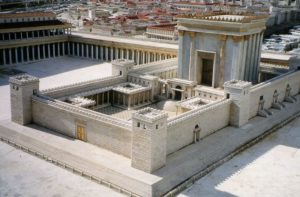
A model of Herod’s version of the Second Temple in Jerusalem

Herod did just that, and renovated the Temple to be the most beautiful building of all time, according to the Talmud. It wouldn’t last long, as that same Temple would be destroyed by his Roman overlords within about a century.

What many forget is that Herod was not a native Jew, but an Idumean. And “Idumea” was simply the Roman name for Edom. Herod was a real, red-blooded Edomite. (Though it should be noted that the Idumeans had loosely, or perhaps forcibly, converted to Judaism in the time of the Hasmoneans.) Herod took over the Jewish monarchy, and began the horrible persecutions that the Roman Empire—of which he was a part—was all too happy to continue. It seems quite likely, therefore, that the association between Edom and Rome began at that point. The people resented that Roman-Edomite tyrant Herod that persecuted them so harshly.

Henceforth, it was easy for the Sages to spill their wrath upon Edom, and their progenitor Esau. Esau became a symbol of the Roman oppressor. “Esau” and “Edom” were code words, used for speaking disparagingly about Rome to avoid alarming the authorities. Indeed, when the Sages speak about the evils of Esau, they are often really referring to the evils of the Roman Empire. It is therefore not surprising that Esau becomes possibly the most reviled figure in the Torah—as the Romans were unquestionably the most reviled entity in Talmudic times.


The above is an excerpt from Garments of Light, Volume Two. To continue reading, get the book here