
This essay was meant to be for last week’s parasha, Massei, but the insight only came to me on Shabbat as I was reading the parasha and wandering, once again, what is the deeper significance of the Torah listing all 42 stops of the Israelites in the Wilderness? As I was going over the list, a few of the location names jumped out at me for being of great historical significance. What if, I thought, the 42 stops represent a historical timeline for all the major events in Jewish history, from the Exodus to the End of Days? Could it be that the Torah was encoding all the key national “journeys” of Israel in the future? As I went through them, it made more and more sense, and a neat picture of Jewish history emerged. I decided to write about it this week instead of saving it for next year because some of the “stops” on the Israelite journey are particularly relevant now, both in light of what is happening around the world and in the Holy Land, and as we get ready to commemorate Tisha b’Av this Sunday. Let’s take a deeper look at the 42 stops of the Israelite journey. Continue reading
Tag Archives: Bar Kochva Revolt
A New Perspective on Rabbi Akiva, Rachel, and the 24,000
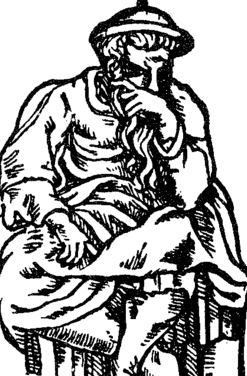
An illustration of Rabbi Akiva from the Mantua Haggadah of 1568
Now that Lag b’Omer is behind us and the mourning customs have been lifted, it may be a good time to reflect more deeply on the whole story of Rabbi Akiva and his 24,000 students. This story is very well-known, of course, and deeply ingrained in our psyches. But for me, like for many people, multiple aspects of the story never really made sense. So many questions emerge, each more troubling than the next.
First, how it is possible that 24,000 Torah giants—talmidei chakhamim and presumably very righteous people—were slaughtered in the span of just a few weeks? The students of the great and saintly Rabbi Akiva, no less? Why did he have to suffer such a horrendous loss? And all because the students “didn’t honour each other properly”? Since when does lack of honour incur mass execution? And what does it even mean, anyway, that they didn’t “honour” each other? How so?
Another question: why specifically 24,000 disciples? How did Rabbi Akiva even get such an astronomical number of students in the first place, at a time following the Great Revolt when the Jewish community in the Holy Land was decimated? And why does the number 24 keep coming up in the story? Recall that Rabbi Akiva left his home and was away from him wife for 24 years, returning with 24,000 students. Surely this is not coincidental. I believe it might actually hold the key to answering all of the perplexing questions above, as well as another big mystery:
Why is it that the mourning period for the 24,000 students specifically requires abstaining from weddings. As explored in the past, the earliest mention of “mourning” during the Omer is from the times of the Geonim, and suggests to only avoid weddings. (The first halakhic code to officially speak about it, the Arba Turim, notes a universal custom to avoid weddings, and only a local custom among some communities to avoid haircuts.) Why is the essence of mourning for the 24,000 specifically observed by prohibiting weddings? Continue reading
Kabbalah of the Omer
What is the deeper significance behind the 49 days between Passover and Shavuot? Why do we count the days, and what is their mystical connection to the Sefirot? Also, where did “mourning” during Sefirat haOmer really originate, and what is the proper way to approach these customs? Find out in this eye-opening class as we dive into Sefirat haOmer and explore what it takes to become a complete, refined human. Plus, the primordial elements associated with the Sefirot, and a Kabbalistic look at Yom ha’Atzmaut, Yom Yerushalayim, and Yom haShoah.