This week’s parasha (in the diaspora) is Shlach, centered around the infamous incident of the Spies. While highly unfortunate, we do learn from it the rule of having a minyan, the quorum of ten men needed for various prayers and rituals. Recall that Moses sent twelve spies total, and two came back with a positive report (Joshua and Caleb), while the other ten convinced the nation not to proceed with entering the Holy Land. God then refers to these ten as the edah hara’ah, the “wicked congregation” (Numbers 14:27). Rashi comments here that we learn from this the minimum number of men to be considered a “congregation” is ten. He cites the Talmud in Megillah 23b which uses this Torah verse as proof that a proper minyan needs at least ten. The Mishnah there starts the discussion by listing various practices that require a minimum of ten, including public Torah and Haftarah readings, birkat kohanim, the repetition of the Amidah, weddings, and funerals. (The Gemara goes on to clarify that the groom at a wedding or the mourner at the funeral do count among the ten.) While Talmud here does not explain why it is exactly that ten men are needed, the Zohar does.

The Ten Sefirot
The Zohar (I, 24a) says, as one might expect, that the ten men of a minyan correspond to the Ten Sefirot. Each person takes on one of the Sefirot, and serves as a “conduit” for one of the Sefirot, allowing the prayers to properly ascend Heavenward. Moreover, it is only in the presence of ten that the Shekhinah can be manifest. Elsewhere, the Zohar (I, 67b) finds an even earlier source for a minyan, pointing out that Abraham had asked God to spare Sodom for the sake of ten righteous people (Genesis 18:32). God replied that He would not destroy Sodom if there even ten good people there. From this we learn that ten good people who recognize God and pray to Him can potentially avert even the most catastrophic decrees—another excellent reason to regularly pray with a minyan! The Zohar here also notes that had there been ten righteous people in the times of Noah, the Great Flood itself would have been averted. Unfortunately, there were only eight good people at the time, the eight-member family of Noah that merited to be saved in the Ark.
Later still, the Zohar (I, 201a) points out another important minyan in the Torah: the sons of Jacob initially came down to Egypt in a quorum of ten (having left Benjamin behind). The Zohar says they were strong and protected as long as they stayed together as ten. Once Joseph imprisoned Shimon, only nine of them were left, and they were now spiritually unprotected and subject to harsh din. The Zohar here says that Hashem gets upset when one member of the minyan leaves and only nine are left. Meanwhile, the Talmud in Sotah (33a) brings another important teaching involving the story of Joseph:
The Talmud says that a person should not pray in Aramaic because angels do not understand Aramaic. This is specifically referring to when a person prays alone, and needs the assistance of angels to carry his prayers up. When it comes to communal prayers with a minyan, however, this isn’t necessary, presumably because the Shekhinah is already there anyway, and the assistance of angels is not required. Thus, communal prayers can be said in Aramaic, which would explain why Kaddish is in Aramaic and needs a minyan to be recited. (Lots more on the meaning and power of Kaddish here.) The Talmud here notes an exception to the general rule of angels not speaking Aramaic, pointing out that the angel Gabriel does speak Aramaic, and knows seventy languages, which were all taught to Joseph on that fateful night when he was released from prison and came before Pharaoh for the first time.
Children and Women in Minyan
Pirkei d’Rabbi Eliezer (Ch. 19) comments on the asor, King David’s ten-stringed instrument, that “All faithful testimonies of Israel need ten.” It goes on to list that “the testimony for the dead is through ten. The testimony for the public benediction of God’s Name is through ten. The testimony of the covenant of circumcision is through ten. The testimony for chalitzah is through ten, as it is said, ‘And he took ten men of the elders of the city…’” (Ruth 4:2) Based on this same verse in Ruth, the Talmud (Ketubot 7b) derives that a wedding and a Sheva Berakhot needs ten as well, since Boaz went on to marry Ruth immediately after. All of these rituals need a quorum of ten to parallel the Ten Sefirot and make the ceremony complete; to serve as conduits for blessings to effectively come down, and for prayers to effectively go up.
And that’s why it’s so powerful to be among the first ten in a minyan. Every additional person that comes afterwards is important, too, and compounds the effect. But the first ten make it all happen. The Talmud adds that the first ten get a reward equivalent to all the others that show up later, combined, even if there were a hundred more people (Berakhot 47b). But what if there are not ten? What if one is missing? The same page of Talmud discusses this, too. First, it suggests that a slave can count as the tenth, or a newly-emancipated slave. Rav Huna proposes that a Torah scroll in the aron can count as the tenth. Rav Ami suggests that Shabbat can count as a tenth, or that two great Torah scholars can count as three people! Rabbi Yochanan says a minor who is old enough to know how to pray and recognizes to Whom he is praying can count as the tenth, or at least as the third for a zimun before birkat hamazon.
Later rabbinic texts discuss that last point at length. The Shulchan Arukh (Orach Chayim 55:4) concludes that while there were those who permitted including a minor (over the age of 6) in extenuating circumstances, it generally should not be done. Surprisingly, there is one source (the Mordechi on Berakhot, #158) that suggests a woman might count in extenuating circumstances as well. Halakhah never went with that opinion. The general position is that, since women are technically exempt from praying, they cannot count in a minyan for prayer. (This is aside from the modesty issue, since men and women need to be physically separated as well.)
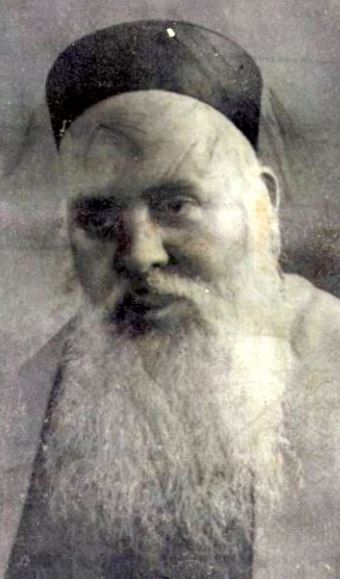
Rav Yosef Messas, rabbi of Tlemcen (now Algeria), and later chief rabbi of Haifa, Israel.
But what about something like a Megillah reading, in which women generally are obligated? (Megillah 4a) At least one opinion held that a woman might count for this, as the Meiri wrote: “Some say that for all cases in which a minyan of ten is necessary, if a woman’s obligation is equivalent to that of men, they may join the minyan.” (More on that here.) Today, it is not uncommon in the Modern Orthodox world for women to hold their own women-only Megillah readings. A related issue is reading publicly from the Torah. The Talmud (Megillah 23a) suggests that a woman theoretically could be called up to the Torah and read from the Torah publicly, but it shouldn’t be done due to issues of respect and modesty. But what if it’s an all-women congregation? Might that be allowed? Amazingly, Rav Yosef Messas (1892-1974), one of the great Sephardic chakhamim of the 20th century and chief rabbi of Haifa, wrote in his Nahalat Avot that there were indeed Sephardic communities in the past where women formed their own minyanim, read from the Torah, and even donned tallit and tefillin!
When we look back at our prophecies, they do describe a future time when “a woman will encircle a man” (Jeremiah 31:22) and, when the light of the moon—understood to represent the female—will once again be restored to its former glory and be equal to the “male” sun (Isaiah 30:26). Intriguingly, in Exodus 15:20-21 it says that Miriam took the women to sing their own song after the Splitting of the Sea, and the word used in reference to the women is lahem, instead of the feminine lahen. The Kli Yakar (Rabbi Shlomo Ephraim of Luntschitz, 1550-1619) comments: “It should have said lahen but because at the Sea the women reached the same level as the men in attaining prophecy, it says lahem, as if speaking to males, and so too this will be in the future, as it is stated, ‘A woman will encircle a man.’”
So perhaps the recent rise of women’s minyanim, along with the proliferation of beit yaakov schools for girls, women’s prayer groups, women’s Torah classes, women’s Megillah readings, women’s siddurim, and so many sefarim custom-tailored for women; yoatzot halakhah and popular rabbanit speakers; Rosh Chodesh gatherings, communal challah bakes, and the like, is yet another sign that we are in the times of the Final Redemption.