Tag Archives: Kli Yakar

The Meaning of Minyan

This week’s parasha (in the diaspora) is Shlach, centered around the infamous incident of the Spies. While highly unfortunate, we do learn from it the rule of having a minyan, the quorum of ten men needed for various prayers and rituals. Recall that Moses sent twelve spies total, and two came back with a positive report (Joshua and Caleb), while the other ten convinced the nation not to proceed with entering the Holy Land. God then refers to these ten as the edah hara’ah, the “wicked congregation” (Numbers 14:27). Rashi comments here that we learn from this the minimum number of men to be considered a “congregation” is ten. He cites the Talmud in Megillah 23b which uses this Torah verse as proof that a proper minyan needs at least ten. The Mishnah there starts the discussion by listing various practices that require a minimum of ten, including public Torah and Haftarah readings, birkat kohanim, the repetition of the Amidah, weddings, and funerals. (The Gemara goes on to clarify that the groom at a wedding or the mourner at the funeral do count among the ten.) While Talmud here does not explain why it is exactly that ten men are needed, the Zohar does.

The Ten Sefirot

The Zohar (I, 24a) says, as one might expect, that the ten men of a minyan correspond to the Ten Sefirot. Each person takes on one of the Sefirot, and serves as a “conduit” for one of the Sefirot, allowing the prayers to properly ascend Heavenward. Moreover, it is only in the presence of ten that the Shekhinah can be manifest. Elsewhere, the Zohar (I, 67b) finds an even earlier source for a minyan, pointing out that Abraham had asked God to spare Sodom for the sake of ten righteous people (Genesis 18:32). God replied that He would not destroy Sodom if there even ten good people there. From this we learn that ten good people who recognize God and pray to Him can potentially avert even the most catastrophic decrees—another excellent reason to regularly pray with a minyan! The Zohar here also notes that had there been ten righteous people in the times of Noah, the Great Flood itself would have been averted. Unfortunately, there were only eight good people at the time, the eight-member family of Noah that merited to be saved in the Ark.

Later still, the Zohar (I, 201a) points out another important minyan in the Torah: the sons of Jacob initially came down to Egypt in a quorum of ten (having left Benjamin behind). The Zohar says they were strong and protected as long as they stayed together as ten. Once Joseph imprisoned Shimon, only nine of them were left, and they were now spiritually unprotected and subject to harsh din. The Zohar here says that Hashem gets upset when one member of the minyan leaves and only nine are left. Meanwhile, the Talmud in Sotah (33a) brings another important teaching involving the story of Joseph:

The Talmud says that a person should not pray in Aramaic because angels do not understand Aramaic. This is specifically referring to when a person prays alone, and needs the assistance of angels to carry his prayers up. When it comes to communal prayers with a minyan, however, this isn’t necessary, presumably because the Shekhinah is already there anyway, and the assistance of angels is not required. Thus, communal prayers can be said in Aramaic, which would explain why Kaddish is in Aramaic and needs a minyan to be recited. (Lots more on the meaning and power of Kaddish here.) The Talmud here notes an exception to the general rule of angels not speaking Aramaic, pointing out that the angel Gabriel does speak Aramaic, and knows seventy languages, which were all taught to Joseph on that fateful night when he was released from prison and came before Pharaoh for the first time.

Children and Women in Minyan

Pirkei d’Rabbi Eliezer (Ch. 19) comments on the asor, King David’s ten-stringed instrument, that “All faithful testimonies of Israel need ten.” It goes on to list that “the testimony for the dead is through ten. The testimony for the public benediction of God’s Name is through ten. The testimony of the covenant of circumcision is through ten. The testimony for chalitzah is through ten, as it is said, ‘And he took ten men of the elders of the city…’” (Ruth 4:2) Based on this same verse in Ruth, the Talmud (Ketubot 7b) derives that a wedding and a Sheva Berakhot needs ten as well, since Boaz went on to marry Ruth immediately after. All of these rituals need a quorum of ten to parallel the Ten Sefirot and make the ceremony complete; to serve as conduits for blessings to effectively come down, and for prayers to effectively go up.

And that’s why it’s so powerful to be among the first ten in a minyan. Every additional person that comes afterwards is important, too, and compounds the effect. But the first ten make it all happen. The Talmud adds that the first ten get a reward equivalent to all the others that show up later, combined, even if there were a hundred more people (Berakhot 47b). But what if there are not ten? What if one is missing? The same page of Talmud discusses this, too. First, it suggests that a slave can count as the tenth, or a newly-emancipated slave. Rav Huna proposes that a Torah scroll in the aron can count as the tenth. Rav Ami suggests that Shabbat can count as a tenth, or that two great Torah scholars can count as three people! Rabbi Yochanan says a minor who is old enough to know how to pray and recognizes to Whom he is praying can count as the tenth, or at least as the third for a zimun before birkat hamazon.

Later rabbinic texts discuss that last point at length. The Shulchan Arukh (Orach Chayim 55:4) concludes that while there were those who permitted including a minor (over the age of 6) in extenuating circumstances, it generally should not be done. Surprisingly, there is one source (the Mordechi on Berakhot, #158) that suggests a woman might count in extenuating circumstances as well. Halakhah never went with that opinion. The general position is that, since women are technically exempt from praying, they cannot count in a minyan for prayer. (This is aside from the modesty issue, since men and women need to be physically separated as well.)
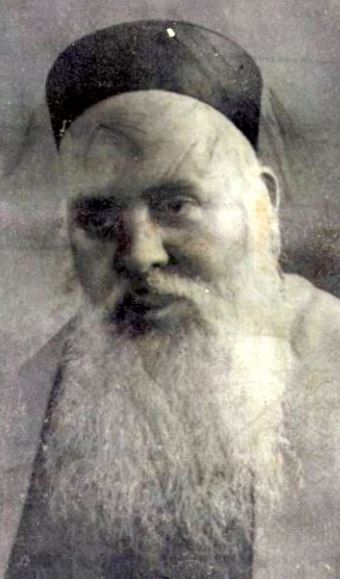
Rav Yosef Messas, rabbi of Tlemcen (now Algeria), and later chief rabbi of Haifa, Israel.

But what about something like a Megillah reading, in which women generally are obligated? (Megillah 4a) At least one opinion held that a woman might count for this, as the Meiri wrote: “Some say that for all cases in which a minyan of ten is necessary, if a woman’s obligation is equivalent to that of men, they may join the minyan.” (More on that here.) Today, it is not uncommon in the Modern Orthodox world for women to hold their own women-only Megillah readings. A related issue is reading publicly from the Torah. The Talmud (Megillah 23a) suggests that a woman theoretically could be called up to the Torah and read from the Torah publicly, but it shouldn’t be done due to issues of respect and modesty. But what if it’s an all-women congregation? Might that be allowed? Amazingly, Rav Yosef Messas (1892-1974), one of the great Sephardic chakhamim of the 20th century and chief rabbi of Haifa, wrote in his Nahalat Avot that there were indeed Sephardic communities in the past where women formed their own minyanim, read from the Torah, and even donned tallit and tefillin!

When we look back at our prophecies, they do describe a future time when “a woman will encircle a man” (Jeremiah 31:22) and, when the light of the moon—understood to represent the female—will once again be restored to its former glory and be equal to the “male” sun (Isaiah 30:26). Intriguingly, in Exodus 15:20-21 it says that Miriam took the women to sing their own song after the Splitting of the Sea, and the word used in reference to the women is lahem, instead of the feminine lahen. The Kli Yakar (Rabbi Shlomo Ephraim of Luntschitz, 1550-1619) comments: “It should have said lahen but because at the Sea the women reached the same level as the men in attaining prophecy, it says lahem, as if speaking to males, and so too this will be in the future, as it is stated, ‘A woman will encircle a man.’”

So perhaps the recent rise of women’s minyanim, along with the proliferation of beit yaakov schools for girls, women’s prayer groups, women’s Torah classes, women’s Megillah readings, women’s siddurim, and so many sefarim custom-tailored for women; yoatzot halakhah and popular rabbanit speakers; Rosh Chodesh gatherings, communal challah bakes, and the like, is yet another sign that we are in the times of the Final Redemption.
The Mystical Significance of Bones

In this week’s parashah, Beshalach, the Israelites finally leave Egypt. We read how Moses made sure to take with him ‘atzamot Yosef, the “bones of Joseph” (Exodus 13:19). It is interesting that a bone is called an ‘etzem (עצם), which literally means an “essence”. As an adjective, ‘atzum (עצום) means “strong”, as well as “shut” or “closed up”. This is fitting since bones are the strongest components of the body, and “closed up” within muscles and other tissues. (For those who like numbers, the gematria of עצום is 206, which is the total number of bones in the human body!) There is something especially significant about bones. God made Eve from Adam’s bone, and Adam later declared that Eve is “bone of my bone” (‘etzem mi’atzamai), implying that her essence is like his essence, and now he would finally be happy and no longer feel alone. What is so special about bones that they hold the very essence of a person?

One of the amazing wonders of biology is that each and every cell of our bodies contains our entire genome (except, of course, the reproductive cells). So, the DNA inside the nucleus of eye cells contains the genes that also program toenails, and the toes have the DNA of the retinal proteins in our eyes! It remains one of the great mysteries of biology how cells are able to control exactly which genes are turned “on” or “off” in every cell, and how they make sure that eyes don’t have nails, and nails don’t grow eyes. In our adult bodies, most cells have already been differentiated into something specific (like eyes or toes), but there is one place where cells remain undifferentiated, and could become anything. These are called stem cells, and they exist mainly within our bones. Here in the bone marrow, we do indeed find our ‘etzem, the core essence of who we are, still undifferentiated and full of potential to become anything.

This explains why God made Eve from Adam’s bone specifically, as if He took some of Adam’s undifferentiated stem cells to create Eve! This is precisely how a modern-day scientist experimenting with genetic engineering or organ printing would do it. Better yet, when scientists and surgeons need to extract bone marrow for stem cell transplants today, the rib bone is actually a great place to get them, since they are near the surface and easily accessible, with little meat around them. (I know that some people will quote a different opinion from our Sages, as in Berakhot 61a, that Eve was “split” from a two-faced Adam, or that she was made from his “tail”, but the rib opinion makes a great deal of sense from a scientific perspective.) In any case, when we remember that our bones contain our undifferentiated cells and our untampered DNA, we appreciate the beauty of divine Hebrew in calling a bone an “essence”.

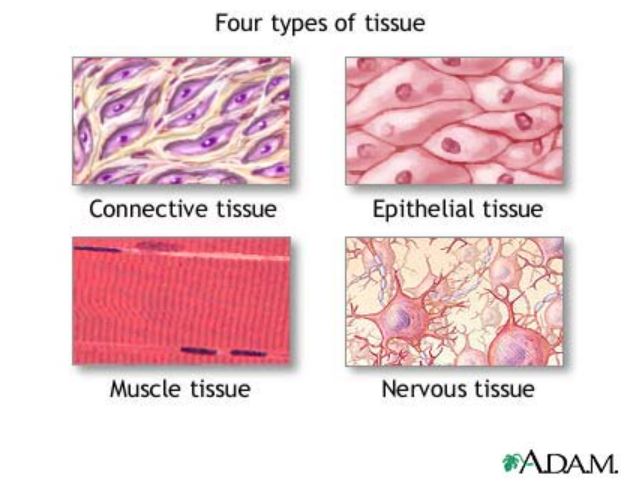
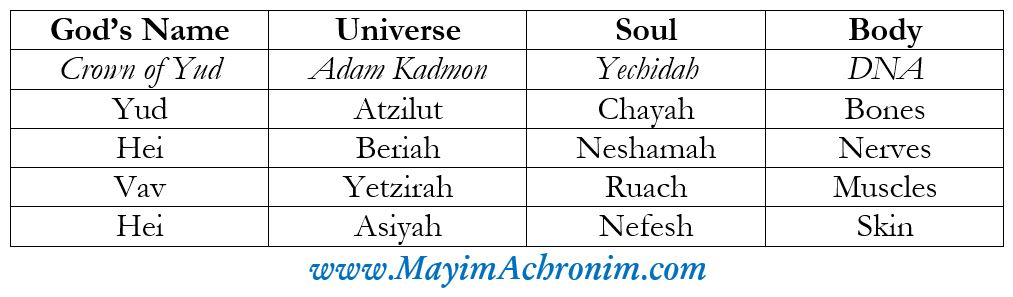
Scientifically speaking, the human body has four main types of tissues: bones are a type of connective tissue, and then there is muscle tissue, nervous tissue, and epithelial tissue. The Torah, too, speaks of four types of tissues: bones, plus bassar (meat), gidim (nerves), and ‘or (skin), neatly paralleling the four biological categories. We know that all fours in the Torah—such as the four mystical universes, the four Pardes aspects of Torah study, and the four letters of God’s Ineffable Name—match up and correspond to each other. We can link these up yet again with the four tissue types, to see once more the divine anatomy with which we were created:

Skin represents the surface level of Torah study, pshat (פשט), corresponding to the lowest realm, the physical and superficial Asiyah (as well as the lowest level of soul, the nefesh). Interestingly, the word in Hebrew to undress, ie. to remove one’s surface garments and reveal the skin, is lehitpashet (להתפשט)!

Beneath the skin is muscle, the bulkiest and heaviest part of the body, representing the sub-surface level of Torah study, remez, and the angelic realm of Yetzirah, as well as the next level of soul, ruach. The ruach is typically associated with the heart, also a muscle. With this we can understand why bassar (בשר), “flesh” or “meat”, shares a root with revealing news, levasser (לבשר)—for what is levasser but to reveal something currently hidden and as yet unknown? Levasser is to give more information beyond the obvious surface pshat that is already known! Moreover, we can now better understand why the Torah specifically uses the term yetzirah to describe the creation of Adam’s body (Genesis 2:7), and the command later for him to specifically become one bassar with his wife (2:24).

Going onwards, the muscles are innervated and controlled by nerves, paralleling drash, the metaphorical and allegorical level of Torah study, and the higher realm of Beriah, along with the neshamah level of soul. The neshamah is seated in the brain, the largest bundle of nerves in our body.

Finally, the inner-most part of the body is the bone, representing sod, the deepest part of Torah and its very essence. This is the level of soul called chayah, fitting because our Sages taught that Eve (made from Adam’s bone) was originally called Chayah, and only after the consumption of the Fruit did she become Chavah (see Kli Yakar on Genesis 3:20). The bone-sod level corresponds to the highest realm of God’s pure emanation, Atzilut. (The pure white colour of bone symbolically adds to this, along with the alliteration between Atzilut and ‘atzamot!) Atzilut is the place of pure, unadulterated light. Light is אור, with a value of 206, again like the total number of bones in the human body. We see a beautiful phonetic relationship between the surface level of skin, ‘or, spelled עור, and the deepest-most level of bone, corresponding to secret light, or, אור. (A word for an even more profound secret is raz, רז, with a value of 207, going one step further.) Without bones, the body would fall apart into a shapeless mass, just as would Torah without sod. (The Chida, Rabbi Chaim Yosef David Azulai [1724-1806] pointed out that if you take the sod out of Pardes [פרדס], you are left with pered [פרד], a mule!)

And what of the hidden-most “fifth” part—the “crown” atop the Yud of God’s Name and the yechidah soul, paralleling the most mysterious and mystical Adam Kadmon? Perhaps it’s the DNA itself, the very code that gives rise to all four tissue types of our bodies.

To summarize:

A final thought: Damage to the skin often heals back to the way it was before. Muscle and nerve damage is much harder to reverse, and sometimes irreparable. Bones, however, tend to heal back even stronger than they were. There is a wonderful lesson here for each of us, both individually and collectively as a nation: If something hurts us deeply and damages our very essence, we should bounce right back and recover, growing even stronger than we were before, so that our inner essence shines brighter than ever.

Shavua Tov and Happy Tu b’Shevat!


For more on ‘The Divine Anatomy of the Human Body’, see here.

Rabbi Goren & the Threshing Floor of Thorns

In this week’s parasha, Vayechi, we read about the passing and burial of Jacob. We are told that all of Egypt mourned his death for seventy days, after which Joseph requested permission to take leave and bury his father in the Holy Land. The whole family went along for the journey (except the youngest infants), together with many high-ranking Egyptian officials and dignitaries (Genesis 50:7). Then the Torah tells us that

they came to Goren haAtad, which is beyond the Jordan, they held there a very great and solemn lamentation; and he observed a mourning period of seven days for his father. And when the Canaanite inhabitants of the land saw the mourning at Goren haAtad, they said, “This is a solemn mourning on the part of the Egyptians.” That is why it was named Avel-Mitzraim, which is beyond the Jordan. (50:10-11)

The commentators are puzzled by these perplexing verses. What is meant by Goren haAtad? Why did they bother traveling “beyond the Jordan” if they were coming up from Egypt? Why did the family mourn again, for another seven days (especially since Jacob had not even been buried yet)? Why did the Canaanites suddenly show up?

Rashi (Rabbi Shlomo Itzchaki, 1040-1105) says goren means a “threshing floor” and atad means “thorns”. But why would anyone thresh thorns? Rashi explains that the Canaanites and Ishmaelites came to wage war when they saw the massive procession coming up out of Egypt. They then saw Jacob’s coffin, and Joseph’s crown resting atop, and each of their leaders came to pay their respects, too, and hung their own crowns around the coffin. The Talmud (Sotah 13a) that Rashi quotes from says that the leaders of Esau were there, too, and altogether there were 36 crowns hung around Jacob’s coffin. This gave the whole thing an appearance like a “threshing floor surrounded by thorns”.

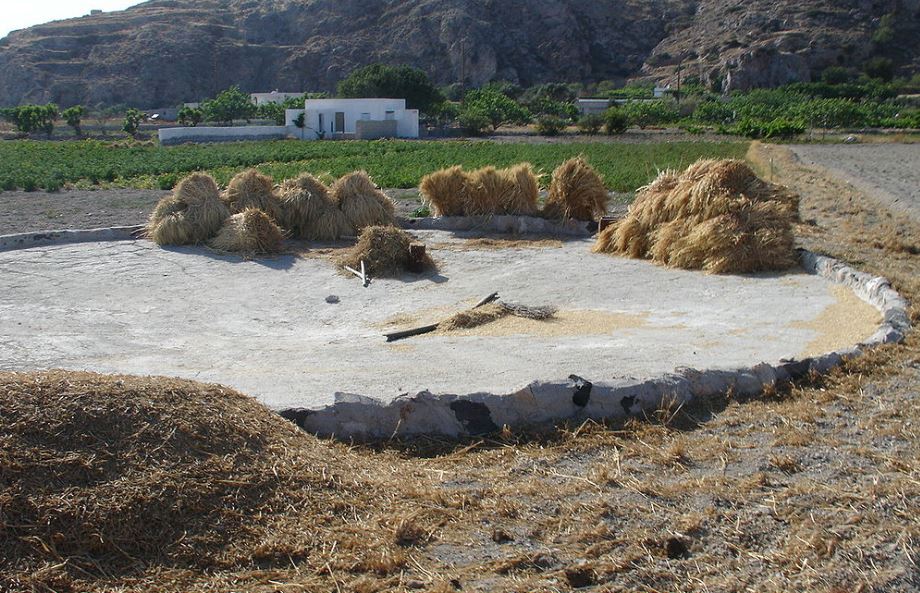
If we look at the design of ancient threshing floors, we find a circular flat surface, usually surrounded by rocks or a low-lying fence. The outer barrier was probably to keep away wild animals from consuming the grain that was being threshed, or to keep the oxen doing the threshing from wandering away. Instead of rocks or a fence, one could plant thorny bushes around the threshing floor for the same reason. That might explain the appearance of Jacob’s coffin in the centre, surrounded by “thorny” crowns all around.

A threshing floor in Santorini, Greece

The Kli Yakar (Rabbi Shlomo Ephraim Luntschitz, 1550-1619) isn’t too happy with this explanation. He points out that if it was common to surround threshing floors with thorns back then, why is this particular one called “the threshing floor of thorns”? He provides some alternate explanations: one has to do with the death of Jacob bringing about another famine in Egypt, while the other sees “thorns” as symbolic of wicked people whose fate is to be “threshed” and destroyed. The Torah is indeed speaking about threshing thorns here! We know that every verse in the Torah is encoding much deeper information, mystical, prophetic, and relevant for all time. So, what is the Torah really trying to tell us here? What might the “threshing floor for thorns”, this Goren haAtad, really be? Continue reading