For Jews in Israel, Pesach will end this Friday, and on Shabbat the Torah reading will be the next parasha, Acharei. For us in the diaspora, Pesach will extend an extra day to Shabbat, meaning we will be reading more holiday-related passages, and continue with Acharei the following Shabbat. It will take quite a while until the Torah readings in Israel and in the diaspora will re-synchronize (at parashat Massei)!
Here outside of Israel, we get to read a special Haftarah for the eighth day of Pesach which centres on Isaiah 11. Fittingly, it is all about the coming Final Redemption and end of the exile, which we in the diaspora are particularly eager for. We read about the miraculous Messianic Age, when “the wolf will dwell with the lamb… the cow and the bear shall graze, with their young lying down together…” Some of our Sages understood this verse metaphorically, symbolizing a time of great peace, and a return to an ecological balance. Others took it literally, that even carnivorous animals will become vegan, and there shall be no death of any kind anymore. One Midrash (Shemot Rabbah 15:21) takes the latter approach, and enumerates this miracle as one of ten “new” things that God will do in the Messianic Age. This comes as a response to Kohelet who had stated that there is currently “nothing new under the sun” (Ecclesiastes 1:9).
The first of the ten is that the world will be newly illuminated, as it is written: “No longer shall you need the sun for light by day, nor the shining of the moon for radiance [by night]; for God shall be your light everlasting, your God shall be your glory.” (Isaiah 60:19) It is interesting to note that if we take this verse literally, it has already come true that we no longer need the sun and moon for light, thanks to electricity! Of course, the verse is primarily metaphorical, saying that God will be our light. The Midrash asks how this is possible, since we know man is incapable of gazing at God. It answers based on Isaiah 30:26, that “The light of the moon will be like the light of the sun, while the light of the sun will be sevenfold, like the light of the seven days [of Creation].” The verse continues to suggest that this special light will have healing properties. The Midrash adds a quote from Malachi (3:20) that “for you who revere My name a sun of victory shall rise to bring healing…”
Intriguingly, the Midrash says that this new light will shine with 49 parts (based on the seven-by-seven wording of the Isaiah verse). That number always alludes to the 49 aspects of the lower Sefirot, particularly relevant to us now during Sefirat HaOmer when we count the 49 days between Pesach and Shavuot. As is well-known (and recorded in most siddurim), each day corresponds to a particular quality tied to the Sefirot. In turn, these relate to the Nun Sha’arei Binah, the “Fifty Gates of Understanding”. The 50th gate is far too lofty, and even Moses was unable to attain it, though he did grasp all the remaining 49, as we hope to do, too (see Rosh Hashanah 21b). Perhaps the Midrash is teaching us in that in the Messianic Age we will finally be able to grasp the 49 levels, and make full use of light’s mysteries to repair the world.
We might see something of an analogy to this in the fact that the world is turning to more and more solar power for our energy needs, which has the potential to significantly improve the health of our planet. While water- and wind-powered machines have been around for centuries (in various mills, for instance), solar power really is a new phenomenon. The sun bathes us with essentially unlimited energy, and can easily satisfy all of the world’s energy needs many times over. The clunky and rudimentary stuff we have today is only just the beginning. There are some truly incredible solar-based and light-based technologies in the works, including artificial photosynthesis and lightning-fast, radiation-free “Li-Fi” internet. And who knows what other secrets are contained within light, of which we still have quite a minimal understanding.
The second new development in the Messianic Age is that healing waters shall go forth from Jerusalem, as prophesied in places like Zechariah 14:8. The Midrash specifically cites Ezekiel: “Every living creature that swarms will be able to go to the streams and be revived…” (47:9) These waters will heal all illnesses. A few verses later, Ezekiel says that “All kinds of trees for food will grow on both banks of the stream… they will yield new fruit every month, because the water for them flows from the Temple. Their fruit will serve for food and their leaves for healing.” This is the third miracle of the Messianic Age: special Jerusalem trees that will perpetually give healing produce every month. (On another related scientific note, researchers have already been able to genetically engineer certain medicines directly into fruits and plants!)

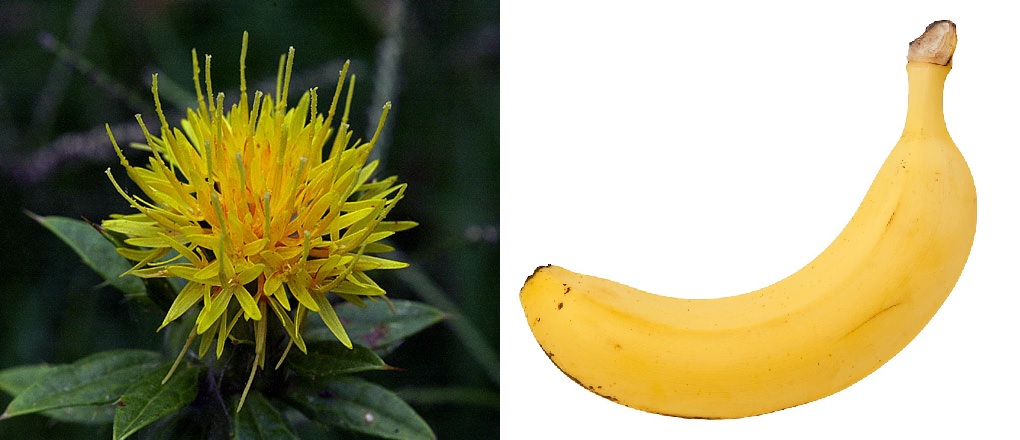
Canada-based SemBioSys developed a safflower plant that can produce human insulin for diabetics, while back in 1996 scientists had already begun work on a banana carrying an edible Hepatitis B vaccine. These technologies never broke into the commercial market and it remains to be seen whether they are even safe or effective. However, they might provide a model or analogy as to how plant produce might directly treat human illness.
The fourth development of the Messianic Age is the rebuilding of all the ruined cities in Israel, and perhaps elsewhere around the world. As prophesied by Ezekiel (16:55), even Sodom and Gomorrah will be restored! Again, we are already living in a reality where this prophesy has been partly realized, as many ancient towns have now been rebuilt in modern Israel, including Modi’in (of Chanukah fame), Caesarea, Be’er Sheva, Rehovot (not at the same site as the Biblical one), numerous settlements in Judea and Samaria, as well as Jerusalem itself. This leads to the next miracle of the Messianic Age, which is that Jerusalem will be overlain with sapphire stones and other precious gems, and will “shine like the sun” (based on Isaiah 54:11-2).
The sixth miracle is the one with which we started: the restoration of an ecological equilibrium, where all living organisms will be at peace. Related to this is the following development, that all people, animals, and living things on the planet will form a new covenant with God, as it is written: “In that day, I will make a covenant for them with the beasts of the field, the birds of the air, and the creeping things of the ground…” (Hoshea 2:20) The verse continues to say how there will be no more wars, with Earth entirely at peace, idolatry will be eliminated, and all will know God. This is the true, divine “new world order” which we await.
With this new order come the final three developments, all based on verses in Isaiah (65:19, 25:8, 35:10). The first is that there will be no more sadness or wailing. The second, that there will be no more death. Some take this to mean not that people will live eternally, but simply that people will live very long lives (as Isaiah says in 65:20 that the youngest shall die at 100). Perhaps it means there will be no more tragic, untimely deaths, and that all people will live to a ripe old age and die of natural causes. Whatever the case, the final new development in the Messianic Age is that there will be no more sorrow, but only real joy for all humanity.
Chag sameach!
From the Archives: ‘Did the Patriarchs Celebrate Passover?’

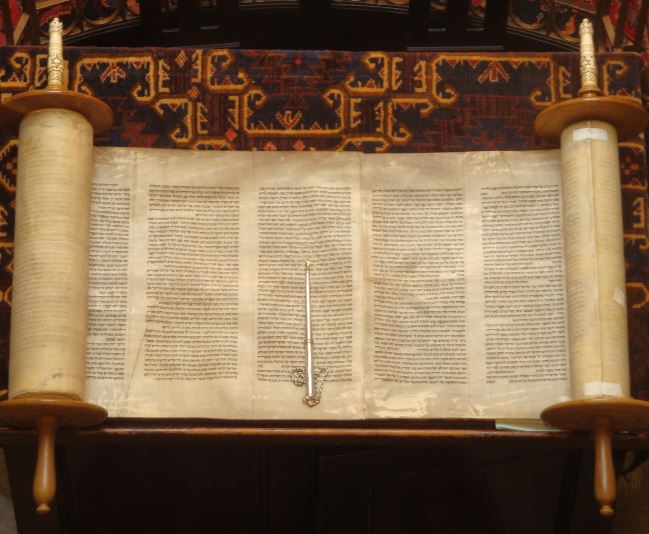 This week’s parasha (outside of Israel) is Emor, which begins with God commanding Moses to speak to the kohanim and to teach them. This is one of the key verses having a clear reference to the Oral Torah. Moses relayed not just the five books of the Written Torah, but also many more oral teachings and explanations that were passed down over the millennia. Another source for the Oral Law is Exodus 34:27, where God tells Moses to write down the words of Torah, and then adds that al pi—literally meaning “orally” or “on the mouth”—of these words of Torah, God is making a covenant with us. The Sages point out that this is another major allusion to the Torah sh’b’al peh, the Oral Torah (see Gittin 60b).