Tag Archives: Geonim

Mysteries of Shemini Atzeret & Simchat Torah

Tonight we usher in Shemini Atzeret, the final “eighth” day following Sukkot, which is technically a distinct holiday of its own. In the diaspora—where we keep two days of yom tov—the second day of Shemini Atzeret is Simchat Torah, when we start a new Torah reading cycle with a big celebration. In Israel—where one yom tov is observed—Simchat Torah and Shemini Atzeret are on the same day. The Torah does not actually say what the purpose of Shemini Atzeret is, and why it is distinct from Sukkot. Simchat Torah is not mentioned in the Torah at all! What is the real meaning behind these mysterious festivals?
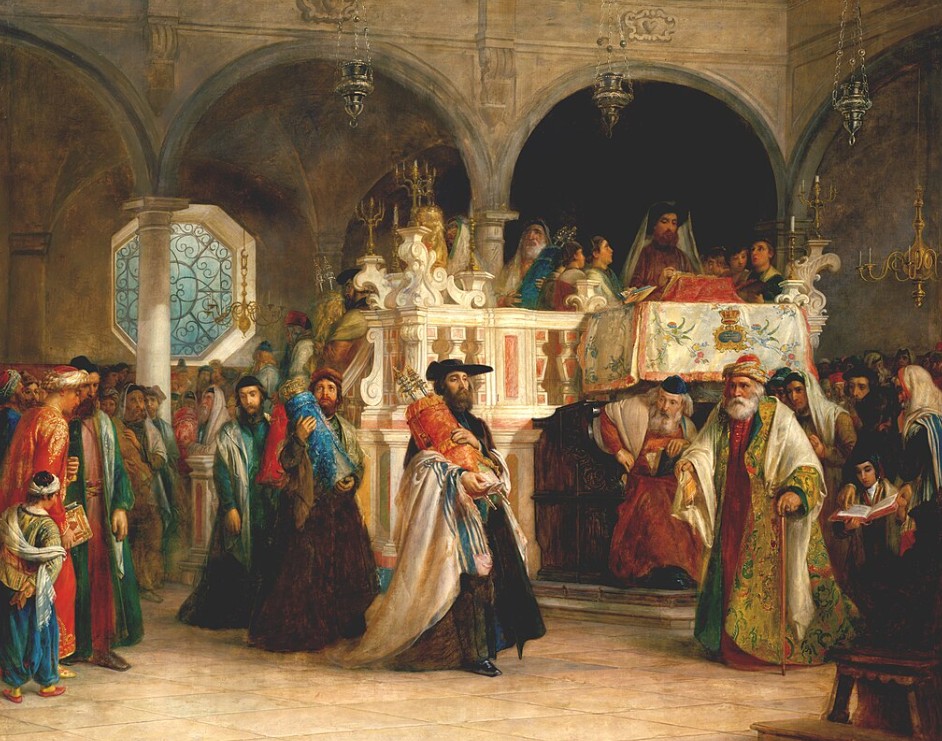
‘The Feast of the Rejoicing of the Law at the Synagogue in Livorno’ by Solomon Hart (1850)

The Torah itself only tells us that we should have one extra holiday after Sukkot, a yom tov in which we should not do any work and in which we should bring offerings to Hashem (Leviticus 23:36, 39). Commenting on this, Rashi famously cites our Sages and quotes God saying “‘I keep you back with Me [atzarti] one more day’—like a king who invited his children to a banquet for a certain number of days. When the time arrived for them to leave, he said, ‘Children, I beg you, please stay one more day with me; it is so hard for me to part from you!’” The Zohar adds to this a beautiful explanation:

As discussed in the recent class here, Sukkot is a holiday envisioning the future, not commemorating the past. The prophet Zechariah tells us (in chapter 14) that in the forthcoming Messianic age, all the nations of the world will come to Jerusalem to celebrate Sukkot with us. Sukkot will become an international festival! And so, the Zohar says, once all the nations of the world leave following seven days of Sukkot in Jerusalem, only the Jewish people will remain for one more day of celebration just for us—Shemini Atzeret. That’s why the Torah says atzeret tihyeh lakhem, “it shall be an atzeret for you” (Numbers 29:35), meaning specifically for the people of Israel and not the other nations of the world who will come to celebrate Sukkot! (See Zohar I, 64a)

But why is this particular date special? What happened in history on Shemini Atzeret to make it a holiday to begin with?

Secrets from Jubilees

The ancient (apocryphal) Book of Jubilees provides an incredible origin to Shemini Atzeret. Recall that Jubilees was excluded from the Tanakh by most Jewish communities (although it was included in the Ethiopian Tanakh and in the ancient Essene Tanakh, and many copies have been found among the Dead Sea Scrolls). Nonetheless, it was always studied and referenced throughout history, and many parallel passages are found in our Midrashim (for more on this, see here).

The setup for Shemini Atzeret begins in Chapter 31 of Jubilees, where we read how Jacob destroyed all the idols in his household (paralleling Genesis 35:2). Jubilees says that it was here that Rachel told her husband about the teraphim she took from Lavan, and handed them over to Jacob to be destroyed. Jacob then finally goes to visit his parents after decades away from them. Instead of taking his entire big family on the journey, he decides to bring only his sons Levi and Judah. Isaac and Rebecca give these two grandsons special blessings, and Isaac gives Levi a blessing to be priestly and Judah to be royal. This is Jubilees’ explanation for why later in history the tribe of Levi would become priests and the tribe of Judah would give rise to the line of kings. It also explains why these are the two tribes that survived throughout history, to this day, while the other tribal lineages have been lost.

In Chapter 32, Jacob fulfils his promise to tithe everything he has to Hashem—and that includes his children! So he lines them all up and counts from the youngest up, the tenth being Levi. Thus, Levi is chosen to be the “tithe”, and to dedicate his life to Hashem. Levi has a dream where God confirms that he will be the family priest. He then builds an altar and begins his work of sacrificial offerings. The family has a seven-day celebration, going out into the fields and dwelling in booths. According to Jubilees, this is the original Sukkot!

On the eighth day, after the seven-day Sukkot is over, Hashem appears to Jacob again. This is where He affirms that “You shall be called Jacob no more, but Israel shall be your name” (Genesis 35:10). The following verses in the Torah tell us that God blesses Jacob to be fruitful, and promises to Jacob the Holy Land, and tells him that nations and kings will emerge from him. This special day is Shemini Atzeret! Fittingly, Jubilees adds that God then reveals to Jacob all the things that will happen in the End of Days, engraved upon seven tablets. Again, we see the link between Sukkot-Shemini Atzeret and the End of Days, the holiday being more about envisioning the future then commemorating the past.

In this way, Jubilees shows how Jacob celebrated Sukkot and Shemini Atzeret long before Sinai, confirming our Sages statement that the Patriarchs observed the whole Torah and marked all the holidays—even though their lives pre-dated Sinai and they did not have a physical Torah in their hands.

What about Simchat Torah? There is no explicit mention of it in Tanakh, and not in Mishnah or Talmud (and not in Jubilees either). This is a much more recent holiday. Where did it come from, and why?

Celebrating the Torah

In olden times, the Torah was typically read over the course of not one year, but three years. (Earlier still, in Biblical times, it was read publicly over the course of seven years—more on that below.) It was in the Persian Empire that the Babylonian sages sped up the cycle to read the whole Torah once a year (see Megillah 29b). Even as late as the Rambam (Rabbi Moshe ben Maimon, 1138-1204), he writes in the Mishneh Torah that there were still some minority communities who followed a three-year cycle, although it had become nearly universal to follow a one-year cycle (Hilkhot Tefillah 13:1). The Rambam codifies that the Torah begins anew with parashat Beresheet on the Shabbat following Sukkot. He then states that it was Ezra the Scribe who instituted the yearly cycle. There is no contradiction here, because Ezra came to Israel from Babylon.

Why start with Beresheet in the fall? Why not in Nisan, which is the first month of the Jewish calendar? This goes back to the debate between Rabbi Eliezer and Rabbi Yehoshua on when Creation took place (Rosh Hashanah 10b-11a). The former said that Creation took place in Tishrei, while the latter argued it took place in Nisan. Rabbi Eliezer brings multiple proofs for his position, including the fact that the Torah states there had not yet been precipitation and then God “raised a mist” and made it rain before creating Adam (Genesis 2:5-6). So, the creation of Adam is clearly tied to the start of the rainy season, meaning Creation must have been in Tishrei!

Another proof is that the Torah says God created every species in its mature, adult form, including trees already containing fruits on their branches. When do find that trees are full of fruit and ready for harvest? In Tishrei! (Sukkot marks the final fruit harvest of the year.) Thus, it is fitting to read Beresheet in the fall, since the Torah begins with a description of a divine spirit “hovering over the waters”, the separation of upper and lower waters and establishment of the water cycle, the first rains, and trees full of fruit. And by the Rambam’s time, the yearly Torah-reading cycle had become essentially universal. However, the Rambam does not mention Simchat Torah.

Some four hundred years later, the Shulchan Arukh (in Orach Chaim 669) does mention Simchat Torah, but very briefly. The way Rav Yosef Karo (c. 1488-1575) phrases it makes it seem like it’s only outside of Israel—where people have to keep two yom tovs—that the second yom tov is called Simchat Torah. The Ashkenazi gloss of the Rama (Rabbi Moshe Isserles, 1530-1572) adds the details that we are familiar with: to remove all the Torah scrolls from the ark and have a big celebration, with hakafot, song and dance, and aliyot for all. The Rama’s language suggests this was the practice specifically in European lands. He cites the Arba’ah Turim of Rabbi Yakov ben Asher (“Ba’al haTurim”, c. 1269-1343) who explicitly says it was “the custom in Ashkenaz” to hold a big celebration and feast in honour of the completion of the Torah reading cycle and the start of a new one. The Ba’al haTurim was born in Ashkenaz but moved with his family to Spain around the year 1300, and became a rabbi among Sephardim. It could well be that his family of Ashkenazi rabbis introduced Simchat Torah to the Sephardic world. By the time of the great Abarbanel (1437-1508)—who was advisor to the Spanish crown and was given an exemption from the Spanish Expulsion, but famously chose to leave with his people—we see that Simchat Torah was observed in Spain, too, and Abarbanel explains (in his commentary on Deuteronomy 31:9):

It is written that each and every year, the high priest or the prophet or judge or gadol hador would read on Sukkot a portion of Torah, and would conclude reading the books of Genesis, Exodus, Leviticus, and Numbers over the course of six years, and then in the seventh year (the Sabbatical), the king would read on Sukkot the book of Deuteronomy, and would complete the Torah. Thus, the custom has remained until our days, that on the eighth day festival, Shemini Atzeret, on the last day we have Simchat Torah, on which we complete the Torah…

Rav Yosef Karo himself was born in Spain, and ultimately settled in Tzfat where he was the chief rabbi. His contemporary was the great Arizal (Rabbi Isaac Luria, 1534-1572), who lived out his final years in Tzfat and revolutionized Judaism with his mystical teachings. The Arizal had an Ashkenazi father and a Mizrachi mother, and was raised in Egypt by his uncle, studying under great rabbis like the Radbaz (Rabbi David ben Solomon ibn Zimra, 1479-1573, also born in Spain). The Arizal played a big role in fusing together Sephardic, Mizrachi, and Ashkenazi practices. He revealed various mystical meditations on Simchat Torah, and particularly on the hakafot. And so, from Tzfat, Simchat Torah spread to the Mizrachi world as well, and it soon become universal to hold a big Simchat Torah celebration—with the additional details and practices mentioned by the Ba’al haTurim and Rama that first originated in Ashkenaz.

Celebrating the Tree of Life

We can now clearly piece together the evolution of Simchat Torah. It officially began in Central Europe. The first explicit mention of the term “Simchat Torah” appears to be in the 11th century Machzor Vitry, written by Rav Simcha of Vitry, France, a student of Rashi. Simchat Torah might trace back to an earlier custom among the Geonim to have a big celebration upon completion of the Torah-reading cycle. The Rambam, who came from a long line of Sephardic rabbis, does not mention Simchat Torah in the 12th century, but the Sephardi gadol Abarbanel does speak of it in the 15th century, meaning it was adopted among Sephardim at some point in those intervening three centuries. It may have been due to the Ba’al haTurim’s family who immigrated from Ashkenaz to Sepharad around the end of the 13th century.

At the same time, in 1290 CE, came the first publication of the Zohar, in Spain. The Zohar (III, 97a) does mention Simchat Torah, calling it by its Aramaic name Hedvata d’Oraita (which is likely what it would have originally been called among the Babylonian Geonim). The Zohar gives a beautiful explanation as to why we celebrate with the Torah specifically on Shemini Atzeret. As noted above, Shemini Atzeret is the festival that is only for Israel, once all the nations of the world leave after Sukkot, and once the seventy bulls offered on behalf of the seventy nations was complete. Now, only Israel remains, delighting with Hashem once last time before going off to start a new year. And what makes our relationship with Hashem special? What makes us unique compared to the other nations? The Torah! It is our covenant with Hashem, with Torah as contract, and our devotion to its laws and its study. So, Shemini Atzeret is the ideal time to celebrate the Torah, to dance with the Torah, renew our commitment to Torah, and start a new Torah-reading cycle.

We see how, between the Zohar and the Arba’ah Turim, Simchat Torah spread throughout Sepharad; and after the Spanish Expulsion, to North Africa and the Middle East and Mizrachi communities as well. Today it has become a beautiful, universal practice in all Jewish communities, a public display of faith and commitment to Hashem and His Torah. And this ties right back into what the Zohar says about Simchat Torah:

Intriguingly, the Zohar gives it another name, calling it Hedvata d’Ilana, a celebration of the Tree of Life. The simple meaning is that King Solomon called the Torah a “Tree of Life for those who grasp it” (Proverbs 3:18). On Simchat Torah we grasp the Torah quite literally! On a deeper level, connecting Simchat Torah to the Tree of Life is yet another allusion to Creation, and to Adam and Eve in the Garden of Eden. At the start of the year, we have a new opportunity to “choose life” (Deuteronomy 30:19), to live a godly life of divine service, a life of blessing, righteousness, kindness, and goodness. It is the opportune time to set resolutions for the new year, so that it should be a fruitful, productive, happy, and blessed year for all.

Chag sameach!

Mourning and Music in the Omer

As we count each day during Sefirat haOmer in the weeks between Pesach and Shavuot, we are conscious of the 24,000 slain students of Rabbi Akiva and observe a period of mourning. It is fitting to think of those victims as we ourselves focus on personal development and self-improvement during this time, in preparation for the Sinai Revelation on Shavuot—which didn’t just take place once some three millennia ago, but happens anew each year. Having said that, it is interesting that we seemingly have so many days of mourning to commemorate the tragedy, yet we don’t have such prolonged mourning for other terrible catastrophes in Jewish history (some of which are arguably much worse). Where did this extended mourning period come from?

If we look in our legal texts, we surprisingly find very little. The Talmud says nothing about mourning in these days. It is brought down that some of the Geonim (c. 600-1000 CE) may have mentioned mourning during this period, and that there was a custom not to hold weddings between Pesach and Shavuot (see, for instance, the collection of Geonic responsa published in 1802 under the title Sha’arei Teshuvah, #278). It is strange then that the Rambam (Rabbi Moshe ben Maimon, 1138-1204), who carefully codified the Talmud and the entire corpus of Jewish law up to that point (including the works of the Geonim!) makes no mention of mourning during the Omer in his monumental Mishneh Torah. The Rambam was Sephardic so one might argue that he may have omitted a custom that developed in Ashkenaz first. Yet, the Machzor Vitry, composed by Rashi’s disciple Rabbi Simchah of Vitry (in northern France) in the 11th century, fails to mention anything about mourning during the Omer either! Neither is it mentioned by great Rishonim like the Rif (Rabbi Isaac Alfasi, 1013-1103) or the Rosh (Rabbeinu Asher, c. 1250-1327).

Timeline of Rabbinic history and halakhic eras

Its first notable mention appears to be the Arba’ah Turim of Rabbi Yakov ben Asher (the “Ba’al haTurim”, 1270-1340), son of the Rosh, who was Ashkenazi but lived in Spain. In Orach Chaim 493, he says it is customary not to have weddings during the Omer, though engagements are permitted. He then states that in some places it is also customary not to take haircuts. No mention is made of abstaining from music, avoiding reciting shehecheyanu, or any other mourning rituals. Interestingly, other sources from this time period (like Sefer Asufot) argue that the mourning period arose not because of Rabbi Akiva’s students, but because of the devastation of the Crusades on Ashkenazi communities! Later sources would combine both reasons, and explain that the mourning is both for Rabbi Akiva’s students and for the Crusades.

Massacres of Jewish communities around the time of the First Crusade (1096-1102)

It should be noted that there is an alternate, more mystical reason for mourning (or at least, for avoiding festivities) during the Omer: the Mishnah brings an opinion that the wicked in Gehinnom are judged specifically between Pesach and Shavuot (Eduyot 2:10). In truth, this is only a singular opinion of one Sage, contrasting an earlier statement that judgement in Gehinnom lasts a full 12 months. It is possible to reconcile the two opinions by saying that following a person’s passing, their soul is judged for up to 12 months, and then if the verdict is for the person to remain in Gehinnom, they are subsequently rejudged each year between Pesach and Shavuot. Since we know that the deaths of Rabbi Akiva’s students actually ended on Lag b’Omer and did not extend all the way to Shavuot (hence the mourning stops on Lag b’Omer), we might apply that same rule to the judgement in Gehinnom as well. In this case, we have yet another mystical reason for lighting bonfires on Lag b’Omer, as these would be appropriately symbolic of the “flames” of Gehinnom.

The above somewhat contradicts the notion that judgements take place specifically on Rosh Hashanah. We assume that all souls, both Jewish and non-Jewish, living and deceased, are judged on this day. Interestingly, the Arba’ah Turim (in Orach Chaim 581) explains that Jews customarily shave before Rosh Hashanah because, unlike gentiles, we don’t grow out our beards in fear of judgement! We are certain that God will judge us favourably. This notion presents something of a problem for the idea of not shaving because of the judgement in Gehinnom.

Haircuts and Music

Continuing our journey through halakhic history, the next major law code was the Shulchan Arukh (which was really only a summary of the larger Beit Yosef). Rabbi Yosef Karo (1488-1575) produced it by integrating the Mishneh Torah with the Arba’ah Turim, and the Rif, plus updating it with newer established customs, as well as the occasional Kabbalistic practices. It was meant to be a universal code of law, and something like the authoritative “last word”, satisfying the majority of opinions. In our times, Rav Ovadia Yosef famously argued that the Shulchan Arukh should be the supreme code of Jewish law, especially in the land of Israel where it always held primacy since its publication.

Regarding mourning during the Omer, the Shulchan Arukh again mentions only weddings and haircuts. It explains that, of course, the mourning ends on Lag b’Omer, and doesn’t extend all the way to Shavuot. The Rama (Rabbi Moshe Isserles, c. 1530-1572) adds in his gloss for Ashkenazim that some have the custom to allow haircuts until Rosh Chodesh Iyar, and only start the mourning period after this. That actually makes a great deal of sense, since we consider the entire month of Nisan to be a festive month, and we don’t recite tachanun at all throughout the month. This is stated clearly in Masekhet Sofrim 21:2-3, which also says that fasting in Nisan should be avoided (except for the firstborn before Pesach). For this reason, many religious authorities opposed the Zionists establishing Yom HaShoah—Israel’s Holocaust Memorial Day—in Nisan, because there shouldn’t be a mourning day within the festive month. It is therefore quite ironic that, at the same time, many religious authorities typically encourage mourning practices in the same Nisan days for the Omer!

It must be repeated that our ancient Sages did not actually institute such mourning, and it is a later custom. Rabbi David Bar-Hayim argues that the Sages did not institute mourning during the Omer because they understood we already have enough mourning days on the Jewish calendar, particularly on Tisha b’Av and the three weeks leading up to it. If we add several more weeks of mourning during the Omer, plus all the other fast days and sad days on the Jewish calendar, it can become quite depressing and psychologically unhealthy. Rabbi Bar-Hayim adds that while we may have a minhag to mourn during the Omer, it is certified halakhah to honour Shabbat and appear presentable and regal on the holy day, therefore it is entirely permitted to trim or get a haircut before Shabbat, even during the Omer.

For many today, the biggest question during the Omer is regarding listening to music. None of the ancient sources speak of abstaining from music, all the way up to the Shulchan Arukh, and beyond. So where did it come from? In his commentary on the Shulchan Arukh, the Magen Avraham (Rabbi Avraham Gombiner, c. 1635-1682) adds that dancing at parties during the Omer is forbidden. Based on this, Rabbi Yechiel Michel Epstein (1829–1908) argued in his Arukh haShulchan (first published in 1884) that if dancing is prohibited, then we must extend the prohibition to music as well, since it inevitably leads to dancing. This appears to be the first clear argument anywhere for avoiding music during the Omer. The position has been rejected by others, as there is no direct guaranteed leap from music to dancing. After all, many people listen to music just to relax, or while driving or cleaning, or to motivate themselves to work or exercise, and so on. For these reasons, some only prohibit live music, not recorded music.

Rav Soloveitchik argued that the Omer mourning should have a precedent from other mourning practices, like the shiva, shloshim, or the year-long mourning following the death of a parent. Since the Omer mourning is likened to the latter, the prohibition is only on going to parties or concerts, but not listening to music in private. His contemporaries, Rav Moshe Feinstein and Rav Ovadia Yosef, disagreed on this and prohibited all music during the Omer. (In the case of Rav Ovadia, this is somewhat inconsistent, since he always argued for the primacy of Shulchan Arukh, which makes no mention of abstaining from music! Nonetheless, it seems he was upholding a modern-day stringency, even if it isn’t mentioned in his go-to law code.)

To summarize, there is no doubt that forbidding weddings between Pesach and Lag b’Omer is based on a valid ancient custom that likely goes back as far as the Geonim. (Though some, even today, do permit and hold weddings up through Rosh Chodesh Iyar.) Abstaining from haircuts is a bit more recent, but still has a source going back some 700 years. It should be remembered that many authorities starting from the Rishonim and up to the present allow haircuts and trimming (or even shaving) to stay presentable, especially in honour of Shabbat, or if necessary for work purposes. This is particularly true if a person is accustomed to trimming or shaving daily.

Finally, regarding music, there is no ancient source for the prohibition. While it is true that one should ideally avoid parties and concerts during the Omer, not listening to music in private is a very recent stringency, perhaps just over a century old. For those who simply cannot go so long without music, there is definitely room to permit it. Either way, there is no need to worry about passively hearing background music in the elevator or supermarket, nor any concern for those who make a living working in the music industry. Nor should a person who has a birthday during the Omer feel condemned to never be able to have a festive birthday party in their life! (See also ‘Should Jews Celebrate Birthdays?’) Lastly, we shouldn’t lose sight of the fact that, despite the seriousness, the Sefirat haOmer period is simultaneously a time of great joy. The Ramban (Rabbi Moshe ben Nachman, 1194-1270)—who also said nothing about mourning during this time—described the whole period from Pesach to Shavuot as chol hamoed, like the intermediate days of a festival (see his comments on Leviticus 23:36). Sefirat haOmer is indeed a festive, positive, and happy time, especially because we have the opportunity to do a most-precious Torah mitzvah of counting the Omer, while eagerly anticipating a new year of Torah learning ahead starting on Shavuot.

Happy counting! 


Make your upcoming Shavuot all-night learning meaningful with
Tikkun Leil Shavuot – The Arizal’s Torah Study Guide

How Jewish History Confirms God’s Promise to Abraham

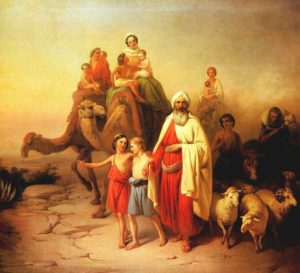
Abraham's Journey to Canaan, by Jozsef Molnar (1850)

Abraham’s Journey to Canaan, by Jozsef Molnar (1850)

Lech Lecha begins with God’s famous command to Abraham to leave the comforts of his home and journey forth to a new beginning in the Holy Land. God promises Abraham (at that point still known as “Abram”) that he will become a great nation, and that God will “bless those who bless you, and the ones who curse you I will curse” (Genesis 12:3). God’s covenant with Abraham passed down to his son Isaac, and then to Isaac’s son Jacob, who fathered twelve sons that became the twelve tribes of Israel. God confirmed his promise to the twelve tribes through the prophet Bilaam, who saw “Israel dwelling tribe by tribe, and the spirit of God came upon him” and he famously remarked, “how goodly are your tents, oh Jacob, your dwellings, oh Israel!” before prophesying that “blessed be those who bless you, and cursed be those who curse you.” (Numbers 24:2-9)

Over three millennia have passed since that time, and as we look back though history, we can see how accurately this prediction has been realized. It began with the twelve sons of Jacob, whom the Ancient Egyptians welcomed to their land and initially treated exceedingly well (thanks to Joseph, who saved Egypt from seven years of extreme famine, and then made the kingdom very rich). As time went on, the Israelites multiplied and prospered in Egypt. In a pattern that would repeat itself countless times throughout history, the natives started to become a little weary (and jealous) of the foreigners. Israel was soon subjugated and enslaved. This brought God’s plagues upon Egypt, and the empire was destroyed. Ancient Egypt’s decline steadily continued from that point, and it would never restore its former glory.

Historians recognize three great ages within Ancient Egypt’s past; the last “golden age” was in the New Kingdom period (1549-1069 BCE), approximately when the Israelites would have been dwelling there. Once Israel left, Egypt’s greatness would soon evaporate, and it would be nothing more than a vassal for the rest of its history – to Assyria, Babylonia, Persia, Greece, and Rome.

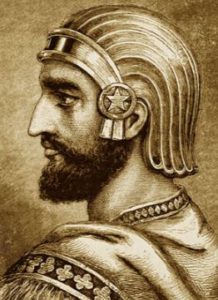
Cyrus the Great

Cyrus the Great

The next major oppressors of Israel were the Assyrians, who destroyed the northern Israelite Kingdom and exiled its tribes. It wasn’t long before the Babylonians overtook the Assyrians. Once the Babylonians themselves destroyed the southern Kingdom of Judah (and the Holy Temple), their own fate was sealed, and it was just 70 years before the Persians took over. The Persian emperor Cyrus treated the Jews very well, allowing them to return to Israel and rebuild the Temple. He was so good that he is described in the Tanakh as God’s anointed – mashiach! (Isaiah 45:1)

When Persian attitudes towards Israel started to turn sour, the Greeks under Alexander the Great quickly became the new rulers. Jews and Hellenists enjoyed very good relations for some two centuries. In the 2nd century BCE, the Seleucids (Syrian-Greeks) attempted to totally assimilate the Jews into their culture. They failed miserably – as celebrated during Chanukah – and soon disappeared from history, being overtaken by the Romans from the West and the Parthians from the East.

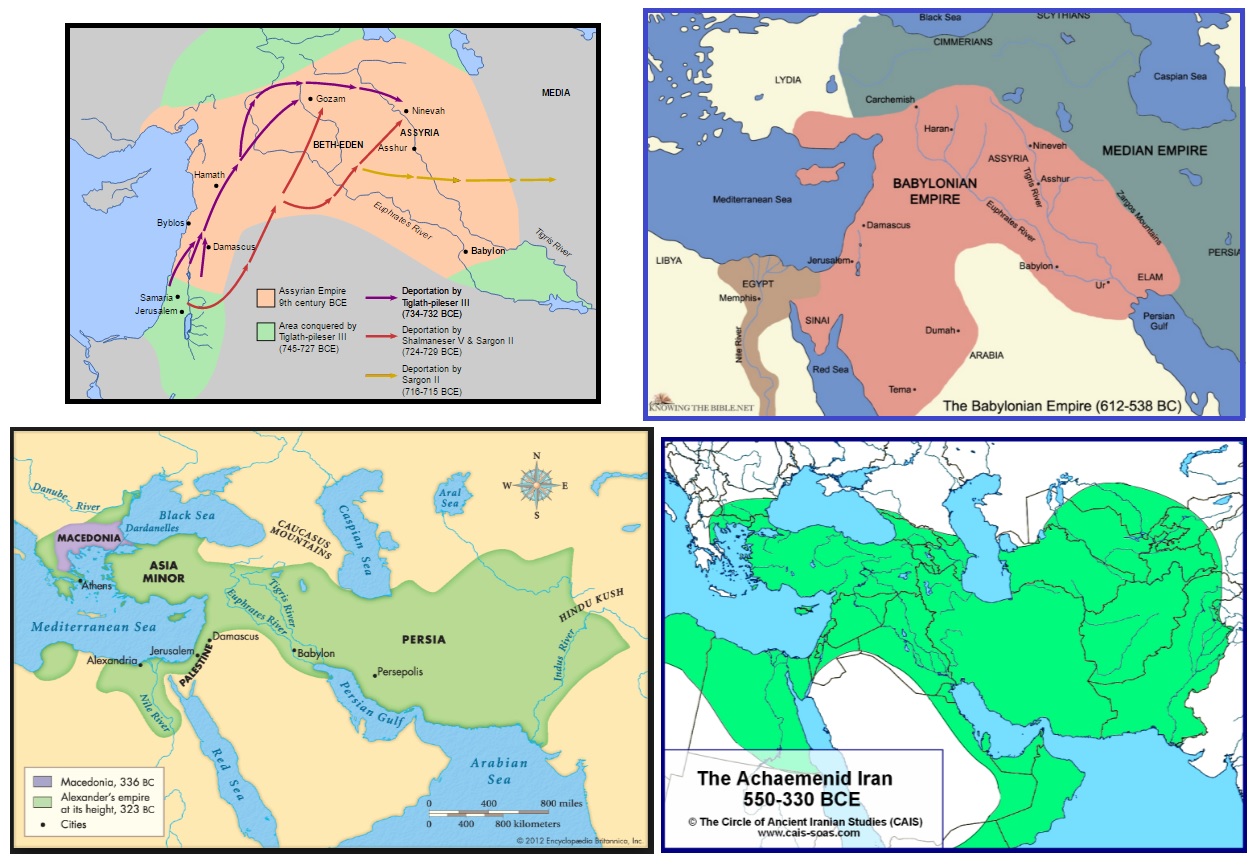
Ancient Empires, clockwise from top left: Assyrian Empire (with deportations of Israelites), Babylonian Empire at its height, the Persian Empire under Cyrus and his Achaemenid dynasty, empire of Alexander the Macedonian (Alexander the Great)

Ancient Empires, clockwise from top left: Assyrian Empire (with deportations of Israelites); Babylonian Empire at its height; the Persian Empire under Cyrus and his Achaemenid dynasty; empire of Alexander the Macedonian (Alexander the Great)

Relations with Rome were good, too, at first. During this time, Rome experienced its own golden age, beginning with the emperor Augustus. Unfortunately, Rome was soon busy quelling the province of Judea and destroying the Second Temple in Jerusalem. At the very same time, Rome was thrust into a difficult period of civil war. In the same year that the Temple was destroyed, Rome had its “Year of Four Emperors”.

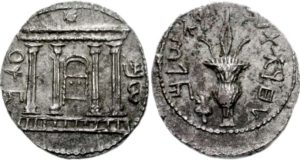
Coins minted by Bar Kochva

Coins minted by Bar Kochva

In 132-135 CE, Rome and Israel were at war again, with the latter lead by Shimon Bar Kochva. After mounting an impressive resistance, Bar Kochva’s rebellion was put down. Just 45 years later, Rome enjoyed the last of its “Five Good Emperors” (Marcus Aurelius Antoninus, who some identify with the Talmud’s “Antoninus”, the close friend of Rabbi Yehuda haNasi). Marcus Aurelius’ successor, Commodus, was a madman who ushered in Rome’s slow decline (as depicted pseudo-historically in the film Gladiator). The ancient historian Dio Cassius marked the year 180 CE – when Commodus took power – as the point at which the Roman Empire began to change “from a kingdom of gold to one of rust and iron.”

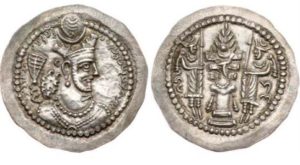
Silver coins minted by Bahram V

Silver coins minted by Bahram V

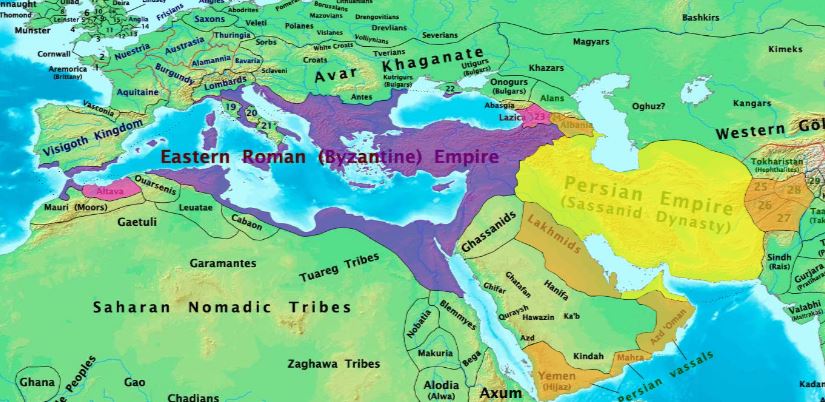
Many of the Jews who fled the Roman Empire moved to the Sasanian (or Sassanid) Persian Empire. The Sasanians treated Jews remarkably well, and were in turn blessed with prosperity and riches. It was during this time, in the “Babylon” of the Sasanians, that the Talmud was compiled. Jews were granted semi-autonomy within the empire and had their own representative to the government, known as the Reish Galuta, or exilarch. Sasanian kings even married Jewish women, and one of the most famous of Sasanian kings, the legendary Bahram V (r. 421-438 CE), was the son of the Jewish princess Shushandukht. Unfortunately, his successor, Yazdegerd II (r. 438-457), started persecuting religious minorities within the empire and force-fed the state religion of Zoroastrianism. (Some say he was motivated to persecute Jews because of a prophecy that Mashiach would come on the 400th anniversary of the Temple’s destruction.)

Sasanian and Eastern Roman (Byzantine) Empires before the rise of Islam

Sasanian and Eastern Roman (Byzantine) Empires before the rise of Islam

At the beginning of the sixth century, a Zoroastrian priest named Mazdak gained a large following and created a new religious sect that even attracted the king, Kavadh I. This thrust the empire into all sorts of religious turmoil, within which the Reish Galuta, Mar Zutra II, led his own rebellion and managed to establish an independent Jewish city-state in Mahoza. This did not last long, as the king captured Mar Zutra and had him crucified. The office of the Reish Galuta was disbanded at this point. Not surprisingly, the Sasanian Empire wouldn’t last very long after this. The office of the Reish Galuta would soon be re-established by the invading Muslim Arabs, who completely overran the Sasanian Empire.

The same pattern then occurred with the Muslims themselves, who initially treated the Jews of their domain quite well. Jews welcomed the Arab conquerors and saw them as “liberators”. Over time, persecution of Jews became more common. In 1040, the last Reish Galuta (and last of the Gaonim, “geniuses”) Hezekiah, was tortured and killed, and the position of the exilarch was abolished permanently. Hezekiah’s sons fled to Spain, where the Muslim rulers were more tolerant.

As is well known, Jews in Spain experienced a “golden age” of their own during this time. But here, too, they would be victimized by the Muslim rulers. The Muslims were soon driven out of the peninsula by the Christian kingdoms. The expulsion of the Jews by King Ferdinand and Queen Isabella followed shortly after.

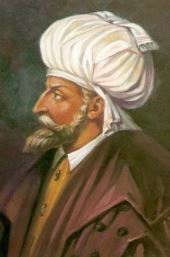
Sultan Bayezid II

Sultan Bayezid II

A large majority of the Jews settled in the Ottoman Empire, where the Sultan Bayezid II welcomed them. In fact, with regards to this the Sultan said, “They tell me that Ferdinand of Spain is a wise man but he is a fool. For he takes his treasure and sends it all to me.” Assisted by the influx of Jews, the Ottoman Empire flourished. Meanwhile in Spain, Isabella died and Ferdinand was unable to hold onto the kingdom. It was soon taken over by the Austrian Habsburgs.

In 1656, Jews were permitted to return to England, and it wasn’t long before the British Empire became the greatest the world has ever known. A similar fate awaited the United States, where many Jews found refuge. (And were instrumental in its founding and success. In fact, one of the main financiers of the American Revolution was a Jew named Haym Solomon.) It isn’t difficult to understand why the Soviet Union lost the Cold War against the U.S. so quickly and so dramatically, as Russia and the USSR never had much tolerance for its Jews, while the United States was just about always a safe place for them.

fuguOf course, history is far more complex than the simple narrative presented above, and there are many factors in the rise and fall of empires. However, there is indeed a clear pattern: Where Jews are treated well, the state flourishes and prospers; when Jews are persecuted and expelled, the very same state rapidly declines. This pattern is so obvious that in the 1930s, the Japanese came up with their “Fugu Plan” to strengthen their empire by settling Jews within its lands!
In analyzing the pattern, some scholars see it in simply practical terms, as Jews would bring their wisdom and wealth, skills, expertise, and business acumen wherever they would go, and thus contribute immensely to the success of the places where they lived. Others see far more powerful spiritual reasons, propelled by Biblical prophecy. Whatever the case, history undeniably confirms God’s promise to Abraham and Israel: “I will bless those who bless you, and the ones who curse you I will curse.”


The above is an excerpt from Garments of Light: 70 Illuminating Essays on the Weekly Torah Portion and Holidays. Click here to get the book!