What are the 5 key qualities that Mashiach must possess? What is the true role of the Messiah, and how can we properly identify this person? And who were the 5 major figures in Jewish history that had a messianic movement associated with them? Find out in this class, where we also explore Jacob’s transformation into Israel, the spiritual power of music, the greatness of King David, and the timeline of events in the forthcoming Messianic Age.
Tag Archives: Israel
Blessings You Don’t Say but Really Should
One of the core fundamentals of Judaism is the recitation of berakhot, “blessings”. On the simplest level, a blessing serves as a little bit of gratitude to God for what He bestows upon us. A Jew must be grateful at all times. In fact, it is the very root of the word Yehudi, which comes from lehodot, “to thank”, and from Leah thanking God for blessing her with a fourth child, Yehuda. As is well-known, a Jew is encouraged to make 100 blessings over the course of a single day. This ensures that a Jew remains grateful and positive always, and such a positive attitude is a valuable key to a successful and happy life.
Yet, ironically, the first people who make blessings in the Torah are not Jews at all! The first person to make a blessing with the formula of barukh followed by God’s Name is actually Noah (Genesis 9:26). This was when he blessed his son Shem. In turn, the next mention of barukh in the Torah is when Shem blessed Abraham (Genesis 14:19). However, both of these cases involve a person giving a blessing to another person, which is a little different than reciting a berakhah simply to thank God. And so, we find that the first person to truly recite a berakhah was Eliezer, in this week’s parasha, Chayei Sarah. This is when Eliezer thanked God for helping him succeed in his mission to find a suitable spouse for Isaac (Genesis 24:27).
Our Sages would later institute an actual berakhah with a specific text to recite upon achieving some great success, or hearing wonderful news (Berakhot 54a). The formula for this berakhah begins like every other (Barukh Atah Adonai Eloheinu Melekh haOlam…) and concludes with the words hatov v’hametiv, thanking God “Who is good and bestows goodness”. There is also an opposite blessing to recite upon hearing devastating news: Barukh… dayan ha’emet, affirming that God is the sole True Judge in this world and surely knows what’s best.
In the same pages of the Talmud, we are presented with many other interesting blessings that people today are generally unfamiliar with. While most are careful with blessings before and after eating food, as well as after going to the bathroom, hagomel after perilous situations, and reciting sh’echeyanu on happy occasions, new fruits, and significant new items, there are actually many more wonderful blessings that a Jew can recite throughout the day. With these in mind, it becomes much easier to hit those important 100 blessings a day. Continue reading
Israel and the Iron Age
In this week’s parasha, Ekev, Moses describes the rich land of Israel and says it is “a good land, a land with brooks of water, fountains and depths, that emerge in valleys and mountains, a land of wheat and barley, vines and figs and pomegranates, a land of oil producing olives and honey…” This first part of the description is well-known, and the source for the Seven Species of Israel. These are the seven plants that are particularly praiseworthy, and are native to the Holy Land: wheat, barley, grapes, figs, pomegranates, olives, and dates (which were used to make the honey that Moses is speaking of). The Zohar explains that all other species of plants have various angels appointed over them, but God alone oversees the growth and flourishing of the Seven Species (see Zohar Chadash on Ruth, 106a).
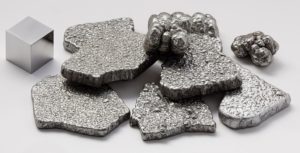 What we often overlook is the next part of Moses description: “a land in which you will eat bread without scarcity, you will lack nothing in it, a land whose stones are iron, and out of whose mountains you will hew copper.” Moses promises the Israelites a land full of iron and copper. This statement is actually just as significant as the Seven Species! What is so special about iron and copper that it was so enticing for Israel? Continue reading