Tag Archives: Jewish Calendar

The Kabbalah of Solar

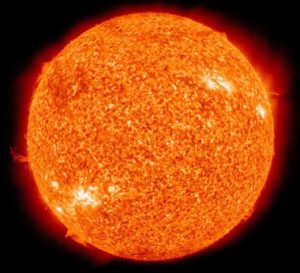
As we prepare to usher in a new year, we remember that while our calendar follows lunar months, it is still synchronized to the sun over the course of a 19-year cycle. Since a lunar month is 29.5 days, each month on the Hebrew calendar is either 29 or 30 days, resulting in a year that is typically just 354 days long. The solar year is a bit over 365 days long, meaning that a strictly lunar calendar will fall behind 11 days each year. To avoid this problem, we add an entire leap month, a second Adar, seven times in 19 years. This ensures that we stay in synch with both moon and sun. The upcoming year will be such a leap year, with 13 months instead of 12.

Although our calendar is lunisolar, and Jewish holidays, rituals, and halakhot generally follow this calendar, there are exceptions to the rule. In fact, there are a handful of Jewish laws and principles that follow not the lunisolar calendar, but the solar calendar of 365 days! We will explore some of the major ones below, and then look at the Zohar’s incredible revelations about the secrets of the solar calendar. Continue reading

Mashiach: Now or Never

How has the coming of Mashiach been understood throughout Jewish history? Are we long overdue for the arrival of the Messiah? How might we understand Mashiach ben Yosef, Mashiach ben David, and their adversary “Armilus”?

Find out in this class, where we also discuss whether a Jew is required to believe in the notion of a messiah, how long the Israelites really spent in ancient Egypt, and explore mysterious figures like Zerubbabel and Nehemiah ben Hushiel.

More End of Days secrets from Nistarot d’Rabbi Shimon bar Yochai here.
For a list of fulfilled prophecies, see here.
For a brief bio of the intriguing life of Abba Hillel Silver, see here.

China’s Spiritual Origins

This week’s parasha, Beshalach, describes the climax of the Exodus, the great Splitting of the Sea, following which Israel began its sojourn in the wilderness. We are introduced to an important geographical region, midbar Sin, the “Wilderness of Sin” (Exodus 16:1, 17:1). Presumably, this is where the name of Mount Sinai comes from. In the past, we have already explored the true location of Mount Sinai and the Sin Wilderness (which is not where the “Sinai Peninsula” is today, in Egypt).

Sin does appear earlier in the Torah, in the “Table of Nations” that describes the 70 root nations that emerged from Noah and his three sons (Genesis 10). There we learn that the Sinites (Sini, סִּינִֽי) were descendants of Ham, through his son Canaan. Apparently, they were originally a subgroup of Canaanite! What’s more perplexing, however, is that today the term Sini refers to an East Asian person, and more specifically, a Chinese person. This is not just a Modern Hebrew appellation, but goes back at least to the time of the Rishonim. How did the Far East become associated with the ancient Wilderness of Sin?

A “Table of Nations” from the ArtScroll Stone Chumash

The First Shabbat

At first glance, it seems like China and the Far East make no appearance in the Torah. The simple explanation for this is that China was too far away to register on the radar of the Israelites. It would be irrelevant to discuss distant peoples who had no relationship with Israel. That said, we know that the Torah is eternal, the Word of God, and encodes all key aspects of human life within it. There is no way that the Torah does not, in some way, refer to the great peoples of the Far East, especially because they have played such an important role in human history. Today in particular, we recognize China as a global superpower that is instrumental on the world stage. Surely, the Torah (and our Sages) had something to say about this. Looking a little deeper, we find that this is, indeed, the case. In fact, China and the Far East are the subject of an intriguing halakhic discussion.

Our Sages taught that Israel is the centre point of the universe. Creation began with Even HaShetiya, the “Foundation Stone”, which lies beneath what is today the Dome of the Rock. From that initial point, the universe burst forth and expanded ever rapidly, eventually resulting in all that we have today (this expansion was first alluded to by our Sages in the Talmud, Chagigah 12a, and in much more depth in the Zohar). Thus, the events of Creation could be said to have first taken place in Israel, and spread outward from there. That being the case, the first Shabbat was surely marked in the Holy Land. Yet, that presents a huge problem: Continue reading
