In this week’s parasha, Vayeshev, we read about the incident of Yehuda and Tamar. Yehuda’s eldest son, Er, marries a beautiful woman named Tamar. Unfortunately, Er “was evil in the eyes of God, and God put him to death.” (Genesis 38:7) As was customary in those days, since Er died without a son, it was expected that his brother, Onan, would perform levirate marriage and take Tamar as his wife. As the Torah describes, the purpose of this is to essentially provide a sort of heir for his childless brother. Onan was happy to marry Tamar, but
knew that the progeny would not be his, and it came about, when he came to his brother’s wife, he wasted [his semen] on the ground, in order not to give seed to his brother. And what he did was evil in the eyes of God, and He put him to death also. (Genesis 38:9-10)
As we know, Yehuda would end up being with Tamar himself, and out of that union would come Peretz, the ancestor of King David.

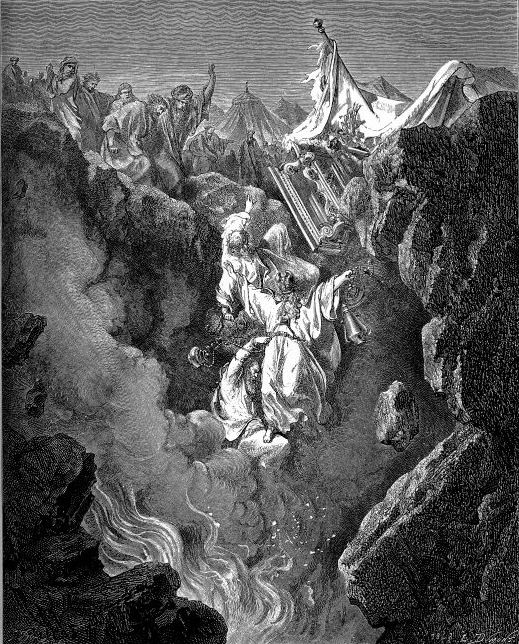
‘Judah and Tamar’
The big question is: what was it that Er and Onan did that was so despicable to God? The classic answer is that they wasted their seed (as the Torah states above), which is why they were punished so severely. This narrative is then used as proof from the Torah that wasting seed is among the gravest of prohibitions.
And yet, the Torah itself does not actually prohibit wasting seed anywhere, at least not explicitly. Considering how strictly the Sages spoke about not wasting seed, we might be surprised to find that it is not one of the 613 commandments. So, what is the true extent of this prohibition? Where did it come from? And what was really going on with Er and Onan?
A Closer Look at Er and Onan
While the Torah tells us that Er was evil in God’s eyes, it does not explain why. Many commentators (including Rashi and Rabbeinu Bechaye) assume that he must have been evil for the same reason his brother Onan was: for wasting seed. Rabbeinu Bechaye (1255-1340) clarifies that the sin was not the act of wasting seed itself, but rather for an ulterior motive. Er did not want to impregnate Tamar so that her beauty would not be ruined. He wanted her solely for physical pleasure. This is what was despicable to God.
Similarly, a careful look at the Torah makes it clear that Onan’s sin was not wasting seed either. What the Torah says is that Onan did not want to fulfil the mitzvah of levirate marriage. He avoided impregnating Tamar because he “knew the progeny would not be his”, and the reason he spilled his seed on the ground was “in order not to give seed to his brother”. The sin here was not the act of wasting seed, but rather disrespecting his own brother, and refusing to fulfil the mitzvah of levirate marriage.
Such is the opinion of Tzror haMor (Rabbi Abraham Saba, 1440-1508), and we see similar comments by Sforno (Rabbi Ovadiah ben Yakov, 1475-1550). Chizkuni (Rabbi Hezekiah ben Manoach, c. 1250-1310) goes even further, saying that Onan was really out to increase his share of land, for if he would have fulfilled the mitzvah, the child would receive Er’s portion of land, and if not, then Onan would be the inheritor. From these commentaries, and the Torah’s own simple reading, we can definitively conclude that the sin was not the wasting of seed itself but the evil ulterior motives behind it, especially greed and disrespect for a brother.
All of this is right in line with the Torah’s persistent theme of brothers failing to love each other, starting with Cain and Abel and continuing through Isaac and Ishmael, Jacob and Esau, Joseph and his brothers, and Yehuda’s sons. The Torah takes every possible opportunity to remind us to love each other wholeheartedly (as we are all brothers), and that tragedies always befall the Jewish people when we lack brotherly love—as our Sages explicitly state countless times.
Going back to the subject at hand, nowhere else in the Torah is wasting seed an issue. The Torah does state that a man who has an “emission” is impure for purposes of going to the Temple. What he must do is immerse in water, and wait until the evening for the impurity to go away (Leviticus 15:16). No other punishment is prescribed, irrespective of why the man might have the emission.
Spilling Seed, or Spilling Blood?
It is in the Talmud where wasting seed takes on its grave overtones. The Sages compare one who wastes seed to a murderer, an idolater, and an adulterer (Niddah 13a-b). This is quite shocking, considering that murder, idolatry, and adultery are the three “cardinal sins” of Judaism. These are the things one must give up their life for in order to avoid, even if coerced. The Sages are equating wasting seed with the worst possible sins.
In the same pages, we read how Rav Yochanan holds that one who wastes seed “deserves death”. Interestingly, he bases himself on the verses in the Torah concerning the deaths of Er and Onan! Yet, as we’ve seen, their sin was not the act of wasting seed, but their evil ulterior motives. In reality, the Sages are hard-pressed to find a good source for the prohibition. They resort to various colourful interpretations of Scriptural verses in an attempt to illustrate the evils of wasting seed. For example, Isaiah 1:15 says “And when you spread forth your hands, I will hide My eyes from you; when you make many prayers, I will not hear, [because] your hands are full of blood.” Rabbi Elazar says that “hands are full of blood” is referring to those who masturbate, since spilling seed is like spilling blood! This is far from the plain meaning of the verse, which is obviously talking about actual bloodshed.
We should keep in mind that in these Talmudic pages, the Sages are not just prohibiting masturbation or wasting seed, but even for a man to simply touch their “member”—even to urinate! “Rabbi Eliezer said: Whoever holds his member when he urinates is as though he had brought a flood on the world.” Rabbi Tarfon later adds that his hand should be cut off! It goes without saying that the Sages were exceedingly careful to avoid any sexual transgressions, and raised many “fences” to ensure that no one should even come close to sinning so gravely. We must remember that the Talmud often uses hyperbole to get a point across and it isn’t always wise to take statements literally. The Sages themselves question Rabbi Eliezer, and say that not holding one’s member would be very impractical, for “would not the spray splatter on his feet…?”
The point, rather, is to teach us that “such is the art of the evil inclination: Today it incites man to do one wrong thing, and tomorrow it incites him to worship idols and he proceeds to worship them.” (Niddah 13b) The Sages are specifically referring to one who fantasizes to “give himself an erection”, and that such a person “should be expelled”. After all, the yetzer hara works in such a way that it gets a person to make a tiny sin, and slowly leads them to greater transgressions. It might start with a small thought, grow into a consuming fantasy, and eventually leads one to grossly misbehave. In short, the fear is that a person will get accustomed to bad habits, and it will end up leading to more severe transgressions.
Halacha & Kabbalah of Spilling Seed
The Rambam (Rabbi Moshe ben Maimon, 1135-1204) codifies as law the prohibition of wasting seed, whether with one’s partner or on their own (Mishneh Torah, Issurei Biah 21:18):
It is forbidden to release semen wastefully. Therefore a person should not enter his wife and release outside of her… Those who release semen with their hands, beyond the fact that they commit a great transgression, a person who does this will abide under a ban of ostracism. Concerning them, it is said: “Your hands are filled with blood.” It is as if they killed a person.
The Rambam makes a distinction between a situation of husband and wife versus a man doing it on his own, which is far worse and likened to “murder”. Having said that, many other great authorities in Jewish law were more lenient when it comes to wasting seed, especially when the intention is not evil. The Rambam’s contemporary, Rabbi Yehuda haHasid (1150-1217), wrote in his Sefer Hasidim that while masturbation is forbidden, and requires a great deal of penance to repair, it is occasionally permitted if it will prevent a person from a more serious sin. On that note, the Rambam himself wrote elsewhere (Commentary on the Mishnah, Sanhedrin 7:4) that wasting seed is not an explicit Torah prohibition, and carries no actual punishment of any kind. However, he writes in the same place that although many things are permitted when done consensually between husband and wife, it is nonetheless important to be exceedingly modest when it comes to sexuality.
The later Kabbalists understood that the Torah carries no explicit punishment for wasting seed, but found an allusion to a more mystical punishment. They taught that wasting seed produces banim shovavim, literally “wayward children” (a term that comes from Jeremiah 3:14 and 3:22). These impure spirits—potential souls that are brought into this world without a body—attach to a man’s neck and cause him great damage, and can harm his children, too. There is no doubt that the Rambam, being a strict rationalist and staying away from anything “Kabbalistic”, would disagree with this approach. The Rambam did not believe in demons or evil spirits, and refused to accept the validity of many Kabbalistic ideas and practices.
The Arizal (Rabbi Isaac Luria, 1534-1572), perhaps the greatest of Kabbalists, was a major proponent of the banim shovavim notion. Since his time, it has become customary in some communities to focus on purifying from sexual sins and from wasted seed during the weeks when we read the consecutive parashas of Shemot, Va’era, Bo, Beshalach, Yitro, and Mishpatim. Since the initials of these parashas spell “shovavim”, it is thought to be an auspicious time for such repentance. Yet even the Arizal taught that wasting seed is primarily a problem when a person does so on their own, for selfish, lustful reasons. If one is married, and there is genuine loving intimacy between husband and wife, the prohibition is no longer so clear cut. (See, for example, Sha’ar HaMitzvot on Noach).
Indeed, many authorities permitted wasting seed in the context of a husband and wife being together—as long as they are not like Er or Onan, and have pure intentions coming out of true love and passion. Among those that held this opinion include the tosafist Rabbi Isaac ben Shmuel (c. 1115-1184, in his comments to Yevamot 34b) and the Maharsha (Rabbi Shmuel Eidels, 1555-1631, in his comments on Nedarim 20a). The tosafist Rabbi Isaiah di Trani (c. 1180-1250) stated it most emphatically: “one whose intention is to satisfy his desires [for his wife] does not transgress, for anything that a man wants to do with his wife he can do, and it is not considered wasting seed”! (מי שכונתו להשלים תאות יצרו אינו עובר, שכל מה שאדם רוצה לעשות באשתו עושה ולא יקרא משחית זרעו, see Tosfot Rid on Yevamot 12b.)
In fact, even the Arizal taught that, in certain special cases, wasted seed can serve a positive purpose. In Sha’ar HaGilgulim (ch. 26), we read how the ten drops of wasted seed that unintentionally emerged out of Joseph (as per the famous Midrash) resulted in levushim, protective “garments” for the soul. The seed wasted indirectly by tzaddikim may similarly produce such protective garments, especially when it happens during proper, loving, holy zivug (union) between husband and wife. Such union, while not fruitful in this world, corresponds to “heavenly unions” that are spiritually fruitful. It is important to repeat that this entails being an actual tzaddik—being righteous, just, observant, modest, humble, selfless—and being intimate in a holy, loving, kosher, monogamous union.
On that note, it is worth mentioning that a couple that is childless, or already pregnant, is absolutely allowed to continue to be intimate, and this is not at all considered “wasting seed”. (The Talmud adds that intimacy during the third trimester is particularly healthy for both mother and baby, see Niddah 31a.) At the very start of Sha’ar HaMitzvot, the Arizal explains that such unions might not produce physical children, but they produce many spiritual children. This is one meaning for the verse in the Torah that says Abraham and Sarah “made souls” in Charan (Genesis 12:5)—although they were physically childless, they had produced many souls in Heaven, and these souls later came down into human form. In fact, there are those who say these souls are given to converts, who receive a Jewish soul upon their successful conversion. The souls that Abraham and Sarah made all those years come down into the bodies of converts, which is the deeper reason why all converts are referred to as “ben Avraham” and “bat Sarah”.
To summarize and conclude, the issue of spilled seed could indeed be a serious one. There is room to be lenient in certain situations, such as the case of a young, unmarried gentleman, whose frustration might reach a point where he might be led to worse sins. The Sages recognized how incredibly difficult the latter case can be, and stated that a young bachelor who lives in the city and can still hold himself back from sexual sins is so praiseworthy that God personally calls out his name in Heaven every day (Pesachim 113a). In the case of a married couple with loving intentions, many authorities state there is no issue of “wasting seed” at all, and any form of intimacy is permitted. That helps to explain why Rabbi Chiya said it is best to stay married no matter what, and to always treat one’s wife exceedingly well—even if she is the worst kind of wife—because wives “save us from sin” (Yevamot 63a). It is fitting to end with another famous adage from the Talmud (Sukkah 52b): אבר קטן יש לו לאדם מרעיבו שבע משביעו רעב “There is a small organ in a man’s body—if he starves it, he is satisfied; if he satisfies it, he starves.”