
What did Isaiah mean when he described the entire nation of Israel as “righteous” and inherting the World to Come? What can a person do to guarantee their place in the World to Come? Which sins of a person actually count in the Heavenly Court? And how can we stimulate more love and unity among our people to bring about the Final Redemption?
Tag Archives: King Solomon
Eye-Opening Facts About Conversion
At the end of this week’s parasha, Vayishlach, the Torah mysteriously mentions that one of the Edomite chiefs, Lotan, had a sister named Timnah. The Sages famously ask why this detail is important to mention? Why does it matter that an Edomite chief had a sister named Timnah? The name “Timnah” appears two more times in the chapter (Genesis 36), once as the name of a clan descended from Esau, and once by telling us that Timnah was a concubine of Esau’s son Eliphaz, and gave birth to Amalek. The Talmud (Sanhedrin 99b) puts it all together for us and explains:
Timnah was a righteous woman who really wanted to convert and join the Abrahamic faith. She first approached Abraham about conversion, but he rejected her. She then approached Isaac and he, too, rejected her. Finally, she went to Jacob and got rejected a third time. At this point, she went to the “next best thing”, Eliphaz, and reasoned that this is the closest she can get to the family of Abraham. Tragically, the result was her son Amalek, eternal tormentor of Israel. The Sages conclude that our Patriarchs should not have rejected Timnah! Because they were too harsh with a potential convert, the evil Amalek came into the world, and has been torturing the people of Israel ever since. The message of our Sages is clear: converts should be welcomed, and we should not make it too difficult for a person to become a member of Israel. In fact, our Sages state that “Israel was exiled only to draw converts”! (Pesachim 87b)
Amazingly, the Talmud Yerushalmi (Kiddushin 4:1 or 65b) records Rav stating that all potential converts should be accepted, even those who converted with ulterior motives. Although their initial intentions were not pure, if we welcome them properly and inspire them, they will become genuine converts. After all, “The Torah of Hashem is pure, restoring the soul; the decrees of Hashem are enduring and make the simple wise; the precepts of Hashem are just, gladdening the heart; the mitzvah of Hashem is clear, illuminating the eyes.” (Psalms 19:8-9) If the prospective convert is taught properly, they will undoubtedly come to a true love of Hashem and His Torah. That was the approach of the great Hillel, who famously converted three people who initially had false intentions.
The Talmud (Shabbat 31a) records that the first Gentile came before Shammai and asked to be converted on condition that he only accept the Written Torah, and not the Oral Torah. Shammai rejected him, but Hillel accepted him, and soon educated him on why the Oral Torah is essential. The second Gentile came before Shammai and asked to be converted “on one foot”, quickly and without any Torah learning. Shammai rejected him, but Hillel accepted him and converted him on one foot! He simply told the convert: “That which is hateful to you, don’t do to others—this is the whole Torah. The rest is commentary. Go learn!” Finally, the third Gentile came before Shammai asking to be converted on condition that he become a kohen gadol, so Shammai naturally rejected him. Hillel converted him anyway, and then taught him why he cannot be a kohen. The passage ends by telling us that the three converts eventually met each other and declared: “Shammai’s strictness sought to drive us from the world; Hillel’s meekness brought us under the wings of the Divine Presence!”
Today, we no longer see such rapid conversions in the Orthodox world. On the contrary, the process has become long (typically around two years), and often expensive. A prospective convert is expected to study Jewish law in depth and pass a written test before conversion. The reality is that this is actually a fairly recent development, and was not the case for the vast majority of Jewish history. It is worth going through the halakhic sources to find out the facts about conversion. Continue reading
A New Perspective on Rabbi Akiva, Rachel, and the 24,000
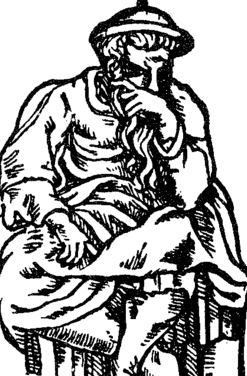
An illustration of Rabbi Akiva from the Mantua Haggadah of 1568
Now that Lag b’Omer is behind us and the mourning customs have been lifted, it may be a good time to reflect more deeply on the whole story of Rabbi Akiva and his 24,000 students. This story is very well-known, of course, and deeply ingrained in our psyches. But for me, like for many people, multiple aspects of the story never really made sense. So many questions emerge, each more troubling than the next.
First, how it is possible that 24,000 Torah giants—talmidei chakhamim and presumably very righteous people—were slaughtered in the span of just a few weeks? The students of the great and saintly Rabbi Akiva, no less? Why did he have to suffer such a horrendous loss? And all because the students “didn’t honour each other properly”? Since when does lack of honour incur mass execution? And what does it even mean, anyway, that they didn’t “honour” each other? How so?
Another question: why specifically 24,000 disciples? How did Rabbi Akiva even get such an astronomical number of students in the first place, at a time following the Great Revolt when the Jewish community in the Holy Land was decimated? And why does the number 24 keep coming up in the story? Recall that Rabbi Akiva left his home and was away from him wife for 24 years, returning with 24,000 students. Surely this is not coincidental. I believe it might actually hold the key to answering all of the perplexing questions above, as well as another big mystery:
Why is it that the mourning period for the 24,000 students specifically requires abstaining from weddings. As explored in the past, the earliest mention of “mourning” during the Omer is from the times of the Geonim, and suggests to only avoid weddings. (The first halakhic code to officially speak about it, the Arba Turim, notes a universal custom to avoid weddings, and only a local custom among some communities to avoid haircuts.) Why is the essence of mourning for the 24,000 specifically observed by prohibiting weddings? Continue reading