The Haftarah for this week’s parasha, Shoftim, has several phrases that are very familiar from our prayers, such as hit’oreri hit’oreri (התעוררי התעוררי), uri uri (עורי עורי), and hitna’ari m’afar kumi (התנערי מעפר קומי). We recognize these words, of course, from the Friday evening Kabbalat Shabbat song of ‘Lecha Dodi’—but they are originally adapted from the prophecies of Isaiah. The first letters of the eight main stanzas of ‘Lecha Dodi’ spell Shlomo haLevi (שלמה הלוי), alluding to the author of the song, Rabbi Shlomo haLevi Alkabetz (c. 1500-1576).
Rabbi Alkabetz was born in Salonica (present-day Thessaloniki, Greece) to a Sephardic family. He was a student of the great Rabbi Yosef Taitazak (1465-1546), who was among the Spanish Jewish exiles of 1492 and settled in Salonica. Rabbi Taitazak would become the “father” of the Tzfat Kabbalists, for many of his students (including Rabbi Yosef Karo, 1488-1575) were from, or settled in, Tzfat and transformed it into the capital of Jewish mysticism. Another one of Rabbi Taitazak’s students was Rabbi Moshe Cordovero (the “Ramak”, 1522-1570), who was the brother-in-law of Rabbi Alkabetz. Together, the Ramak and Rabbi Alkabetz famously popularized the ancient mystical practice of staying up all night to study Torah on Shavuot.
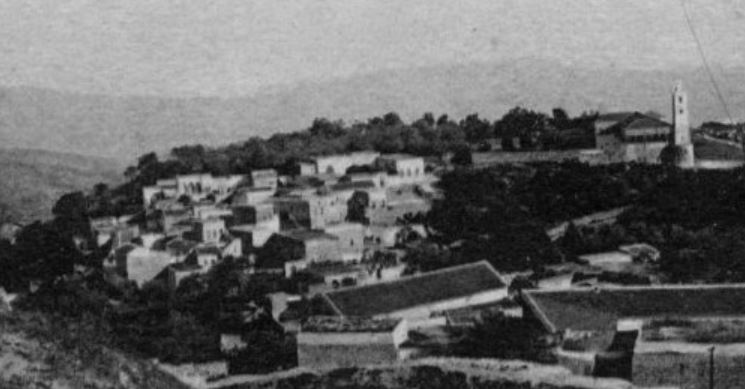
Tzfat in the 19th Century
Rabbi Alkabetz settled in Tzfat in 1535. One of the notable practices of the Tzfat Kabbalists was to go out into the fields on Friday evening to welcome the “Sabbath Queen”. This is based on the Talmud (Shabbat 119a), which says that Rabbi Chanina would do so, as did Rabbi Yannai, who would also call out bo’i kallah, bo’i kallah. In another place, the Talmud (Bava Kamma 32b) adds that some would say to go out likrat Shabbat, kallah, malkata, to welcome the Sabbath Bride and Queen. The Tzfat Kabbalists resurrected this ancient practice. Rabbi Chaim Vital (1543-1620), the preeminent student and scribe of the great Arizal (Rabbi Isaac Luria, 1534-1572), records in his Pri Etz Chaim (Sha’ar Shabbat) the Arizal’s precise procedure for Kabbalat Shabbat:
He would go out into the fields and first recite Psalm 29 (‘Mizmor l’David’). Then he would say bo’i kallah three times, followed by Psalm 92 (‘Mizmor Shir l’Yom haShabbat’). That was it! The Arizal would then return home, and had another set of rituals around the meal table. One of these was to recite the words Zachor v’shamor b’dibbur echad ne’emru, to recall the mitzvah of Shabbat in the Ten Commandments. Recall that in the first passage of the Ten Commandments in the Book of Exodus, God says zachor et yom haShabbat, to “commemorate” the Sabbath day, while in the second passage of the Ten Commandments in the Book of Deuteronomy, Moses recorded it as shamor et yom haShabbat, to “safeguard” the Sabbath day. Our Sages explained that God had said both words simultaneously—the people heard zachor v’shamor b’dibbur echad, to “commemorate” and “safeguard” in a single utterance.
The Arizal passed away in 1572, while Rabbi Alkabetz outlived him and passed away in 1576 (or 1580 according to alternate sources). We do not know for certain when Rabbi Alkabetz wrote ‘Lecha Dodi’, but it is quite possible that it was composed in his final years, as the Kabbalah of the Arizal was already spreading. A major clue is that Rabbi Alkabetz incorporated the Arizal’s practice of reciting Zachor v’shamor b’dibbur echad into his song (though it is possible that the Arizal had himself adopted the practice from earlier Tzfat Kabbalists). Rabbi Alkabetz also included the key words from the Talmud, and the phrases from this week’s Haftarah about the Final Redemption and rebuilding of Jerusalem, among other Biblical verses. Encrypted into the popular song are some fundamental and profound ideas. Let’s take a deeper look into what the verses of ‘Lecha Dodi’ really mean. Continue reading →