
Tag Archives: Ancient Hebrew

The Letters of Creation (Video)

Why does the Hebrew alphabet begin with an Aleph? Why does the Torah begin with a letter Beit? What role did the divine Hebrew letters have in Creation? What is God’s “seal of truth”, and what is God’s “sceptre”? Why do we find pagan death cults in countries and cultures all over the world? And what is the missing “nun” verse in Psalm 145? Find out in this class as we unravel a fascinating ancient Midrash about the letters of the Hebrew alphabet presenting themselves before God at the start of Creation. Also: Did God really command Abraham to sacrifice his son, and did Abraham pass the test? What really happened with the Tree of Knowledge? And why does evil exist?

For a brief written summary, see here.

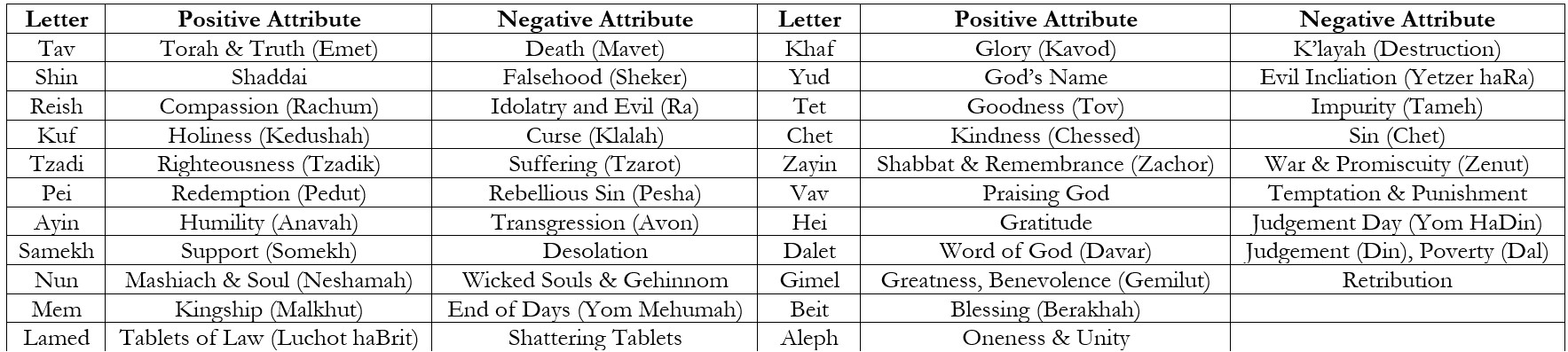
The summary chart at the end of the video:
King Solomon’s Kabbalah

In this class, we explore the esoteric knowledge of King Solomon encoded in his three books: Kohelet, Mishlei, and Shir haShirim. Along the way, we answer big questions like: What is the Seal of Solomon? Why did King Solomon take on hundreds of wives and what did he conclude about marriage? What scientific knowledge did Solomon uncover? What are the 50 Gates of Understanding? Plus: the great secret behind El Shaddai, the mystical reason for the exile of the Jewish people, and incredible revelations from the ancient mystical text Sefer haTemunah.

For more on the Seal of Solomon and the Star of David, see here.
See also ‘Things You Didn’t Know About King Solomon’.
For more on Sheddu and Cherubs, see ‘The Guardian Angels and Hybrid Beasts Known as Cherubs’ in the second volume of ‘Garments of Light’

The Forgotten Reason For Fasting on the Tenth of Tevet

Today we mark one of the “minor” fast days of the Jewish calendar: Asarah b’Tevet, the Tenth of Tevet. Technically, in ancient times there were three separate fasts instituted on the eighth, ninth, and tenth days of Tevet. However, because fasting three days in a row is not practical for most people, the three were combined into a single day. None of this is coincidence, of course, and there is a profound connection between the “three” fasts. First, a recap: what does each of these fasts commemorate?

Continue reading