This week’s parasha, Ki Tetze, begins by describing the procedure when Israelite men “go out to war” and encounter a beautiful woman behind enemy lines. The Torah permits taking this woman for a wife, but on condition that the soldier waits for one month. He is to bring her to his home, where she shaves her head and cuts her nails while mourning for a month for the loss of her family. Only then, if the soldier still wants her, he can take her as a wife. If he no longer wants her, then she is to be set free unconditionally. The Torah cautions that she must not be treated as a slave or sold. A big question here is: is the soldier permitted to have relations with the “beautiful captive” immediately, or must he wait one month until she is eligible to be his wife? Continue reading
Tag Archives: Neurobiology
The Kabbalah of Neurotransmitters
With gratitude to my dear friend Rabbi Yehoshua Gerzi, who first suggested the idea.
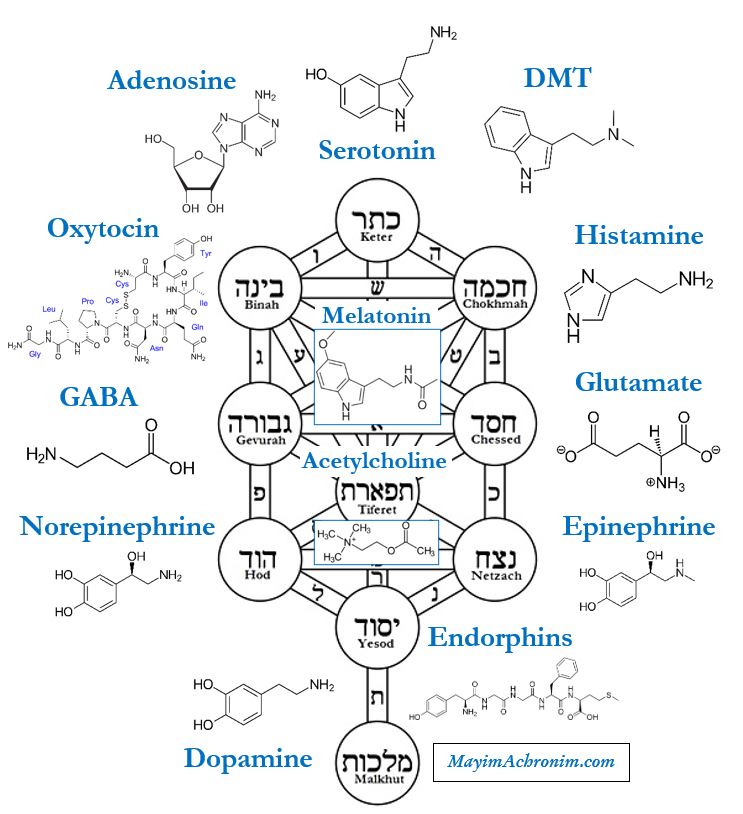
The centrepiece of this week’s parasha, Yitro, is the Ten Commandments relayed at Mount Sinai. As is well-known, all “tens” in the Torah are connected and parallel each other, starting with the Ten Utterances of Creation and the Ten Sefirot, the ten trials of Abraham, the Ten Plagues, and the Ten Commandments. Similarly, there are patterns of ten all over science and nature. Our entire mathematical system is built upon a base-10 system of digits. The human body has ten senses. Relatedly, we find that the human brain relies primarily on a set of ten neurotransmitters (out of a total of about forty altogether). This is particularly relevant to this week’s parasha, where the Sinai Revelation is described as something akin to a synesthetic and psychedelic experience. What are the brain’s major neurotransmitters, and what is their spiritual root in the Sefirot?
The most abundant neurotransmitter in the brain, by far, is glutamate. Glutamate is a small molecule closely related to the the amino acid glutamic acid, and made from the similar amino acid glutamine. Glutamate is an excitatory neurotransmitter whose job is to turn things “on”. It is vital for learning, memory, and the formation of new synapses between brain cells. It is also used to make a different neurotransmitter which has the exact opposite role, to turn things “off”: GABA. Gamma-aminobutyric acid (GABA) is the main inhibitory neurotransmitter in the brain. It is also important for brain development, and is involved in regulating moods, and blood sugar, too (directly affecting insulin-producing cells in the pancreas). Alcohol’s effect on the brain is caused by increasing levels of GABA, resulting in an inhibitory effect.
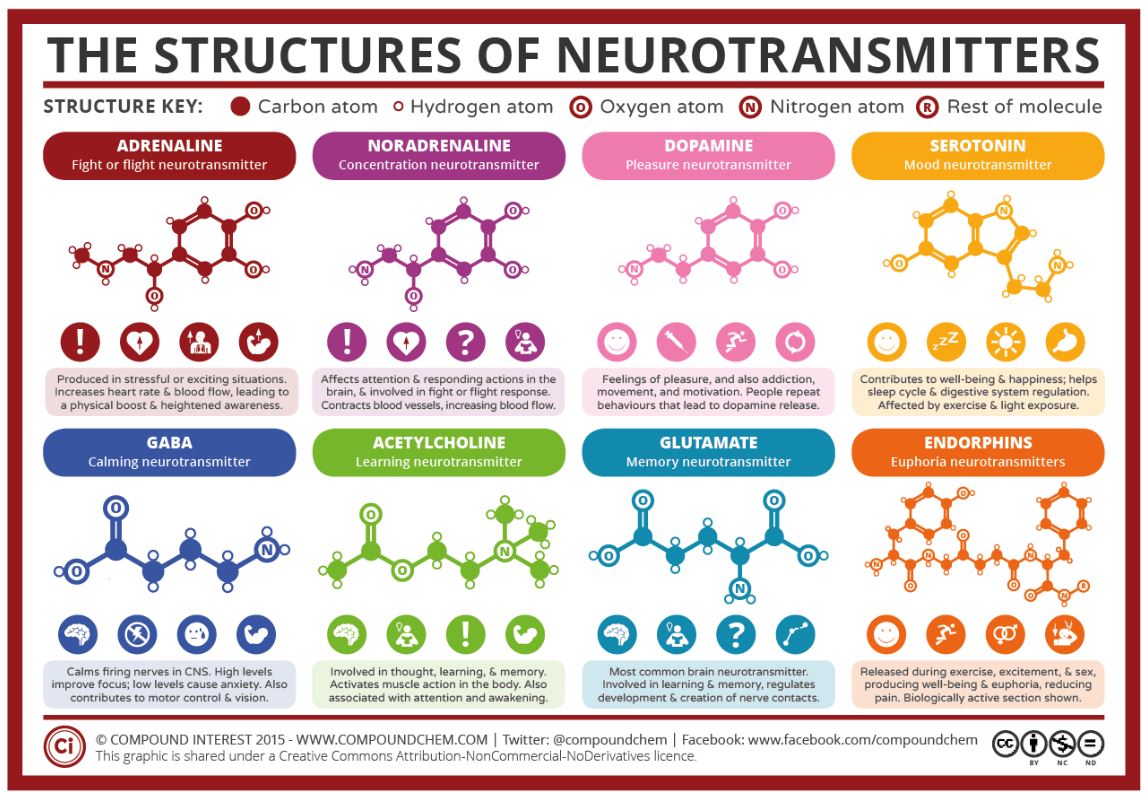
In terms of Sefirot, it is quite clear that glutamate and GABA parallel Chessed and Gevurah, “positive” and “negative” energies that balance each other out and are both vital for healthy functioning. Recall that Chessed is often referred to as Gedulah, “largeness”, fitting for glutamate which is the most abundant neurotransmitter in the body. Meanwhile, mystical texts parallel red wine (and, by extension, all alcohol) to the realm of Gevurah, further solidying the connection to GABA.
It is worth noting that glutamate activates the tongue’s “savoury” (or umami) taste receptors. This is why monosodium glutamate, infamously known as MSG, is added to many foods and snacks. Some have argued that since glutamate is an excitatory neurotransmitter, too much MSG consumption can result in “excitotoxicity” in the brain, possibly damaging brain cells or interfering with brain development. This is why people often look for MSG on labels to avoid them, so food producers use alternate names to avoid detection, including “flavour enhancer 621” or even just “yeast extract” or “autolyzed yeast”.
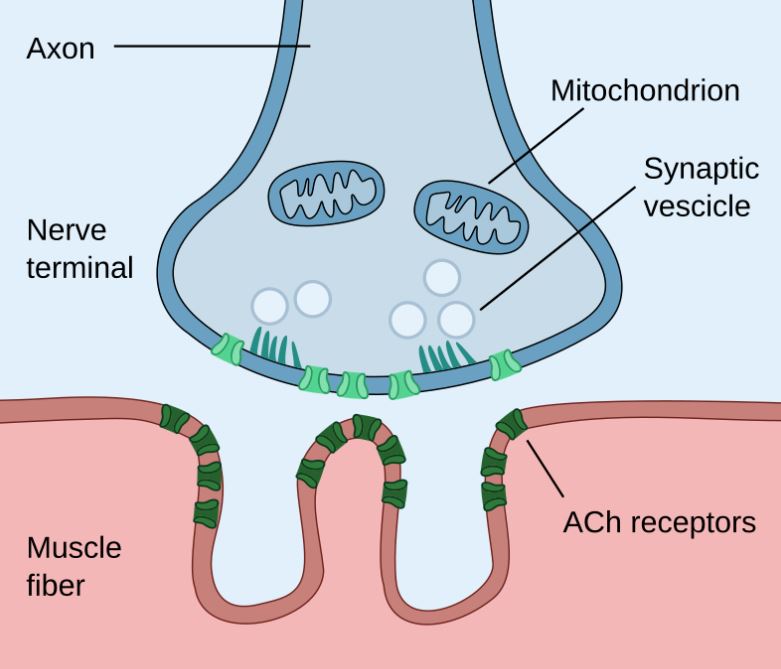
At the neuromuscular junction, the axon (top) releases acetylcholine, which then binds acetylcholine (ACh) receptors on the muscle, ultimately triggering a contraction.
The next major neurotransmitter is acetylcholine. It is involved in excitation, learning, and memory, as well, but has many more roles all over the body. Perhaps most importantly, acetylcholine is the chemical that transforms the brain’s electrical signals into muscle contractions. At every neuromuscular junction between nerves and skeletal muscles is acetylcholine. It is vital for the heart, too, and regulates heart rate and blood pressure. Acetylcholine is precisely the central Sefirah of Tiferet, the only one that intertwines with all other Sefirot, sending energy in all directions, and serving as the “heart” of the Sefirot.
The next two Sefirot, Netzach and Hod, always come in a pair, their literal names meaning “victory” and “glory”. They are compared to the “legs”, and are sources of strength, elevation, and prophecy. Of course, they neatly parallel the twin pair of epinephrine (adrenaline) and norepinephrine, the main neurotransmitters in the body’s sympathetic “fight-or-flight” response. These neurotransmitters turn up one’s heart rate, breath rate, stress levels, alertness, attention, and focus. No victory or glory was ever achieved in battle (or at a sports game) without a steady flow of adrenaline in the participants. Medically, epinephrine is most commonly used to stop allergic reactions, asthma attacks, and heart attacks, making it a key life-saver (another point for Netzach). Meanwhile, many medications for ADHD and depression upregulate the body’s norepinephrine levels.
We then get to Yesod, the domain of pleasure and intimacy. This corresponds to endorphins, the body’s natural painkillers and pleasure-producers. Release of endorphins from the pituitary gland is the primary cause of sexual pleasure. (The pituitary gland also releases hormones that control the reproductive system and production of both male and female gametes.) The term “endorphin” comes from endogenous morphine, and many drugs and painkillers are actually endorphin mimics. In fact, these are some of the most addictive drugs—including opioids, which are tragically resulting in the deaths of countless people. It is fairly well-known that Kabbalistic texts pinpoint life’s most difficult test to be in the realm of Yesod, and the final tikkun of the pre-Mashiach generation is specifically about rectifying Yesod—which certainly explains the world we see around us today, on many levels.
Finally, we come to Malkhut at the base of the Sefirot, where the final reward lies after the test of Yesod is passed. This is the place of the reward hormone dopamine. Like other neurotransmitters, dopamine plays an important role in learning, memory, and concentration. However, its most famous role is to produce a sense of reward and positivity. Most recreational drugs (including nicotine, cannabis, cocaine, meth, and heroine) mimic dopamine or increase the amount of dopamine in the brain. It is interesting that in mystical texts Malkhut is always described as being “empty”, often devoid of its own energy, and is also called shiflut, “lowliness”. This might explain why people who are in such a state of lowliness or emptiness tend to abuse dopamine-type drugs.
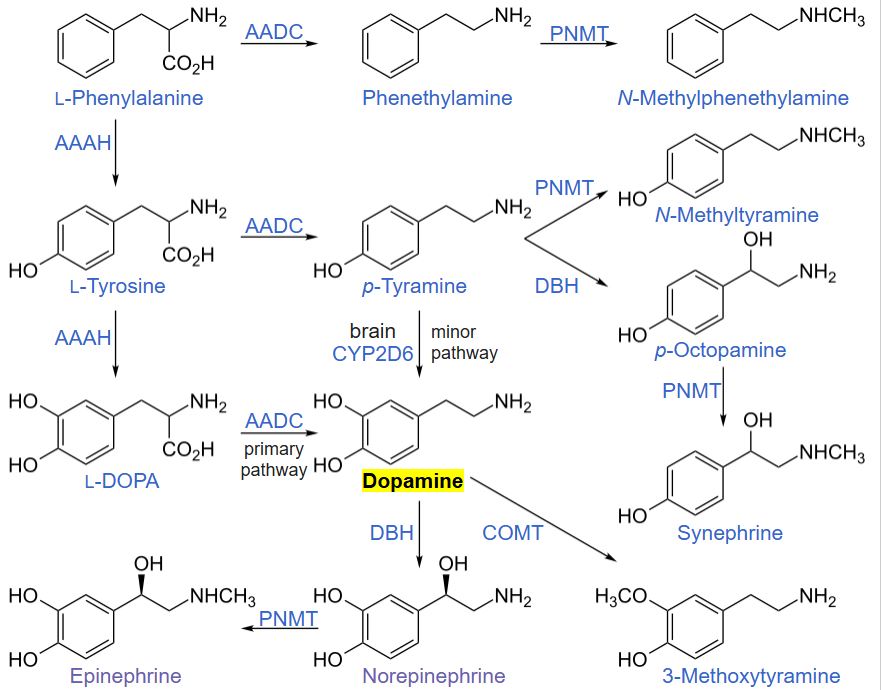
The amino acid phenylalanine (top left) is used to produce a number of important neurotransmitters including dopamine, epinephrine, and norepinephrine.
Now we come to the upper three Sefirot, the Mochin, most closely associated with the brain itself. The motherly Binah, also called Ima, neatly corresponds to the neurotransmitter and hormone oxytocin. Recall that it is oxytocin that causes contractions during childbirth, and is involved with production of breastmilk afterwards. Oxytocin plays a huge role (in men and women) in love and emotional attachment, trust and social bonding, sexual arousal, and even anger management.
On the other side is Chokhmah, the fatherly Abba. This corresponds well with a molecule that until recently was thought to be only a hormone, but is now recognized as an important neurotransmitter, too: histamine. Histamine is made directly from the amino acid histidine, and is popularly known for its role in the immune system and allergic responses. It was once thought that histamine is only made in the immune system and by immune cells. We now know it is produced by the brain as well, and is primarily involved with alertness (hence antihistamines causing drowsiness). More recently, it was found to play a key role in male arousal and erectile function. It also plays a protective role for neurons, and may be involved in forgetting unnecessary things (another stereotypical male trait).
At last, we get to the highest Sefirah of Keter, the root of willpower, ratzon. This is undoubtedly the all-important serotonin, deeply involved in our own human willpower. Serotonin is made from the amino acid tryptophan, and has countless functions in the brain and body. It plays key roles in the digestive system and circulatory system, serves as a growth factor for some cells and organs, and regulates bone mass. (Note that Keter is often referred to as the “skull”.) Its best-known role is in mood regulation, and a lack of serotonin (or rapid reuptake of it) causes depression and a lack of willpower. Many antidepressants target serotonin and serotonin-related receptors and channels, as do many antipsychotics and antimigraine drugs. Interestingly, psychedelic drugs like DMT, psilocybin, LSD, and peyote (mescaline) are also serotonin mimics. And this brings us to the hidden Sefirah of Da’at:
Da’at is thought of as the inner “realization” of Keter, the application of the initial will. It lies directly beneath Keter, between Chokhmah and Binah, usually concealed on a diagram of the Sefirot. It is sometimes described as the “integration” of knowledge. Da’at is intricately tied to Keter, so we should expect it to have its own related set of neurotransmitters. First is melatonin, the sleep hormone. Like serotonin (which also plays a small role in sleep), melatonin is made from tryptophan and has a very similar structure. Sleep is absolutely vital, shutting down our consciousness to allow the brain to reorganize and clean itself up. Like Da’at, sleep allows for “integration” of knowledge. Spiritually, our holy texts teach that most of the soul ascends to higher worlds during sleep, hence the body’s “dead-like” state. And this is what allows some of our dreams to be prophetic, as the wandering soul may pick up and retain higher knowledge from Above.
Scientifically, dreaming is very poorly understood and is still mostly a mystery. No one knows the biological reason for dreaming, but we do know it is essential, and going without dreaming (and the corresponding REM sleep) could be fatal. Incredibly, the Talmud (Berakhot 55a) knew this long ago, pointing out that the Hebrew word for “dream”, chalom, shares a root with “health” and “healing”, hachlamah. Based on Isaiah 38:16, the Talmud points out that dreaming keeps a person alive!
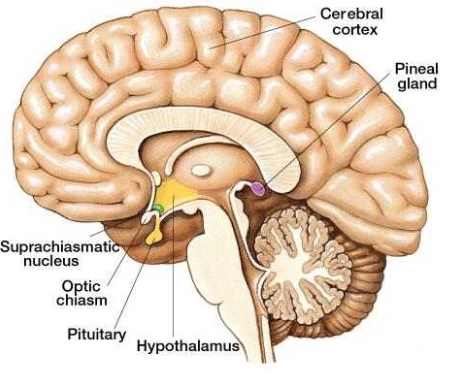 On the neurotransmitter level, dreaming has been linked to another tryptophan-derived molecule closely related to melatonin, popularly called DMT (dimethyltryptamine). DMT is famous for its hallucinogenic and psychedelic properties, and as the active ingredient in Ayahuasca. It can be highly transformative and therapeutic for many people. DMT is found in various plants (including those mentioned in the Torah, as described in a previous essay here.) And it is believed that tiny amounts of DMT may even be naturally produced by our brains, in the same pineal gland that makes melatonin. It may be involved in our own dreams, possibly including prophetic ones.
The pineal gland—often called the “third eye”—sits at the base of the brain, just as Da’at sits at the base of the Mochin, the literal “brain” of the Sefirot. The pineal gland actually contains photoreceptors like our eyes do, and in birds, for example, it sits at the top of the brain and picks up light signals to help birds navigate as they fly. This “third eye” pineal gland has been linked to the head tefillin worn between the eyes (as well as wearing a kippah, as explored in the past here). Amazingly, the Zohar taught centuries ago that the reason the head tefillin is split into four compartments (while the arm tefillin has just one) is both because it corresponds to the four light receptors in the eyes (the Zohar seems to have incredibly known about rods and cones!) as well as the four aspects of the Mochin! (Ie. Keter, Chokhmah, Binah, and Da’at. See Zohar III, 292b-293b, Idra Zuta.)
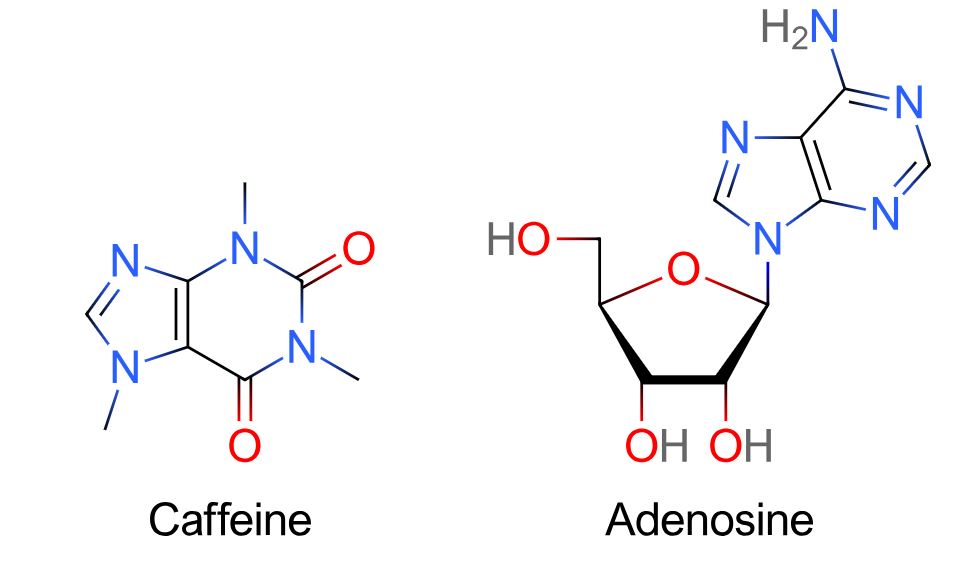 To complete the discussion, there is one more minor neurotransmitter that needs to be mentioned in the concealed “Da’at” category: adenosine. Adenosine is better known for its role as one of the four letters that make up our genetic alphabet (the adenine “A” of ACTG). But it happens to play a critical role in sleep and wakefulness, too. In fact, caffeine is an adenosine mimic, and specifically blocks adenosine receptors to prevent sleepiness! Lastly, while we can group adenosine, melatonin, and DMT together in the “Da’at” category, there is an alternative: In deeper mystical texts, two additional aspects of Keter are mentioned: Ta’anug, “pleasure”, and Emunah, “faith”. So, one might also align sleepy adenosine with Ta’anug (sleep being particularly associated with “pleasure” and oneg Shabbat), and spiritually uplifting DMT with Emunah.
To summarize:
The Kabbalah of Kippah
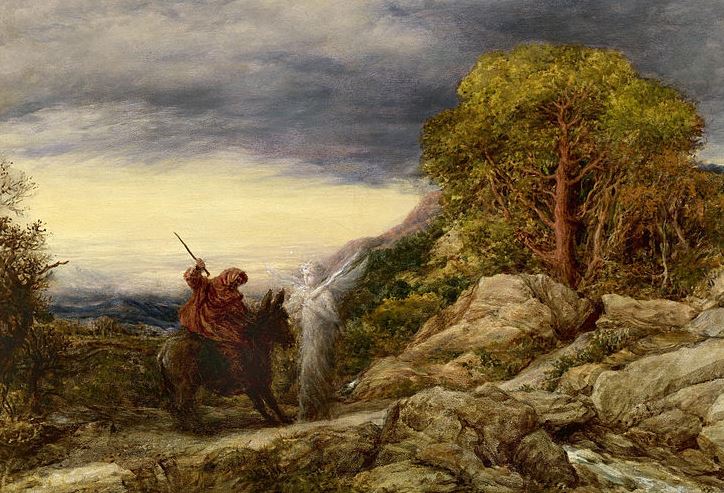
‘Balaam and the Angel’ by John Linnell
This week’s parasha, Balak, recounts the attempt of two great sorcerers, Balak and Bilaam, to curse the people of Israel. Balak was a Moabite king who worried that Israel would conquer his land. He hired the famous gentile prophet and wizard Bilaam to curse the nation. Bilaam knew he would be unable to do this, for he can only pronounce what God desires. And so, each time Bilaam sought to pronounce a curse, a blessing emerged from his mouth instead. Balak tried several magical tricks and sacrificial rituals to change that, to no avail. Israel remained blessed.
The persistent motif in this parasha is the eye, or vision more broadly. Right from the beginning, we read:
Balak the son of Tzippor saw all that Israel had done to the Amorites… He sent messengers to Bilaam the son of Beor, to Pethor, which is by the river of the land of his people, to call for him, saying, “A people has come out of Egypt, and behold, they have covered the eye of the land, and they are stationed opposite me.” (Numbers 22:2-5)
This kind of language permeates the entire parasha, and is perhaps most concentrated in the following passage:
Bilaam raised his eyes and saw Israel dwelling according to its tribes, and the spirit of God rested upon him. He took up his parable and said, “The word of Bilaam the son of Beor and the word of the man with an open eye. The word of the one who hears God’s sayings, who sees the vision of the Almighty, fallen yet with open eyes. (Numbers 24:1-4)
Bilaam had a special “open eye” for seeing divine visions. Interestingly, although translated as “open eye”, the Hebrew is actually shtum or stum ‘ayin, which can be read as “closed eye”. Rashi comments on this dichotomy, bringing sources that favour both translations, with the possibility that Bilaam was blind in one eye or was missing an eye. The deeper mystical meaning is referring to an inner, spiritual eye. Aderet Eliyahu (the commentary of the Vilna Gaon, Rabbi Eliyahu of Vilnius, 1720-1797) states that this refers to seeing with divine inspiration. The Torah is alluding to an eye that is covered up, not visible on the face of a person. This eye is often referred to as the “third eye”.
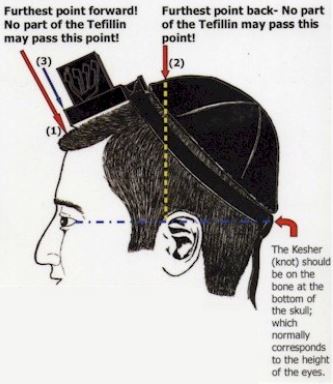
When worn properly, the head tefillin points directly to the pineal gland inside the brain.
In Kabbalah, the third eye is associated with the head tefillin, which the Torah commands be placed “between your eyes”. Despite this, we do not put the tefillin between our eyes, but atop the head, above the hairline. This alludes to the fact that the head tefillin is about opening up our third eye, buried deeper in our brains. Science has shed some incredible light on this subject.
Deep in our brains is a small organ called the pineal gland. It releases the sleep hormone melatonin, and has also been found to contain DMT (dimethyltryptamine), a chemical that causes hallucinations and visions. Some say this chemical generates our dreams, or at least plays some role in dreaming. In South American shamanic rituals, a special tea (called Ayahuasca) with a high concentration of DMT is brewed and drunk in a religious ceremony to open one’s eyes to spiritual visions (and apparently works extremely well).
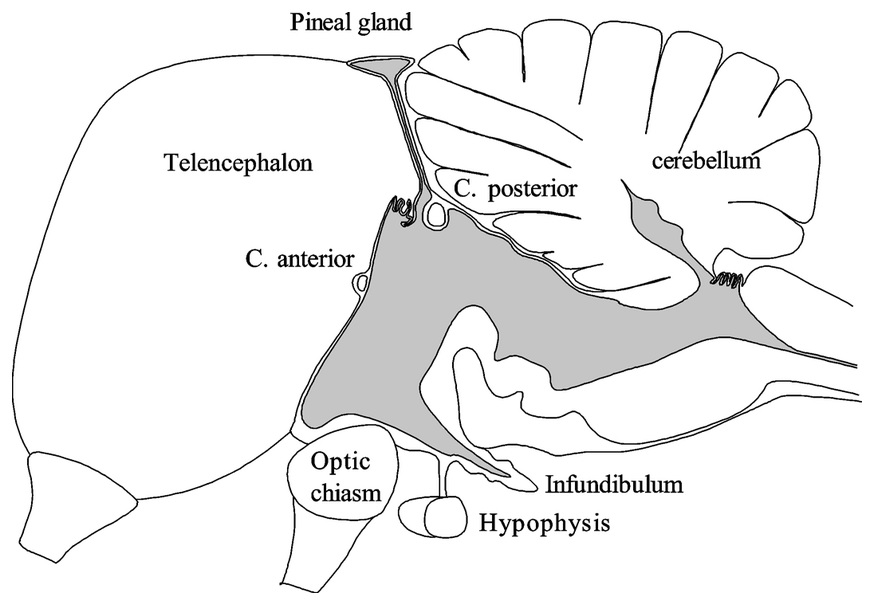
Pineal gland atop a bird’s brain.
If we can point to any part of the brain as being a “receiver” for prophecy, it would certainly be the mysterious pineal gland. Most intriguingly, scientists have found that the pineal gland contains photoreceptor cells similar to those in our eyes! (In some animals, it rests higher in the brain and appears to respond to light, and may even be involved in processes like bird migration.) For these reasons, many have identified the pineal gland with the mystical third eye described in ancient mystical texts.
One of these ancient texts is the Zohar, on this week’s parasha. The section on Balak is among the longest in the entire Zohar. It includes what some identify as a separate mystical text that was only later incorporated into the Zohar, called the Yenuka, or “Child”. It describes a dialogue that Rabbi Yitzchak and Rabbi Yehuda had with a particularly precocious child. The child reveals some incredible mystical secrets, and one of these is regarding the inner eye. (For more on these secrets, and to the identity of this mysterious child, see the second edition of Mayim Achronim Chova – Secrets of the Last Waters.) The Zohar (III, 187a) reads:
[The Child] opened the discussion with the verse: “The wise man, his eyes are in his head, while the fool walks in darkness…” [Ecclesiastes 2:14] Why does it say the eyes are in his head? Are the eyes of a man in any other place? …Rather, the meaning of the verse is this: it has been taught that a man should not walk four cubits with an uncovered head. What is the reason? Since the Shekhinah rests upon the head, and a wise man’s thoughts and visions are in his head…
King Solomon alluded to the third eye when he said a wise man’s eyes are in his head and show him the light. The meaning of his words are quite clear, for he didn’t mean that a fool is literally blind, rather that he is lacking spiritual vision, which a wise man has. The Zohar comments by first stating that it is obvious the eyes are in (or on) the head. What one should understand is that contained within our heads are all of our holy thoughts and spiritual visions, imbued by God, and thus God’s divine presence, the Shekhinah, hovers over the head.
The Child goes on to state that a spiritual light emanates from the head of a righteous person, and he sees that light glowing upon the heads of Rabbi Yitzchak and Rabbi Yehuda. The Kabbalists associate that light with the two highest souls of a person, the Chayah and Yechidah. While the three lower souls (Nefesh, Ruach, Neshamah) reside in the body, the higher souls exude outwards and hover over the body. (For more on this, see A Mystical Map of Your Soul.) This is why it is common to wear two head-coverings, for example a kippah and a hat, which is meant to “cover” the two higher souls. These souls are particularly roused during prayer, which is the deeper reason for having a kippah and a tallit over one’s head.
The Child alludes to a Talmudic teaching of Rav Huna, who said he never walked four cubits with an uncovered head because the Shekhinah hovered over it (Kiddushin 31a). Elsewhere in the Talmud, we learn that an astrologer told the mother of Rav Nahman bar Yitzchak that he would become a thief, so his mother made him wear a head-covering his whole life to ensure “the fear of Heaven should always be upon him” (Shabbat 156b). It worked, and Rav Nahman became a great rabbi instead. Some cite this as the source for calling a kippah a yarmulke, meaning “fear of the King”. A kippah should remind a person at all times Who is above them.
Despite such teachings, wearing a kippah at all times was not a halachic requirement in those days. This was especially the case for an unmarried man, as we learn from another passage in the Talmud (Kiddushin 29b):
Rav Ḥisda would praise Rav Hamnuna to Rav Huna by saying that he is a great man. Rav Huna said to him: “When he comes to you, send him to me.” When Rav Hamnuna came before him, Rav Huna saw that he did not wear a head-covering. Rav Huna said to him: “What is the reason that you do not wear a head-covering?” Rav Hamnuna said to him: “The reason is that I am not married.” Rav Huna turned his face away from him, and he said to him: “See to it that you do not see my face until you marry.”
The story comes full circle with Rav Hamnuna. The Zohar states that the mysterious Child—who taught the secret of the inner eye and the kippah—is none other than the son of Rav Hamnuna Saba (“the Elder”). Although it isn’t entirely certain if these are the same Rav Hamnunas, it appears that this is indeed the case. Rav Huna (who was so careful with a head-covering) was the one who taught and made sure that Rav Hamnuna would get married and cover his head. The child that resulted from that marriage was the angelic child, who went on to reveal the secret of the head-covering.
It was Rabbi Yosef Karo (1488-1575), a great mystic in his own right, who incorporated this practice as law in the Shulchan Arukh, stating that one should not walk four cubits with his head uncovered (Orach Chaim 2:6). In previous centuries, wearing a kippah or head-covering was only mandatory during prayer (Mishneh Torah, Sefer Ahava, Hilkhot Tefilah 5:5). Even in the centuries following Rabbi Karo, there were those that maintained wearing a kippah at all times was not a strict requirement but a middat hassidut, an extra measure of piety. (Such was the view of the Chida, Rabbi Chaim Yosef David Azzulai, 1724-1806; as well as the Vilna Gaon, and Rabbi Samson Raphael Hirsch, 1808-1888).
Today, it has become accepted for a Jewish man to wear a kippah all the time, and for good reason. It is a mark of modesty, and a symbol of one’s Jewishness. It reminds a person of the Heavens above, and saves them from sin. It (hopefully) motivates a person to do Kiddush Hashem. It reminds a person of their higher souls, and the holy Shekhinah resting upon them. And it serves to stimulate and guard one’s “third eye”, one’s inner vision, and those holy Torah thoughts residing in the mind.
The above essay is adapted from Garments of Light, Volume Three.
Get the book here!