
What is the deeper meaning behind the name of ancient Egypt (“Mitzrayim”), and how is it related to the Straits of Hormuz? What about the spiritual significance of Kharg Island, through which 90% of Iranian oil passes? Who are the Mandeans? Where do the laws of niddah (menstrual purity) really come from, and what does Zoroastrianism have to do with it? Find out in this eye-opening third part of the series, where we also unravel the secret of the number 50, explore the possible location of the Garden of Eden, and learn about the great Persian Queen Ifra Hormiz.
Tag Archives: Straits of Hormuz
The Kabbalah of Shavuot
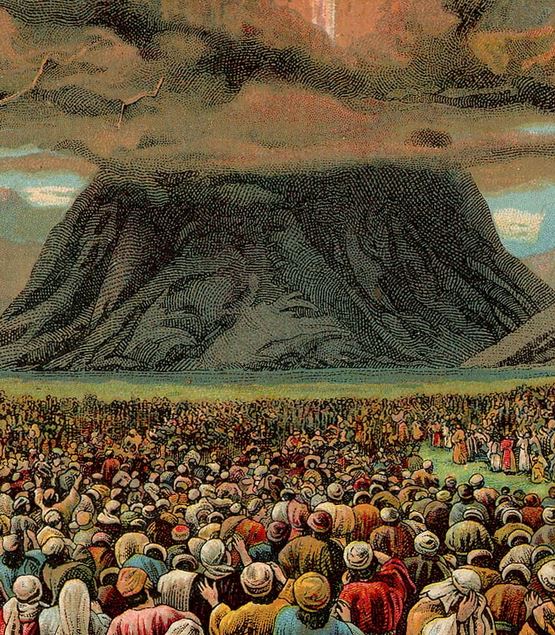 With Shavuot coming tomorrow night, let us delve into some of its deeper cosmic mysteries, as relayed in a most profound passage in the Zohar (III, 97b-98b, together with Ra’aya Mehemna). It begins by describing Shavuot night as a “wedding” between Hashem and His people. It is well-known that Mount Sinai served as the “chuppah”, the Torah as the “ketubah”, Hashem as the groom, and Israel as the bride. As explored in depth previously, in ancient times an Israelite bride was adorned with 24 different ornaments, and the corresponding “ornaments” of the Jewish people are the 24 books of Tanakh.
The Zohar says that there are those who, on Shavuot, learn the Oral Torah at night and the Written Torah during the day. But it also says that, just as a bride is excited the whole night before her wedding and doesn’t sleep, and prepares for her wedding with her 24 adornments, so too the Jewish people should stay up all night and not sleep, and “adorn” ourselves with the 24 books of Tanakh. This is why the Arizal laid out his tikkun text for Torah study on the night of Shavuot to be entirely from Tanakh, the Written Torah, and not the Oral Torah. The Arizal says that together with the Tanakh, one should study mystical commentaries on it. (This was the impetus behind my tikkun for Shavuot, to lay out the correct sections of study from Tanakh, and provide a concise and fitting mystical commentary on each section.) Why Tanakh and its encoded secrets should be the sole focus on Shavuot needs further elucidation. Continue reading
Judaism vs. Zoroastrianism
Did ancient Zoroastrianism inspire Judaism, or vice versa? What are the similarities and differences between the two great faiths? And what does it all have to do with the current war in Iran and the Straits of Hormuz, named after the god of the Zoroastrians? Find out in this eye-opening class, in which we also explore the origins of the two chief demons in the universe, the true nature of hell, and parallels between Abraham and Zarathustra.