Tag Archives: Keritot

How to Earn Olam HaBa

This week’s parasha, Bo, relays the commandment to the Children of Israel to prepare the Pesach offering. We are told that no one uncircumcised is permitted to consume of it (Exodus 12:48), from which we learn that many of the Israelites circumcised themselves in the days leading up to the Exodus. In fact, the Zohar (II, 35b-36a) points out on the words “and God shall pass over the opening” (12:23) that “the opening”, petach, is alluding to the opening of the reproductive organ! And thus, the Zohar says, “The blood was of two kinds, that of circumcision and that of the Passover lamb—the former symbolizing mercy and the latter justice.”

These two mitzvot are actually deeply connected. In fact, there are 36 commandments in the Torah for which their violation incurs karet, “excision” from the nation of Israel, and presumably from the World to Come (see Keritot 1:1). Of those 36, all are prohibitions that must not be violated, except for only two which are positive commandments requiring fulfilment: pesach and milah. Our Sages taught that the fulfilment of these two critical mitzvot not only prevents karet, but actually guarantees a Jew to earn their place in the World to Come! (For women who, of course, need no milah, they are considered to be “born circumcised” automatically, so it’s even easier. See Avodah Zarah 27a.)

Today, we are unable to bring the Pesach offering literally, but we fulfil the mitzvah through the Pesach seder. Thus, the Zohar says that “a person who speaks of the Exodus from Egypt and relays that story in joy is destined to rejoice with the Shekhinah in the World to Come”. The Haggadah itself tells us that anyone who participates in the seder joyously and speaks of the Exodus at length is praiseworthy, and the Zohar (II, 40b) adds that such a person thereby earns their share in Olam haBa, the World to Come.

Similarly, the Talmud (Eruvin 19a) relays that the simple status of being circumcised saves one from punishment in Gehinnom, with only one exception:

As Reish Lakish said: With regard to the sinners of Israel, the fire of Gehinnom has no power over them, as may be learned by a fortiori from the golden altar. If the golden altar in the Temple, which was only covered by gold the thickness of a golden dinar, stood for many years and the fire did not burn it, so too the sinners of Israel, who are filled with good deeds like a pomegranate, as it is stated: “Your temples [rakatekh] are like a split pomegranate” (Song of Songs 6:7), will not be affected by the fire of Gehinnom. And Rabbi Shimon ben Lakish said about this: Do not read: “Your temples [rakatekh]”, but rather: “Your empty ones [reikateikh]”, ie. even the sinners among you are full of mitzvot like a pomegranate; so how much more so [the fire of Gehinnom has no power over them].

But what about that which is written: “Those who pass through the valley of weeping”? (Psalms 84:7) There it speaks of those who are liable for punishment in Gehinnom, but our forefather Abraham comes and raises them up and receives them, except for a Jew who had relations with a gentile woman, for which his foreskin is redrawn, and our father Abraham does not recognize him [as one of his descendants].

Every single Jew, even a rebellious sinner, is saved by Abraham from Gehinnom—as long as the Jew is circumcised. However, a Jewish man who slept with a Gentile loses his “circumcised” status and Abraham does not recognize him as being part of his Covenant. This is not because there is anything wrong with a Gentile, for all human beings were made in God’s image and are precious to Hashem (Sanhedrin 37a). In fact, the Midrash attests in multiple places (including Yalkut Shimoni II, 42 and Tanna d’Vei Eliyahu Rabba 9:1) that “I bring Heaven and Earth to bear witness, whether one is a Gentile or a Jew, man or woman, slave or maid, anyone can merit to have the Divine Spirit rest upon them—all depending on their deeds.” Rather, the Torah has an explicit prohibition for Israel not to intermarry or be promiscuous with Gentiles for several good reasons, including the simple fact of it being a spiritual mismatch.

Now, why does the Talmud above specifically mention a man being intimate with a Gentile, and not a woman? One answer is as follows: If a Jewish man intermarries with a non-Jewish woman, the children are not Jewish, but if a Jewish woman intermarries with a non-Jewish man, the children are still Jewish! Thus, the intermarriage of a Jewish man with a non-Jewish woman completely cuts off his line from the Jewish people and the nation of Israel, meaning that such a Jewish man has, in effect, excised himself from his people. On the contrary, the intermarriage of a Jewish woman with a non-Jewish man—although undoubtedly still forbidden and a violation of Torah law—nonetheless does not excise her progeny from Israel.

We must also remember that Abraham was the first to prohibit intermarriage, even before the Torah was given. Abraham instructed his servant Eliezer to go find a wife for his son Isaac from among his own people, and not the local Canaanites (Genesis 24:2-4). Moreover, Abraham was chosen by God and sealed a Covenant with Him because, as God Himself affirmed, “I know that he will instruct his children and his progeny to keep the way of God by doing what is just and right…” (Genesis 18:19) A Jewish man who does not follow the ways of Abraham and intermarries thus loses his connection to Abraham’s Covenant and to his people.

That said, there is always a chance to fix one’s errors. A Jewish man who intermarried need not divorce his wife, but should rather convert her and bring her into the nation of Israel. And a Jewish man who was with a non-Jewish woman in the past without marriage can repent and clear his record. In fact, the Talmud (Avodah Zarah 17a) tells the story of the infamous Elazar ben Durdaya, who went out of his way to sleep with every harlot, but ultimately recognized his sins and repented wholeheartedly—so much so that he died in grief. A Heavenly Voice then resounded and declared that Elazar was welcome in the World to Come!

Genuine repentance allows a person to clear their record, and God promises that He will forgive a sincere repentant each year on Yom Kippur (Leviticus 16:30). What other things wipe away one’s sins and give a person a fresh start? Our Sages taught us many practices that can bring about complete atonement. One is keeping Shabbat: “Anyone who observes Shabbat properly according to its laws, even if he worshipped idols like the generation of Enosh, he is forgiven!” (Shabbat 118a-b) The Talmud adds here that one who eats three meals on Shabbat is spared from three punishments: the suffering in the era preceding Mashiach, the suffering of Gehinnom, and the suffering at the final apocalyptic war of Gog u’Magog.

Another mitzvah that atones for all of one’s past sins is getting married (Yevamot 63b, Talmud Yerushalmi, Bikkurim 3:3). The wedding day is seen as a “mini-Yom Kippur”, which is why some communities have a custom for the bride and groom to fast prior to their chuppah. This is true even for a second marriage or late marriage, as the Sages derive this teaching from Esau’s second (or third) marriage. The same Yerushalmi source says that a person who ascends a high position of leadership is forgiven all of their past sins as well. This includes one who is ordained as a rabbi, or one who becomes president or holds high office. The Ba’al haTurim (Rabbi Yakov ben Asher, c. 1269-1343) cites this in his commentary on the Torah (Exodus 21:19), and also notes that one who was gravely ill and recovered is forgiven for all of their sins. This is based on the Talmud which states that “a person who is gravely ill does not recover until all of his sins have been forgiven.” (Nedarim 41a)

Lastly, the Torah tells us that “His land atones for His people” (Deuteronomy 32:43). Our Sages derive from this that being buried in the land of Israel wipes away all of one’s sins (Ketubot 111a). This is a major reason for why many Jews seek to be buried in Israel, even if they lived their entire lives in the diaspora. (That said, there are those who held that this only works if a person also lived in Israel, and was not simply transported there just for burial.)
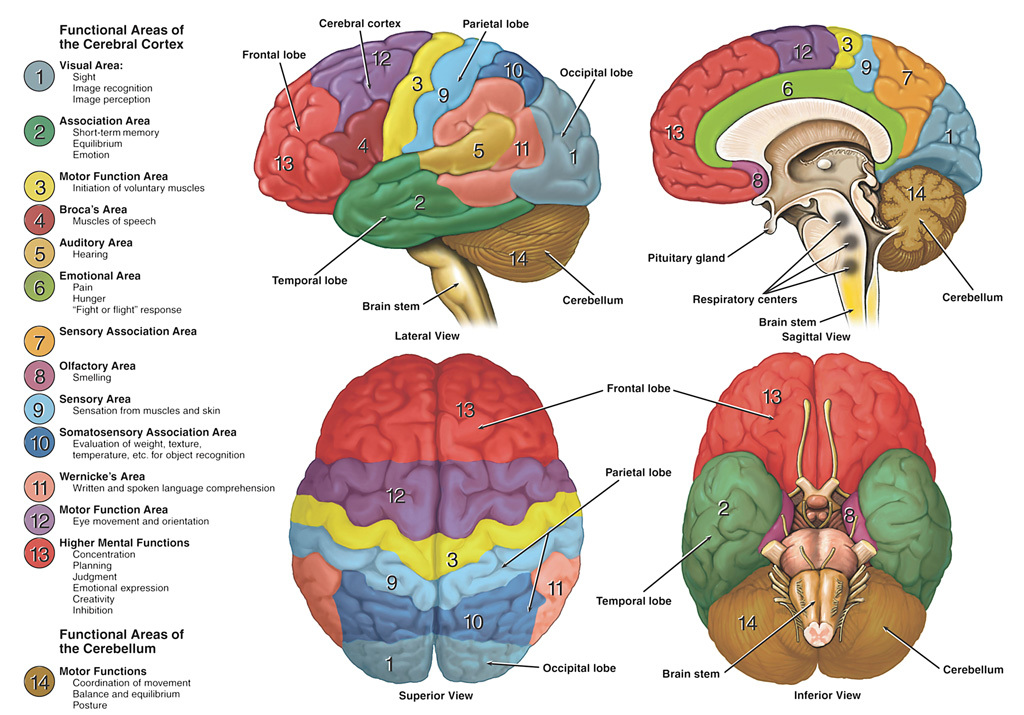
Finally, it’s important to mention that a person is only considered a full-fledged adult from age 20, and the sins one incurs before this age may certainly harm a person in this world, but are not tried by the Heavenly Court for Olam HaBa. (See Shabbat 89b; Zohar I, 118b; and Rashi on Numbers 16:27.) God knows that teenagers will make foolish mistakes—after all, He is the one that designed the human body to have all of those challenging hormonal changes. And He designed the brain in such a way that the decision-making and planning section, the pre-frontal cortex, is the last to fully develop. It is worth adding that the Midrash says Adam and Eve were created as twenty-year-olds (Beresheet Rabbah 14:7). Of course, this does not mean that someone who is currently under the age of 20 gets a free pass to sin! It is meant retroactively, for things one regrettably did in their youth.

Guaranteed Olam HaBa

We saw above that one who engages joyously and actively at the Pesach seder is guaranteed a portion in the World to Come, as is one who is circumcised and was never promiscuous with a Gentile woman. What other mitzvot guarantee a person’s Olam haBa?

We saw above that one is forgiven for all of their sins if they keep Shabbat and if they are buried in Israel. The Talmud adds in another place (Pesachim 113a) that “Three people are among those who inherit the World to Come: One who lives in the Land of Israel; one who raises his sons to engage in Torah study; and one who recites Havdalah over wine at the conclusion of Shabbat.” Living in Israel is such a great mitzvah that a person automatically earns Olam HaBa. Reciting Havdalah regularly works the same magic. And then there’s putting one’s children through Jewish schools and ensuring that they engage in regular Torah study. After all, we say multiple times a day in the Shema that one should teach Torah to his children “in order that your days and your children’s days shall be prolonged upon the land which God promised your forefathers as long as the Heavens are upon the Earth.” (Deuteronomy 11:21) So, one who teaches Torah to his children will ultimately merit to inherit his promised portion for as long as the Heavens are upon the Earth.

Similarly, one who learns Torah is guaranteed a portion in the World to Come, as we say regularly in our prayers from Tana d’Vei Eliyahu that “Anyone who learns halakhot each day is guaranteed Olam haBa”. How many halakhot does one need to learn? The Mekhilta of Rabbi Shimon bar Yochai says that “anyone who learns two halakhot in the morning and two halakhot in the evening, and works all day, it is as if he has fulfilled the whole Torah.” (16:4) So, even learning just a few verses each morning and evening is enough if done consistently. And it is worth repeating the famous first Mishnah in tractate Peah that “The following are the things for which a person enjoys the fruits in this world while the principal reward remains for him in the World to Come: Honoring one’s father and mother; acts of kindness; and making peace between a person and his friend—and the study of the Torah is equal to them all.”

Regular prayer also has tremendous benefits. The Talmud (Berakhot 16b) says that anyone who recites the Shema and prays the Amidah is guaranteed Olam haBa. The Zohar (III, 164a) adds that one who bows and stands upright during the Amidah will merit to stand upright at the Resurrection of the Dead. Reciting Ashrei (Psalm 145) three times a day also guarantees Olam haBa (Berakhot 4b). Even just answering “amen” to someone else’s blessing with intention earns one the World to Come! (Shabbat 119b) Meanwhile, the same passage says that answering amen, yehe sheme… in Kaddish with full intention wipes away all negative decrees upon a person, and clears even the stain of idolatry.

There are other super-powerful mitzvot, too. Giving regularly to charity is described by our Sages as being equal to all of the Torah’s other mitzvot combined, even if giving a small amount like a third of a shekel (Bava Batra 9a). The following page of Talmud says that giving charity saves one from Gehinnom, based on King Solomon’s famous adage that “charity saves from death.” (Proverbs 10:2) The Zohar (III, 273b, Ra’aya Mehemna) explains that a completely destitute person is considered “like dead” halakhically, so when one gives the destitute person charity, it’s as if he raised him from the dead. Thus, God will likewise resurrect the charitable person in Olam haBa, measure for measure.

Like charity, the Sages say that the mitzvah of tzitzit is equal to all the others combined. After all, we say in Shema multiple times a day that when one sees the tzitzit, he should be reminded of “all of God’s commands”. The Ba’al haTurim (on Numbers 15:38-39) points out that the value of this phrase (כל מצות ה’) equals 612, meaning that the one mitzvah of tzitzit is equal to the remaining 612! He further notes that the atbash transformation of tzitzit (המהמא) has a value of 91, like kis’i (כסאי), “My Throne”, and one who regularly fulfils the mitzvah of tzitzit “will merit to see the face of the Divine Presence” and be lifted up to Heaven on “the wings of eagles”.

Meanwhile, the Zohar (III, 253b, Ra’aya Mehemna) says that putting on tefillin in the morning is tied to King David’s words of lo amut ki echyeh, “I will not die, but live”, suggesting that one thereby merits eternal life. Lastly, the introductory verses of Perek Shirah, an ancient text recording the songs of all things in Creation, begin with Rabbi Eliezer the Great saying that “Anyone who involves himself with Perek Shirah in this world, merits saying it in the World to Come.” This is by no means an exhaustive list, and one could find other mitzvot, rituals, and texts that promise a guarantee of Olam haBa as well.

Finally, the Talmud (Sanhedrin 88b) says that one who has the following traits is destined for Olam HaBa: “One who is modest and humble, who bows and enters [the Synagogue or Beit Midrash] and bows and exits, who studies Torah regularly, and who does not take credit for himself.” This is reminiscent of the prophet Micah’s question: “What does God ask of you? Only to do justly, and to love mercy, and to walk humbly with your God.” (Micah 6:8) The Sages say this was not just good advice, but a summary and condensation of all 613 commandments! (See Makkot 24a) The same page of Talmud says the prophet Amos reduced the whole Torah to the phrase “Seek Me and live!” (Amos 6:5), while the prophet Habakkuk reduced the whole Torah to the phrase “The righteous lives in his faith” (Habakkuk 2:4). Hillel famously taught that the whole Torah is “what is hateful to you don’t do unto others” (Shabbat 31a) and Rabbi Akiva said that the most important Torah verse is “Love your fellow as yourself” (Sifra, Kedoshim 4:12). Finally, we learn in Pirkei Avot (3:10) that “One with whom people are pleased, God is pleased. But anyone with whom people are displeased, God is displeased.” The last word goes to the prophet Isaiah (60:21), who said: “And your people, all of them righteous, shall possess the land for all time; they are the shoot that I planted, My handiwork in which I glory.”

To summarize, one is guaranteed their portion in the World to Come if they fulfil any (and hopefully all) of the following:

  • Actively and joyously participate in a Pesach seder (Zohar II, 40b)
  • Regularly study Torah, even just a few verses a day (Tana d’Vei Eliyahu, Mekhilta d’Rashbi 16:4, Peah 1:1)
  • Teach Torah to their children, or put them in Jewish schools (Pesachim 113a)
  • Live in Israel (Pesachim 113a)
  • Recite Havdalah regularly at the conclusion of Shabbat (Pesachim 113a)
  • Recite daily the Shema and Amidah prayer (Berakhot 16b; Zohar III, 164a)
  • Recite Ashrei (Psalm 145) three times a day (Berakhot 4b)
  • Answer “amen” with intention (Shabbat 119b; Zohar III, 285a-b)
  • Give regularly to charity (Bava Batra 9a-10a; Proverbs 10:2; Zohar III, 273b, Ra’aya Mehemna)
  • Wear tzitzit, put on tefillin daily, and/or regularly review Perek Shirah
  • Are modest, humble, and treat all others with respect and dignity (Sanhedrin 88b, Avot 3:10)
  • Circumcised (for a man), as long as one did not intermarry or was promiscuous with Gentile women, and failed to repent for it (Eruvin 19a)

To summarize, one is forgiven for all of their sins if they do any of the following:

  • Keep Shabbat properly (Shabbat 118b)
  • Recover from a serious illness (Nedarim 41a)
  • Ascend to a high position of leadership (TY Bikkurim 3:3)
  • Get married (Yevamot 63b, TY Bikkurim 3:3)
  • Answer amen, yehe sheme rabbah in Kaddish with intention (Shabbat 119b)
  • Genuinely repent on Yom Kippur (Leviticus 16:30, Yoma 85b)
  • Are buried in Israel (Deuteronomy 32:42, Ketubot 111a)
  • Retroactively for sins before the age of 20 (Shabbat 89b; Zohar I, 118b)

For lots more information, sources, and analysis, see the recent class ‘Every Jew is a Tzadik’.
The Mysterious (and Psychoactive) Ingredients of Ketoret

In this week’s parasha, Ki Tisa, God commands Moses to make the special incense mixture of Ketoret. This was the highest and holiest service performed in the Temple. Once a year, on Yom Kippur, the kohen gadol would take three handfuls of this incense into the Holy of Holies. When the room filled with the incense smoke, the kohen would see a vision of God and thereafter procure atonement for Israel. Later in the Book of Numbers we see how the incense prevented a plague and saved countless lives following Korach’s rebellion. Based on this, the Zohar (II, 218b) teaches that in lieu of the Temple Ketoret, one can read the verses that describe the incense and this itself can ward off illness. This is why the Ketoret passage is found at the start of every siddur, and customarily recited before the daily morning and afternoon prayers.

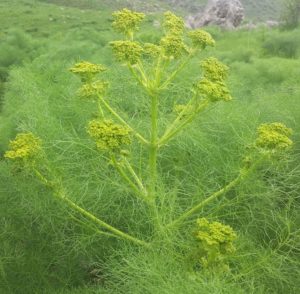
Galbanum flowers

What exactly were the ingredients of this enigmatic mixture? The Torah seems to suggest that Ketoret had four spices: “God said to Moses: take for yourself spices, nataf and shechelet and galbanum; spices, and pure frankincense—an equal part each.” (Exodus 30:34) The Sages famously derive from this verse that Ketoret actually had eleven ingredients (Keritot 6a-b): first God said “spices”, implying two spices, then He listed three more (nataf, shechelet, galbanum), bringing the total to five altogether, and then the Torah strangely says “spices” again, implying that one should double the existing five, making ten, before adding “frankincense” for a total of eleven. These eleven ingredients were:

תָּנוּ רַבָּנַן: פִּיטּוּם הַקְּטֹרֶת: הַצֳּרִי, וְהַצִּיפּוֹרֶן, וְהַחֶלְבְּנָה, וְהַלְּבוֹנָה – מִשְׁקַל שִׁבְעִים שֶׁל שִׁבְעִים מָנָה. מוֹר, וּקְצִיעָה, שִׁיבּוֹלֶת נֵרְדְּ, וְכַרְכּוֹם – מִשְׁקָל שִׁשָּׁה עָשָׂר שֶׁל שִׁשָּׁה עָשָׂר מָנֶה. הַקּוֹשְׁטְ – שְׁנֵים עָשָׂר, קִילּוּפָה – שְׁלֹשָׁה, וְקִנָּמוֹן – תִּשְׁעָה. בּוֹרִית כַּרְשִׁינָה – תִּשְׁעָה קַבִּין, יֵין קַפְרִיסִין – סְאִין תְּלָתָא קַבִּין תְּלָתָא. אִם אֵין לוֹ יֵין קַפְרִיסִין מֵבִיא חֲמַר חִיוַּרְיָין עַתִּיק. מֶלַח סְדוֹמִית – רוֹבַע. מַעֲלֵה עָשָׁן – כׇּל שֶׁהוּא. רַבִּי נָתָן אוֹמֵר: אַף כִּיפַּת הַיַּרְדֵּן כׇּל שֶׁהוּא.

Our Sages taught: The blending of the incense: balm [tzori], and onycha [tzipporen], and galbanum, and frankincense, seventy maneh by mass. Myrrh, and cassia, and spikenard, and saffron [kharkom], sixteen maneh by mass. Costus, twelve maneh; aromatic bark [kilufah] three maneh; and nine maneh of cinnamon. Lye of Carshinah, a volume of nine kabin; Cyprus wine of the volume of three se’ah and three more kabin. If one does not have Cyprus wine, he brings old white wine. Sodomite salt, a quarter-kav. A minimal amount of the “smoke-raiser” [ma’aleh ‘ashan]. Rabbi Natan says: Also a minimal amount of Jordan amber.

We have 11 spices and herbs, plus another five ingredients to strengthen and perfect the mixture. The first one is nataf, literally “drops”, which is the first in the Torah’s list in this week’s parasha. Rashi comments that this is a certain type of “gum” resin. It is a balm that exudes from trees, possibly from myrrh. Some identify it with the “Balm of Gilead” (which has also been identified with the afarsamon of the anointing oil). It may be the Commiphora opobalsamum species of myrrh which is found growing around the Red Sea. Nataf is also translated as “stacte”.

The second in the Torah’s list is shechelet, and when our Sages first translated the Torah into Greek (the Septuagint) they used the Greek word onycha, literally a “fingernail”. This is why shechelet is called tzipporen (“fingernail”) in the Talmud. It was compared to nails probably because it was made from crushed sea snails and sea shells, including those of the Murex genus. This is significant because we know that the blue tekhelet dye—derived from Murex shells—was used extensively in ancient times (and to this day in dying tzitzit, as the Torah instructs). It makes perfect sense that the Israelites would extract the dye, and then use the shells for the incense. A further clue comes from the Talmud above, which goes on to say that “Carshinah lye”* (a strong chemical base containing sodium hydroxide) was used to “soften” the tzipporen, while Cyprus wine was used to help extract its fragrance. This seems to confirm that tzipporen comes from hard snail shells. However, others dispute this notion because the snails are not kosher animals.

The Talmud (Keritot 6b) suggests that onycha does grow from the ground, though it is not a tree. In fact, the Talmud asks why the Torah didn’t just list all 11 ingredients itself, and only mentioned four types? The answer is that God gave us the main categories of spices and herbs that may be used: nataf comes from trees, onycha comes from the ground (but is not a tree), and galbanum has a foul smell, while frankincense has an odour that diffuses but doesn’t produce smoke that rises up. Thus, we are given the general categories of ingredients: those derived from trees, those that are herbs, foul-smelling ones, and “essential oils” that diffuse but don’t smoke.

Galbanum has a bitter, “musky”, and turpentine odour. Rashi says (on Exodus 30:34) that we include it to remember the sinners of Israel, and that we shouldn’t lose hope and abandon them. The Ketoret represents all of Israel, and atones for all types of Jews. In fact, the Arizal taught that 11 is a number that symbolizes kelipah, the “husks” that cover up and conceal the sparks of holiness. Ten is a number that stands for wholeness and completion, just as we have Ten Sefirot, Ten Commandments, Ten Utterances of Creation, and so on. Eleven is one more than ten, like a covering over top, a husk to conceal the wholeness. The Ketoret thus neutralizes the kelipot, and rectifies all Ten Sefirot.

Each member of the Jewish people is spiritually rooted in one of the Sefirot, so the Ketoret is able to purify us all. At the same time, the entire people of Israel as a whole are rooted in the Sefirah of Tiferet. This Sefirah is associated with the sun, and the Zohar and Arizal teach that there are 365 lights which emerge out of Tiferet. These fittingly correspond to the 365 days of the solar year. And this is why the Ketoret was specifically prepared in a “solar” manner, with a total of 368 portions: the first four spices with 70 portions (making 280 total), the next four with 16 portions (making 64 total), then 12, 3, and 9 portions for the remaining ingredients, making 368 portions altogether. Of these, our Sages say “365 handfuls correspond to the days of the solar year, and the remaining three that the kohen gadol would bring into [the Holy of Holies] on Yom Kippur.” (Keritot 6a)

Psychoactive and Psychedelic Compounds

The fourth ingredient in the Torah and Talmud’s list is classic frankincense, also known as olibanum, from the Boswellia genus of trees. It has been used in healing and religious rituals for millennia, and still used today (often as an essential oil, like the Talmud states above). Recent scientific studies have confirmed that frankincense is both antimicrobial and neuroprotective. Similarly, the next ingredient myrrh has historically been used as an antiseptic and as a pain-killer. Recent studies show that chemicals in myrrh can affect the brain’s opioid pathway.

Interestingly, myrrh is featured prominently in the Purim story, both with Esther being bathed in myrrh (Esther 2:12), and with Mordechai’s name being derived from mira or mara dachya, “pure myrrh” (Chullin 139b). The latter is based on the Aramaic translation of Exodus 30:23 in this week’s parasha, which describes the production of the special anointing oil used in the Temple, for priests, and for kings. The recipe for this oil was simpler than the Ketoret, with three ingredients: 500 parts mor dror, literally “myrrh of freedom” (though translated as “pure myrrh” or “solidified myrrh”), then 250 parts cinnamon, and 250 parts of a mysterious kneh bosem, “aromatic cane”. Multiple commentators suggest that the myrrh here is actually musk derived from animals, but others reject this and maintain that it is regular myrrh from trees.

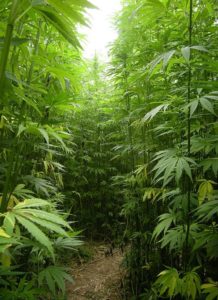
A hemp field in France

The last of the ingredients, kneh bosem, sounds very similar to cannabis. Though no major rabbinic sources say so, some academics have proposed that the unknown etymology of “cannabis” is actually the Torah’s kneh bosem (and the Sumerian kunibu). Cannabis has many known therapeutic properties, along with its hallucinogenic ones, so it wouldn’t be odd that it was used in the Temple’s spiritual services. Indeed, archaeologists have found chemical traces of CBD and THC (the active compounds in cannabis) on ancient Judean altars dating back to at least 2700 BCE. Cannabis is also the origin of the word canvas, for the same hemp plant was historically widely used to make clothing, mesh, and sacs. The Mishnah even mentions it in a discussion of kilayim, and whether one is permitted to mix together pishtan v’hakanebos, “wool and cannabis” (Kilayim 9:1).

Next there’s cassia, which is really just a type of cinnamon, the last ingredient in the list. Cinnamon is known to have some antioxidant and anti-inflammatory properties, and a recent study found that cinnamon might act like a “brain booster”, improving the use of glucose by neurons (and making rodents just a little bit smarter).

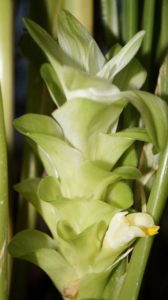
Turmeric flower

The Talmud’s kharkom is translated by the Rambam (Hilkhot Klei haMikdash 2:4) as saffron, made from the Crocus sativus flower. That said, there may be a better identification for it. Kharkom sounds a lot like curcumin from the Curcuma longa plant (better known as turmeric). Archaeologists have found curcumin in Israel going all the way back to the end of the second millennium BCE, so it would have definitely been known to the ancient Israelites. Curcumin, too, is well-known for its medicinal properties, and studies show that it even has powerful antidepressant effects (by inhibiting the enzyme MAO, monoamine oxidase, as many antidepressant drugs do). Substances in turmeric appear to be involved in the body’s cannabinoid system as well. In fact, cassia, cinnamon, and saffron all have traces of alpha-curcumene, one of the key active ingredients in turmeric. (Both saffron and curcumin have been used to make an orange dye; the saffron dye is the similar-sounding crocin).

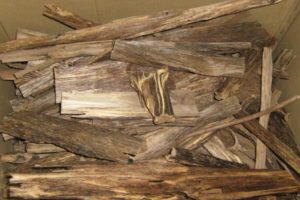
Agarwood

The oils of spikenard were historically used for healing, especially as sedatives. (Spikenard is related to the better-known valerian family of plants.) Costus, too, was used extensively in ancient medicines to help treat everything from cancer to leprosy. The last ingredient of Ketoret is the mysterious kilufa, some kind of aromatic “bark” or “peel”. Rashi seems to say it is also a type of cinnamon. Rambam identifies it with the Arabic oud, which is agarwood or aloeswood. It may be the same as the ohalim trees mentioned in Tanakh (such as in Numbers 24:6 and Psalm 45:9). Agarwood and oud oils are highly prized for their aromas, and are therapeutic and psychoactive. Today, agarwood is considered the most expensive tree in the world, with pure agarwood going for as much as $100,000 per kilogram!

The Talmud then lists five more ingredients which were used to enhance the Ketoret mixture. We already noted that the Carshina lye and the Cyprus wine were used to soften and extract the compounds from the hard tzipporen onycha. Why did the latter specifically have to be Cyprus wine? Intriguingly, archaeologists have found multiple jugs of Cyprus wine in Israel, and what’s unique about them is that their remains contain traces of opium! Perhaps Cyprus wine was particularly prized and imported from across the sea because of its opium-enhanced psychedelic effects.

Similar to Carshina lye, we know that salt helps to extract the flavours and juices out of foods, hence the addition of melach sdomit, “Sodomite salt”. As explored at length in Secrets of the Last Waters, our Sages called it “Sodomite” salt specifically because it would atone for the grave sins and negative qualities of Sodom, which sadly doom many societies and communities.

The most mysterious ingredient of all was the ma’aleh ‘ashan, some kind of plant that made the smoke of the Ketoret rise in a vertical column. In Second Temple times, only one family of kohanim knew how to properly prepare the Ketoret mixture, the House of Avtinas. However, they refused to divulge the secrets of the incense, so the Sages sent for Greek scientists from Alexandria to come and figure out the exact composition! (Yoma 38a) The Alexandrians were able to determine all of the ingredients, except ma’aleh ‘ashan. The Sages gave up on it, and the secrets of the Ketoret were lost with the destruction of the Temple and the end of the Avtinas family line. Rabbi Steinsaltz suggested that ma’aleh ‘ashan is the Indian khimp plant of the Leptadenia pyrotechnica species. This herb is known to be highly flammable and can give off sparks when burned (hence the name pyrotechnica), while also being used extensively in ancient times for its medicinal properties (especially as an antifungal and anti-worming agent).

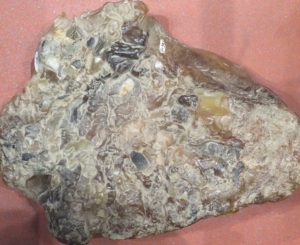
Ambergris

Kipat hayarden, “Jordan amber”, is another mystery. Rashi says it’s a plant that grows along the banks of the Jordan River. Rambam identifies it in Arabic as inbar, which is ambergris. Ambergris, “grey amber” is a fragrant waxy secretion from the sperm whale that would wash up on shorelines. The main active compound, ambroxide, is still used in many perfumes today.

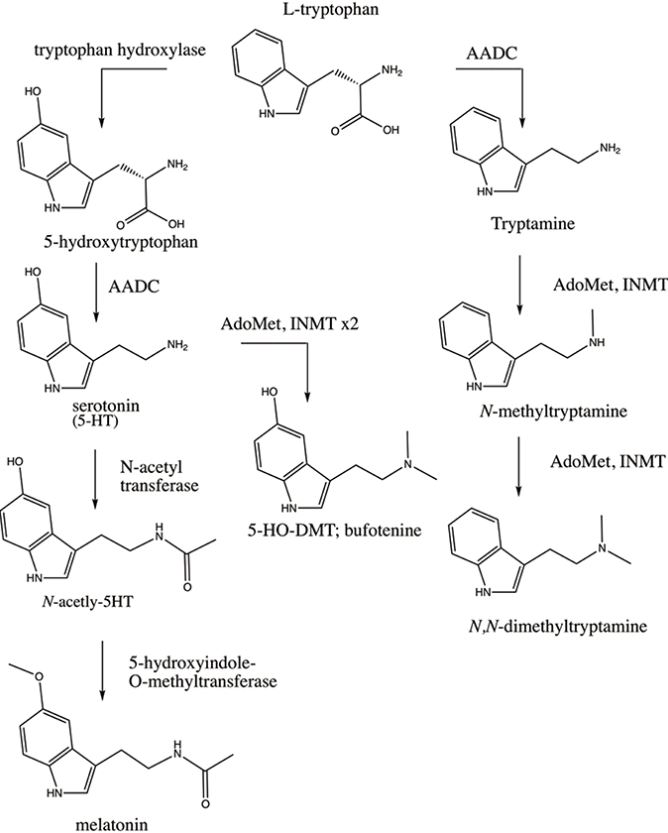
Finally, the coals used for burning the incense, and much of the wood used in the Mishkan, was ‘atzei shittim, acacia wood. Today we know that acacia wood is high in DMT. This is a hallucinogenic substance naturally produced by the pineal glands in our brains. The pineal gland regulates our circadian rhythm and produces melatonin to put us to sleep. Thus, there is good evidence that DMT (molecularly similar to melatonin, and made from the same animo acid) is involved in dreaming. It is also thought to play a role in prophetic visions, and much research has been done on this in recent decades. (We explored its connection to tefillin and wearing a kippah here.)

The production of melatonin and DMT (N,N-dimethyltryptamine) from the amino acid tryptophan.

Aside from their unique flavours, we find that the common denominator among many of these herbs and spices is that they are therapeutic, psychoactive, sedative, antidepressant, and maybe even hallucinogenic. With this in mind, it isn’t difficult to understand how the kohen gadol would get a profound spiritual vision when he entered the small Holy of Holies chamber and filled it with the smoke of the Ketoret. After all, many of the ingredients in the incense, as well as the anointing oil used to purify all the equipment (and the kohen himself), and even the wood of the Tabernacle and the wood on the altar, contained brain-stimulating and mind-altering compounds.

In fact, Rabbi Shimon bar Yochai teaches in the Zohar (III, 58b):

פָּתַח רִבִּי שִׁמְעוֹן וְדָרַשׁ, (שיר השירים א׳:ג׳) לְרֵיחַ שְׁמָנֶיךָ טוֹבִים וְגוֹ’. הַאי קְרָא אִסְתַּכַּלְנָא בֵּיהּ, וְהָכִי הוּא. לְרֵיחַ, מַאי רֵיחַ. רֵיחַ דִּקְטֹרֶת דְּאִיהוּ דְּקִיקָא וּמָעַלְיָא וּפְנִימָאָה מִכֹּלָּא, וְכַד סָלִיק הַהוּא רֵיחַ לְאִתְקַשְּׁרָא, בְּהַהוּא מְשַׁח רְבוּת דְּנַחֲלֵי מַבּוּעָא, אִתְּעֲרוּ דָּא בְּדָא וְאִתְקְטָרוּ כַּחֲדָא. וּכְדֵין אִינּוּן מִשְׁחָן טָבָאן לְאַנְהָרָא. כְּמָה דְאַתְּ אָמֵר, לְרֵיחַ שְׁמָנֶיךָ טוֹבִים

Rabbi Shimon opened the discussion saying: “Your ointments are good to smell…” (Song of Songs 1:3) I have closely studied this verse and this is the explanation: What is meant by “to smell”? This refers to the fragrance of the Ketoret, which is finer and elevates more than anything else. When this fragrance rises to join with the anointing oil of the fountain streams, they wake one another and connect together. Then these ointments are good for illumination, as the verse says, “Your ointments are good to smell.”

Clearly, there was something about the smell of the incense that “elevated” and “illuminated” a person. Moreover, the Zohar says in multiple places (such as III, 30b) that the ketoret had a stimulating effect, citing Proverbs 27:9 which says “Oil and incense gladden the heart” (shemen u’ketoret yismach lev, שֶׁמֶן וּקְטֹרֶת יְשַׂמַּח־לֵב). Note how the language of this verse is nearly identical to Psalms 104:15, which famously states “Wine gladdens the heart” (v’yayin ismach levav enosh, וְיַיִן  יְשַׂמַּח לְבַב־אֱנוֹשׁ). There was indeed something about the ketoret which was intoxicating like wine, and the Zohar (III, 34a) even describes it as producing “a supernal joy both above and below” (וְחֶדְוָותָא דְּעִלָּאִין וְתַתָּאִין).

It’s worth remembering that the kohen gadol would only have this experience once a year, on Yom Kippur, after properly purifying himself, going to the mikveh multiple times, and on an empty stomach during a fast, after much prayer and meditation, and with great concentration and kavanah. Such substances should not be consumed frequently or lightly, nor should they ever be consumed simply for recreational purposes or as an “escape”. These are therapeutic and powerful “plant medicines”, ultimately meant for assisting in spiritual growth, healing, and enlightenment.


*The identity of Carshinah lye is quite mysterious. According to multiple opinions, it was actually a plant-based source, possibly the Bitter Vetch. In that case, it probably wouldn’t have sodium hydroxide in it, though it could be that the plant was used to produce potassium hydroxide. In old times, plants containing high amounts of potassium (or potassium carbonate) would be burned and then the ashes dissolved in water and boiled to produce lye.

Ascending the Temple Mount

In this week’s parasha, Re’eh, we are told that a time would come when God would choose to rest His Divine Presence in one particular city in the Holy Land (Deuteronomy 12:5). This city is, of course, Jerusalem. The Torah says that it is only there that sacrifices could be brought, and this is the place to which Jews should pilgrimage thrice a year on the holidays. The pilgrimage mitzvah is referred to as re’iyah (רְאִיָּיה), “appearing” or “being seen” before God in Jerusalem. This name has a deep connection, and shares a linguistic root, with the name of this week’s parasha.

The re’iyah is the subject of the first Mishnah in the tractate Chagigah. It begins by stating that all Jews are obligated to appear in Jerusalem on the festivals, with twelve exceptions. One of these exceptions is a minor. The Mishnah then asks who is considered a “minor”? Beit Shammai held that a minor is any child who is unable to make the trip riding on his father’s shoulders as he ascends up to the Temple Mount. Beit Hillel held a more lenient opinion that a minor is any child who cannot make the trip up to the Temple Mount while holding his father’s hand. Beit Hillel reason that since the pilgrimage holidays are called regalim, literally “legs”, a person must be able to use their own legs to ascend to the Temple Mount.

Today, we have yet to rebuild the Temple, but we do have the Temple Mount, and many Jews wish to ascend it. This has generated much controversy in recent decades, with many rabbis in opposition, and others strongly in favour of Jews making their presence felt on the Temple Mount. It is worth carefully exploring the issues at hand and come to a clear conclusion regarding whether or not ascending the Temple Mount is permissible and advisable.

Where Was the Temple?

In ancient times, entering the Temple itself required one to be on the highest level of spiritual purity. Among other things, anyone who had come in contact with a corpse had to first be purified using the special mixture that contains the ashes of the red heifer. However, a person did not have to be pure to enter the Temple Mount, only the Temple proper. The Rambam rules clearly in his Mishneh Torah that “a corpse may be brought into the Temple Mount, and one who has contracted ritual impurity from a corpse may definitely enter there.” (Sefer Avodah, Hilkhot Beit haBechirah 7:15)

For the past two millennia, we have not had the red heifer mixture, so everyone is considered to carry the impurity of death by default. This means that while we cannot enter the Temple, we are still allowed to enter the Temple Mount. Now, since we do not have a Temple, there shouldn’t be any issue here at all. Nonetheless, many rabbis affirm that even though there is no Temple, a person who is impure cannot walk where the Temple once stood, since the Divine Presence has not left the area. A few big questions emerge here: Where exactly was the Temple located? And is the Divine Presence still in that area?

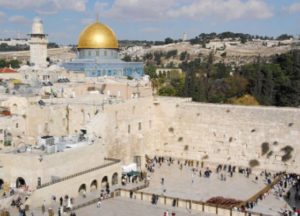
The Dome of the Rock overlooking the Western Wall plaza

The majority of opinions hold that the Temple stood directly where the Dome of the Rock stands today, though a minority holds otherwise. We know that the Temple was built over the Even haShetiya, the “Foundation Stone”, and our Sages state that in the Second Temple, the kohen gadol would rest the incense in the Holy of Holies atop this large rock, which protruded out of the ground (Yoma 53b). There is only one such large stone on the Temple Mount, and it currently lies beneath the Dome of the Rock.

The Muslims built the Dome of the Rock in the 7th century specifically over the site of what they believed to be Solomon’s Temple. In fact, an ancient Midrash prophesied that this would happen. Pirkei d’Rabbi Eliezer (dating back to the 1st century Rabbi Eliezer ben Hyrcanus, teacher of Rabbi Akiva) predicted that the Ishmaelites would one day conquer the Holy Land, and would do 15 major things there. One of these things is building a shrine atop the site of the Temple (see ch. 30). This is further supported by Nistarot d’Rabbi Shimon bar Yochai (an ancient text we explored in depth here), which clearly states that Ishmael “will build for himself there a place for prayer upon the site of the Foundation Stone, as Scripture says: ‘And set your nest on the rock…’” (Numbers 24:21) All of this makes it pretty much certain that the Beit HaMikdash really did sit where the Dome of the Rock is today, and not elsewhere on the Temple Mount.

Based on this, the argument of some poskim that we should not ascend the entire Temple Mount since we do not know where exactly the Temple stood doesn’t hold much water. Even if it did, we have to answer the other big question: does the Divine Presence remain where the Temple once stood? Such a position would strongly contradict a fundamental Midrash, and much more.

It is taught that when the Temple was destroyed, the Shekhinah moved on and took rest in the Kotel, the Western Wall. The Midrash prophesies that, therefore, the Western Wall would never be destroyed (see Eichah Rabbah 1:31, as well as Shemot Rabbah 2:2). This is another incredible prophecy that has come true: Jerusalem has been conquered and reconquered more than any other city in the world over the past two thousand years, and despite all the wars and changing regimes, the Western Wall remains. In fact, this is why Jews are so attached to the Western Wall, since this is where the Shekhinah currently lies, awaiting the return of the Temple.

As such, the Shekhinah probably does not remain where the Temple once stood. This is further supported by the fact that few would dare argue that the Shekhinah lies within the Dome of the Rock, a Muslim shrine. While there is no doubt that the ground retains its sanctity, it is safe to say there is no greater spiritual presence within the Dome of the Rock area—certainly no more than around the Western Wall, for which we have a clear source saying the Shekhinah rests there! Therefore, one can strongly argue that not only should Jews be allowed to enter the Temple Mount, we should even be allowed to enter the Dome of the Rock. It is worth mentioning here the position of the Raavad (Rabbi Avraham ben David, c. 1125-1198) who held that there is no longer any karet prohibition to go anywhere on the Temple Mount. Which brings us to the last big question:

Why have many gedolim today ruled against ascending the Temple Mount when the sources are quite clear that it should be permissible?

The Solution to Fear and Politics

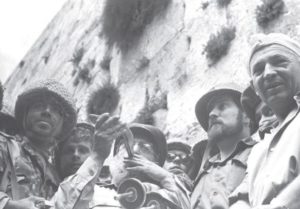
In 1967, the Israeli army liberated Jerusalem during the Six-Day War. The commander of the Golani Brigade, Motta Gur, is the person who led the way. Gur believed that it was his life’s purpose and mission to liberate Jerusalem. In fact, he predicted he would do so all the way back in 1961, in a conversation with Rabbi Shlomo Goren. Gur thought that the reason God put him on this planet was to return the Temple Mount to the Jewish people. His vision was realized in 1967, and it was Gur who loudly declared “Har HaBayit beYadeinu!” The recording of his voice was broadcast to jubilant Jews around the world. And that’s not all.

Rabbi Shlomo Goren blows the shofar by the Western Wall during the 1967 liberation of Jerusalem.

When the Temple Mount was secured, Gur immediately ordered one of his soldiers to put an Israeli flag atop the Dome of the Rock. He wanted to make clear that Jews have regained complete sovereignty over their holiest site. Unfortunately, as soon as General Moshe Dayan saw the Israeli flag atop the Dome with his binoculars, he ordered it removed immediately. “Do you want to set the Middle East on fire?!” Dayan shouted into his radio. Dayan, like most of the Israeli government at the time, feared taking control of the Temple Mount. The fear was both of the Muslim reaction, as well as of the religious Jewish reaction. Rabbi Shlomo Goren, IDF chief rabbi, was also on-hand during the capture, and immediately began working on establishing a synagogue on the Temple Mount. (In fact, we know from historical sources that there used to be synagogues on the Temple Mount at various times during the Arab and Ottoman periods.) In response to this, Dayan instituted a ban on Jews establishing synagogues, or even just praying, on the Temple Mount.

Nonetheless, with the Temple Mount in our hands, countless Jews would undoubtedly want to ascend. Not only that, but religious Jews may want to start fulfilling other major laws. For instance, the korban pesach can be fulfilled on the Temple Mount, and does not require a Temple (and is permitted to be done even with tumat met, under certain conditions). On that note, it is vital to point out that the korban pesach is one of two positive mitzvot that results in karet if not fulfilled (the other is circumcision, see Keritot 1:1). So, while many rabbis are quick to point out that ascending the Temple Mount may result in a karet due to impurity, few mention that we are already in a de-facto state of karet since we cannot bring a korban pesach!

In short, the Israeli authorities feared what would happen if Jews were in charge of the Temple Mount: Packed synagogues? Numerous public mikvehs like in ancient times? Sheep sacrifices? Rebuilding the Temple? The ultra-secular government would never allow such a thing. They also didn’t want to stand up to the Muslim threats nor deal with any possible Muslim violence, though there really was no way of knowing how the Muslim world would actually respond. So, the government quickly gave up sovereignty back to the Muslim Waqf.

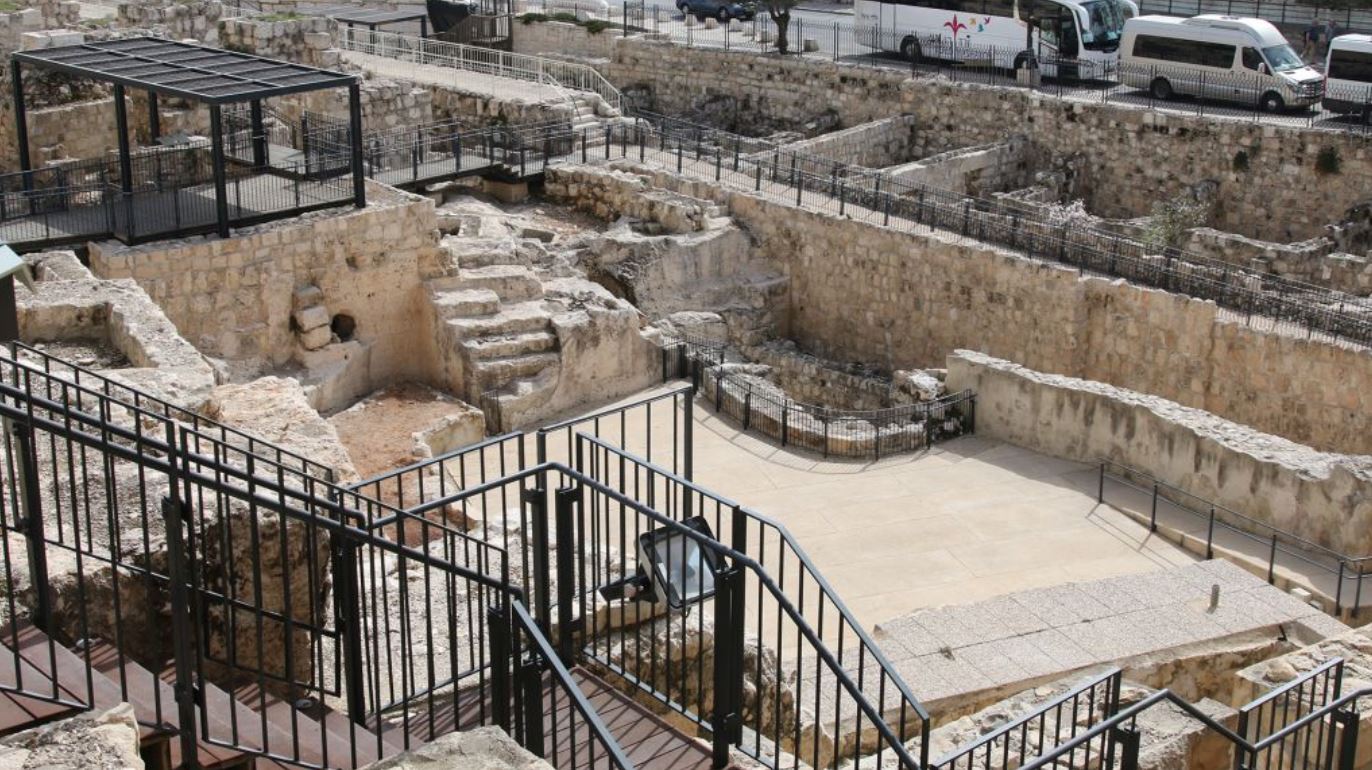
The ‘Mikveh Trail’ of the Jerusalem Archaeological Park. Over 50 different mikvehs have been uncovered around the Temple Mount, including this one most recently. (Photo Credit: Shmuel Bar-Am)

Unfortunately, many of the rabbinic authorities at the time agreed with the secular Israeli authorities, and wished to maintain the status quo. I imagine some of them thought it best to just leave it to Mashiach to deal with, whenever he would arrive. Soon, the Chief Rabbinate put up a sign warning Jews not to ascend the Temple Mount. It seems the ban had more to do with fear and politics than it did with genuine halakhah. The result was that the Muslims then (and now) took it as a sign that the Jews do not truly want this holy place, and it only bolstered the Muslim claim to the site. In reality, the Muslims have no legitimate claim to the site whatsoever, and even Muslim scholars agree that Mohammad’s “al-Quds” was nowhere near Jerusalem, and the Dome of the Rock holds no actual sanctity for Muslims. (Here’s one, for example.)

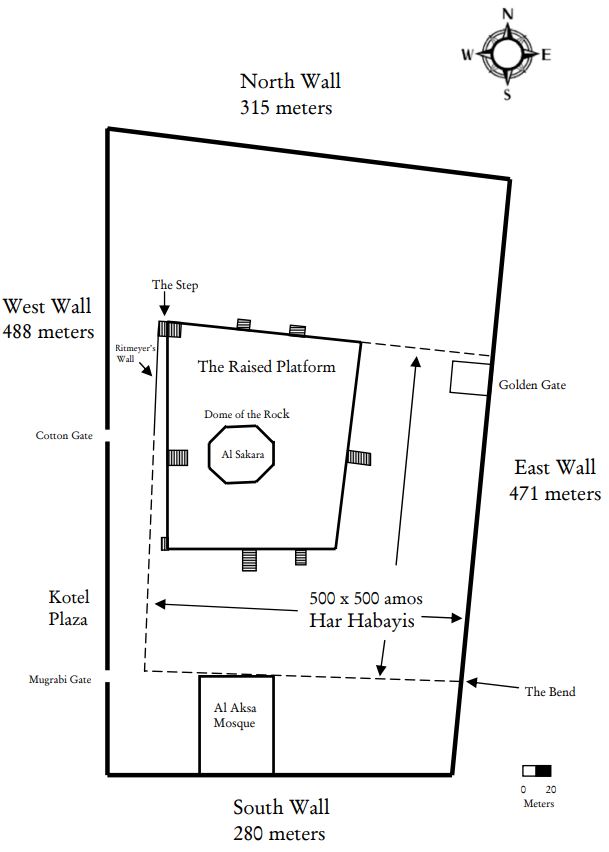
A map of the Temple Mount, and the rough position of the original Temple Mount area (“Har HaBayis”). The Temple would have stood inside of the “Raised Platform”, which pre-dates the Dome of the Rock. Credit: Gedalia Meyer and Henoch Messner. Read their excellent in-depth analysis of the Temple Mount issue here.

As such, Jews have to come together and make it clear that this is our holy site, and no one else’s. We have to take back complete sovereignty; we have to show that this site matters to us, and that we will make use of it to its full extent. Jews have to ascend the Temple Mount as much as possible, and do as many mitzvot there as we can. If you are concerned about Temple sanctity and issues of purity, then ascend and stay on the periphery—but do ascend! (The Mishnah, Middot 2:1, tells us that the original Temple Mount was 500 by 500 amot, which is less than half the size of the current Temple Mount area, so there is little chance of accidentally stepping on holy ground if you stay on the periphery, for those who are concerned.)

If we continue to avoid the Temple Mount, we will never live to see the restoration of the Temple—which we all pray for daily. The words of our prayers are empty without action. Recall that God did not split the Sea until Nachshon dove into it. The people prayed and prayed to no avail. “Then God said to Moses: ‘Why do you cry out to Me? Tell the Israelites to go forward!’” (Exodus 14:15) It is time to boldly go forward.

Our Sages had a principle, based on Psalms 119:26, et la’asot la’Hashem, heferu Toratecha! “It is a time to act for God, for they have violated your Torah!” The simple meaning of this verse is that since the Torah has been violated, it is a time to act. Our Sages interpreted this verse another way: at certain critical times, a revolutionary action is needed—one that might even violate the Torah! Rashi gives examples in his commentary on this verse. For instance, we see how Eliyahu brought a sacrifice on Mt. Carmel—which is forbidden based on the law given in this week’s parasha that sacrifices could only be brought at the Temple in Jerusalem. He did so because it was a critical time to act, and so a small violation was necessary for the greater good of Israel.

Now is another such time to act. Everyone agrees, including all gedolim, that we are in the Ikvot haMashiach. Everyone also agrees that the world is spiritually at a tremendous low point, and Israel isn’t doing so well either. We are at a moment that is very much like that of Eliyahu’s time, and like that of the Exodus. It is an unmistakable et la’asot la’Hashem, a time to act for God.

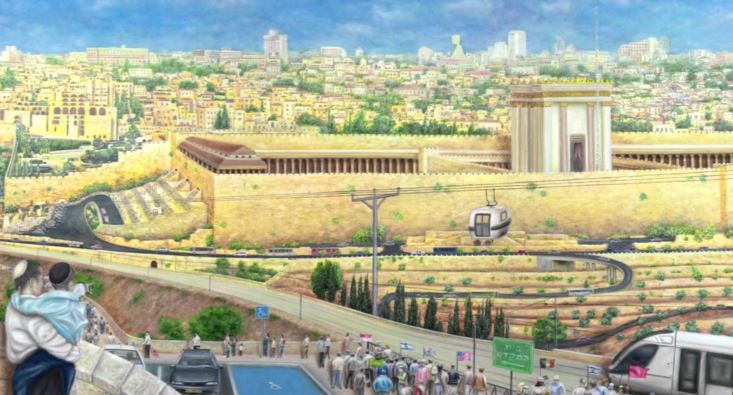
‘Going Up To The Third Temple’ by Ofer Yom Tov