
Tag Archives: Shabbat

Why is a Week 7 Days?

This week’s parasha, Vayak’hel, begins with the command to keep Shabbat, “six days shall you work, and on the seventh day will be for you a holy day of complete rest…” (Exodus 35:2) While Shabbat is mentioned numerous times in the Torah, it is this particular instance which served as the basis for our Sages to extrapolate the specific laws of Shabbat. Here, the Torah explicitly mentions only the prohibitions of working and lighting a fire. However, the Sages derived a list of 39 categories of prohibitions from the fact that God commanded the Sabbath, and right after juxtaposed it with the command to build the Mishkan. The Mishkan was not constructed on Shabbat, so all those actions that were required for the construction and operation of the Mishkan were forbidden on Shabbat.

There is a linguistic proof for this in the parasha because the type of work forbidden on Shabbat is specifically called melakhah, loosely translated as “creative labour”. The Sages note that this same term is used when speaking of the work required in building the Mishkan. In fact, they enumerate that this word is used 39 times in relation to the Mishkan (Shabbat 49b), hence 39 forms of labour. The Yerushalmi Talmud (Shabbat 44a) adds to this that the Shabbat mitzvah is introduced with the words eleh hadevarim, “these are the things”, implying there are multiple things that are forbidden on Shabbat. How many? The word eleh (אלה) has a numerical value of 36, while hadevarim (הדברים) implies three more things, since the plural devarim is a minimum of 2, and the definite hei at the start of the word suggests one more. Altogether, hadevarim is 3, and adding to eleh we get a total of 39 prohibitions! So, we rest on Shabbat from 39 major categories of activity.
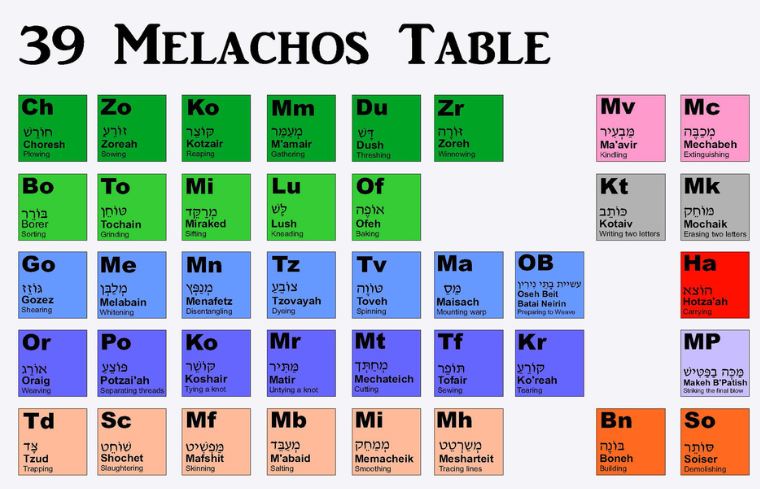
A “Periodic Table” of the 39 Melakhot, by Anshie Kagan

Another big question that is often overlooked is this: why is Shabbat specifically the seventh day? Why did God create a week of 7 days to begin with? Why not 5 days, or 10 days? Why must we rest on the seventh day and not any other? What’s amazing is that there is no actual astronomical basis for keeping a week of 7 days. A year is a year because that’s how long it takes the Earth to orbit the sun, and a month is a month originally based on the amount of time it takes the moon to orbit the Earth. A week, however, is not related to any orbits or astronomical phenomena. This is why ancient cultures from around the world had weeks of varying lengths—and some had no concept of a “week” at all.

Ancient Rome once had an 8-day week, and ancient China followed a 10-day week. Today, the entire planet keeps a week of 7 days only because the Torah said so! Jews kept it first, of course, and then Christians and Muslims got the idea from the Torah, spreading it around the world. In fact, in their attempts to expunge religion for good, the Soviet Union introduced a 5-day week in 1929. Needless to say, it didn’t work. They probably got the idea from anti-religious French revolutionaries who introduced the “Republican calendar” in 1793 with a 10-day week. That one didn’t last long either.

The Meaning of 7

What is special about seven? We live in a universe that is 3 dimensional, resulting in six axes or directions (up, down, left, right, forward, backward), meaning that everything will inevitably have six outer faces. Six is therefore the number that represents the external and superficial. Seven is what is inside, representing the inner and the spiritual. In fact, the Hebrew word “seven”, sheva (שבע), is spelled the same way as sova or savea, to be “fulfilled”. All things spiritual or “internal” tend to be associated with the number seven. Light, when split to reveal its inner components, gives seven visible colours. Music is composed of a scale of seven distinct notes. The Heavens have seven levels (Chagigah 12b). The holiest month of the Hebrew calendar (and, somewhat paradoxically, the first of the new year) is the seventh month, Tishrei. For the same reasons, Shabbat is the seventh day of the week, being a day devoted to spirituality and holiness. The first six days of the week represent the physical realm, and we are required to work and be materially productive. Shabbat, the seventh day, is for the soul.
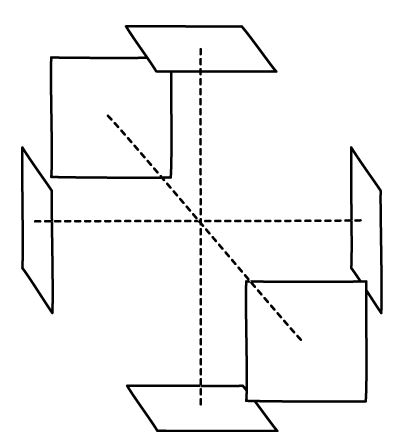
The three axes (x, y, z) of our three-dimensional reality, and the six faces (or six directions) that they produce.

Shabbat is the day when God’s Divine Presence, the Shekhinah, is most revealed and accessible. The Shekhinah itself is associated with the seventh of the lower Sefirot, called Malkhut. On that note, the seven days of the week actually correspond to the seven lower Sefirot (see Sha’ar HaMitzvot on Behar). Sunday is Chessed, Monday is Gevurah, Tuesday is Tiferet, and so on. These also correspond to the seven visible luminaries in the sky above us: sun and moon, and the five planets Mercury, Venus, Mars, Jupiter, and Saturn (the other planets are not visible to the naked eye and were only discovered after the invention of the telescope). In his Discourse on Rosh HaShanah, the Ramban (Rabbi Moshe ben Nachman, 1194-1270) explains that pagans named their days of the week after these luminaries (and their corresponding deities). In English: Saturday after Saturn, Sunday after the sun, Monday after the moon, and Tuesday, Wednesday, Thursday, and Friday after the Norse gods Tiw, Odin, Thor, and Frigga. In French: Lundi for Luna (the moon), Mardi for Mars, Mercredi for Mercury, Jeudi for Jupiter, Vendredi for Venus. Contrary to them, the Ramban points out that Jews call the days of the week numerically in relation to the holy Shabbat: yom rishon, yom sheni, etc.

The Sages do admit that the luminaries have a spiritual influence on the events and people of this planet (Shabbat 156a). However, Israel is able to break free from this astrological influence and determine their own fate. (For more, see ‘Astrology and Astronomy in Judaism’.) The Ba’al HaTurim (Rabbi Yakov ben Asher, 1269-1343) interestingly notes how in olden days the Jewish court would convene on Thursdays because the Torah says b’tzedek tishpot (Leviticus 19:15), “you shall rule justly”, and tzedek also happens to be the Hebrew name of the planet Jupiter, which “rules” over Thursday! (The beit din would also convene on Mondays which, Kabbalistically, is the day of Gevurah and Din, “judgement”.) Saturn, with its beautiful rings and record-number of moons, is associated with Shabbat, and in fact it is called Shabbatai in Hebrew. Historically, the pagans always held Saturn as the greatest of their “gods”, while in Judaism it simply corresponds to the greatest day of the week.

Saturn

Finally, the Arizal notes (in Sha’ar Ruach HaKodesh) that on each day of the week a different one of the four mystical olamot, parallel “worlds” or “universes”, is revealed and made more accessible. We inhabit and see all around us the world of Asiyah, which has its greatest expression on Tuesday and Wednesday. Above that is the world of Yetzirah, more accessible and visible on Monday and Thursday (the days when the Torah is read publicly in the synagogue). Higher still is Beriah, revealed on Sunday and Friday, the days immediately before and after the Sabbath, into which some of the Shabbat holiness “spills” over. It is only on Shabbat that we can more easily access the highest of the worlds, Atzilut, and get a true sense of God’s infinite emanation.
Mind-Blowing Gematriot

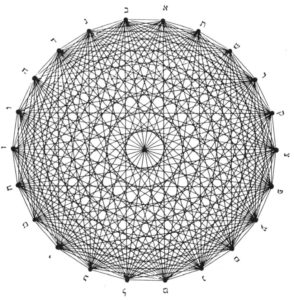
In this week’s parasha, Ha’azinu, Moses cautions the people in his final song to carefully fulfil “all the words of this Torah, for it is not an empty thing for you” (Deuteronomy 32:46-47). The Ba’al HaTurim (Rabbi Yakov ben Asher, 1269-1343) comments here that, on a deeper level, the words “for it is not an empty thing for you” are referring to gematriot, the numerical calculations and mathematical codes embedded in the Torah, that emanate from the divinity and precision of the Hebrew language. The general public often disparages gematria as being unreal or artificial in some way, a soup where anyone can find anything they are looking for. This couldn’t be further from the truth. While some have certainly abused gematria in unnatural ways, there is a legitimate foundation and system to it. Continue reading

The Little-Known Purpose of Deuteronomy

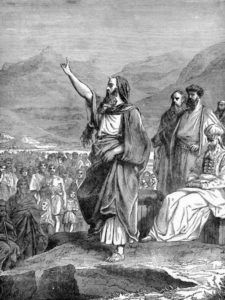
‘Moses Speaks to Israel’ by Philippoteaux (19th century)

This week we begin reading the fifth and final book of the Torah, Devarim, literally “Words”. This book is distinct from the others, for it is written from the perspective of Moses. It records Moses’ final words to the nation over his last 37 days of leadership. Devarim serves, in many ways, as a summary of the Torah, and is therefore traditionally referred to as Mishneh Torah, a “repetition” of the Torah. In fact, when our ancient Sages first translated the Torah into Greek (at the behest of King Ptolemy), they called the book Deuteronomion, “repeated law”, ie. the Greek translation for Mishneh Torah. Having said that, Deuteronomy introduces a number of new mitzvot previously unmentioned in the Torah, and contains some of the Torah’s most significant passages, including the Shema and Ha’azinu.

The reader will quickly notice that Deuteronomy has a totally different tone from the rest of the Torah. Its language is far more similar, not to the books of Torah that precede it, but to the books of Tanakh that follow it: Joshua, Judges, Samuel, and Kings. (Secular scholars actually combine these books and label them the “Deuteronomistic history”.) Thus, the fifth book of the Torah plays a critical function: it concludes the Five Books of Moses while simultaneously introducing and segueing into the rest of the Tanakh. One who reads the conclusion of Deuteronomy and immediately starts Joshua will hardly notice that they’ve changed books. For instance, the former ends with Moses telling Joshua to be chazak v’ematz, “strong and brave” (Deuteronomy 31:7, 23), while the latter picks up with the same exact phrase multiple times (Joshua 1:6, 7, 9, 18).

This signifies the fluid, continuous chain of transmission, starting with Moses, passing on directly to Joshua, then the Elders, down through the rest of the Prophets, to the Men of the Great Assembly, and to the Sages that followed (Avot 1:1), up to the rabbis of the present day. Herein lies the true purpose of Deuteronomy: it holds together all of Judaism, including both the “Written” and “Oral” Torah. We may think of Deuteronomy as “Written”, but a careful reading shows that it is quite clearly more “Oral” in nature. One of the most puzzling things about it is that with all of the key narratives that it repeats, it appears to change the details!

For example, in the Ten Commandments recorded in Exodus, Shabbat is to commemorate the world’s Creation in six days, and God’s resting on the seventh (Exodus 20:11). In the Ten Commandments of Deuteronomy, however, Shabbat is to commemorate that God took us out of Egypt and we are no longer slaves who must work around the clock (Deuteronomy 5:15). Which is it? Another example is the Sin of the Spies: in Numbers 13 we read that God commanded to send spies to scout the Holy Land; in Deuteronomy 1:22, it is the people themselves that request it of Moses. What was it? Even more problematic, in Deuteronomy 10:6, Aaron dies in a different place and at a different time than that presented in Numbers 33:38! How do we make sense of these discrepancies?

The classic answer is that Deuteronomy is Moses’ own recollection of past events. After all, the book begins by saying Eleh hadevarim asher diber Moshe—these were specifically the words of Moses himself. The Zohar (III, 261a) says that unlike the rest of the Torah which was dictated to Moses by God, “Mishneh Torah was spoken from Moses’ own mouth” (משנה תורה משה מפי עצמו אמרן). As such, included within it were Moses’ own interpretations of the Torah and the law. And this, therefore, serves as the foundation for the entire Oral Tradition. Moreover, this is why we always refer to Moses as Moshe Rabbeinu, “Moses our rabbi”. He is the first rabbi, the first to analyze and interpret the Torah, extracting its deeper meanings and uncovering the hidden wisdom of God buried in the plain text—in the words of the Zohar, the chokhmah ila’ah (חכמה עלאה) buried inside.

The Zohar concludes that Deuteronomy is the Oral Torah! It is from Deuteronomy that we learn about the need to interpret the Torah and extract the wisdom within it. The Zohar adds that this is why the Ten Commandments in Deuteronomy have a seemingly superfluous vav before them (וְלֹ֣֖א תִּֿנְאָ֑͏ף׃ וְלֹ֣֖א תִּֿגְנֹֽ֔ב׃ וְלֹֽא־תַעֲנֶ֥ה) whereas the Ten Commandments in Exodus do not (לֹ֣֖א תִּֿנְאָ֑͏ף׃ לֹ֣֖א תִּֿגְנֹֽ֔ב׃ לֹֽא־תַעֲנֶ֥ה). The extra vav, which means “and”, serves to teach that this is the command and, hidden inside, all the other additional laws one can extract from it! The Zohar gives an example: In Exodus we are told only not to covet a fellow’s wife (לֹֽא־תַחְמֹ֞ד אֵ֣שֶׁת רֵעֶ֗ךָ), but in Deuteronomy we are told not to covet and not to crave (וְלֹ֥א תַחְמֹ֖ד אֵ֣שֶׁת רֵעֶ֑ךָ וְלֹ֨א תִתְאַוֶּ֜ה). Rabbi Yose explains that based on Exodus alone one might think the law is only not to actually abduct a woman, or conspire to do so, but from Deuteronomy we further learn that one is forbidden from even craving another, whether in thought or desire, even without acting on it. The Zohar gives other examples, showing how the purpose of Deuteronomy is actually to extract the true meaning of the previous four books of the Torah.

In that case, Moses the rabbi was the first to reinterpret the Torah and extract new layers of meaning from it. It is in Deuteronomy that he lays out the rabbinic system, and in Deuteronomy that the 613 mitzvot of the Torah are completed. Beautifully, the numerical value of Moshe Rabbeinu (משה רבינו) is 613. It has further been pointed out that the system Moses laid out in Deuteronomy, relayed specifically over his last 37 days, correspond to the 37 tractates of Talmud, solidifying the link. So, we see that Deuteronomy accomplishes two things: first, weaving smoothly into the rest of the Tanakh, and second, bridging to the Oral Torah. It is no coincidence that the first official written work of Oral Torah is called the Mishnah, a direct link to Moses’ Mishneh Torah.

With this in mind, there is truly little room to distinguish between “Written” and “Oral” Torah at all. The two are inseparable and intertwined, like the branches of the Tree of Life (to paraphrase the poetic words of the Zohar). The Oral Torah begins in Deuteronomy, and flows through the rest of the Tanakh, before being fleshed out in fuller form in the Mishnah, then the Talmud. There is a continuous historical, chronological, legal, linguistic chain of development. (If considering the ‘Nakh as “Oral Torah” seems strange and counterintuitive, keep in mind how the Samaritans—who deny an Oral Torah—only hold Moshe’s Torah as holy, and have no ‘Nakh at all! They reject the Prophets basically the same way they reject the Talmud!)

It is worth adding one more point here: the first person to actually codify the entire Torah, both “Written” and “Oral”, was the Rambam, Rabbi Moshe ben Maimon (1138-1204), “Maimonides”. As the famous saying goes, “from Moshe to Moshe there arose no one like Moshe”, ie. since Moshe Rabbeinu there was none as great as Moshe ben Maimon. In some ways, he completed the Torah process that began at Sinai—at least its legal portion. He summarized and codified all of Jewish law, clearly and succinctly, in a 14-volume masterpiece that he called, not coincidentally, the Mishneh Torah. It remains the only complete code of Jewish law, that covers all aspects of Torah and Judaism. In his introduction, the Rambam boldly states that no other code is required and, quite incredibly, that a person who wants to understand all of Judaism need only read the Torah, and his Mishneh Torah!  

For this (among other things), the Rambam was heavily criticized. He sought to set in stone Jewish law, but Jewish law is not meant to be set in stone. Even the Ten Commandments that were literally set in stone in Exodus were already interpreted differently by Moshe Rabbeinu in Deuteronomy! Jewish law must remain alive and breathing, changing, growing, adapting with the times.

One might ask: if that’s the case, why did Moses say not to add or remove anything from his Torah? (Deuteronomy 4:2) At the same time, he said to listen to the future rulings of the Torah leaders that arise in each generation, and not to veer “right or left” from their decrees (Deuteronomy 17:11). Throughout history, many solutions have been presented to this problem. One way to understand it is to remember that, in Deuteronomy, Moses is speaking to the soul of each individual Jew. The other four books of the Torah were God’s Word to the nation as a whole. Deuteronomy is Moses’ word to his people, to each person. Thus, in the same way that he says each person should listen to the consensus of the Torah authorities (17:11), so too should each person not add or remove anything from the Torah of their own accord (4:2). Only a recognized majority body of scholars could ever make critical emendations when necessary. This was indeed the case throughout the era of Prophets and the Talmud, when a Sanhedrin existed (it formally ended in the 5th century, see ‘An Eye-Opening History of the Sanhedrin’).

That brings us back to the Rambam. In his Mishneh Torah introduction, he lamented the fact that, due to our exile, individual rabbis have had to make local rulings that were subsequently adopted by others and, over the centuries, Judaism started to fracture because of it, and there was growing confusion regarding the law. The Rambam therefore sought to clarify and codify the actual, universal Jewish law, based strictly on the Torah and Talmud, the only documents that carried the authority of a Sanhedrin or other recognized majority body of scholars. He explains this all in the latter half of his introduction.

While the Mishneh Torah did not end up being the last word on Jewish law, it did launch a trend where the law needed more widespread consensus and recognition. It led to more in-depth codes of law, with more explanation, and more debate regarding the finer points of law. It led to a “virtual” Sanhedrin of sorts, where legal texts attain primacy over time through majority recognition of rabbis separated by thousands of miles. And so, Jewish law continues to evolve, adapt, and grow, as always intended by the first Moses—and the first rabbi—Moshe Rabbeinu.


Click here to read ‘The Untold Story of Napoleon and the Jews’, an excerpt from Garments of Light on Tisha b’Av.