
In this week’s parasha, Re’eh, we find one of three instances in the Torah prohibiting to “cook a kid in its mother’s milk.” (Deuteronomy 14:21) The most literal understanding of this prohibition is not to cook a baby goat specifically in its own mother’s milk. Certain sources suggest this refers to an ancient pagan practice where idolaters did exactly that. The Rambam (Rabbi Moshe ben Maimon, 1138-1204) writes in his Moreh Nevuchim (III, 48):
Meat boiled in milk is undoubtedly gross food, and makes overfull; but I think that most probably it is also prohibited because it is somehow connected with idolatry, forming perhaps part of the service, or being used on some festival of the heathen. I find a support for this view in the circumstance that the Law mentions the prohibition twice after the commandment given concerning the festivals…
Since twice the Torah juxtaposes this prohibition with celebrating festivals, the Rambam reasons that it must have been something done by pagans on their festivals. Archaeologists have indeed found evidence of a possible ancient Canaanite fertility ritual where they would cook a kid in its mother’s milk, then sprinkle the soup on their farms. Idolatry aside, this ritual is undoubtedly cruel, too. Way back in the 1st century CE, Philo Judaeus wrote in his On Virtues how anyone who does such a thing “is exhibiting a terrible perversity of disposition” (XXVI, 144).
Intriguingly, Philo also explains the meat-dairy prohibition as having more of a mystical reason: There is something spiritually incompatible in mixing meat and dairy, for “it is a very terrible thing for the nourishment of the living to be the seasoning and sauce of the dead…” (143) In other words, milk is that nourishing substance that represents new life, whereas meat requires slaughter and represents death. It is important to remember that God originally prohibited mankind from eating any meat whatsoever. Adam and Eve were vegetarians. Meat was later permitted by God after the Flood, though in a very limited capacity, and mainly for a spiritual reason (as explained in the past here). And spiritually, meat and dairy are simply incompatible.
Now, everyone agrees, as did Philo, that the Torah’s prohibition is not just specifically for goats, but for any domesticated herd flesh such as sheep and cows. Undomesticated animals are a different story, since they are not milked, so it wouldn’t be possible (or it would be extremely difficult) to cook them in their mother’s milk. Birds, of course, are not mammals and have no milk at all. Hence, Rabbi Akiva teaches in the Mishnah (Chullin 8:4) that “an undomesticated animal or bird in milk is not prohibited by Torah law.” Rabbi Akiva also adds non-kosher animals, meaning that a Jew who, say, works as a cook in a non-kosher restaurant would be allowed to mix pork and dairy for the non-Jewish diners. According to Rabbi Akiva, this is why the Torah mentions the meat-dairy prohibition three separate times, to teach that three categories of animals are excluded: undomesticated, birds, and non-kosher.
The Talmud then discusses this Mishnah in more depth. The implication of Rabbi Akiva’s statement is that while those three categories are not prohibited by Torah law, they are prohibited by Rabbinic law (Chullin 116a). However, Rabbi Yose haGelili held that consuming birds with dairy is not prohibited at all, not even by Rabbinic law, and that in his hometown it was normal for Jews to eat fowl and dairy regularly! Then, in a story about the sage Levi, the Talmud presents the possibility that the hometown of Rabbi Yehuda ben Beteira may have permitted fowl and dairy, as well. Earlier in the Talmud (Chullin 104b), Agra teaches that fowl and cheese are permitted to be eaten together, though his statement is later qualified to mean that he meant they can be consumed one after another, not actually together.
There is no doubt that by the close of the Talmudic period, consuming fowl and dairy was prohibited just as any other meat. And everyone agrees that this is a Rabbinic fence. The big question is: why? The Talmud does not give a reason for the expansion of the prohibition to include fowl. One cannot argue that the Sages simply extended the prohibition to include all animal flesh with dairy, for they did not extend the prohibition to fish and the kosher locusts, which remain pareve. Only fowl became forbidden.
For many years, I searched for a satisfying answer to the problem. Surprisingly, there is a serious scarcity of discussion on the matter. The most oft-repeated reason is that fowl may be easily confused with red meat, so the Sages worried that people might unintentionally break a Torah law, hence the need for a fowl fence. Yet, there doesn’t appear to actually be an ancient source for this answer, nor does it make much sense upon closer examination. If we are worried about appearances, some fish might also be confused with meat (they call tuna the “chicken of the sea” after all), but fish and dairy was not prohibited. Eating a hamburger with artificial pareve cheese, or eating a vegan cheeseburger, have not been prohibited either, and those situations are far more visually confusing. Besides, people are generally careful to know what they are eating—especially Jews who have many dietary restrictions.
A better answer I came across looks at the question more practically. For most of history, red meat was prohibitively expensive.* Cows, sheep, and goats are a lot more valuable alive than dead. One could get years’ worth of nutrition—milk, butter, cheese—not to mention other goods like wool and lanolin, as long as the animal remains living. Also, there is too much meat on these animals for a single family to consume in one sitting, and there were no freezers to keep the leftovers. Thus, red meat was typically only consumed on special occasions and big events. The most common meat was chicken, which was easy and quick to raise and slaughter, not expensive at all, and small enough that there was little waste. Practically speaking, for most people in the past, “meat” meant chicken, and had more day-to-day significance than rare red meat. Thus, it wasn’t much of a leap to include chicken (and thereby other fowl) in the prohibition.
Having said that, another answer might seem totally the opposite. The Mishnah (Bava Kamma 7:7) states that it was forbidden to raise chickens in Jerusalem during Temple times, and kohanim were not allowed to raise chickens at all, anywhere in Israel. This is because chickens are scavengers that will eat anything, including garbage, and might pick up bones and move them from place to place, spreading tumah impurity. One of the peculiar archaeological findings in Qumran—famous for the Dead Sea Scrolls—is that while many bones of cows, sheep, and goats have been dug up, there are absolutely none of chickens! Those Essenes who likely inhabited Qumran were very strictly-observant Jews, so it makes sense that they kept the same purity laws as would be kept in Jerusalem. Considering how much the Essenes influenced Rabbinic Judaism (or reflected an element of that era’s Rabbinic Judaism), it is quite possible that many of the early Sages avoided chicken as well. The Torah itself never mentions chickens at all, the Midrash describes them as “the most brazen of birds” (Shemot Rabbah 42:9), while the Talmud (Berakhot 6a) associates chicken feet with demons.
So, it is quite possible that Jews in those days actually ate little chicken. In fact, we know that the main fowl that was consumed in Israel was pigeon and dove. Perhaps chicken was designated “meat” (for dairy-mixing purposes) because it was uncommon and unfamiliar. Once chicken was prohibited, other birds slowly followed suit. Indeed, the episode in Chullin mentioned above describes how Levi was presented with a peacock and dairy dish, and did not object. Perhaps the fence started with chicken, and over time expanded to include other birds.
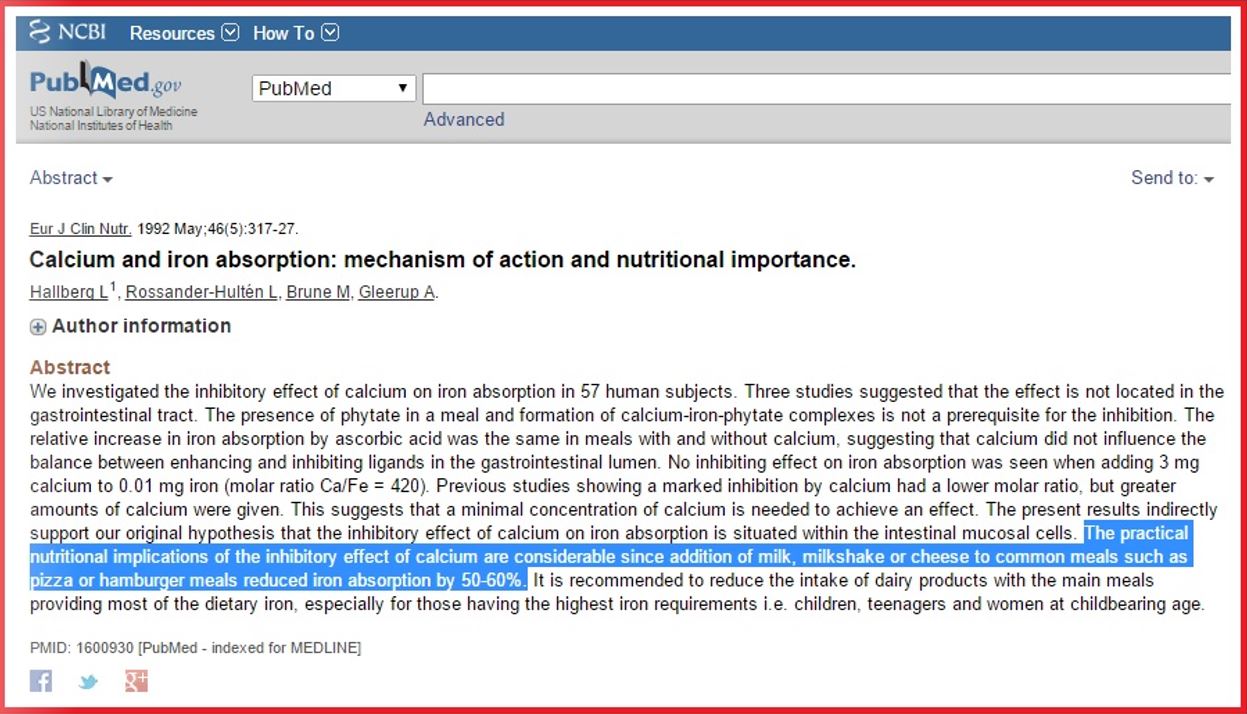
A study highlighting one issue of eating meat and dairy together.
Whatever the case, what we find is that during the Second Temple era, consuming fowl with dairy was not prohibited, and shortly afterwards was prohibited Rabbinically. It took several centuries for the prohibition to be cemented and universal. Intriguingly, the Ethiopian Jewish community knew of no prohibition for fowl and dairy, and only accepted it upon themselves when they began settling in Israel in recent decades. (This may be a valuable point of evidence suggesting the Ethiopian Jewish community branched off in the very early years of the exile after the Temple’s destruction, or even earlier). I believe that here, in this chronology, lies one more possible answer as to why fowl and dairy was forbidden. And this answer is a mystical one.
Elevating Birds
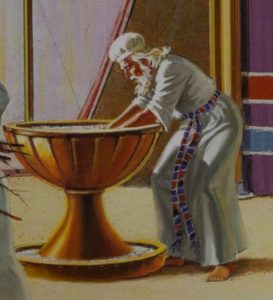
Illustration of a kohen washing his hands in the Temple’s copper laver.
From the information above, we can deduce that the critical moment in the birth of the fowl-dairy prohibition was the destruction of the Temple. A great many things changed with that seismic event. Our Sages stated that since we no longer have a Temple altar, the meal table now takes its place (Berakhot 55a, Chagigah 27a). As such, the Sages instituted a number of meal-time rituals to parallel the Temple services. First is netilat yadayim, which parallels the priestly washing in the Temple’s copper laver before service (as well as the washing before their consumption of terumah). Second is dipping bread in salt after hamotzi, since all sacrifices in the Temple had to be salted. Then there’s the final washing, mayim achronim, as explored in depth in Secrets of the Last Waters. Such practices were meant to commemorate, reinforce, and facilitate that what was spiritually accomplished in the Temple before could now be spiritually accomplished at the meal table. So, what is it that we seek to accomplish spiritually here?
Across Jewish mystical texts (particularly the Arizal), it is made clear that the purpose of the Temple was to elevate the holy sparks of Creation trapped in this lower physical world. The soul of an animal that was sacrificed in the Temple was able to break free of the kelipot, and return Above. Any lost holy sparks (nitzotzot) trapped within the animal were restored to their true place in the cosmos. The same goes for eating, which serves to elevate the spiritual matter within the food, thereby rectifying Creation. (See, for instance, Sha’ar HaGilgulim, ch. 22; Sha’ar haMitzvot on Ekev; and the Zohar on Ekev.)
In Temple times, a person was able to elevate sparks on things like fruits, vegetables, and fish through eating and reciting an after-blessing. Fowl and herd animals were more difficult to elevate, and generally required sacrifice in the Temple. Once the Temple was destroyed, the spiritual potential within each Jew declined. Now, an additional pre-blessing was necessary to properly elevate the sparks, which is the mystical reason for the Sages having instituted the berakhah rishonah. This works for low-level sparks and kelipot like those in produce or fish, but what about the more difficult fowl and herd animals, which were offered in the Temple? For those, we have the meal table, and thus the necessity of the additional rituals instituted by the Sages, mirroring those in the Temple.
The kelipot within fowl and herd animals are particularly strong, and their souls are greater than other animals. (This has a biological aspect, too, in that birds and mammals are the only two categories of animals that are warm-blooded.) To accomplish their elevation in a spiritually-weaker reality devoid of a Temple, the Sages had to introduce a number of spiritual supports. For instance, there was the directive to preferably leave meat consumption only for Shabbat, when a Jew has an additional soul and more spiritual power. Another suggestion was that only a tzadik should eat meat since the average ‘am aretz is not spiritually refined enough to process it (see Sha’ar HaMitzvot on Ekev).
I believe that it is for this mystical reason that the prohibition on mixing fowl and dairy emerged. Without a Temple, it became more difficult to spiritually process fowl meat. In the same way that it is biologically harder to digest meat and dairy mixtures, and effectively absorb their nutrients (see here, for example), it is more difficult to spiritually “digest” them together, too. This would also explain why the meat-dairy prohibition did not extend to other animals like fish and kosher locusts, since those animals were never brought as offerings in the Temple anyway. Finally, it would explain why the fowl-dairy prohibition was not instituted by a decree of the Sanhedrin, and was not universal for several centuries, since it would have been taught specifically by the mystics, and the general rule is that we don’t impose mystical stringencies and rituals upon the general public. Of course, due to their power and allure, mystical practices spread widely over time anyway, and become normative halakhah. That could very well be what happened with fowl and dairy.
A study highlighting one issue of eating meat and dairy together.
Shabbat Shalom and Chodesh Tov!
*My parents often relate how lucky we are to have so much meat today, and so cheaply. In Soviet Uzbekistan where they lived, a kilo of beef cost 5 rubles. To put that in perspective, the average monthly salary then, as mandated by the government, was about 85 rubles. So, a single kilo of beef was worth roughly 6% of one’s monthly income. To compare, average monthly income in the US today is $3000, so it would be like paying $180 for a kilo of beef—and that’s not even kosher beef! A whole live chicken, meanwhile, would go for as little as 4 rubles. My mother says how, when she was a child, her mother would ask her to walk down the street to the shochet, and he would do a kosher chicken slaughter for just 5 kopeks! (My mom always put the chicken in a closed box because she didn’t want anyone to see!)