
What are the different parts of the soul, and how do they relate to, and interact with, the body? What is the real reason for sleeping and dreaming? How might we be able to explain spiritual phenomena like prophecy and telepathy? And how does one rectify their soul to the highest degree to become a master of life? Find out in this class as we embark on an eye-opening exploration of the human soul.
Category Archives: Personal Development
What Exactly is the Yetzer HaRa?
This week’s parasha, Ki Tetze, begins by describing the procedure when Israelite men “go out to war” and encounter a beautiful woman behind enemy lines. The Torah permits taking this woman for a wife, but on condition that the soldier waits for one month. He is to bring her to his home, where she shaves her head and cuts her nails while mourning for a month for the loss of her family. Only then, if the soldier still wants her, he can take her as a wife. If he no longer wants her, then she is to be set free unconditionally. The Torah cautions that she must not be treated as a slave or sold. A big question here is: is the soldier permitted to have relations with the “beautiful captive” immediately, or must he wait one month until she is eligible to be his wife? Continue reading
A New Perspective on Rabbi Akiva, Rachel, and the 24,000
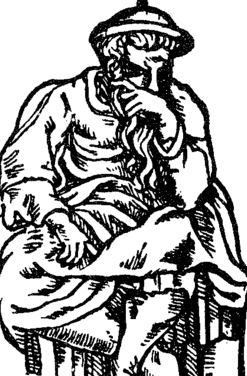
An illustration of Rabbi Akiva from the Mantua Haggadah of 1568
Now that Lag b’Omer is behind us and the mourning customs have been lifted, it may be a good time to reflect more deeply on the whole story of Rabbi Akiva and his 24,000 students. This story is very well-known, of course, and deeply ingrained in our psyches. But for me, like for many people, multiple aspects of the story never really made sense. So many questions emerge, each more troubling than the next.
First, how it is possible that 24,000 Torah giants—talmidei chakhamim and presumably very righteous people—were slaughtered in the span of just a few weeks? The students of the great and saintly Rabbi Akiva, no less? Why did he have to suffer such a horrendous loss? And all because the students “didn’t honour each other properly”? Since when does lack of honour incur mass execution? And what does it even mean, anyway, that they didn’t “honour” each other? How so?
Another question: why specifically 24,000 disciples? How did Rabbi Akiva even get such an astronomical number of students in the first place, at a time following the Great Revolt when the Jewish community in the Holy Land was decimated? And why does the number 24 keep coming up in the story? Recall that Rabbi Akiva left his home and was away from him wife for 24 years, returning with 24,000 students. Surely this is not coincidental. I believe it might actually hold the key to answering all of the perplexing questions above, as well as another big mystery:
Why is it that the mourning period for the 24,000 students specifically requires abstaining from weddings. As explored in the past, the earliest mention of “mourning” during the Omer is from the times of the Geonim, and suggests to only avoid weddings. (The first halakhic code to officially speak about it, the Arba Turim, notes a universal custom to avoid weddings, and only a local custom among some communities to avoid haircuts.) Why is the essence of mourning for the 24,000 specifically observed by prohibiting weddings? Continue reading