Tag Archives: Hebrew

Things You Didn’t Know About Abraham

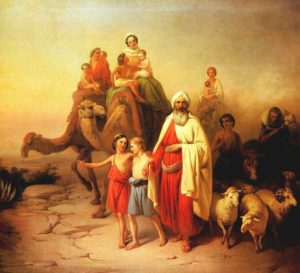
Abraham’s Journey to Canaan, by Jozsef Molnar (1850)

After two parashas that span the first two millennia of civilization, the Torah shifts its focus to the origins of Israel and the Jewish people starting with, of course, Abraham. Abraham is probably most famous for something that he actually isn’t: being the first monotheist. Noah was a monotheist long before Abraham, as was Noah’s son Shem, who was already a priest of the one Supreme God (El Elyon, as in Genesis 14:18). In Jewish tradition, it is said that Shem established the first yeshiva, and the patriarchs studied there. Was Abraham the first monotheist? No, but he is described as being the first person to actively preach monotheism to the world. He took it upon himself to crusade against idolatry—and the immoral behaviours that went with it.

Some of our Sages also state that Abraham invented the concept of a positive mitzvah. This means drawing closer to God not by abstinence and asceticism but through acts of kindness and the performance of physical actions. For this reason, the gematria of “Abraham” (אברהם) is 248, equal to the number of positive commandments in the Torah. Not surprisingly, Abraham is well-known for his legendary hospitality, his great compassion, and his ceaseless efforts on behalf of his fellow man.

Jewish tradition describes Abraham’s house as having a front door on each side so that guests wouldn’t have to look for the entrance. Meals were always on the house, as long as the guest was willing to thank God for it. Of his compassion, we read in the Torah how Abraham questioned God before the destruction of Sodom, seeking to exonerate the people despite their cruelty (Genesis 18). In this week’s parasha, Lech Lecha, we read of all the “souls that they had made” (Genesis 12:5), the countless people that Abraham and Sarah inspired and brought closer to God. In fact, the Meshekh Chokhmah (of Rabbi Meir Simcha of Dvinsk) on Genesis 33:18 states that Abraham later migrated to Egypt specifically because it was the capital of idolatry and impurity at the time, and Abraham wished to bring some light to that dark place.

What else do we know about Abraham? Extra-Biblical texts reveal some intriguing details in the life of Judaism’s first patriarch.

Discovering God

There are three major opinions as to when Abraham came to know God. The Talmud (Nedarim 32a) holds that he first recognized his Creator when he was three years old. This is deduced from Genesis 26:5, where God says Abraham had “listened to My voice”, ekev asher shama Avraham b’koli. The term “ekev” (עקב) has a numerical value of 172, and since we know Abraham lived 175 years, we learn that Abraham had listened to God’s voice for 172 of them, starting at age 3.

The Rambam (Rabbi Moshe ben Maimon, 1135-1204), meanwhile, writes in his Mishneh Torah that Abraham came to know God at age 40 (Hilkhot Avodat Kochavim 1:3). A more commonly-held view is that Abraham came to know God at age 52. This is based on the Talmudic statement that history is divided into three eras: the first 2000 years being the era of “chaos”, the next 2000 years being the era of Torah, and the final 2000 years being the era of Mashiach (Avodah Zarah 9a). Since we know that Abraham was born in the Hebrew year 1948, and the era of Torah started in the year 2000, Abraham must have been 52 when he came to know God.

One way to reconcile these three opinions is as follows: Abraham first realized there must be one God when he was three years old. By age 40, he was ready to begin his life’s work, and set forth in preaching his message. This got him into a lot of trouble, for which he was imprisoned, and ultimately sentenced to death. The Talmud (Bava Batra 91a) clarifies that he was imprisoned for 10 years. Then came the day of his execution. Abraham was thrown into the flames of Ur Kasdim when he was 52, and at this point God actually revealed Himself to Abraham for the first time, miraculously saving him from death. Therefore, there are those who say it wasn’t God who chose Abraham, but Abraham who chose God.

Abraham was already preaching long before he received any kind of prophecy or communication from Hashem. He logically deduced there must be one Creator to this world, and recognized the folly of idolatry on his own. He then took it upon himself to teach this truth, despite never having “heard” anything from God, or being summoned to do so. God chose him precisely because of this incredible initiative. We learn this explicitly from Genesis 18:19, where God says:

For I have known him, that he commands his children and his household after him, that they should keep the way of God, to do righteousness and justice; therefore God brings upon Abraham that which He has spoken of him.

God chose Abraham because he was already teaching others to be more Godly! At age 52, the God that Abraham had been preaching about for so long finally revealed Himself, in miraculous fashion. This sets off a new 2000-year era, that of Torah and prophecy, spanning from Abraham until the times of Rabbi Yehudah HaNasi, who compiled the Mishnah, thus putting the Oral Torah in writing for the first time.

Abraham the Kabbalist

The Talmud (Bava Batra 91a) states that Abraham was world-famous for being an unparalleled astrologer and healer. According to tradition, he was also a great mystic. It is believed that he authored, or in some other way originated, Sefer Yetzirah, the “Book of Formation”, one of the most ancient Kabbalistic text. The book explains how God fashioned the universe through the Hebrew letters. The Talmud (Sanhedrin 67a) suggests that mastery of this text would allow the mystic to create ex nihilo, out of nothing, and such was done by Rav Oshaya and Rav Chanina every Friday afternoon. These two rabbis would create a chunk of veal, and make a barbecue!
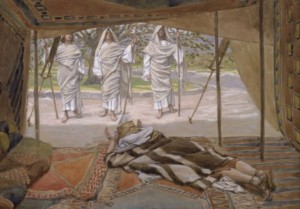
‘Abraham and the Three Angels’ by James Tissot

It appears the same was done by Abraham. We read in Genesis 18:7 that when the angels visited him, Abraham hastened to “make” a calf, v’imaher la’asot oto. The Malbim (Rabbi Meir Leibush Wisser, 1809-1879) comments on the Torah’s strange choice of verb by stating that Abraham literally created a calf through the wisdom of Sefer Yetzirah. This is why, he explains, the next verse has Abraham serving butter and milk. It is unthinkable that Abraham would serve veal with dairy—an explicit Torah prohibition—unless the veal was of his own creation, and was therefore not real meat that once had a soul. Abraham may have been the first person to serve vegan burgers.

Where did Abraham get this wisdom? According to one tradition, the angel Raziel (literally “God’s secret”) taught these mysteries to Adam. Adam passed it down to his son Seth, and onward it went down to Noah, then to his son Shem. Midrashic texts have Shem teaching Abraham, circumcising Abraham (Pirkei d’Rabbi Eliezer, ch. 29), and even ordaining Abraham as a priest (Midrash Aggadah, Genesis 14:19).

Alternatively, Abraham received mystical knowledge on his own. Kabbalah implies something “received”, and is often seen as being conferred directly by the Heavens to those who are worthy. In his commentary on Sefer Yetzirah, the Ravad (Rabbi Avraham ben David, c. 1125-1198) lists the names of the angels that taught our patriarchs this mystical wisdom:

The master of Shem was Yofiel. The master of Abraham was Tzadkiel. The master of Isaac was Raphael. The master of Yakov was Peliel. The master of Yosef was Gabriel. The master of Moshe Rabbeinu was Metatron. The master of Elijah was U’maltiel. Each of these angels passed down Kabbalah to his disciple, whether through a book or orally, in order to enlighten him, and to inform him of future events.

According to the Book of Jubilees (12:25), Abraham was also taught Hebrew directly from Heaven. It had been lost following the Great Dispersion of the Tower of Babel. Now, the Holy Tongue was restored. Of course, it wouldn’t have been possible for Abraham to learn Kabbalah and the mysticism of Sefer Yetzirah without knowledge of Hebrew, upon which it is all based. Interestingly, the Book of Jubilees (11:6) also paints Abraham as a great engineer. He first became famous for inventing a seed-scattering device attached directly to a plow, as well as a method for keeping birds from eating the seeds of farmers.

The Torah tells us that at the end of his life, Abraham gave over his entire inheritance to Isaac, his rightful heir, but left various matanot, “gifts”, for his other children (Genesis 25:6). He then sent those other children eastward, to live outside the borders of Israel, so that it would be clear that the Holy Land belongs solely to Isaac and his descendants. What were these gifts? The Sages state that these were kernels of mystical wisdom to take with them. Some say this was white magic, and others black magic. The Talmud (Sanhedrin 91a) associates it with impure wisdom of some sort. Many see in these gifts the mystical wisdom that would give rise to the ancient religions of the Far East. So perhaps there is a connection after all between the Hindu concept of Brahman—and the Hindu priestly caste of Brahmins—with the name Abraham.

While Abraham is generally seen as a forefather—whether biological or spiritual—of Jews, Christians, and Muslims, he is also a forefather of many other nations through his many other children that we often forget about (see Genesis 25). Our Sages say he is called “Avraham” because he is av hamon goyim, the father of a multitude of nations. He might very well be the father of all the world’s major religions, too.
Is It Necessary to Have a Hebrew Name?

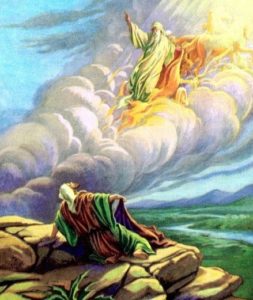
‘Elijah Taken Up to Heaven’

This week’s parasha is named after Pinchas, grandson of Aaron, who is commended for taking action during the sin with the Midianite women. Pinchas was blessed with an “eternal covenant”, and Jewish tradition holds that he never really died. Pinchas became Eliyahu, and as the Tanakh describes, Eliyahu was taken up to Heaven alive in a flaming chariot (II Kings 2). While we know what the name “Eliyahu” means, the name “Pinchas” is far more elusive. It doesn’t seem to have any meaning in Hebrew. Historical records show that there was a very similar name in ancient Egypt, “Pa-Nehasi”. Did Pinchas have a traditional Egyptian name?

When we look more closely, we find that multiple figures of the Exodus generation actually bore Egyptian names. For example, “Aaron” (or Aharon) doesn’t have a clear meaning in Hebrew, and appears to be adapted from the ancient Egyptian name “Aha-Rw”, meaning “warrior lion”. Even the origin of Moses’ name is not so clear.

Although the Torah tells us that Pharaoh’s daughter named him “Moshe” because she “drew him [meshitihu] from the water” (Exodus 2:10), it seems very unlikely that an Egyptian princess should know Hebrew so well and give her adopted child a Hebrew name. Our Sages noted this issue long ago, and grappled with the apparent problem. Chizkuni (Rabbi Hezekiah ben Manoach, c. 1250-1310) writes that it was actually Moses’ own mother Yocheved that named him “Moshe”, and then informed Pharaoh’s daughter of the name. Yet, the Midrash affirms that Yocheved called her son “Tuviah”, or just “Tov” (based on Exodus 2:2), and Moshe was the name given by Pharaoh’s daughter. Meanwhile, Ibn Ezra (Rabbi Abraham ben Meir ibn Ezra, 1089-1167) suggests that Pharaoh’s daughter called him “Munius”. Josephus takes an alternate approach entirely, saying that Pharaoh’s daughter (whose name was Thermuthis, before she became a righteous convert and was called Batya or Bitya in Jewish tradition) named him Moses because the Egyptian word for water is mo.

The most elegant solution might be that Pharaoh’s daughter called him “Mose” (spelled the same way, but pronounced with a sin instead of shin), which means “son” in Egyptian. This is most fitting, since Pharaoh’s daughter yearned for a child of her own, and finally had a “son”. In fact, we see this suffix (and its close variant mses, from which the English “Moses” comes) used frequently in Egyptian names of that time period, such as Ahmose, Thutmose, and Ramses. Thus, he would have been known as Mose (or Moses) during his upbringing, but later known to his nation as Moshe, with a more appropriate and meaningful Hebrew etymology, yet without having to change the spelling of the name (משה) at all.

All of this begs the question: is it important to have a Hebrew name? And is it okay to have a Hebrew name together with an English name, or a name in the local language of wherever a Jew may live?

Why Are So Many Sages Called “Shimon”?

When looking through the names of the many rabbis in Talmudic and Midrashic literature, we find something quite intriguing. Although we would expect the Sages to be named after great Biblical figures like Moses, David, or Abraham, in reality there are essentially no sages with such names! Instead, we find a multitude of names of lesser-known Biblical figures, and many names that have no Biblical or Hebrew origin at all.

One very common name is Yochanan: There’s Yochanan ben Zakkai and Yochanan haSandlar, Yochanan bar Nafcha, Yochanan ben Nuri, and Yochanan ben Beroka. Another popular name is Yehoshua. While we might not expect this name to be so popular (considering its association with Jesus), we still find Yehoshua ben Perachia, Yehoshua ben Levi, Yehoshua ben Chananiah, Yehoshua ben Korchah, and many others. There are also lots and lots of Yehudas like Yehuda haNasi (and his descendents, Yehuda II and Yehuda III), Yehuda ben Beteira, Yehuda bar Ilai, and Yehuda ben Tabbai. And there are tons of Elazars: Elazar ben Arach, Elazar ben Azariah, Elazar ben Pedat, and many more with the similar “Eliezer”.

Perhaps the most common name is “Shimon”. There is Shimon haTzadik and Shimon bar Yochai, Shimon bar Abba and Shimon ben Shetach, Shimon ben Gamaliel (both I and II), Shimon ben Lakish (“Reish Lakish”), and more. We would think this is a strange choice, considering that the Biblical Shimon was actually of somewhat poor character (at least compared to the other sons of Jacob). In fact, on his deathbed, Jacob did not bless Shimon at all, and instead said he wanted nothing to do with his violent nature. Moses, meanwhile, completely omits Shimon in his last blessings! So why would so many of our Sages be called “Shimon”?

A Good-Sounding Name

What might explain the strange selection of names among our ancient Sages? While no clear reason stands out, there is one plausible answer. It appears that the choice of names above was heavily influenced by the contemporary Greek society. Just as today many Jewish parents seek Hebrew names that also sound good in English, it seems parents back then wanted names that sounded good in Greek (since most Jews lived in the Greek part of the Roman, and later “Byzantine”, Empire).

We find that Greek names tend to end with an “n”: Platon (Greek for “Plato”), Jason, and Solon, for example. Numerous others end with “s”: Aristotles (Greek for “Aristotle”), Pythagoras, Philippos. Indeed, many of our Sages actually have such Greek names directly: Yinon, Hyrcanus, Pappus, Symmachus, Teradyon, and Onkelos. There is no indication that these great rabbis had some other “Hebrew” name.

Those that did want to bear Hebrew names could choose names already ending with an “n” like Shimon and Yochanan. Or, they could choose names where adding an “s” to the end would be easy: Yehoshua in Greek is Yeosuos (later giving rise to Yesus, ie. Jesus), while Yehuda is Yudas (Judas). Such names would be easy to convert between Hebrew and Greek. We know from historical sources that several people named Chananiah were simultaneously called “Ananias” in Greek.

The same is true for Elazar or Eliezer. Many Greek names transliterated into English and other languages simple lose their “s” and end with an “r”: Antipatros becomes Antipater, while Alexandros becomes Alexander. In reverse fashion, Elazar could easily become Elazaros (or Lazarus)—very palatable in the Greek-speaking world which our early Sages inhabited.

On that note, what do we make of “Alexander”? A great number of Jews both modern and ancient (there is Alexander Yannai and Rabbi Alexandri in the Talmud) have this name. Some cite a famous Midrashic account of Alexander the Great’s arrival in Jerusalem as being proof that while Alexander is not a Hebrew name, it is something of an “honorary” Jewish name. This requires a more careful analysis.

Is Alexander a Jewish name?

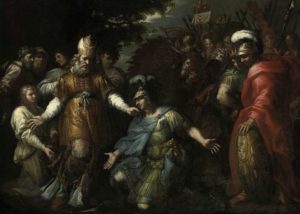
The Talmud (Yoma 69a) describes Alexander the Great’s conquest of Judea. As he is marching towards Jerusalem, intent on destroying the Temple, Shimon HaTzadik goes out to meet him in his priestly garments (he was the kohen gadol at the time). When Alexander sees him, he halts, gets off his horse, and bows down to the priest. Alexander’s shocked generals ask why he would do such a thing, to which Alexander responds that he would see the face of Shimon before each successful battle. Alexander proceeds to treat the Jews kindly, and leaves the Temple intact. The Talmud stops there, though it does mention that this event took place on the 25th of Tevet, which was instituted as a minor holiday on which mourning was forbidden. (The story is also attested to by Josephus, though with a different high priest—see here for more.)

‘Alexander the Great and Jaddus the High Priest of Jerusalem’ by Pietro da Cortona (1596-1669)

According to one tradition, the priests at the time wanted to honour Alexander for his kindness, and named all the boys born that year “Alexander”. In another version, Alexander was given a tour of the Holy Temple and, naturally, wished to place a statue of himself inside. Since this was impossible (but they couldn’t refuse the emperor), Shimon haTzadik convinced him that it would be a greater honour for all the children born to be named “Alexander”. Either way, some like to say that “Alexander” has become a Jewish name ever since.

In truth, this suggestion looks more like a modern way of explaining why so many Jews were named Alexander. In reality, the Midrash clearly states that a Jew should not name his child Alexander. We read in Vayikra Rabbah 32:5:

In the merit of four things was Israel redeemed from Egypt: they did not change their names*, nor their language, they did not speak lashon hara, and not one among them committed sexually immoral sins… They did not call Yehuda “Rufus”, and not Reuben “Lullianus”, and not Yosef “Listus”, and not Benjamin “Alexander”…

Apparently, when Midrash Rabbah was composed—just like today—it was common for Jews to have a non-Jewish name that they would use regularly, together with a Hebrew name that they would use only in Jewish circles. The Hebrew name “Benjamin” was often paired with “Alexander”.

We see from the Midrash above that it is important to have a Hebrew or Jewish name. But what exactly counts as a “Jewish” name?

Non-Jewish “Jewish” Names

Although today most Jews insist on having Hebrew or Biblical names (and rightly so), it seems that our Sages weren’t so strict in this regard. Indeed, many of them bore Greek, Latin, or Aramaic names with no second Hebrew name. Akiva, Avtalyon, Nechunia, Mani, Nittai, Nehorai, Adda, Papa, Simlai, Tanhum, Tarfon, Ulla, and countless others are cited in rabbinic literature. As we saw earlier, those that did have Hebrew names naturally chose names that would be palatable to the surrounding Greeks, much like many Jews today choose names that have easy English homonyms.

This trend continued for centuries, all the way up to modern times. The result is that many seemingly “Jewish” names are actually adaptations of very non-Jewish names. For example, one popular name among Ashkenazi Jews in the past was Feivel or Feibush. This name, meaning “bright”, comes from Phoebus, one of the appellations for the Greco-Roman god of light, Apollo. With this in mind, there may actually be a big halachic problem of bearing this name, since it is forbidden to recite the names of idols. That said, the names Mordechai and Esther actually come from the Babylonian idols Marduk and Astarte, or Ishtar! Nonetheless, they became solid Jewish names, though this case is different because it comes with a clear source in Tanakh. Going back to Feivel, some say the name was only meant to substitute the Biblical name Shimshon, the root of which is “sun”, thus having a similar meaning to Phoebus or Apollo. Others link the name to Pavel, Paul, or Philipp, also not of Jewish origin.

Another appellation for Apollo was Lycegenes or Lukegenes, “born of a wolf” (possibly the source of the name “Luke”), which would be “Wolf” in Germanic countries, where the wolf was an important symbol in European mythology. Wolf also became very popular among Ashkenazis, who usually added the Hebrew translation Ze’ev to the name. The same is true for the classic German/Norse name Baer (“Bear”), to which Ashkenazis added Dov, its Hebrew translation. None of these names are Biblical or Talmudic, nor is their origin truly Hebrew. (Ironically, the name Ze’ev appears in the Tanakh [Judges 7:25] as the name of an enemy Midianite prince that the Israelites slayed!)

Having said that, many have linked these names to Biblical characters. For example, Benjamin is described in the Torah as a wolf (Genesis 49:27), so some carried the name “Binyamin Wolf”, where the former was their actual Jewish name while the latter was their social name. The same goes for “Yehuda Leib”, where Leib means “lion”, like Aryeh, the symbol of the Biblical Yehuda. It has even become common to combine all three to form “Yehuda Aryeh Leib”. Similarly, there’s “Naftali Tzvi Hirsch”, since the Biblical Naftali is described as a deer, ayalah or tzvi, and “Hirsch” is German for “deer”.

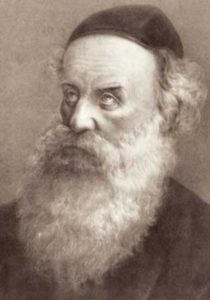
A portrait thought to be of Rabbi Schneur Zalman of Liadi, the “Alter Rebbe” (1745-1812). For more on the origins of this portrait, see here

“Schneur”, too, is of non-Jewish origin, and comes from the Spanish name Senor (and is sometimes a German equivalent for Seymour). Chassidim have since reinterpreted it in the Hebrew as Shnei Or, “two lights”. It probably didn’t have this meaning when it was given to Schneur Zalman of Liadi, the founder and first rebbe of Chabad. In his case, “Schneur” was likely meant to be his social name while “Zalman” (Solomon, or “Shlomo”) was his traditional Jewish or Hebrew name.

Sephardic Jews are just as culpable. Many have Arabic names like “Massoud” (which means “lucky”) or “Abdullah”. In fact, Rav Ovadia Yosef’s birth name was Yusuf Abdullah, and it was only when the family made aliyah to Israel that “Abdullah” was replaced with its Hebrew translation “Ovadia” (which is a Biblical name). At one point, a popular female Sephardic name was “Mercedes”. This one is highly problematic, as it happens to be a Spanish appellation for the Virgin Mary! (The automobile brand Mercedes is named after a Jewish girl of that name, the daughter of the company’s founder Emil Jellinek and his French-Sephardi wife.) A similar problem lies with the very popular “Natalie”, which literally means “Christmas” in Latin.

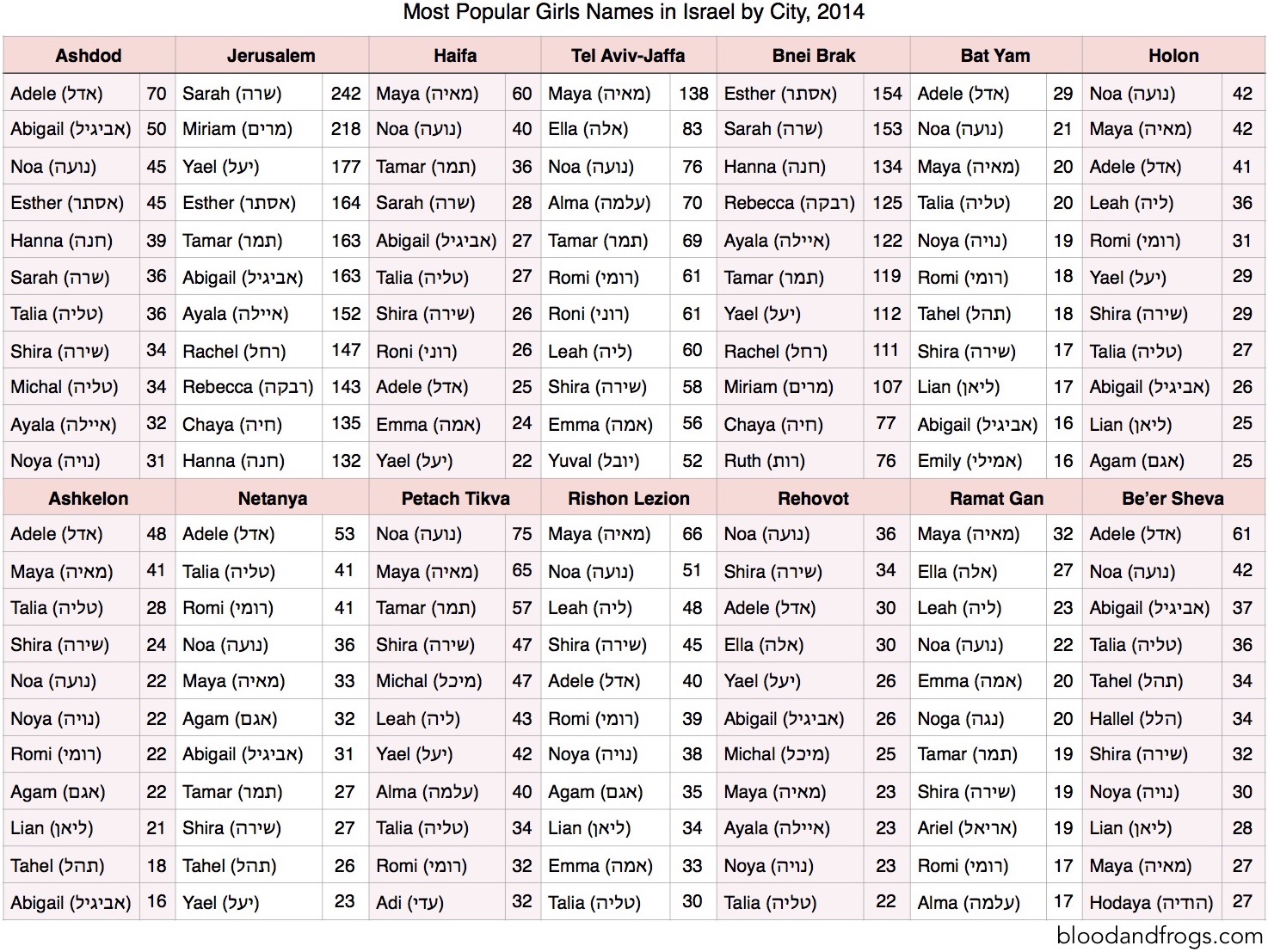
Is it okay to bear such names? A distinction must be made between those that clearly have an idolatrous origin versus those that were simply adapted from non-Jewish names but still carry a good meaning. The latter are certainly permissible, since many of our great Sages had such foreign names. Over time, many of these evolved a deeper, Jewish meaning. For instance, Adele was a classic German name (meaning “noble”) and yet the Baal Shem Tov chose it for his daughter. He explained to his chassidim that he received this name through divine inspiration, and that it is an acronym (אדל) for the important words in the Torah אש דת למו—that God gave His people “a fiery Torah” (Deuteronomy 33:2). The Torah, like fire, purifies all things. The Baal Shem Tov’s daughter went on to become a holy chassid of her own, imbued with so much Ruach haKodesh that she was nicknamed Adele HaNeviah, “Adele the Prophetess”.

Jewish “Non-Jewish” Names

The opposite case exists as well: names that appear to be non-Jewish but actually have a clear Jewish origin. Take “Elizabeth”, for example. While it may sound like a classic European name, it is actually the transliteration of “Elisheva” (אלישבע), the righteous wife of Aaron (Exodus 6:23). Some Jewish name sources incorrectly write that John is a non-Jewish name, associating it with the “New Testament” John. Yet, even that John was originally a Jewish man living in Israel, and “John” is simply a transliteration of the Hebrew name “Yochanan”. (It sounds closer in Germany and Eastern Europe, where “John” is “Johan”, or “Yohan”.)

There are numerous other examples. Susanna is Shoshana (שושנה), and Abigail is Avigayil (אביגיל). In the Tanakh, the latter makes an important comment about names, pointing out that because her first husband’s name was Naval (“abomination”) he acted abominably (I Samuel 25:25). She later married King David and is considered a prophetess in her own right.

Many are surprised to discover that “Jessica” comes from the Torah. It is an English adaptation of Iscah (יסכה), mentioned in Genesis 11:29 and, according to our Sages, the birth name of Sarah. Rashi comments:

Iscah. This is Sarah, because she would see [סוֹכָה] through divine inspiration, and because all gazed [סוֹכִין] at her beauty. Alternatively, יִסְכָּה is an expression denoting princedom [נְסִיכוּת], just as Sarah is an expression of dominion [שְׂרָרָה].

Interestingly, it appears that the earliest recorded use of the transliteration “Jessica” comes from Shakespeare’s play The Merchant of Venice. Here, Jessica is the Jewish daughter of the play’s Jewish villain, Shylock. Although many see The Merchant of Venice as an anti-Semitic work, others actually see it as Shakespeare’s cunning manipulation of that era’s rampant anti-Semitism and his own “plea for tolerance”. After all, Shylock’s most famous speech (Act III, Scene 1) reads:

Hath not a Jew eyes? Hath not a Jew hands, organs, dimensions, senses, affections, passions; fed with the same food, hurt with the same weapons, subject to the same diseases, heal’d by the same means, warm’d and cool’d by the same winter and summer as a Christian is? If you prick us, do we not bleed? If you tickle us, do we not laugh? If you poison us, do we not die? And if you wrong us, shall we not revenge? If we are like you in the rest, we will resemble you in that.

Shylock argues that his own villainy is nothing but a reflection of the villainy of the Christian world. Shakespeare recognized the cruelty that Jews had suffered, and tells his anti-Semitic audience that Jews are human, too.

Is It Necessary to Have a Hebrew Name?

Ultimately, it is certainly beneficial to have a Hebrew name of some sort, whether Biblical, Talmudic, adapted, or modern. After all, Hebrew is a holy language, and each of its letters carry profound meaning. The Hebrew term for “name” is shem (שם), which is a root of neshamah (נשמה), “soul”, and spelled the same as sham (שם), “there”, for it is there within a person’s name that his or her essence is found. For this reason, the Talmud (Yoma 83b) tells us that Rabbi Meir used to carefully analyze people’s name to determine their character. (This Talmudic passage was explored at length in Secrets of the Last Waters.)

The Talmud (Rosh Hashanah 16b) also notes that changing one’s name is one of five things a person can do to change their fate. Indeed, we see this multiple times in Scripture. Abraham and Sarah have their names changed (from Abram and Sarai) to allow them to finally have a child. Jacob becomes Israel, while Hoshea becomes Yehoshua (Joshua). At some point, Pinchas becomes Eliyahu, and even Yosef (Joseph) becomes Yehosef (Psalms 81:6). On that last name change, the Midrash explains that it was only because Yosef had an extra hei added to his name that he was able to ascend to Egyptian hegemony.

Thus, having a name with a deep meaning, in Hebrew letters, and one that is actually used regularly (as opposed to a secondary Hebrew name that no one calls you by) is of utmost significance. If you don’t yet have such a name, it isn’t too late to get one!


*This Midrash presents a possible contradiction: how can it say that the Israelites did not adopt Egyptian names when we see that some clearly did? Maybe most of the Israelites did not adopt Egyptian names, though some did. Thankfully, another Midrash (Pesikta Zutrati on parashat Ki Tavo) steps in to offer an alternate reason. Here, Israel was redeemed in the merit of three things: not changing their clothing, their food, and their language. Changing their names is conspicuously absent.


The above essay is adapted from Garments of Light, Volume Three.
Get the book here! 

The Difference between “Jew” and “Hebrew”

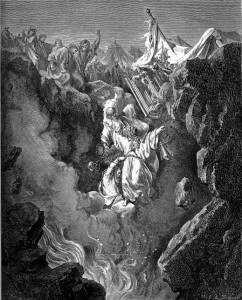
“Death of Korah, Dathan, and Abiram” by Gustave Doré

This week’s parasha is named after Korach, the rebellious cousin of Moses. Korach felt he had been unfairly slighted. Moses had apparently made himself like a king over the people, then appointed his brother Aaron as high priest. The final straw was appointing another cousin, the younger Elitzaphan, as chief of the Kohatites, a clan of Levites of which Korach was an elder. Where was Korach’s honour?

Korach’s co-conspirators were Datan and Aviram, leaders of the tribe of Reuben. They, too, felt like they’d been dealt a bad hand. After all, Reuben was the eldest son of Jacob, and as the firstborn among the tribes, should have been awarded the priesthood.

The Sages explain that Reuben indeed should have held the priesthood. Not only that, but as the firstborn, he should have also been the king. Reuben, however, had failed in preventing the sale of Joseph, and had also committed the unforgivable sin of “mounting his father’s bed”. For this latter crime especially, and for being “unstable like water”, Jacob declared that Reuben would “not excel” or live up to being “my first fruit, excelling in dignity, excelling in power” (Genesis 49:3-4).

Instead, the status of “firstborn” was awarded to Joseph, who had taken on the mantle of leadership and saved his entire family in a time of terrible drought. Jacob made Joseph the firstborn, and thus gave Joseph a double portion among the Tribes and in the land of Israel. He put Joseph’s sons Ephraim and Menashe in place of his own firsts Reuben and Shimon (Genesis 48:5). Meanwhile, the excellence of “dignity”—the priesthood—went to the third-born son, Levi, and the excellence of power—royalty—went to the fourth son, Judah. (The second-born Shimon was skipped over because he, too, had greatly disappointed his father in slaughtering the people of Shechem, as well as spearheading the attempt to get rid of Joseph.)

Levi merited to hold the priesthood because the Levites were the only ones not to participate in the Golden Calf incident (Exodus 32:26). The Book of Jubilees (ch. 32) adds a further reason: Jacob had promised to God that he would tithe everything God gave him (Genesis 28:22), and everything included his children. Jacob thus lined up his sons, and counted them from the youngest up. The tenth son, the tithe, was Levi (who was the third-oldest, or “tenth-youngest”, of the twelve). And so, Levi was designated for the priesthood, to the service of God.

Judah merited the royal line for his honesty and repentance—particularly for the sale of Joseph, and for the incident with Tamar. He further established his leadership in taking the reins to safely secure the return of Benjamin. The name Yehudah comes from the root which means “to acknowledge” and “to be thankful”. Judah acknowledged his sins and purified himself of them. Ultimately, all Jews would be Yehudim, the people who are dedicated to repentance and the acknowledgement and recognition of Godliness in the world. Much of a Jew’s life is centered on prayers and blessings, thanking God every moment of the day, with berakhot recited before just about every action. The title Yehudi is therefore highly appropriate to describe this people. Yet, it is not the only title.

Long before Yehudi, this people was known as Ivri, “Hebrew”, and then Israel. What is the meaning of these parallel names?

Hebrew: Ethnicity or Social Class?

The first time we see the term “Hebrew” is in Genesis 14:13, where Abraham (then still called Abram) is called HaIvri. The meaning is unclear. The Sages offer a number of interpretations. The plain meaning of the word seems to mean “who passes” or “who is from the other side”. It may refer to the fact that Abraham migrated from Ur to Charan, and then from Charan to the Holy Land. Or, it may be a metaphorical title, for Abraham “stood apart” from everyone else. While the world was worshipping idols and living immorally, Abraham was “on the other side”, preaching monotheism and righteousness.

An alternate approach is genealogical: Ever was the name of a great-grandson of Noah. Noah’s son Shem had a son named Arpachshad, who had a son named Shelach, who had a son named Ever (see Genesis 11). In turn, Ever was an ancestor of Abraham (Ever-Peleg-Reu-Serug-Nachor-Terach-Abraham). Thus, Abraham was called an Ivri because he was from the greater clan of Ever’s descendants. This must have been a powerful group of people recognized across the region, as attested to by Genesis 10:21, which makes sure to point out that Shem was the ancestor of “all the children of Ever”. Amazingly, archaeological evidence supports this very notion.

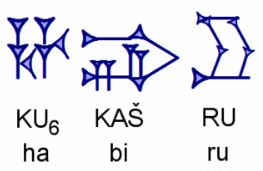
“Habiru” in ancient cuneiform

From the 18th century BCE, all the way until the 12th century BCE, historical texts across the Middle East speak of people known as “Habiru” or “Apiru”.  The Sumerians described them as saggasu, “destroyers”, while other Mesopotamian and Egyptian texts describe them as mercenary warriors, slaves, rebels, nomads, or outlaws. Today, historians agree that “Habiru” refers to a social class of people that were somehow rejected or outcast from greater society. These were unwanted people that did not “fit in”. That would explain why Genesis 43:32 tells us that Joseph ate apart from the Egyptians, because “the Egyptians did not eat bread with the Hebrews; for that was an abomination to the Egyptians.”

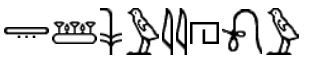
One of the “Habiru” described in Egyptian texts are the “Shasu YHW” (Egyptian hieroglyphs above), literally “nomads of Hashem”. Scholars believe this is the earliest historical reference to the Tetragrammaton, God’s Ineffable Name, YHWH.

Defining “Hebrew” as an unwanted, migrating social class also solves a number of other issues. For example, Exodus 21:2 introduces the laws of an eved Ivri, “a Hebrew slave”. When many people read this passage, they are naturally disturbed, for it is unthinkable that God would permit a Jew to purchase another Jew as a slave. Yet, the Torah doesn’t say that this is a Jew at all, but an Ivri which, as we have seen, may refer to other outcasts from an inferior social class. The Habiru are often described as slaves or servants in the historical records of neighbouring peoples, so it appears that the Torah is actually speaking of these non-Jewish “Hebrews” that existed at the time. Regardless, the Torah shows a great deal of compassion for these wanderers, and sets limits for the length of their servitude (six years), while ensuring that they live in humane conditions.

Rebels and Mystics

Though he was certainly no slave or brigand, Abraham was undoubtedly a “rebel” in the eyes of the majority. To them, he was a “criminal”, too, as we read in the Midrash describing his arrest and trial by Nimrod the Babylonian king. Abraham spent much of his life wandering from one place to another, so the description of “nomad” works. So does “warrior”, for we read of Abraham’s triumphant military victory over an unstoppable confederation of four kings that devastated the entire region (Genesis 14). There is no doubt, then, that Abraham would have been classified as a “Habiru” in his day.

His descendants carried on the title. By the turn of the 1st millennium BCE, it seems that all the other Ivrim across the region had mostly disappeared, and only the descendants of Abraham, now known as the Israelites, remained. The term “Hebrew”, therefore, became synonymous with “Israelite” and later with Yehudi, “Judahite” or “Jew”. (This is probably why later commentators simply assumed that the Torah was speaking about Jewish slaves in the Exodus 21 passage discussed above.) To this day, in many cultures and languages the term for a “Jew” is still “Hebrew”. In Russian it is yivrei, in Italian it is ebreo, and in Greek evraios. In other cultures, meanwhile, “Hebrew” is used to denote the language of the Jews. It is Hebrew in English, hebräisch in German, hébreu in French.

In fact, another rabbinic theory for the origins of the term Ivri is that it refers specifically to the language. In Jewish tradition, Hebrew is lashon hakodesh, “the Holy Tongue” through which God created the universe when He spoke it into existence. The language contains those mystical powers, and because the wicked people of the Tower of Babel generation abused it, their tongues were confounded in the Great Dispersion. At that point, God divided the peoples into seventy new ethnicities, each with its own language, giving rise to the multitude of languages and dialects we have today.

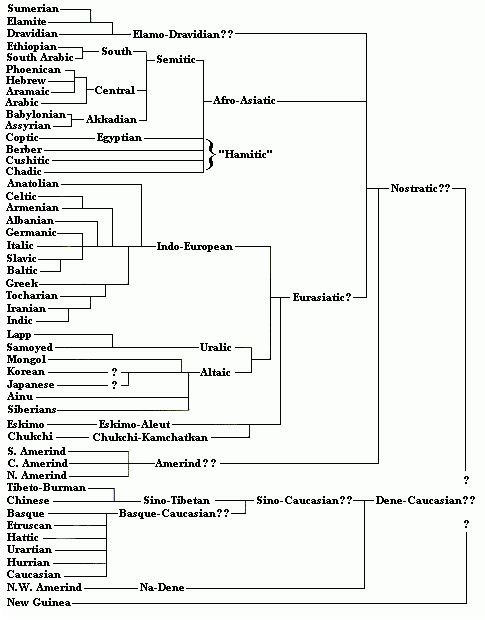
A possible language tree to unify all of the world’s major tongues, based on the work of Stanford University Professor Joseph Greenberg. (Credit: angmohdan.com)

Hebrew did not disappear, though. It was retained by the two most righteous people of the time: Shem and Ever. According to tradition, they had built the first yeshiva, an academy of higher learning. Abraham had visited them there, and Jacob spent some fourteen years studying at their school. The Holy Tongue was preserved, and Jacob (who was renamed Israel) taught it to his children, and onwards it continued until it became the language of the Israelites.

Alternatively (or concurrently), Abraham learned the Hebrew language from his righteous grandfather Nachor, the great-grandson of Ever. We read of the elder Nachor (not to be confused with Nachor the brother of Abraham) that he had an uncharacteristically short lifespan for that time period (Genesis 11:24-25). This is likely because God took him away so that he wouldn’t have to live through the Great Dispersion. (Nachor would have died around the Hebrew year 1996, which is when the Dispersion occurred. The Sages similarly state that God took the righteous Methuselah, the longest-living person in the Torah, right before the Flood to spare him from the catastrophe.)

Interestingly, we don’t see much of an association between the Hebrew language and the Hebrew people in the Tanakh. Instead, the language of the Jews is called, appropriately, Yehudit, as we read in II Kings 18:26-28, Isaiah 36:11-13, Nechemiah 13:24, and II Chronicles 32:18. The term Yehudit may be referring specifically to the dialect of Hebrew spoken by the southern people of Judah, which was naturally different than the dialect used in the northern Kingdom of Israel.

Israel and Jeshurun

The evidence leads us to believe that “Hebrew” was a wider social class in ancient times, and our ancestors identified themselves (or were identified by others) as “Hebrew”. This was the case until Jacob’s time. He was renamed Israel, and his children began to be referred to as Israelites, bnei Israel, literally the “children of Israel”. The twelve sons gave rise to an entire nation of people called Israel.

The Torah tells us that Jacob was named “Israel” because “he struggled with God, and with men, and prevailed” (Genesis 32:29). Jewish history really is little more than a long struggle of Israel with other nations, and with our God. We stray from His ways so He incites the nations against us to remind us who we are. Thankfully, throughout these difficult centuries, we have prevailed.

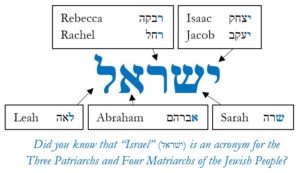
Within each Jew is a deep yearning to connect to Hashem, hinted to in the name Israel (ישראל), a conjunction of Yashar-El (ישר-אל), “straight to God”. This is similar to yet another name for the people of Israel that is used in the Tanakh: Yeshurun. In one place, Moses is described as “king of Yeshurun” (Deuteronomy 33:5), and in another God declares: “Fear not, Jacob my servant; Yeshurun, whom I have chosen.” (Isaiah 44:2) Yeshurun literally means “upright one”. This is what Israel is supposed to be, and why God chose us to begin with. “Israel” and “Yeshurun” have the same three-letter root, and many believe these terms were once interchangeable. The Talmud (Yoma 73b) states that upon the choshen mishpat—the special breastplate of the High Priest that contained a unique stone for each of the Twelve Tribes—was engraved not Shivtei Israel, “tribes of Israel”, but Shivtei Yeshurun, “tribes of Yeshurun”.

What is a Jew?

By the middle of the 1st millenium BCE, only the kingdom of the tribe of Judah remained. Countless refugees from the other eleven tribes migrated to Judah and intermingled with the people there. Then, Judah itself was destroyed, and everyone was exiled to Babylon. By the time they returned to the Holy Land—now the Persian province of Judah—the people were simply known as Yehudim, “Judahites”, or Jews. Whatever tribal origins they had were soon forgotten. Only the Levites (and Kohanim) held on to their tribal affiliation since it was necessary for priestly service.

As already touched on previously, it was no accident that it was particularly the name of Yehuda that survived. After all, the purpose of the Jewish people is to spread knowledge of God, and within the name Yehuda, יהודה, is the Ineffable Name of God itself. This name, like the people that carry it, is meant to be a vehicle for Godliness.

Perhaps this is why the term Yehudi, or Jew is today associated most with the religion of the people (Judaism). Hebrew, meanwhile, is associated with the language, or sometimes the culture. Not surprisingly, early Zionists wanted to detach themselves from the title of “Jew”, and only use the term “Hebrew”. Reform Jews, too, wanted to be called “Hebrews”. In fact, the main body of Reform in America was always called the Union of American Hebrew Congregations. It was only renamed the “Union for Reform Judaism” in 2003!

All of this begs the question: what is a Jew? What is Judaism? Is it a religion? An ethnicity or culture? A people bound by some common history or language? By the land of Israel, or by the State of Israel?

It cannot be a religion, for many Jews want absolutely nothing to do with religion. There are plenty who proudly identify as atheists and as Jews at the same time. We are certainly not a culture or ethnicity, either, for Ashkenazi Jews, Sephardi Jews, Mizrachi Jews, Ethiopian Jews, all have very different customs, traditions, and skin colours. Over the centuries, these groups have experienced very different histories, too, and have even developed dozens of other non-Hebrew Judaic languages (Yiddish, Ladino, Bukharian, and Krymchak are but a few examples).

So, what is a Jew? Rabbi Moshe Zeldman offers one terrific answer. He says that, despite the thousands of years that have passed, we are all still bnei Israel, the children of Israel, and that makes us a family. Every member of a family has his or her own unique identity and appearance, and some members of a family may be more religious than others. Family members can live in distant places, far apart from each other, and go through very different experiences. New members can marry into a family, or be adopted, and every family, of course, has its issues and conflicts. But at the end of the day, a family is strongly bound by much more than just blood, and comes together when it really matters.

And this is precisely what Moses told Korach and his supporters in this week’s parasha. Rashi (on Numbers 16:6) quotes Moses’ response:

Among each of the other nations, there are multiple sects and multiple priests, and they do not gather in one house. But we have none other than one God, one Ark, one Torah, one altar, and one High Priest…

There is something particularly singular about the Jewish people. We are one house. We are a family. Let’s act like one.

Continue reading