
Tag Archives: Rashi

Abraham and the State of Israel

This week’s parasha, Lech Lecha, begins in the year 2023—of the Hebrew calendar, that is. In traditional Jewish chronology, Abraham was born in the year 1948 AM (Anno Mundi, or “world year”). At the start of the parasha, we are told that Abraham was 75 years old when he settled in the Holy Land, meaning it was 2023 AM. Many have pointed out the intriguing “coincidence” that the forefather of the Jewish people and the first to settle in Israel was born in the same numerical year as was born the State of Israel and the Jewish people’s return to independence in the Holy Land in 1948 CE. More amazingly, we find that key dates in the life of Abraham align with key dates for the State of Israel, all the way up to the present situation that we find ourselves in today.
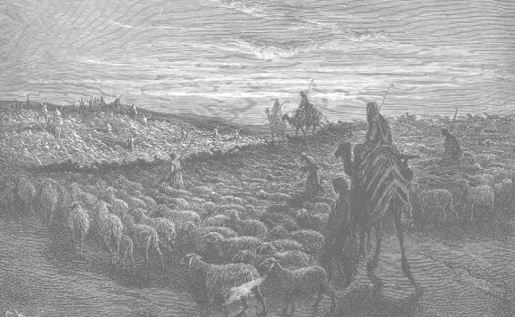
‘Abraham Journeying to the Land of Canaan’, by Gustav Doré

The Torah has very little to say about Abraham’s early life. In fact, all it tells us is that he was born, got married, and left Ur-Kasdim. The Torah then jumps ahead to his 75th birthday. What happened in the first half of Abraham’s life? Rabbinic tradition fills in a lot of the details, including that he was imprisoned for ten years! (Bava Batra 91a) At the end of that decade came the most notable event of Abraham’s early life: He was brought before the king and commanded to abandon monotheism and worship idols. Abraham refused, and was thrown into a fiery furnace. God miraculously saved him—marking the first time God openly revealed Himself to Abraham. Immediately after this, Abraham left Ur to settle in Haran. This event happened when Abraham was 52 years old, in the year 2000 AM. It launched what the Talmud calls “the Era of Torah”, lasting 2000 years until 4000 AM. (The first 2000 years of history, starting from Adam, were called “the Era of Chaos”.)

We find a similar monumental shift for the State of Israel in the year 2000 CE. A few key things happened then. In May of 2000, the IDF withdrew from southern Lebanon, where they had been stationed since 1982. This allowed for Hezbollah’s subsequent takeover of the region. (Just a few months later, Hezbollah terrorists launched a cross-border raid and abducted three Israeli soldiers.) In July of 2000, Prime Minister Ehud Barak headed to Washington for the Camp David Summit with Bill Clinton and Yasser Arafat. Barak offered Arafat just about everything he wanted, including all of Gaza and over 95% of the West Bank, with land transfers to make up for the other parts. Arafat notoriously walked away from the table without offering any explanation why, then launched the Second Intifada. A peaceful resolution to the conflict was not in the interest of the corrupt Palestinian leadership.

These events were the nail in the coffin for the Oslo Accords, and proved that the Palestinian leadership didn’t care for any two-state solution. Their goals were obvious: the destruction of the State of Israel and the takeover of the entire region “from the River to the Sea”. The peace process had always been a ruse. That year, 2000, officially marked the death of the peace process, and wiped away the possibility for a two-state solution. The majority of the Israeli population woke up to realize that peace had only been a dream. Since then, Israeli society has noticeably and understandably shifted right-ward. More broadly, the years that followed saw a religious revival in Israel and in Jewish communities around the world, with a large and global baal teshuva movement reminiscent of Abraham’s “Era of Torah”. Thus, just as the year 2000 AM marked a great shift in the life of Abraham, the year 2000 CE marked a great shift in the life of the State of Israel and Jews worldwide. The parallels don’t end there.

After 23 years living in Haran, God commanded Abraham to finally settle in the Promised Land. However, Abraham was confronted with a difficult reality upon arrival. There were hostile Canaanites in the land (Genesis 12:6), as well as rampant famine (12:10), forcing Abraham to head south to Egypt. There, his wife Sarah was abducted. After returning to the Holy Land, Abraham settled between Beit El and Ai. He finally found prosperity, but this led to quarrels within the family, particularly with his nephew Lot. And so, we find that in 2023 AM, Abraham experienced economic difficulties, hostile neighbours, abductions of family members, and internecine brotherly conflict, much like the people of Israel have experienced in 2023 CE.

Some years later, a war came to the Holy Land, with the Sodomite confederation of five cities falling to an alliance of four Mesopotamian kings. Many of the Sodomites were taken captive, including Lot. Abraham went to war and rescued them. When the Sodomite king offered Abraham riches as a reward, Abraham refused and said he wouldn’t take even a “thread or shoe strap”. The Talmud (Sotah 17a) states that in the merit of this, Abraham’s descendants were gifted the mitzvot of tzitzit (the threads) and tefillin (the leather straps). Both contain immense spiritual power, and are said to confer protection to Jewish warriors. It is therefore fitting that there has been an immense desire for IDF soldiers to get tzitzit, and volunteers have tied over 60,000 shirts so far. Meanwhile, Jews around the world are newly inspired to lay tefillin, and over 2300 have already signed up to receive a free pair.

Right after the War of the Kings, God appeared to Abraham and Abraham complained that he was still without a child (Genesis 14). God allayed his concerns and told him he will indeed have much progeny. Right after this comes the account of the birth of Ishmael, forefather of all Arabs and, by extension, all Muslims. Ishmael was born when Abraham was 86 years old, in the year 2034 AM. Ishmael would go on to cause a lot of trouble, but our Sages say that he did ultimately repent and died a righteous man (see Rashi on Genesis 25:17).

What does all of this mean for us, as we look ahead to the next decade? Will things get worse before they get better? Will there be a larger, long-lasting regional war as in the days of Abraham? And will, at the end of it, the House of Ishmael experience a “rebirth” and find righteousness like their ancestor? Perhaps then we can finally have peace.

In the Torah’s chronology, the long-awaited Isaac would be born when Abraham was 100, in the year 2048 AM. And our Sages teach that Itzchak (יצחק) is ketz chai (קץ חי), symbolic of life at the End of Days. Isaac is the only forefather who dwelled securely in the Holy Land and never had to leave. He enjoyed me’ah she’arim, hundred-fold prosperity. The Zohar (I, 137a, Midrash haNe’elam) compares his “return” following the Akedah at age 40 to a “resurrection” of sorts, and sees this as a sign of the final Resurrection of the Dead, to come forty years into the Messianic Age. Based on the Abraham-Israel connection and the pattern outlined above, the Torah years of 2034 AM, 2048 AM, and 2088 AM might offer us hope to expect events of great significance to come in 2034 CE, 2048 CE, and 2088 CE.

As for the present, the Zohar (I, 83b) says that when Abraham entered the Holy Land at age 75, in the year 2023 AM, he received a brand new nefesh. It was like he became a totally new person. Then, when he went south (before going to Egypt) he received a new ruach, the second and higher soul. It was only years later, after returning from Egypt, parting from Lot, and becoming even more prominent—right before the onset of the War of the Kings—that Abraham received the lofty neshamah, at the moment when “he built an altar to God” (Genesis 13:18). For the State of Israel, too, 2023 CE will undoubtedly be the year that it received a brand new nefesh. In light of what has happened in recent weeks, the country will never be the same again, nor will its people. And following the model set by Abraham, the next decade will surely transform the country as it receives a new ruach, too, and eventually its true divine neshamah. We hope it will then become the proper holy kingdom of God that the State of Israel was always meant to be.
Hamas in the Torah

In this week’s parasha, Noach, we read about the Great Flood that “reset” the world millennia ago. The reason for the Flood is given in one terse sentence right at the beginning of the parasha: “The Earth became corrupt before God; the Earth was filled with hamas.” (Genesis 6:11) Two verses later, we are again told: “God said to Noah: ‘I have decided to put an end to all flesh, for the Earth is filled with hamas because of them, so I will destroy them with the Earth.’” The mysterious word hamas appears just a few more times in the Torah. It is typically translated as “violence” or “lawlessness”. Rashi (Rabbi Shlomo Itzchaki, 1040-1105) comments here that hamas is gezel, “theft” or “robbery”. Chizkuni (Rabbi Hezekiah ben Manoach, c. 1250-1310) explains that hamas is a particular type of theft or robbery accomplished through subterfuge and manipulation. He brings verses from other places in Tanakh that use this term to show that it can also mean sexual sin, idolatry, and the shedding of innocent blood. The Ibn Ezra (Rabbi Avraham ben Meir ibn Ezra, 1089-1167) adds that hamas refers to the abduction of women against their will. As we’ve horrifically witnessed in recent days, all of these are accurate descriptions of the group that calls itself Hamas, an organization that is violent and manipulative, a band of thieves who abduct, rape, and pillage, shed the blood of innocents—and do it all supposedly in the name of Allah, a most-appalling act of idolatry.

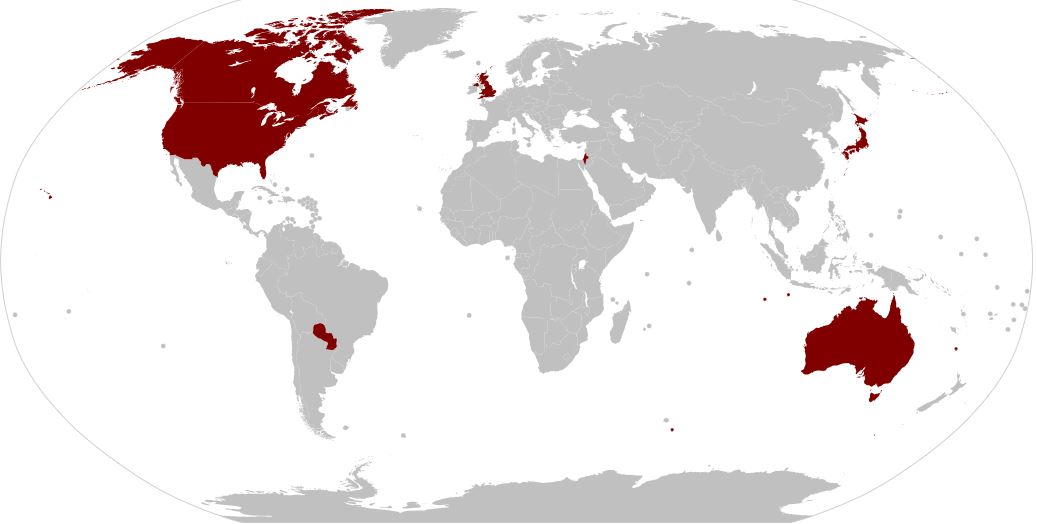
Countries that designate Hamas as a terrorist organization.

This is certainly not a coincidence. It appears that long ago the Torah encoded and predicted the rise of yet another Hamas that would wreak destruction upon the world. In fact, every instance of hamas in Tanakh seems connected to the terror group Hamas. The third case after the two above is when Sarah vented to Abraham her frustration with the pregnant Hagar, saying hamasi aleikhah (Genesis 16:5). Of course, Hagar would go on to give birth to Ishmael, forefather of the Arabs and spiritual father of Muslims. This makes a clear link between hamas and Ishmael, so that we would know exactly who they are!

The next instance of hamas in the Torah is connected to Simon and Levi’s surprise-attack upon the people of Shechem. On his deathbed, their father Jacob reproved them for the massacre, and said they should not have taken up klei hamas against their neighbours (Genesis 49:5). The next two cases both invoke ‘adei hamas, lying and conspiring false witnesses (Exodus 23:1 and Deuteronomy 19:16). Lying eye-witnesses and staged “Pallywood” videos are a classic tool in the Hamas book of tricks. This was most apparent in the recent errant rocket that landed short in the parking lot of a Gaza hospital. A minor event with minimal damage was creatively transformed into a “major attack” by Israel upon a hospital that supposedly killed hundreds. The whole thing was an elaborate lie, but the media ate it up and demonized Israel instantly without bothering to check the facts.

King David presciently foresaw the lying media in Psalm 58, which he began by saying that those who are looked upon to speak truth and justice instead have “wrongdoing in their hearts”. They have blood on their hands, too, for they collude with those ba’aretz hamas (58:3). In Psalm 11 he reminds us that “God seeks out the righteous man, but loathes the wicked one who loves hamas.” They will get their comeuppance, and “He will rain down upon the wicked blazing coals and sulfur; a scorching wind shall be their lot. For God is righteous and He loves righteous deeds; the upright shall behold His face.”

Meanwhile, Ezekiel spoke at length about the final war at the End of Days (Ch. 38-39), then described the Third Temple and the outlines of a rebuilt Jewish kingdom. He quotes God as chastising the failed leaders of Israel: “Thus said the Lord God: Enough, leaders of Israel! Make an end of hamas and crime, and do what is right and just! Put a stop to your evictions of My people—declares the Lord God.” (Ezekiel 45:19) We shouldn’t forget that it was the State of Israel’s failed leadership that unilaterally handed over Gaza to the Palestinians back in 2005 and created this mess, while forcefully evicting Jews who had lived there peacefully. And we shouldn’t forget that Israel’s leadership once quietly supported Hamas in the 1980s, hoping to use them as a wedge against Fatah. (This was the same mistake made by the United States in supporting the Mujahideen against the USSR, only to have the same terrorists turn around and attack America some years later.) And where was Israel’s leadership last week? We are all still confounded as to how such a massacre was even possible. Ezekiel tells us that God will hold Israel’s leaders to account. And he makes it clear that the leaders of Israel must “do what is right and just” and finally end hamas v’shod for good.

That second term shod (שד) is typically translated as “crime” or “rapine”. However, the same word with the same spelling is shed, a demonic force. When we look at the recent crimes of Hamas—which they proudly displayed for the whole world—there is no doubt that the demonic was involved. No human being could commit such crimes without assistance and inspiration from the Sitra Achra, the “Other Side”, the realm of evil. It isn’t surprising, therefore, that our Sages centuries ago described that there are those within the House of Ishmael that are likened to “demons of the outhouse” (Kiddushin 72a). Interestingly, the numerical value of hamas (חמס) is 108, equal to Gehinnom (גיהנם). In Reishit Chokhmah, we learn that there are three origins or “gates” to Gehinnom: in the sea (ים), in the wilderness (מדבר), and in a settlement (ישוב). One can immediately see a connection to Hamas’ recent three-pronged attack, with an invasion by sea landing at the Zikim Beach, an attack on a nature party in the wilderness, and into Sderot and surrounding settlements. This was a massacre straight out of Hell.

It is worth concluding with a Mishnah in Eduyot (2:10) which suggests that five things last exactly one year or twelve months: the Flood, the suffering of Job, the plagues in Egypt, the forthcoming war of Gog u’Magog, and the judgement of the wicked in Gehinnom. This ties everything together: we began with the Flood, where the notion of hamas is first introduced; and our suffering today is much like the suffering of Job, who tragically lost all of his children, his home, his wealth and health, and even his faith. The Prophets compare the events at the End of Days to those in ancient Egypt (and say that Pesach seders in the future will recount not just the Exodus but also the salvation at the End of Days). And we hope to be in the final Gog u’Magog war now, when all evil and all the forces of Gehinnom will be defeated for good. This was foreseen by Isaiah, who declared that “No more shall hamas be heard in your land, nor shod or ruin within your borders” (Isaiah 60:18).

Let us pray that we see this day very soon.

Body Piercings in Judaism

In the first of this week’s double parasha, Matot, we read about the tribute and offerings that the Israelite warriors brought to Moses and Elazar the Kohen Gadol following their wars of conquest. Among the jewellery we find “armlets, bracelets, rings, earrings, and pendants” (Numbers 31:50). Although the final word in this list, khumaz (כומז), is typically translated as “pendant”, its meaning is far more mysterious. Rashi says here that the khumaz was apparently a pendant in the shape of a womb, and by offering up these ornaments, the Israelites were atoning for the sexual sin previously committed with the Midianites.

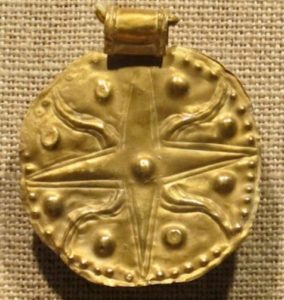
Canaanite Jewellery from the Late Bronze Age, c. 13th century BCE (Credit: factsanddetails.com)

Long before this sin, in Exodus 35:22, we already saw how the Israelites donated their own jewellery for the construction of the Mishkan, and the khumaz appears there also as something offered by the righteous Israelite women. Rashi’s comment there is different, citing the Talmud (Shabbat 64a) that khumaz stands for kan makom zimah (כָּאן מְקוֹם זִמָּה), meaning that this jewellery was something placed on the reproductive organ and was used for “lewdness”! The shocking implication seems to be that this was a piercing in the nether regions.

Interestingly, the Talmud here also presents an opinion that ‘agil (עגיל), typically translated as an “earring”, was actually worn on the breasts, perhaps as a nipple ring, or a golden breastplate of some sort designed to accentuate a woman’s features for lewd purposes. The Talmud concludes the passage with Rav Sheshet saying that the Torah lists exposed ornaments (like bracelets and rings) with concealed ones (like the ‘agil and khumaz) to teach you that there is really no difference: a man that ogles at a woman’s exposed features and ornaments (even just a pinky finger!) is equated with one who ogles at her concealed features and is just as wicked.

The Riva (Rabbi Isaac ben Asher haLevi, c. 11th century), a disciple of Rashi and one of the Tosafists, asks how it is possible that a piercing or ornament of lewdness could be donated for a holy purpose? Similar objections were understandably shared by other commentators. This is why the Ibn Ezra says (on Exodus 35:22) the khumaz must simply be a bracelet for the upper arm. Another possibility was that it was indeed placed over the reproductive organ as the Talmud states, though not for lewdness, but for chastity. Perhaps the khumaz was like a “chastity belt” purportedly used in the Middle Ages to ensure a woman remains a virgin and/or to protect her from sexual harassment. The reality, however, is that there is no physical evidence that such belts ever existed, nor can anyone explain how they might have been comfortably worn or how they would have been kept locked in place without the option of easily removing them. Scholars relegate chastity belts to the realm of myth.

The best explanation is probably that the Israelite women only had those types of lewd ornaments and pieces of jewellery because they were taken from the Egyptians. Recall that the Israelites received gifts and riches from the Egyptians as they left (Exodus 12:35-36). So, it is these pagan ornaments that they repurposed for use in the holy Mishkan. (We might conclude that, in so doing, they were able to affect a tikkun, a spiritual rectification.) The Israelite women themselves probably never wore them. And if they did, it begs the question: what is actually permitted halakhically today when it comes to bodily piercings?

The first piercing that comes to mind is earrings, which we know must be fine. Then come nose rings, which we might assume are not fine. Yet, the reality in ancient Israel may very well have been the opposite. We read, for instance, how Eliezer brought Rebecca a nose ring as a gift (Genesis 24:22 and 47). For those who might argue that this was before the giving of the Torah, and since then nose rings are no longer permissible, the Talmud (Sotah 7b) states that a sotah who was suspected of being an adulteress had to remove her nose ring, meaning they were common among Israelite women at least up to the Talmudic era.

The Talmud there mentions three specific types of ornaments: finger rings, nose rings, and necklaces or “chokers” worn close around the neck. Note how earrings are strangely not mentioned, suggesting that nose rings were more popular among Israelite women at the time. Indeed, the Torah suggests that earrings may have been associated with slavery, as we read how one who wished to be a permanent slave needed to have their ear punctured with an awl (Exodus 21:6). There is a big question if the slave actually had to wear an earring afterwards, or if he only required to have his ear punctured once symbolically. Most likely, he did have to wear an earring to identify him as a permanent slave, and the earring may have even identified to whom he belonged. The Talmud (Kiddushin 21b) has an opinion that the puncturing was done specifically in the upper ear, so perhaps there is a difference between an earring on the earlobe for beauty, versus an earing on the upper ear cartilage to indicate slavery.

The 24 Ornaments of a Jewish Bride

As explored in the past, the Torah gives us 24 ornaments that an Israelite bride would be adorned with in ancient times. The prophet Isaiah lists them in the third chapter of his book, and they are:

  1. anklets [‘achasim] עֲכָסִ֛ים
  2. ribbons (or headbands) [shvisim] שְּׁבִיסִ֖ים
  3. crescents [saharonim] שַּׂהֲרֹנִֽים
  4. pendants (or earrings) [netifot] נְּטִפ֥וֹת
  5. bracelets [sheyrot] שֵּׁיר֖וֹת
  6. veils [ra’alot] רְעָלֽוֹת
  7. headdresses [pe’erim] פְּאֵרִ֤ים
  8. armlets [tza’adot] צְּעָדוֹת֙
  9. sashes [kishurim] קִּשֻּׁרִ֔ים
  10. corselettes (or talismans) [batei hanefesh] בָתֵּ֥י הַנֶּ֖פֶשׁ
  11. amulets [lehashim] לְּחָשִֽׁים
  12. rings [taba’ot] טַּבָּע֖וֹת
  13. nose-rings [nizmei ha’af] נִזְמֵ֥י הָאָֽף
  14. aprons (or festive robes) [mahalatzot] מַּֽחֲלָצוֹת֙
  15. shawls [ma’atafot] מַּ֣עֲטָפ֔וֹת
  16. hair-coverings [mitpachot] מִּטְפָּח֖וֹת
  17. girdles (or purses) [charitim] חֲרִיטִֽים
  18. robes (or gowns) [gilyonim] גִּלְיֹנִים֙
  19. fine linen (or linen vests) [sadinim] סְּדִינִ֔ים
  20. headscarves (or kerchiefs) [tzenifot] צְּנִיפ֖וֹת
  21. mantles (or capes) [redimim] רְדִידִֽים
  22. perfume [bosem] בֹּ֜שֶׂם
  23. belt (or apron) [chagorah] חֲגוֹרָ֤ה
  24. hair curls or braids [petigil] פְּתִיגִ֖יל

In this list, we see no mention of the ‘agil or khumaz, lending further evidence that these really were inappropriate piercings. We do have netifot, literally “drops”, which some interpret to mean earrings that are like droplets hanging from the earlobes. The only other piercing mentioned is, once again, the nose ring. The term used is nezem af, with the second word seemingly superfluous. If nezem already means a “nose ring” then why add af, “nose”?

This dilemma might be solved by looking at the Golden Calf incident. Recall that Aaron had told the men to “take off the gold rings that are on the ears of your wives…” (Exodus 32:2) The term for “gold rings” is nizmei hazahav (נִזְמֵ֣י הַזָּהָ֔ב), but Aaron says to remove them off of their ears! So, a nezem might be referring to any piercing, whether on the nose, ears, or otherwise. Finally, in Ezekiel 16:11 (which parallels Isaiah 3, above) we read that God bedecked the Jewish people with “a ring in your nose, and earrings in your ears, and a splendid tiara on your head.” Here, a nezem is clearly a nose ring and ‘agilim are undoubtedly earrings. So, a Jewish women could sport a modest nose ring and earrings, but other piercings are unlikely to be kosher.

On the whole, there are three major things to consider regarding piercings: first is tzniut, that the piercing should be elegant and modest. Second is darkei Emori, the prohibition of imitating pagan practices. If the piercing is a type that is widely acceptable and universal, like earrings or nose rings, then it is most likely okay, while if it is clearly associated with pagan or gentile practices, then it is not okay. Lastly, there is the issue of beged ishah, that men cannot adorn themselves in the manner of women. Since piercings are generally considered a woman’s form of adornment, they would be entirely prohibited for Jewish men. This is all the more important today, when secular society seeks to completely blur the gender gaps, so we should be all the more punctilious in clearly defining and differentiating between men and women.

Shabbat Shalom!