Tag Archives: Repentance

How to Earn Olam HaBa

This week’s parasha, Bo, relays the commandment to the Children of Israel to prepare the Pesach offering. We are told that no one uncircumcised is permitted to consume of it (Exodus 12:48), from which we learn that many of the Israelites circumcised themselves in the days leading up to the Exodus. In fact, the Zohar (II, 35b-36a) points out on the words “and God shall pass over the opening” (12:23) that “the opening”, petach, is alluding to the opening of the reproductive organ! And thus, the Zohar says, “The blood was of two kinds, that of circumcision and that of the Passover lamb—the former symbolizing mercy and the latter justice.”

These two mitzvot are actually deeply connected. In fact, there are 36 commandments in the Torah for which their violation incurs karet, “excision” from the nation of Israel, and presumably from the World to Come (see Keritot 1:1). Of those 36, all are prohibitions that must not be violated, except for only two which are positive commandments requiring fulfilment: pesach and milah. Our Sages taught that the fulfilment of these two critical mitzvot not only prevents karet, but actually guarantees a Jew to earn their place in the World to Come! (For women who, of course, need no milah, they are considered to be “born circumcised” automatically, so it’s even easier. See Avodah Zarah 27a.)

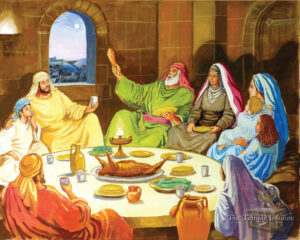
Today, we are unable to bring the Pesach offering literally, but we fulfil the mitzvah through the Pesach seder. Thus, the Zohar says that “a person who speaks of the Exodus from Egypt and relays that story in joy is destined to rejoice with the Shekhinah in the World to Come”. The Haggadah itself tells us that anyone who participates in the seder joyously and speaks of the Exodus at length is praiseworthy, and the Zohar (II, 40b) adds that such a person thereby earns their share in Olam haBa, the World to Come.

Similarly, the Talmud (Eruvin 19a) relays that the simple status of being circumcised saves one from punishment in Gehinnom, with only one exception:

As Reish Lakish said: With regard to the sinners of Israel, the fire of Gehinnom has no power over them, as may be learned by a fortiori from the golden altar. If the golden altar in the Temple, which was only covered by gold the thickness of a golden dinar, stood for many years and the fire did not burn it, so too the sinners of Israel, who are filled with good deeds like a pomegranate, as it is stated: “Your temples [rakatekh] are like a split pomegranate” (Song of Songs 6:7), will not be affected by the fire of Gehinnom. And Rabbi Shimon ben Lakish said about this: Do not read: “Your temples [rakatekh]”, but rather: “Your empty ones [reikateikh]”, ie. even the sinners among you are full of mitzvot like a pomegranate; so how much more so [the fire of Gehinnom has no power over them].

But what about that which is written: “Those who pass through the valley of weeping”? (Psalms 84:7) There it speaks of those who are liable for punishment in Gehinnom, but our forefather Abraham comes and raises them up and receives them, except for a Jew who had relations with a gentile woman, for which his foreskin is redrawn, and our father Abraham does not recognize him [as one of his descendants].

Every single Jew, even a rebellious sinner, is saved by Abraham from Gehinnom—as long as the Jew is circumcised. However, a Jewish man who slept with a Gentile loses his “circumcised” status and Abraham does not recognize him as being part of his Covenant. This is not because there is anything wrong with a Gentile, for all human beings were made in God’s image and are precious to Hashem (Sanhedrin 37a). In fact, the Midrash attests in multiple places (including Yalkut Shimoni II, 42 and Tanna d’Vei Eliyahu Rabba 9:1) that “I bring Heaven and Earth to bear witness, whether one is a Gentile or a Jew, man or woman, slave or maid, anyone can merit to have the Divine Spirit rest upon them—all depending on their deeds.” Rather, the Torah has an explicit prohibition for Israel not to intermarry or be promiscuous with Gentiles for several good reasons, including the simple fact of it being a spiritual mismatch.

Now, why does the Talmud above specifically mention a man being intimate with a Gentile, and not a woman? One answer is as follows: If a Jewish man intermarries with a non-Jewish woman, the children are not Jewish, but if a Jewish woman intermarries with a non-Jewish man, the children are still Jewish! Thus, the intermarriage of a Jewish man with a non-Jewish woman completely cuts off his line from the Jewish people and the nation of Israel, meaning that such a Jewish man has, in effect, excised himself from his people. On the contrary, the intermarriage of a Jewish woman with a non-Jewish man—although undoubtedly still forbidden and a violation of Torah law—nonetheless does not excise her progeny from Israel.

We must also remember that Abraham was the first to prohibit intermarriage, even before the Torah was given. Abraham instructed his servant Eliezer to go find a wife for his son Isaac from among his own people, and not the local Canaanites (Genesis 24:2-4). Moreover, Abraham was chosen by God and sealed a Covenant with Him because, as God Himself affirmed, “I know that he will instruct his children and his progeny to keep the way of God by doing what is just and right…” (Genesis 18:19) A Jewish man who does not follow the ways of Abraham and intermarries thus loses his connection to Abraham’s Covenant and to his people.

That said, there is always a chance to fix one’s errors. A Jewish man who intermarried need not divorce his wife, but should rather convert her and bring her into the nation of Israel. And a Jewish man who was with a non-Jewish woman in the past without marriage can repent and clear his record. In fact, the Talmud (Avodah Zarah 17a) tells the story of the infamous Elazar ben Durdaya, who went out of his way to sleep with every harlot, but ultimately recognized his sins and repented wholeheartedly—so much so that he died in grief. A Heavenly Voice then resounded and declared that Elazar was welcome in the World to Come!

Genuine repentance allows a person to clear their record, and God promises that He will forgive a sincere repentant each year on Yom Kippur (Leviticus 16:30). What other things wipe away one’s sins and give a person a fresh start? Our Sages taught us many practices that can bring about complete atonement. One is keeping Shabbat: “Anyone who observes Shabbat properly according to its laws, even if he worshipped idols like the generation of Enosh, he is forgiven!” (Shabbat 118a-b) The Talmud adds here that one who eats three meals on Shabbat is spared from three punishments: the suffering in the era preceding Mashiach, the suffering of Gehinnom, and the suffering at the final apocalyptic war of Gog u’Magog.

Another mitzvah that atones for all of one’s past sins is getting married (Yevamot 63b, Talmud Yerushalmi, Bikkurim 3:3). The wedding day is seen as a “mini-Yom Kippur”, which is why some communities have a custom for the bride and groom to fast prior to their chuppah. This is true even for a second marriage or late marriage, as the Sages derive this teaching from Esau’s second (or third) marriage. The same Yerushalmi source says that a person who ascends a high position of leadership is forgiven all of their past sins as well. This includes one who is ordained as a rabbi, or one who becomes president or holds high office. The Ba’al haTurim (Rabbi Yakov ben Asher, c. 1269-1343) cites this in his commentary on the Torah (Exodus 21:19), and also notes that one who was gravely ill and recovered is forgiven for all of their sins. This is based on the Talmud which states that “a person who is gravely ill does not recover until all of his sins have been forgiven.” (Nedarim 41a)

Lastly, the Torah tells us that “His land atones for His people” (Deuteronomy 32:43). Our Sages derive from this that being buried in the land of Israel wipes away all of one’s sins (Ketubot 111a). This is a major reason for why many Jews seek to be buried in Israel, even if they lived their entire lives in the diaspora. (That said, there are those who held that this only works if a person also lived in Israel, and was not simply transported there just for burial.)
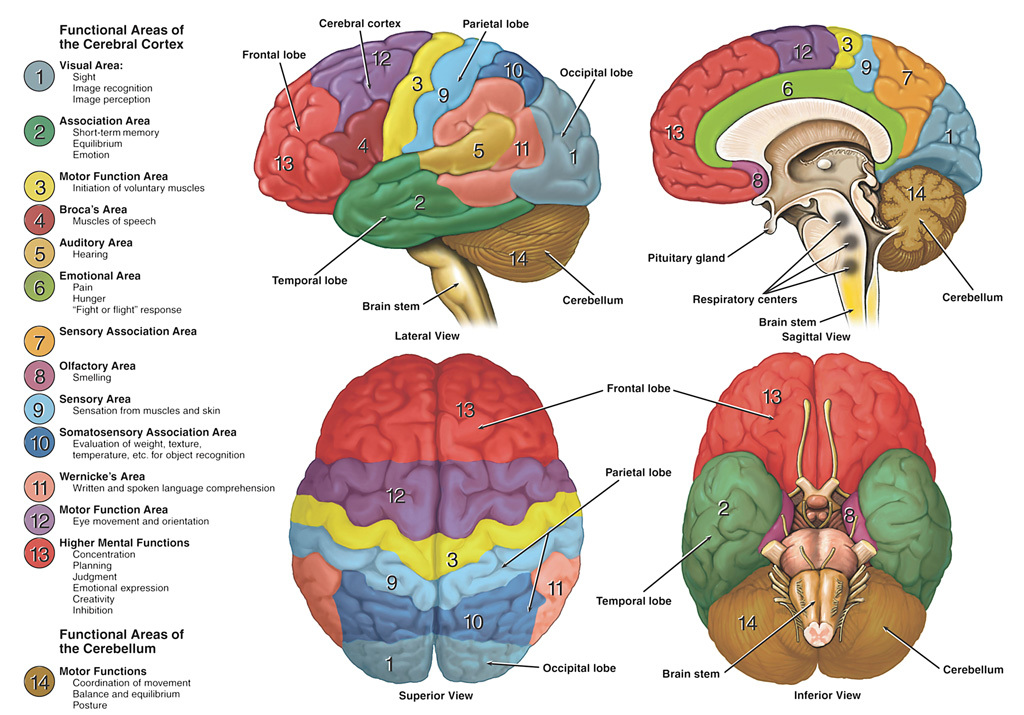
Finally, it’s important to mention that a person is only considered a full-fledged adult from age 20, and the sins one incurs before this age may certainly harm a person in this world, but are not tried by the Heavenly Court for Olam HaBa. (See Shabbat 89b; Zohar I, 118b; and Rashi on Numbers 16:27.) God knows that teenagers will make foolish mistakes—after all, He is the one that designed the human body to have all of those challenging hormonal changes. And He designed the brain in such a way that the decision-making and planning section, the pre-frontal cortex, is the last to fully develop. It is worth adding that the Midrash says Adam and Eve were created as twenty-year-olds (Beresheet Rabbah 14:7). Of course, this does not mean that someone who is currently under the age of 20 gets a free pass to sin! It is meant retroactively, for things one regrettably did in their youth.

Guaranteed Olam HaBa

We saw above that one who engages joyously and actively at the Pesach seder is guaranteed a portion in the World to Come, as is one who is circumcised and was never promiscuous with a Gentile woman. What other mitzvot guarantee a person’s Olam haBa?

We saw above that one is forgiven for all of their sins if they keep Shabbat and if they are buried in Israel. The Talmud adds in another place (Pesachim 113a) that “Three people are among those who inherit the World to Come: One who lives in the Land of Israel; one who raises his sons to engage in Torah study; and one who recites Havdalah over wine at the conclusion of Shabbat.” Living in Israel is such a great mitzvah that a person automatically earns Olam HaBa. Reciting Havdalah regularly works the same magic. And then there’s putting one’s children through Jewish schools and ensuring that they engage in regular Torah study. After all, we say multiple times a day in the Shema that one should teach Torah to his children “in order that your days and your children’s days shall be prolonged upon the land which God promised your forefathers as long as the Heavens are upon the Earth.” (Deuteronomy 11:21) So, one who teaches Torah to his children will ultimately merit to inherit his promised portion for as long as the Heavens are upon the Earth.

Similarly, one who learns Torah is guaranteed a portion in the World to Come, as we say regularly in our prayers from Tana d’Vei Eliyahu that “Anyone who learns halakhot each day is guaranteed Olam haBa”. How many halakhot does one need to learn? The Mekhilta of Rabbi Shimon bar Yochai says that “anyone who learns two halakhot in the morning and two halakhot in the evening, and works all day, it is as if he has fulfilled the whole Torah.” (16:4) So, even learning just a few verses each morning and evening is enough if done consistently. And it is worth repeating the famous first Mishnah in tractate Peah that “The following are the things for which a person enjoys the fruits in this world while the principal reward remains for him in the World to Come: Honoring one’s father and mother; acts of kindness; and making peace between a person and his friend—and the study of the Torah is equal to them all.”

Regular prayer also has tremendous benefits. The Talmud (Berakhot 16b) says that anyone who recites the Shema and prays the Amidah is guaranteed Olam haBa. The Zohar (III, 164a) adds that one who bows and stands upright during the Amidah will merit to stand upright at the Resurrection of the Dead. Reciting Ashrei (Psalm 145) three times a day also guarantees Olam haBa (Berakhot 4b). Even just answering “amen” to someone else’s blessing with intention earns one the World to Come! (Shabbat 119b) Meanwhile, the same passage says that answering amen, yehe sheme… in Kaddish with full intention wipes away all negative decrees upon a person, and clears even the stain of idolatry.

There are other super-powerful mitzvot, too. Giving regularly to charity is described by our Sages as being equal to all of the Torah’s other mitzvot combined, even if giving a small amount like a third of a shekel (Bava Batra 9a). The following page of Talmud says that giving charity saves one from Gehinnom, based on King Solomon’s famous adage that “charity saves from death.” (Proverbs 10:2) The Zohar (III, 273b, Ra’aya Mehemna) explains that a completely destitute person is considered “like dead” halakhically, so when one gives the destitute person charity, it’s as if he raised him from the dead. Thus, God will likewise resurrect the charitable person in Olam haBa, measure for measure.

Like charity, the Sages say that the mitzvah of tzitzit is equal to all the others combined. After all, we say in Shema multiple times a day that when one sees the tzitzit, he should be reminded of “all of God’s commands”. The Ba’al haTurim (on Numbers 15:38-39) points out that the value of this phrase (כל מצות ה’) equals 612, meaning that the one mitzvah of tzitzit is equal to the remaining 612! He further notes that the atbash transformation of tzitzit (המהמא) has a value of 91, like kis’i (כסאי), “My Throne”, and one who regularly fulfils the mitzvah of tzitzit “will merit to see the face of the Divine Presence” and be lifted up to Heaven on “the wings of eagles”.

Meanwhile, the Zohar (III, 253b, Ra’aya Mehemna) says that putting on tefillin in the morning is tied to King David’s words of lo amut ki echyeh, “I will not die, but live”, suggesting that one thereby merits eternal life. Lastly, the introductory verses of Perek Shirah, an ancient text recording the songs of all things in Creation, begin with Rabbi Eliezer the Great saying that “Anyone who involves himself with Perek Shirah in this world, merits saying it in the World to Come.” This is by no means an exhaustive list, and one could find other mitzvot, rituals, and texts that promise a guarantee of Olam haBa as well.

Finally, the Talmud (Sanhedrin 88b) says that one who has the following traits is destined for Olam HaBa: “One who is modest and humble, who bows and enters [the Synagogue or Beit Midrash] and bows and exits, who studies Torah regularly, and who does not take credit for himself.” This is reminiscent of the prophet Micah’s question: “What does God ask of you? Only to do justly, and to love mercy, and to walk humbly with your God.” (Micah 6:8) The Sages say this was not just good advice, but a summary and condensation of all 613 commandments! (See Makkot 24a) The same page of Talmud says the prophet Amos reduced the whole Torah to the phrase “Seek Me and live!” (Amos 6:5), while the prophet Habakkuk reduced the whole Torah to the phrase “The righteous lives in his faith” (Habakkuk 2:4). Hillel famously taught that the whole Torah is “what is hateful to you don’t do unto others” (Shabbat 31a) and Rabbi Akiva said that the most important Torah verse is “Love your fellow as yourself” (Sifra, Kedoshim 4:12). Finally, we learn in Pirkei Avot (3:10) that “One with whom people are pleased, God is pleased. But anyone with whom people are displeased, God is displeased.” The last word goes to the prophet Isaiah (60:21), who said: “And your people, all of them righteous, shall possess the land for all time; they are the shoot that I planted, My handiwork in which I glory.”

To summarize, one is guaranteed their portion in the World to Come if they fulfil any (and hopefully all) of the following:

  • Actively and joyously participate in a Pesach seder (Zohar II, 40b)
  • Regularly study Torah, even just a few verses a day (Tana d’Vei Eliyahu, Mekhilta d’Rashbi 16:4, Peah 1:1)
  • Teach Torah to their children, or put them in Jewish schools (Pesachim 113a)
  • Live in Israel (Pesachim 113a)
  • Recite Havdalah regularly at the conclusion of Shabbat (Pesachim 113a)
  • Recite daily the Shema and Amidah prayer (Berakhot 16b; Zohar III, 164a)
  • Recite Ashrei (Psalm 145) three times a day (Berakhot 4b)
  • Answer “amen” with intention (Shabbat 119b; Zohar III, 285a-b)
  • Give regularly to charity (Bava Batra 9a-10a; Proverbs 10:2; Zohar III, 273b, Ra’aya Mehemna)
  • Wear tzitzit, put on tefillin daily, and/or regularly review Perek Shirah
  • Are modest, humble, and treat all others with respect and dignity (Sanhedrin 88b, Avot 3:10)
  • Circumcised (for a man), as long as one did not intermarry or was promiscuous with Gentile women, and failed to repent for it (Eruvin 19a)

To summarize, one is forgiven for all of their sins if they do any of the following:

  • Keep Shabbat properly (Shabbat 118b)
  • Recover from a serious illness (Nedarim 41a)
  • Ascend to a high position of leadership (TY Bikkurim 3:3)
  • Get married (Yevamot 63b, TY Bikkurim 3:3)
  • Answer amen, yehe sheme rabbah in Kaddish with intention (Shabbat 119b)
  • Genuinely repent on Yom Kippur (Leviticus 16:30, Yoma 85b)
  • Are buried in Israel (Deuteronomy 32:42, Ketubot 111a)
  • Retroactively for sins before the age of 20 (Shabbat 89b; Zohar I, 118b)

For lots more information, sources, and analysis, see the recent class ‘Every Jew is a Tzadik’.
Three Reasons to be Religious

An artist’s rendition of the Ark of the Covenant

In this week’s parasha, Vayelech, we read how Moses completes writing the Torah and places it inside the Ark of the Covenant. The parasha cautions multiple times that we must not stray from this Torah, for our own benefit. At this introspective time of year, it is especially pertinent to ask: what is the benefit of living a Torah life? Why bother being religious? Aside from the simple answers, like fulfilling God’s will, earning an afterlife, or knowing this is the right way, what are the tangible, clear, positive impacts of living religiously? While there are, of course, many reasons, the following are three vital benefits of a life according to God’s Torah.

1. Personal Development that Works

Although Mussar as a large-scale movement only began in the 19th century, it has always been a central part of Judaism. The root of the word mussar (מוּסַר) literally means “restraint” or “discipline”. It is about developing self-control, awareness, morality, and being in tune with one’s inner qualities. The origin of this word is actually in the Book of Proverbs, which begin with this very term: “The proverbs of Solomon, the son of David, king of Israel, to know wisdom and mussar, to comprehend sayings of understanding, to receive mussar of reason, justice, law, and ethics.”

Before Proverbs, the word mussar appears once in the Torah, in reference to God disciplining us (Deuteronomy 11:2). The Torah instructs us to be kind and generous, humble and wise, restrained and strong; to take care of the widow and orphan, of the poor and oppressed. The prophets of Israel continued to instruct the people in this way, reminding them to be upright and just individuals. The tradition continued into the Rabbinic period, with ancient treatises like Pirkei Avot (a tractate of the Mishnah) wholly devoted to inspiring personal growth and self-improvement.

One who lives a Torah lifestyle is immersed in such teachings. Whether it’s simply reading the weekly parasha, or listening to the rabbi’s dvar; going through Avot in the weeks between Passover and Shavuot, reciting Selichot in the Forty (or Ten) Days of Repentance, or participating in the various fasts throughout the year, a religious Jew is simply unable to abstain from personal growth of some kind. We are constantly reminded of the humility of Moses, the selflessness of Abraham, the devotion of David, and the wisdom of Solomon; the incomparable patience of Hillel, the studiousness of Rabbi Akiva, and the tremendous qualities of countless other great figures. These are our heroes, and we are constantly prompted to emulate them.

There is no doubt whatsoever that a Jew who is truly religious (and not just religious in appearance, or because this is how he grew up) is continually becoming ever kinder, more humble, and generally a better human being. Now, it may be argued that even a non-religious person can focus on personal growth, and there isn’t a lack of secular self-help literature out there. This is true, but there is one key difference:

The secular person is improving for their own benefit (and the benefit of those immediately around them), while the religious person is improving not only for that benefit, but also because he understands that God demands this of him. This is important because the secular person might feel like reading a self-improvement book this week, or working hard on himself this year, but might completely forget about it next week, or might have a very busy year in which he didn’t have any time for this kind of thing at all. The religious Jew does not have this luxury. He will be fervently repenting and reflecting during the High Holiday season, and during Sefirat HaOmer and during the Three Weeks, because he is obligated to do so and cannot abstain. Religion forces us to improve. It demands that we become better, and God will judge us if we do not. This makes all the difference.

Take, for example, a person going on a diet. We all know that the vast majority of diets fail. Why is this so? Because there is nothing external forcing a person to stick to the diet. Eventually, they will slip up once, and then again, and soon enough the diet will be a forgotten thing of the past. Meanwhile, a religious person who takes upon themselves a kosher diet is unlikely to lapse. Most religious Jews happily stick to a kosher diet their entire life, despite the fact that it is so difficult. Why is such a diet successful? Because there is an external factor—God—that keeps us firmly on the diet.

Thus, while every 21st century Westerner might be engaged in some sort of secular personal development, these fleeting periods of growth are inconsistent at best, and completely ineffective at worst. Religious-based personal development works, and this is one major benefit to a Torah lifestyle.

2. The Importance of Community

While other religions may be practiced in solitude, Judaism is an entirely communal faith. The ideal prayer is in a minyan of ten or more, the ideal Torah study in pairs; marriage and child-bearing are a must, a holiday is no holiday without a large gathering, and even a simple daily meal should ideally have at least three people. Judaism is all about bringing people together. Indeed, Jews are famous for sticking together and helping each other out. There are interest-free loans, and a gmach that freely provides to those in need of everything from diapers to furniture. Jews pray together, feast together, study together, and take care of each other. A Jew can visit the remotest Chabad House in the farthest corner of the world and still feel like he is having a Shabbat meal at home.

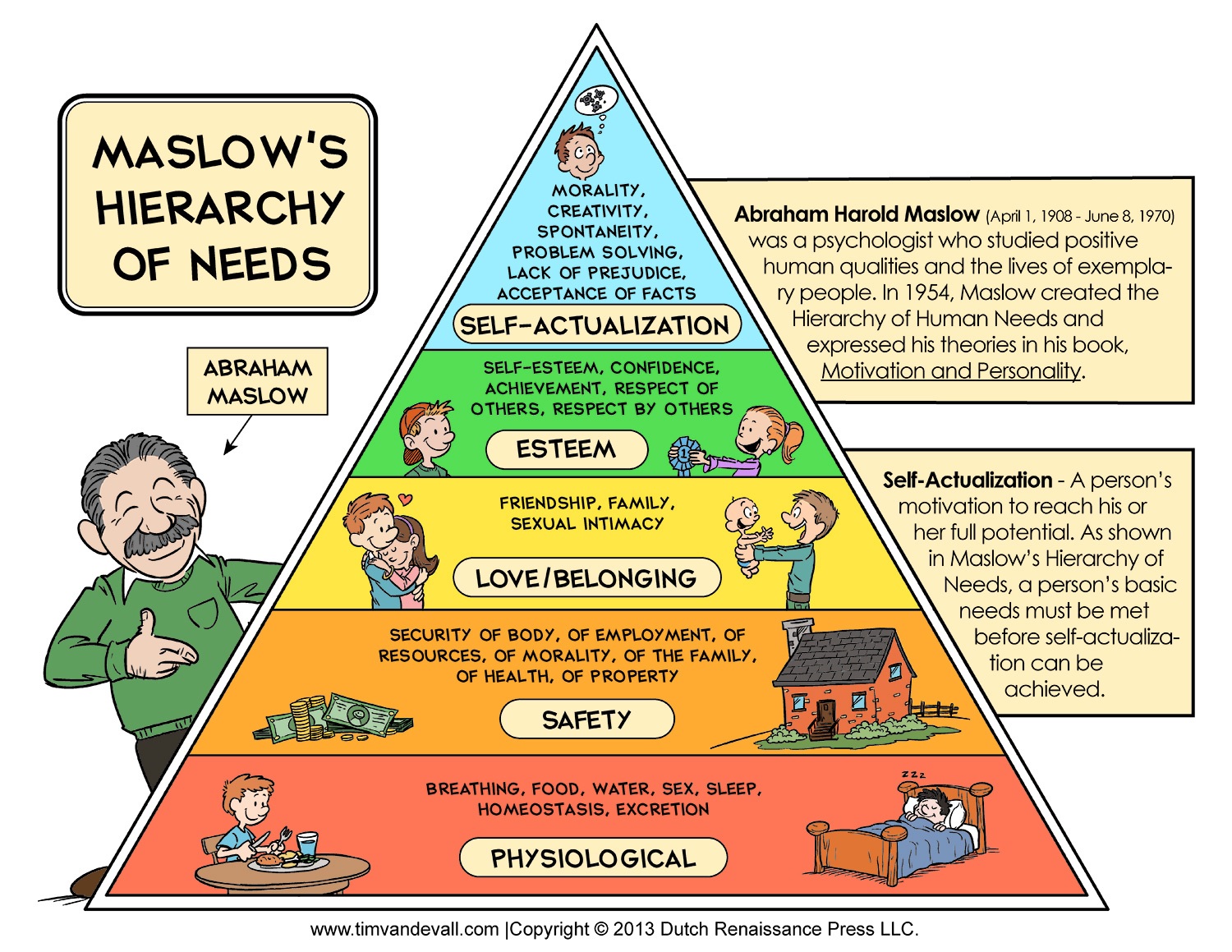
“Belongingness” fills the third rung of Abraham Maslow’s Hierarchy of Needs. Judaism neatly facilitates the fulfilment of all five rungs.

Jews are not a nation, culture, ethnicity, or even a religion; we are, as Rabbi Moshe Zeldman put it, a family. And it is worth being a part of this extended family. We know from the field of psychology how important “belongingness” is. We know the troubles that people go through just to feel like they belong, or to have a community around them. We know how loneliness plays a key role in depression and mental illness. We know that “no man is an island”, and how important it is to be surrounded by a supportive community. The religious Jewish community is tight-knit like no other. Doors are always open for Sabbaths and holidays, charities are always open to help, and the synagogue serves as the nucleus of the community.

It is important to mention here how necessary it is for a community to stay physically close together. This is one major positive side-effect of not driving on Shabbat. In so doing, we must remain within walking distance of the synagogue, and therefore within walking distance of the whole community. The fatal error that the Conservative movement made was in allowing driving to the synagogue. As soon as this change was made, people saw no need to live close to the synagogue, and bought homes further and further away, tearing the community apart. Once the largest Jewish denomination in America, Conservative Judaism has been on a steadily decline ever since.

And so, the second major reason to be religious is the close community that comes with it. Dan Buettner, who famously spent decades studying communities around the world where people live longest and healthiest, concluded that being part of a “faith-based community” adds as much as fourteen years to a person’s life!

3. Cultivating the Mind, Mastering the Universe

Today, we find ourselves in an incredible age where centuries worth of philosophy, mysticism, and science are converging. Going back at least as far as George Berkeley (1685-1753), and really much farther to Plato (c. 427-347 BCE), philosophers have long noted the illusory nature of this physical world, and some denied the very existence of concrete material as we perceive it. The only real substance to this universe, according to them, is the mind. We live in a mental universe.

While this may sound far-fetched, the physics of the past century has brought us a great deal of proof to support it. The Big Bang taught us that the entire universe emerged from a miniscule, singular point, and that all was once in a ball of uniform energy, and that all matter (which appears to come in so many shapes and forms) really emerges from one unified source. The famous double-slit experiment showed us that all particles of matter are also simultaneously waves. Sometimes particles behave like solid objects, and other times like transient waves. The only difference is the presence of an observer, a conscious mind. Our minds literally impact our surroundings. Max Planck, regarded as the father of quantum physics, remarked:

As a man who has devoted his whole life to the most clear headed science, to the study of matter, I can tell you as a result of my research about atoms this much: There is no matter as such. All matter originates and exists only by virtue of a force which brings the particle of an atom to vibration and holds this most minute solar system of the atom together. We must assume behind this force the existence of a conscious and intelligent mind. This mind is the matrix of all matter.

The “matrix” of this vast universe is the mind. Of course, this has been a central part of Kabbalah and other schools of mysticism for millennia. The Tikkunei Zohar (18b) transforms the first word of the Torah, Beresheet (בראשית), into Rosh Bayit (ראש בית), ie. that this entire universe (bayit), is a product of God’s “Mind”, or perhaps existing in His head (rosh). In fact, the Kabbalists say that if God were to stop thinking about a person even for the briefest of moments, that person would cease to exist. This is related to what we say daily in our prayers, that God “each day, constantly, renews Creation.” God is that Mind that holds the universe in existence.

And we are all a part of that Mind. After all, He made us in His image, with a small piece of that universal consciousness. This is related to the “quantum brain” hypothesis we have spoken of in the past, a scientific theory suggesting that our brains are entangled with the universe, which may itself be “conscious” in some way. In short, thousands of years of human reason, mysticism, and experimentation points to one conclusion: the only real currency in this universe is the mind.

In that case, the only thing really worth developing is the mind. The more powerful one’s mind is, the greater control one wields over the universe. This isn’t just a pretty saying, we know scientifically that our minds affect the universe around us. More personally, studies have shown that meditation (and prayer) can actually impact the way our genes are expressed! We may be able to consciously affect the biology of our bodies down to the molecular level.

The placebo effect is the best proof for this. Science still cannot explain how it is that a person who simply believes they are receiving treatment will actually heal. Surgeons have even done placebo surgeries, with results showing that people who were only led to believe they were operated on still improved just as well as those who actually went under the knife. How is this possible?

The answer is obvious: our minds have a very real, concrete, physical affect on reality. Unfortunately, most people are unaware of this latent power, and must be duped into it (as with placebos). But that power is definitely there, and its potential is immeasurable. One must only work to develop these mental powers.

Judaism provides us with exactly this opportunity. Like no other religion, Judaism is entirely based on ceaseless mental growth. We must always be studying, praying, blessing, meditating, contemplating, and reasoning. Scripture tells us to meditate upon the Torah day and night (Joshua 1:8), and the Talmud reminds us that talmud Torah k’neged kulam, learning Torah is more important than all other things. The mystical tradition, meanwhile, is built upon mental exercises like hitbonenut (“self-reflection”) and hitbodedut (“self-seclusion”), yichudim (“unifications”) and kavannot (“intentions”). A religious Jew is constantly developing not only their outer intellect, but their inner mental capacities.

And this is the true meaning of Emunah, loosely translated as “faith”. The first time the word appears in the Torah is during the battle with Amalek, following the Exodus, where we read how Moses affected the outcome of the battle by holding up his arms emunah (Exodus 17:12). Moses was very much affecting the universe around him. The only other time the word appears in the Torah itself is in next week’s parasha, Ha’azinu, where God is described as El Emunah (Deuteronomy 32:4). In light of what was said above, this epithet makes sense: God is that Universal Mind that brings this illusory physical world into existence. God is the ultimate mental power, and our minds are only tapping into that infinite pool.

Not surprisingly, the prophets and sages describe Emunah as the most powerful force in the universe. King David said he chose the path of Emunah (Psalms 119:30), while King Solomon said that one who breathes Emunah is the greatest tzaddik, and has the power to repair the world with his tongue (Proverbs 12:17-18). Amazingly, the Sages (Makkot 23b) reduced the entire Torah—all 613 mitzvot—to one verse: “The righteous shall live in his Emunah” (Habakkuk 2:4). Perhaps what they meant is that the purpose of all the mitzvot is ultimately to develop our Emunah; to strengthen our minds, to recognize the Divine within every iota of the universe, and to align our consciousness with God’s. This is the secret of the rabbinic maxim: “Make your will like His will, so that He should make His will like your will. Nullify your will before His will, so that He should nullify the will of others before your will.” (Avot 2:4)

Being religious Jews provides us with a regular opportunity (and requirement) to develop our mental faculties. Aside from the many positive health effects of doing so (including staving off mental and neurological illnesses, and even living longer), we are also given a chance to become real masters of the universe around us; to transcend our limited physical bodies. At the end of the day, that’s what life is all about.


The above is adapted from Garments of Light, Volume Two. Get the book here

The Difference between “Jew” and “Hebrew”

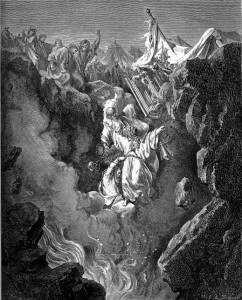
“Death of Korah, Dathan, and Abiram” by Gustave Doré

This week’s parasha is named after Korach, the rebellious cousin of Moses. Korach felt he had been unfairly slighted. Moses had apparently made himself like a king over the people, then appointed his brother Aaron as high priest. The final straw was appointing another cousin, the younger Elitzaphan, as chief of the Kohatites, a clan of Levites of which Korach was an elder. Where was Korach’s honour?

Korach’s co-conspirators were Datan and Aviram, leaders of the tribe of Reuben. They, too, felt like they’d been dealt a bad hand. After all, Reuben was the eldest son of Jacob, and as the firstborn among the tribes, should have been awarded the priesthood.

The Sages explain that Reuben indeed should have held the priesthood. Not only that, but as the firstborn, he should have also been the king. Reuben, however, had failed in preventing the sale of Joseph, and had also committed the unforgivable sin of “mounting his father’s bed”. For this latter crime especially, and for being “unstable like water”, Jacob declared that Reuben would “not excel” or live up to being “my first fruit, excelling in dignity, excelling in power” (Genesis 49:3-4).

Instead, the status of “firstborn” was awarded to Joseph, who had taken on the mantle of leadership and saved his entire family in a time of terrible drought. Jacob made Joseph the firstborn, and thus gave Joseph a double portion among the Tribes and in the land of Israel. He put Joseph’s sons Ephraim and Menashe in place of his own firsts Reuben and Shimon (Genesis 48:5). Meanwhile, the excellence of “dignity”—the priesthood—went to the third-born son, Levi, and the excellence of power—royalty—went to the fourth son, Judah. (The second-born Shimon was skipped over because he, too, had greatly disappointed his father in slaughtering the people of Shechem, as well as spearheading the attempt to get rid of Joseph.)

Levi merited to hold the priesthood because the Levites were the only ones not to participate in the Golden Calf incident (Exodus 32:26). The Book of Jubilees (ch. 32) adds a further reason: Jacob had promised to God that he would tithe everything God gave him (Genesis 28:22), and everything included his children. Jacob thus lined up his sons, and counted them from the youngest up. The tenth son, the tithe, was Levi (who was the third-oldest, or “tenth-youngest”, of the twelve). And so, Levi was designated for the priesthood, to the service of God.

Judah merited the royal line for his honesty and repentance—particularly for the sale of Joseph, and for the incident with Tamar. He further established his leadership in taking the reins to safely secure the return of Benjamin. The name Yehudah comes from the root which means “to acknowledge” and “to be thankful”. Judah acknowledged his sins and purified himself of them. Ultimately, all Jews would be Yehudim, the people who are dedicated to repentance and the acknowledgement and recognition of Godliness in the world. Much of a Jew’s life is centered on prayers and blessings, thanking God every moment of the day, with berakhot recited before just about every action. The title Yehudi is therefore highly appropriate to describe this people. Yet, it is not the only title.

Long before Yehudi, this people was known as Ivri, “Hebrew”, and then Israel. What is the meaning of these parallel names?

Hebrew: Ethnicity or Social Class?

The first time we see the term “Hebrew” is in Genesis 14:13, where Abraham (then still called Abram) is called HaIvri. The meaning is unclear. The Sages offer a number of interpretations. The plain meaning of the word seems to mean “who passes” or “who is from the other side”. It may refer to the fact that Abraham migrated from Ur to Charan, and then from Charan to the Holy Land. Or, it may be a metaphorical title, for Abraham “stood apart” from everyone else. While the world was worshipping idols and living immorally, Abraham was “on the other side”, preaching monotheism and righteousness.

An alternate approach is genealogical: Ever was the name of a great-grandson of Noah. Noah’s son Shem had a son named Arpachshad, who had a son named Shelach, who had a son named Ever (see Genesis 11). In turn, Ever was an ancestor of Abraham (Ever-Peleg-Reu-Serug-Nachor-Terach-Abraham). Thus, Abraham was called an Ivri because he was from the greater clan of Ever’s descendants. This must have been a powerful group of people recognized across the region, as attested to by Genesis 10:21, which makes sure to point out that Shem was the ancestor of “all the children of Ever”. Amazingly, archaeological evidence supports this very notion.

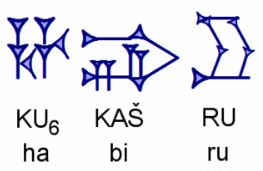
“Habiru” in ancient cuneiform

From the 18th century BCE, all the way until the 12th century BCE, historical texts across the Middle East speak of people known as “Habiru” or “Apiru”.  The Sumerians described them as saggasu, “destroyers”, while other Mesopotamian and Egyptian texts describe them as mercenary warriors, slaves, rebels, nomads, or outlaws. Today, historians agree that “Habiru” refers to a social class of people that were somehow rejected or outcast from greater society. These were unwanted people that did not “fit in”. That would explain why Genesis 43:32 tells us that Joseph ate apart from the Egyptians, because “the Egyptians did not eat bread with the Hebrews; for that was an abomination to the Egyptians.”

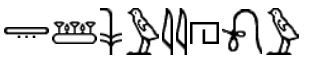
One of the “Habiru” described in Egyptian texts are the “Shasu YHW” (Egyptian hieroglyphs above), literally “nomads of Hashem”. Scholars believe this is the earliest historical reference to the Tetragrammaton, God’s Ineffable Name, YHWH.

Defining “Hebrew” as an unwanted, migrating social class also solves a number of other issues. For example, Exodus 21:2 introduces the laws of an eved Ivri, “a Hebrew slave”. When many people read this passage, they are naturally disturbed, for it is unthinkable that God would permit a Jew to purchase another Jew as a slave. Yet, the Torah doesn’t say that this is a Jew at all, but an Ivri which, as we have seen, may refer to other outcasts from an inferior social class. The Habiru are often described as slaves or servants in the historical records of neighbouring peoples, so it appears that the Torah is actually speaking of these non-Jewish “Hebrews” that existed at the time. Regardless, the Torah shows a great deal of compassion for these wanderers, and sets limits for the length of their servitude (six years), while ensuring that they live in humane conditions.

Rebels and Mystics

Though he was certainly no slave or brigand, Abraham was undoubtedly a “rebel” in the eyes of the majority. To them, he was a “criminal”, too, as we read in the Midrash describing his arrest and trial by Nimrod the Babylonian king. Abraham spent much of his life wandering from one place to another, so the description of “nomad” works. So does “warrior”, for we read of Abraham’s triumphant military victory over an unstoppable confederation of four kings that devastated the entire region (Genesis 14). There is no doubt, then, that Abraham would have been classified as a “Habiru” in his day.

His descendants carried on the title. By the turn of the 1st millennium BCE, it seems that all the other Ivrim across the region had mostly disappeared, and only the descendants of Abraham, now known as the Israelites, remained. The term “Hebrew”, therefore, became synonymous with “Israelite” and later with Yehudi, “Judahite” or “Jew”. (This is probably why later commentators simply assumed that the Torah was speaking about Jewish slaves in the Exodus 21 passage discussed above.) To this day, in many cultures and languages the term for a “Jew” is still “Hebrew”. In Russian it is yivrei, in Italian it is ebreo, and in Greek evraios. In other cultures, meanwhile, “Hebrew” is used to denote the language of the Jews. It is Hebrew in English, hebräisch in German, hébreu in French.

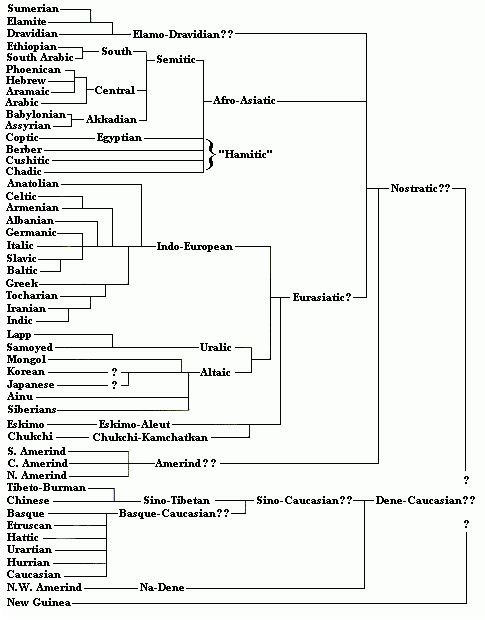
In fact, another rabbinic theory for the origins of the term Ivri is that it refers specifically to the language. In Jewish tradition, Hebrew is lashon hakodesh, “the Holy Tongue” through which God created the universe when He spoke it into existence. The language contains those mystical powers, and because the wicked people of the Tower of Babel generation abused it, their tongues were confounded in the Great Dispersion. At that point, God divided the peoples into seventy new ethnicities, each with its own language, giving rise to the multitude of languages and dialects we have today.

A possible language tree to unify all of the world’s major tongues, based on the work of Stanford University Professor Joseph Greenberg. (Credit: angmohdan.com)

Hebrew did not disappear, though. It was retained by the two most righteous people of the time: Shem and Ever. According to tradition, they had built the first yeshiva, an academy of higher learning. Abraham had visited them there, and Jacob spent some fourteen years studying at their school. The Holy Tongue was preserved, and Jacob (who was renamed Israel) taught it to his children, and onwards it continued until it became the language of the Israelites.

Alternatively (or concurrently), Abraham learned the Hebrew language from his righteous grandfather Nachor, the great-grandson of Ever. We read of the elder Nachor (not to be confused with Nachor the brother of Abraham) that he had an uncharacteristically short lifespan for that time period (Genesis 11:24-25). This is likely because God took him away so that he wouldn’t have to live through the Great Dispersion. (Nachor would have died around the Hebrew year 1996, which is when the Dispersion occurred. The Sages similarly state that God took the righteous Methuselah, the longest-living person in the Torah, right before the Flood to spare him from the catastrophe.)

Interestingly, we don’t see much of an association between the Hebrew language and the Hebrew people in the Tanakh. Instead, the language of the Jews is called, appropriately, Yehudit, as we read in II Kings 18:26-28, Isaiah 36:11-13, Nechemiah 13:24, and II Chronicles 32:18. The term Yehudit may be referring specifically to the dialect of Hebrew spoken by the southern people of Judah, which was naturally different than the dialect used in the northern Kingdom of Israel.

Israel and Jeshurun

The evidence leads us to believe that “Hebrew” was a wider social class in ancient times, and our ancestors identified themselves (or were identified by others) as “Hebrew”. This was the case until Jacob’s time. He was renamed Israel, and his children began to be referred to as Israelites, bnei Israel, literally the “children of Israel”. The twelve sons gave rise to an entire nation of people called Israel.

The Torah tells us that Jacob was named “Israel” because “he struggled with God, and with men, and prevailed” (Genesis 32:29). Jewish history really is little more than a long struggle of Israel with other nations, and with our God. We stray from His ways so He incites the nations against us to remind us who we are. Thankfully, throughout these difficult centuries, we have prevailed.

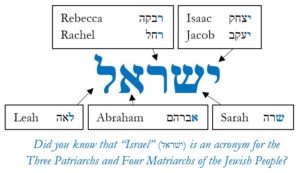
Within each Jew is a deep yearning to connect to Hashem, hinted to in the name Israel (ישראל), a conjunction of Yashar-El (ישר-אל), “straight to God”. This is similar to yet another name for the people of Israel that is used in the Tanakh: Yeshurun. In one place, Moses is described as “king of Yeshurun” (Deuteronomy 33:5), and in another God declares: “Fear not, Jacob my servant; Yeshurun, whom I have chosen.” (Isaiah 44:2) Yeshurun literally means “upright one”. This is what Israel is supposed to be, and why God chose us to begin with. “Israel” and “Yeshurun” have the same three-letter root, and many believe these terms were once interchangeable. The Talmud (Yoma 73b) states that upon the choshen mishpat—the special breastplate of the High Priest that contained a unique stone for each of the Twelve Tribes—was engraved not Shivtei Israel, “tribes of Israel”, but Shivtei Yeshurun, “tribes of Yeshurun”.

What is a Jew?

By the middle of the 1st millenium BCE, only the kingdom of the tribe of Judah remained. Countless refugees from the other eleven tribes migrated to Judah and intermingled with the people there. Then, Judah itself was destroyed, and everyone was exiled to Babylon. By the time they returned to the Holy Land—now the Persian province of Judah—the people were simply known as Yehudim, “Judahites”, or Jews. Whatever tribal origins they had were soon forgotten. Only the Levites (and Kohanim) held on to their tribal affiliation since it was necessary for priestly service.

As already touched on previously, it was no accident that it was particularly the name of Yehuda that survived. After all, the purpose of the Jewish people is to spread knowledge of God, and within the name Yehuda, יהודה, is the Ineffable Name of God itself. This name, like the people that carry it, is meant to be a vehicle for Godliness.

Perhaps this is why the term Yehudi, or Jew is today associated most with the religion of the people (Judaism). Hebrew, meanwhile, is associated with the language, or sometimes the culture. Not surprisingly, early Zionists wanted to detach themselves from the title of “Jew”, and only use the term “Hebrew”. Reform Jews, too, wanted to be called “Hebrews”. In fact, the main body of Reform in America was always called the Union of American Hebrew Congregations. It was only renamed the “Union for Reform Judaism” in 2003!

All of this begs the question: what is a Jew? What is Judaism? Is it a religion? An ethnicity or culture? A people bound by some common history or language? By the land of Israel, or by the State of Israel?

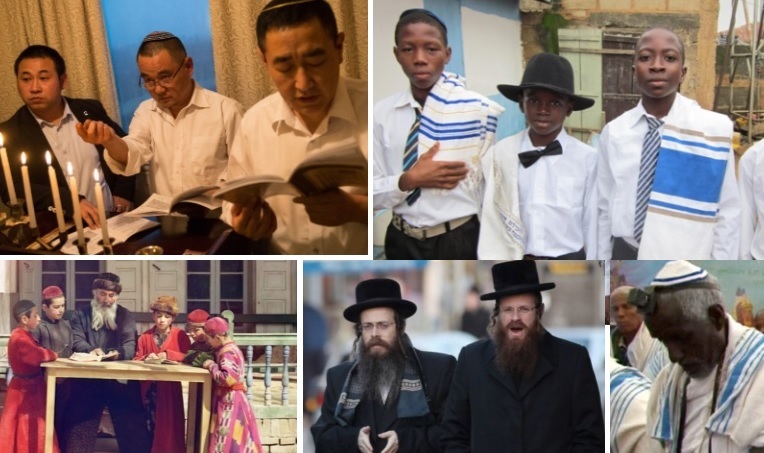
It cannot be a religion, for many Jews want absolutely nothing to do with religion. There are plenty who proudly identify as atheists and as Jews at the same time. We are certainly not a culture or ethnicity, either, for Ashkenazi Jews, Sephardi Jews, Mizrachi Jews, Ethiopian Jews, all have very different customs, traditions, and skin colours. Over the centuries, these groups have experienced very different histories, too, and have even developed dozens of other non-Hebrew Judaic languages (Yiddish, Ladino, Bukharian, and Krymchak are but a few examples).

So, what is a Jew? Rabbi Moshe Zeldman offers one terrific answer. He says that, despite the thousands of years that have passed, we are all still bnei Israel, the children of Israel, and that makes us a family. Every member of a family has his or her own unique identity and appearance, and some members of a family may be more religious than others. Family members can live in distant places, far apart from each other, and go through very different experiences. New members can marry into a family, or be adopted, and every family, of course, has its issues and conflicts. But at the end of the day, a family is strongly bound by much more than just blood, and comes together when it really matters.

And this is precisely what Moses told Korach and his supporters in this week’s parasha. Rashi (on Numbers 16:6) quotes Moses’ response:

Among each of the other nations, there are multiple sects and multiple priests, and they do not gather in one house. But we have none other than one God, one Ark, one Torah, one altar, and one High Priest…

There is something particularly singular about the Jewish people. We are one house. We are a family. Let’s act like one.

Continue reading