Category Archives: Holidays

The First Pesach: Did the Patriarchs Celebrate Passover?

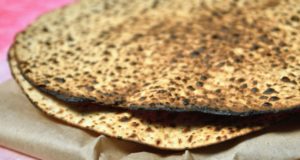
The holiday of Passover commemorates the Exodus of the Israelites out of Egypt over three thousand years ago. The Torah tells us that because of their hasty departure, the dough of the Israelites did not have time to rise, hence the consumption of matzah. Yet, the term matzah appears in the Torah long before the Exodus! We read in Genesis 19:3 that Lot welcomed the angels into his home and “made them a feast, and baked matzot, and they ate.” Since the angels came to Lot immediately after visiting Abraham and Sarah to announce the birth of Isaac at that time next year (Genesis 18:10), the Sages learn from this that Isaac was born on Passover. Of course, the Exodus only took place four hundred years after Isaac’s birth! How is it that the patriarchs are already eating matzah?

An Eternal Torah

Although the Torah was given to the Israelites following the Exodus, Jewish tradition affirms that the Torah is eternal, and even predates existence. A famous verse in the Zohar (II, 161a) states that “God looked into the Torah and created the universe.” Adam knew the whole Torah, and was taught its deepest secrets by the angel Raziel. Many of these teachings were passed on by Adam to future generations, down to Noah, then his son Shem, and eventually to the Patriarchs who, according to tradition, studied at Shem’s academy. So, while the Torah tradition officially dates back to Sinai, in some ways it dates back all the way to Creation! It’s also important to keep in mind that the Patriarchs were prophets, which means that even though they did not have a physical, written Torah, there is no reason why they could not have received the Torah’s wisdom directly from God.

As such, it is said that the Patriarchs kept the entire Torah and fulfilled all the mitzvot. When Jacob sends a message to Esau after his sojourn in Charan he tells him “I have lived [garti] with Laban” (Genesis 32:5). On this, Rashi says that garti (גרתי) is an anagram of taryag (תרי״ג), the 613 commandments, meaning that despite living under the oppressive Laban for twenty years, Jacob still observed all 613 commandments. Yet, this is impossible since Jacob married two sisters—a clear Torah prohibition! Similarly, when Abraham meets Melchizedek (ie. Shem) following his victory over the Mesopotamian kings, he tells him that he will not take any reward whatsoever, not even “a thread or strap” (Genesis 14:23). For this, the Sages say, Abraham’s descendants merited the mitzvah of tzitzit (the threads) and tefillin (the straps). In that case, Abraham himself did not wear tefillin or tzitzit. From such instances we see that the patriarchs did not keep the Torah completely, at least not the Torah as we know it.

Emanations of Torah

While Kabbalistic texts often point out that the Torah is eternal and served as the very blueprint of Creation, they also go into more detail to explain that this primordial Torah was not quite the same as the Torah we have today. Each of the four mystical universes (Asiyah, Yetzirah, Beriah, Atzilut) has an ever-more refined level of Torah, with the highest being the Torah of Atzilut. Our Torah is the one of Asiyah, and is full of mitzvot only due to Adam’s sin and the corruption of mankind. In Olam HaBa, the Torah of Atzilut will finally be revealed, which is why Jewish tradition holds that many mitzvot will no longer apply in that future time. This is said to be the meaning of Isaiah 51:4 where God proclaims that in the messianic times “a Torah will go forth from Me”; and of Jeremiah 31:30 where God says He will forge a brit chadashah, a “new covenant”, with Israel. (This latter term was usurped by Christians for their “New Testament”.)

An even more intriguing idea is that the “New Torah” will be composed of the exact same letters as the current one we possess, just rearranged to form new words! Yet another is based on the well-known principle that the Heavenly Torah is composed of “black fire on white fire”. This is often used to explain the fact that the Torah actually has 304,805 letters, even though it is always described as having 600,000 letters (one for each Israelite at Mt. Sinai)—there are 304,805 letters of “black fire” and the rest are the invisible letters of “white fire”. Gershom Scholem cites a number of Kabbalistic and Hasidic texts suggesting that these currently-invisible “white fire” letters are the true eternal Torah! (See Scholem’s Kabbalah, pgs. 171-174, for a complete analysis of these concepts.)
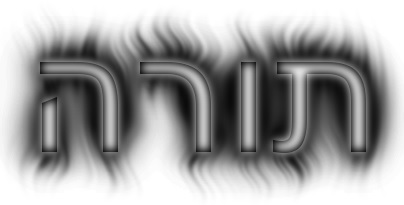
It is this primordial Torah that was originally taught to Adam, and was passed down through his descendants to the Patriarchs, who carefully observed it. As such, it appears that eating matzah is an eternal mitzvah that already appeared in the primordial Torah before the Exodus and the revelation of the current Torah of Asiyah. What was the meaning behind that consumption of matzah?

Bread of Faith

Matzah is called the “bread of faith”. It symbolizes our faithfulness to God, who took us out of Egypt to be His people: “Let My people go so that they may serve Me” (Exodus 7:16, 26). Further emphasizing this point, the word matzot is spelled exactly like mitzvot. This simple, “humble” bread symbolizes our subservience to God’s commands. We are His faithful servants, just as the Patriarchs were His faithful servants. So they, too, ate matzah as a sign of their faith. They ate matzah because God had liberated them, too, from various hardships.

The very first Patriarch, Abraham, was miraculously saved from Nimrod’s furnace. He also dwelled in Egypt for a time before God miraculously brought him out of there with great wealth, just as his descendants would do centuries later. And then came his greatest test of faith: the Akedah. Amazingly, the apocryphal Book of Jubilees connects this event with the future Passover holiday. In chapter 18, it suggests that God commanded the Akedah to Abraham on the 15th of Nisan. As the Torah states, Abraham journeyed for three days before the Akedah happened and then, naturally, it took him three days to return home. Thus, the whole ordeal spanned seven days, and when Abraham returned, he established a seven-day “festival to Hashem” from the 15th of Nisan. The future seven-day Passover holiday would happen on those same days in that same month.
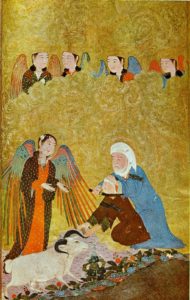
“Abraham’s Sacrifice”, a 15th century piece of Timurid-Mongolian art

While the Sages do debate whether some of the Torah’s major events (including Creation itself) happened in the month of Tishrei or Nisan, the accepted Jewish tradition is that the Akedah happened in Tishrei. Nonetheless, it is quite fitting that the Binding of Isaac should happen on Passover, when Isaac was born. In this case, the ram that Abraham ultimately offered in place of Isaac would serve as a proto-Pesach offering. After all, the ram is nothing but a male sheep, and it is the ram that is the astrological sign of Nisan, and it was those ram-headed gods that the Egyptians worshipped that needed to be slaughtered by the Israelites (as discussed last week). Whatever the case, the Book of Jubilees offers an intriguing possibility for the spiritual origins of Passover, and for why the Patriarchs themselves ate matzot long before the Exodus.

Secrets of the Pesach Seder Plate

This Friday evening marks the start of Passover. At the Passover seder, it is customary to have a plate upon which all the symbolic Passover foods are placed. According to one arrangement, on the top right we place the zeroa bone; parallel to it on the left is an egg; then the maror (bitter herb) in the centre; the sweet charoset on the bottom right, opposite the karpas vegetable; and in the bottom centre the chazeret, horseradish or another serving of maror (which is used in the korech “sandwich”). In addition, we have three matzahs and the cup of wine, to be filled four times. What is the significance of these Pesach elements?

The zeroa represents the fact that God took us out of Egypt “with an outstretched arm” (b’zeroa netuya), as the Torah states. It also represents the korban pesach, the Pesach offering that would be brought and consumed in the days of the Temple. For this reason, it is best to have a zeroa from a lamb shank, since the Pesach offering was a lamb. The lamb itself was in commemoration of the fact that the Israelites smeared the blood of the lamb on their doorposts on the eve of their Exodus, to protect their homes from the tenth and final plague. It was a lamb in particular because the astrological sign for the month of Nisan is Aries, a ram or sheep. This is tied to Egyptian idolatry, where a number of Egyptian gods were depicted as ram-headed, or with the horns of a ram, including Khnum and Osiris. The slaughter of a lamb was thus symbolic of destroying the idols of Egypt, like the Ten Plagues themselves (see ‘The Ten Plagues: Destroying the Idols of Egypt’ in Garments of Light).

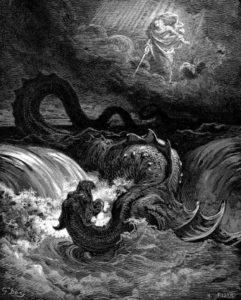
The egg symbolizes another offering brought on Passover: the chagigah, or holiday offering. This was the standard offering brought on all festivals in the days of the Temple. The reason that it is specifically an egg is because a whole egg is one of the foods traditionally consumed by mourners. (The round egg represents the cycle of life.) In this case, the egg is a symbol of mourning for the destruction of the Temple. Intriguingly, Rav Sherira Gaon (d. 1006) wrote how it is customary to eat meat, fish, and egg at the Pesach seder to represent the foods that will be eaten in the End of Days at the Feast of Mashiach. According to the Midrash, in that time the righteous will eat the fishy flesh of Leviathan, that great sea-dragon that Mashiach will slay; as well as the meat of the beast called Behemoth; and the egg of the mythical bird Ziz. So, eating an egg at the Pesach meal is symbolic of that future messianic feast.

‘Destruction of Leviathan’ by Gustav Doré

The maror famously represents the bitter oppression of the Jews, just as the Torah states that the Egyptians “embittered” (v’imareru) the lives of the Jews with mortar and brick, and hard labour (Exodus 1:14). The need to eat maror actually comes explicitly from the Torah, which commands that Jews should eat the Pesach offering together with matzah and bitter herbs (Exodus 12:8). The Mishnah (Pesachim 2:6) lists five possible maror herbs, though their identity is not entirely clear. The only one that appears to be undisputed is lettuce, and hence it is lettuce that is used for maror in Sephardic communities. Another possibility is that maror is horseradish—not the mustard-like sauce but an actual horseradish root (since maror must be a raw vegetable, as the Shulchan Arukh states in Orach Chaim 473:5). There are other traditions for maror’s identity as well.

Interestingly, the Midrash states that the consumption of maror on Pesach is one of the few things King Solomon did not understand! In Proverbs 30:18, Solomon wrote that “Three things are wondrous to me and four I do not know.” Although the passage continues to state what it is that Solomon wondered about, the Midrash (Vayikra Rabbah 30:14) has an alternate explanation: The three things wondrous to Solomon were the Pesach offering, matzah, and maror; and the four he didn’t know were the mysteries behind the four species of Sukkot!

The Mystery of Karpas and Charoset

The maror is dipped into the sweet charoset. This paste is meant to resemble the clay mortar that the Israelites used, or the mud that was baked into clay bricks. The word charoset comes from cheres, “clay”. There are vastly different traditions as to the ingredients of charoset. One tradition is to use the fruits mentioned in Shir HaShirim, the Song of Songs, among them: apples (2:3), figs (2:13), nuts (6:11), dates (7:7), wine (1:2), and cinnamon (4:14). The romantic lyrics of the Song are interpreted as an allegorical “love story” between God and Israel, and the fruits are used throughout the text in metaphorical fashion to describe that passionate love. It is particularly appropriate to use the Song of Songs recipe since it is customary to read the Song of Songs on the holiday of Pesach. (There are five megillot, “scrolls”, in the Tanakh, and each is read on a particular holiday: Shir HaShirim on Passover, Ruth on Shavuot, Eichah on Tisha b’Av, Kohelet on Sukkot, and Esther on Purim.)

Some have pointed out that charoset may have a Greek origin, as it was common…


The above is an excerpt from Garments of Light, Volume Two. To continue reading, get the book here

Who is Ahashverosh?

This Wednesday evening marks the start of Purim. The events of Purim, as described in the Book of Esther, take place in the Persian Empire during the time of King Ahashverosh. Who is this king? Is there a historical figure that matches up with what we know of the Biblical Ahashverosh? And when exactly did the Purim story happen?

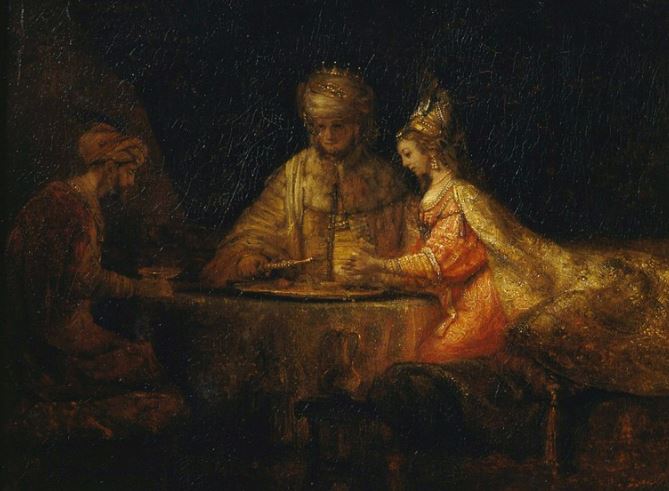
Ahaseurus and Haman at Esther’s Feast, by Rembrandt

Not long after Jerusalem was destroyed by Nebuchadnezzar and the Jews exiled to Babylon, the Babylonian Empire itself fell to the Persians. This was prophesied by Isaiah (45:1), who went so far as to describe the liberating Persian King Cyrus as “mashiach”! In one place (Megillah 12a), the Talmud states that he was obviously not the messiah—though perhaps a potential one—while in another (Rosh Hashanah 3b) it admits that he was “kosher”, and this is why his name (Koresh in Hebrew and Old Persian) is an anagram of kosher.

According to the accepted historical chronology, Cyrus took over the Babylonian Empire in 539 BCE. The Temple was destroyed some five decades earlier in 586 BCE. Our Sages, too, knew that the Babylonian Captivity lasted less than the seventy years prophesied by Jeremiah. They explained that although Cyrus freed the Jews before seventy years, they were unable to actually rebuild the Temple until seventy years had elapsed. In secular chronology, its rebuilding thus took place in 516 BCE. This was in the reign of the next great Persian king, Darius (r. 522-486 BCE). His son and successor was the famous Xerxes I (485-465 BCE), or in Old Persian Khshayarsha, ie. Ahashverosh.

Despite the name, many believe that the Ahashverosh of Purim is not Xerxes I. Scholars have suggested other possibilities, including one of several kings named Artaxerxes. The problem with Artaxerxes is that first of all the name does not match at all, being Artashacha in Old Persian, and second of all the name actually appears elsewhere in Scripture, in the books of Ezra and Nehemiah, as Artachshashta (אַרְתַּחְשַׁשְׂתָּא). This is clearly not Ahashverosh (אֲחַשְׁוֵרוֹשׁ). Having said that, Ezra 6:14 may imply that Artachshashta and Ahashverosh are one and the same. This verse lists Cyrus, then Darius, then Artachshashta, whereas we know from historical sources that following Cyrus was Cambyses, then the more famous Darius, followed by Xerxes I.

The Book of Daniel complicates things further. Daniel speaks of a Darius that conquers Babylon. Yet we know for a fact that it was Cyrus who conquered Babylon. Some scholars therefore say that Daniel is confusing Darius with Cyrus. Others say this “Darius the Mede” conquered Babylon alongside Cyrus, and this version has been accepted by many in the Jewish tradition. Later, Daniel 9:1 says that Darius was a son of Ahashverosh! Hence, some Jewish sources state that the Persian king Darius was the son of Esther. This suggests an entirely different Darius, and historical sources do speak of three Dariuses, the last one being defeated by Alexander the Great.

Perhaps the only way to find the real Ahashverosh is to ignore the other Biblical books and focus solely on Megillat Esther. In this case, the name Ahashverosh only fits Xerxes. There were two Xerxeses in ancient Persia. Xerxes II, though, ruled for just 45 days before being assassinated. That leaves us with Xerxes I. Does the Purim Ahashverosh match the historical Xerxes?

Xerxes the Great

Xerxes was born around 518 BCE to King Darius I and his wife Atossa, who was the daughter of Cyrus the Great. Xerxes was thus a grandson of the first Persian emperor. When Darius I died, his eldest son Artobazan claimed the throne. Xerxes argued that he should be king since he was the son of Atossa, the daughter of Cyrus. Ultimately, it was Xerxes that was crowned, thanks to his mother’s influence. This may be related to the Talmud’s suggestion that Ahashverosh claimed his authority through his wife Vashti, who was the daughter of a previous emperor, while Ahashverosh was just a usurper.

Xerxes immediately solidified his rule and crushed a number of rebellions. He melted down the massive idolatrous statue of Bel, or Marduk, the chief Babylonian god, triggering a number of rebellions by the Babylonians. Xerxes thus removed “king of Babylon” from his official title in an attempt to wipe out any mention of the former Babylon. He remained as “king of Persia and Media, great king, king of kings, and king of nations”.*

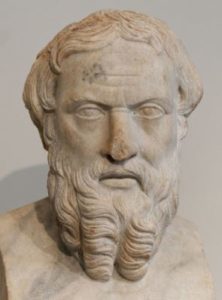
Xerxes is undoubtedly most famous for his massive invasion of Greece in 480 BCE, and particularly the difficulties he experienced at the Battle of Thermopylae (where he faced off against “300” Spartans). Returning home without victory, he focused on large construction projects. The ancient Greek historian (and contemporary of Xerxes) Herodotus (c. 485-425 BCE) notes that Xerxes built a palace in Susa. This is, of course, the Shushan HaBirah, “Susa the Capital” mentioned multiple times in the Megillah. Herodotus further states that Xerxes ruled from his capital in Susa over many provinces “from India to Ethiopia”, just as the Megillah says.

Bust of Herodotus

Herodotus also writes how Xerxes loved women and regularly threw parties where the wine never stopped flowing. Indeed, Megillat Esther speaks of the mishteh, literally “drinking party” that Ahashverosh threw. More specifically, Herodotus wrote how Xerxes returned to Persia from his failed Greek invasion in the “tenth month of his seventh year” and spent a lot of time sulking with his large harem of women. Incredibly, the Megillah also states that “Esther was taken unto king Ahashverosh into his palace in the tenth month, which is the month Tevet, in the seventh year of his reign” (Esther 2:16). This is unlikely to be a coincidence.

More amazing still, among the historical records from the time of Xerxes I that have been found we find the name of a court official named Marduka. Interestingly, this Marduka is given no other titles. It isn’t hard to see the connection to Mordechai, also an untitled official in the court of Ahashverosh.

Xerxes’ reign came to an end in 465 BCE when he was unceremoniously assassinated. His eldest son Darius, who should have succeeded him, was killed, too. This once again may relate to the Jewish tradition of Ahashverosh having a son with Esther called Darius.

However, Xerxes’ son Darius was the child of his queen Amestris, or Amastri, the daughter of a Persian nobleman. Historical sources speak of her in the most negative of terms. Herodotus writes that she buried people alive, and she apparently brutally tortured and mutilated a relative she wanted to punish. She was jealous of her husband’s extramarital affairs, and power-hungry in her own right. Although the name Amestris may sound more similar to the name Esther, Amestris’ character fits the profile of a cruel Queen Vashti quite well (see Megillah 12b).**

A Historical Nightmare

One of the greatest issues in Biblical chronology is the problem of the so-called “missing years”. As mentioned, secular scholarship has 586 BCE (or 587 BCE) as the year of the Temple’s destruction and 516 BCE as its rebuilding. Traditional Jewish dating has around 424 BCE (or 423 or even 421 BCE) for the destruction and 354 BCE (or 349 BCE) for the reconstruction. That’s a discrepancy of some 160 years!

Generally, it is concluded that the Jewish traditional dating is simply wrong, as the Sages did not have access to all the historical and archaeological sources that we have today. As we wrote in the past, the Talmud and other ancient Jewish sources do have occasional historical errors, and this has already been noted by rabbis like the Ibn Ezra and Azariah dei Rossi (c. 1511-1578). Still, the traditional Jewish dating need not be thrown out the door just yet.

In his The Challenge of Jewish History: The Bible, The Greeks, and The Missing 168 Years, Rabbi Alexander Hool makes a compelling case for rethinking the accepted chronology. He brings an impressive amount of evidence suggesting that Alexander the Great did not defeat Darius III, but rather Darius I! After Alexander, the Seleucids did not rule over all of Persia, but only the former Babylonian provinces, while the Persian Empire continued to co-exist alongside the Greek. Interestingly, there is another version of Megillat Esther (sometimes called the Apocryphal Book of Esther) which may support the theory. While the apocryphal version is certainly a later edition and not the authentic one, it still provides some additional information which may be useful. This Book of Esther actually says Haman was a Macedonian, like Alexander the Great, which fits neatly with Hool’s theory. Having said that, Hool’s theory is very difficult to accept, and would require rewriting a tremendous amount of history while ignoring large chunks of opposing evidence. Elsewhere, though, he may be right on point.

Hool suggests that Cyrus and the mysterious “Darius the Mede” are one and the same person, with evidence showing “Darius” is a title rather than a proper name. He argues that “Ahashverosh” may be a title, too, and concludes that the Ahashverosh of Purim is none other than Cambyses II (r. 530-522 BCE), the son of Cyrus. This suggestion fits well with the chronology presented in Jewish sources (especially Seder Olam) and with the Tanakh (where, for example, Darius I is the son of Ahashverosh in the Book of Daniel). It also fits with the description of Cambyses given by Herodotus, who says Cambyses was a madman with wild mood swings, much like the Ahashverosh in the Megillah. The timing is excellent, too, fitting inside the seventy year period before the Second Temple was rebuilt and while the Jews were still in exile mode.

Identifying Cambyses with Ahashverosh opens up a host of other problems though. The Megillah has Ahashverosh reigning for at least a dozen years, whereas Cambyses only reigned for about seven and a half. The other details that we know of Cambyses’ life and love interests do not match Ahashverosh either. Point for point, it seems that Xerxes I still fits the bill of Ahashverosh much better than anyone else, despite the chronological mess.

At the end of the day, history before the Common Era is so frustratingly blurry that it is difficult to conclude much with certainty. Without a doubt, there are historical errors and miscalculations in both secular scholarship and in ancient Jewish sources. It seems the identity of Ahashverosh and the exact chronology between the destruction of the First and Second Temples is one mystery that can’t be solved at the moment.


*Perhaps Xerxes’ father Darius is the one called “Darius the Mede” (being unrelated to Cyrus). This makes more sense chronologically if Daniel was one of the original Jewish exiles, as the Tanakh suggests. The Book of Daniel should have said that Ahashverosh was the son of Darius, and not vice versa. In fact, the Talmud (Megillah 12a) admits that Daniel erred in some chronological details. This may be why the Book of Daniel is not always considered an authoritative prophetic book, and is included in the Ketuvim, not the Nevi’im. In Jewish tradition, Daniel is typically excluded from the list of official prophets.

**The Talmud suggests that Vashti was the daughter of Nebuchadnezzar (Megillah 10b) or Belshazzar (Megillah 12b), while Ahashverosh was only the son of their stable-master. This makes little sense chronologically or historically. Scholars have pointed out that this extra-Biblical suggestion in the Talmud may have been adapted from the popular Persian story of the king Ardashir I (180-242 CE), which would have been well-known in Talmudic times.


The above essay is adapted from Garments of Light, Volume Three.
Get the book here!