Tag Archives: Idolatry

Secrets of the Pesach Seder Plate

This Friday evening marks the start of Passover. At the Passover seder, it is customary to have a plate upon which all the symbolic Passover foods are placed. According to one arrangement, on the top right we place the zeroa bone; parallel to it on the left is an egg; then the maror (bitter herb) in the centre; the sweet charoset on the bottom right, opposite the karpas vegetable; and in the bottom centre the chazeret, horseradish or another serving of maror (which is used in the korech “sandwich”). In addition, we have three matzahs and the cup of wine, to be filled four times. What is the significance of these Pesach elements?

The zeroa represents the fact that God took us out of Egypt “with an outstretched arm” (b’zeroa netuya), as the Torah states. It also represents the korban pesach, the Pesach offering that would be brought and consumed in the days of the Temple. For this reason, it is best to have a zeroa from a lamb shank, since the Pesach offering was a lamb. The lamb itself was in commemoration of the fact that the Israelites smeared the blood of the lamb on their doorposts on the eve of their Exodus, to protect their homes from the tenth and final plague. It was a lamb in particular because the astrological sign for the month of Nisan is Aries, a ram or sheep. This is tied to Egyptian idolatry, where a number of Egyptian gods were depicted as ram-headed, or with the horns of a ram, including Khnum and Osiris. The slaughter of a lamb was thus symbolic of destroying the idols of Egypt, like the Ten Plagues themselves (see ‘The Ten Plagues: Destroying the Idols of Egypt’ in Garments of Light).

The egg symbolizes another offering brought on Passover: the chagigah, or holiday offering. This was the standard offering brought on all festivals in the days of the Temple. The reason that it is specifically an egg is because a whole egg is one of the foods traditionally consumed by mourners. (The round egg represents the cycle of life.) In this case, the egg is a symbol of mourning for the destruction of the Temple. Intriguingly, Rav Sherira Gaon (d. 1006) wrote how it is customary to eat meat, fish, and egg at the Pesach seder to represent the foods that will be eaten in the End of Days at the Feast of Mashiach. According to the Midrash, in that time the righteous will eat the fishy flesh of Leviathan, that great sea-dragon that Mashiach will slay; as well as the meat of the beast called Behemoth; and the egg of the mythical bird Ziz. So, eating an egg at the Pesach meal is symbolic of that future messianic feast.
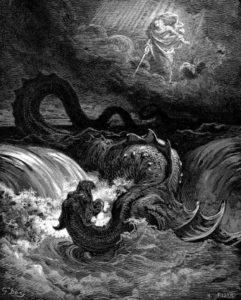
‘Destruction of Leviathan’ by Gustav Doré

The maror famously represents the bitter oppression of the Jews, just as the Torah states that the Egyptians “embittered” (v’imareru) the lives of the Jews with mortar and brick, and hard labour (Exodus 1:14). The need to eat maror actually comes explicitly from the Torah, which commands that Jews should eat the Pesach offering together with matzah and bitter herbs (Exodus 12:8). The Mishnah (Pesachim 2:6) lists five possible maror herbs, though their identity is not entirely clear. The only one that appears to be undisputed is lettuce, and hence it is lettuce that is used for maror in Sephardic communities. Another possibility is that maror is horseradish—not the mustard-like sauce but an actual horseradish root (since maror must be a raw vegetable, as the Shulchan Arukh states in Orach Chaim 473:5). There are other traditions for maror’s identity as well.

Interestingly, the Midrash states that the consumption of maror on Pesach is one of the few things King Solomon did not understand! In Proverbs 30:18, Solomon wrote that “Three things are wondrous to me and four I do not know.” Although the passage continues to state what it is that Solomon wondered about, the Midrash (Vayikra Rabbah 30:14) has an alternate explanation: The three things wondrous to Solomon were the Pesach offering, matzah, and maror; and the four he didn’t know were the mysteries behind the four species of Sukkot!

The Mystery of Karpas and Charoset

The maror is dipped into the sweet charoset. This paste is meant to resemble the clay mortar that the Israelites used, or the mud that was baked into clay bricks. The word charoset comes from cheres, “clay”. There are vastly different traditions as to the ingredients of charoset. One tradition is to use the fruits mentioned in Shir HaShirim, the Song of Songs, among them: apples (2:3), figs (2:13), nuts (6:11), dates (7:7), wine (1:2), and cinnamon (4:14). The romantic lyrics of the Song are interpreted as an allegorical “love story” between God and Israel, and the fruits are used throughout the text in metaphorical fashion to describe that passionate love. It is particularly appropriate to use the Song of Songs recipe since it is customary to read the Song of Songs on the holiday of Pesach. (There are five megillot, “scrolls”, in the Tanakh, and each is read on a particular holiday: Shir HaShirim on Passover, Ruth on Shavuot, Eichah on Tisha b’Av, Kohelet on Sukkot, and Esther on Purim.)

Some have pointed out that charoset may have a Greek origin, as it was common…


The above is an excerpt from Garments of Light, Volume Two. To continue reading, get the book here

Should You Wear a Red String on Your Wrist?

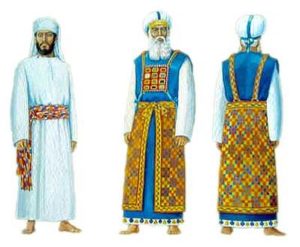
Vestments of the kohen and kohen gadol

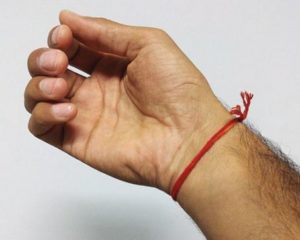
This week’s parasha, Tetzave, continues to outline the items necessary for the Mishkan, or Tabernacle, starting with the Menorah and going into a detailed description of the priestly vestments. One of the materials necessary for the holy garments is tola’at shani, commonly translated as “crimson wool”. This was a deep red fabric apparently derived from some kind of insect or worm (which is what the Hebrew “tola’at” means). The Torah speaks of this material in multiple places and in multiple contexts. Today, wearing a “tola’at shani”-like red string on the wrist has become very popular among those calling themselves “Kabbalists” and even by secular Jews and non-Jews. What is the significance of the red fibre, and is there any real spiritual meaning to the red string bracelet?

The First Red String

The earliest mention of a red string is in Genesis 38:27-30, where Tamar gives birth to her twin sons Peretz and Zerach:

And it came to pass in the time of her labour that, behold, twins were in her womb. And in her labour, one hand emerged, and the midwife took a red string [shani] and tied it to his hand saying, “This one came out first.” And he drew back his hand, and behold, his brother came out, and she said: “With what strength have you breached [paratz] yourself?” so his name was called Peretz. And afterward came out his brother that had the red string upon his hand, and his name was called Zerach.

Here, the red string is simply used to designate the firstborn. It didn’t work out as planned, for the other twin ended up coming first. The strong Peretz would go on to be the forefather of King David, and therefore Mashiach, who is sometimes called Ben Partzi. Clearly, wearing the red string wasn’t much of an effective charm for Zerach.

Temple Rituals

In addition to being used in the garments of the priests and various Temple vessels, tola’at shani was employed in a number of sacrificial rituals. In Leviticus 14 we read how someone who had healed from tzara’at, loosely translated as “leprosy”, would bring an offering of two birds which were dipped in a mixture containing the red dye. From this we see that tola’at shani (or shni tola’at, as it appears here) is not necessarily the string itself, but simply the red dye extracted from the insect. Similarly, the red dye was used in the preparation of the parah adumah, “Red Cow”, mixture (Numbers 19) which was used to purify the nation from the impurity of death.

The Talmud (Yoma 67a) describes how a red string was tied to the scapegoat on Yom Kippur. Recall that on Yom Kippur two goats were selected, one being slaughtered and the other being sent off into the wilderness, “to Azazel”. This “scapegoat” had a red string attached to it, and if the string turned white the people would know that their sins had been forgiven, as Isaiah 1:18 states: “…though your sins be as scarlet, they shall be as white as snow; though they be red like crimson, they shall be as wool.” Here, then, the red string represents the sin of the people, bound to the scapegoat going to Azazel. If it turned white, it was a good sign, whereas if the string remained red it meant God was unhappy with the nation. Indeed, the Talmud (Yoma 39b) states that in the last forty years before the Second Temple was destroyed, the red string never once turned white.

Red in Kabbalah

In mystical texts, red is typically the colour of Gevurah or Din, severity and judgement. It was therefore generally discouraged to wear red. The Kabbalists often wore garments of all white, and this is still the custom during the High Holidays, a time of particularly great judgement. It was only centuries later that the Chassidic rebbe known as Minchat Eliezer (Rabbi Chaim Elazar Spira of Munkacz, 1868-1937) wrote how having a red cloth may serve to ward off judgement and severity. Another Chassidic rebbe, the Be’er Moshe (Rabbi Moshe Stern of Debreczin, 1890-1971) wrote that he remembered seeing people wear red strings as a child, but did not know why. Still, this does not appear to have been a very popular practice then, nor is it much of a custom among Chassidim now.

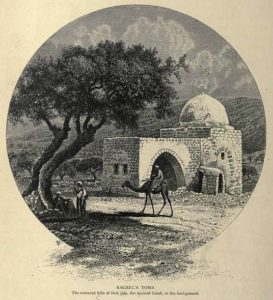
1880 Illustration of Rachel’s Tomb

Rather, the red string today has been popularized by The Kabbalah Centre and similar “neo-Kabbalah” movements that cater as much to non-Jews as to secular Jews. The Kabbalah Centre explains that the bracelets are made by taking a long red thread and winding it around Rachel’s Tomb seven times. The thread is then cut into wrist-size lengths, and if worn on the “left wrist, we can receive a vital connection to the protective energies surrounding the tomb of Rachel.” It is not clear where The Kabbalah Centre took this practice from. They claim that the red string wards off the evil eye. While they cite certain passages from the Zohar regarding the evil eye, there doesn’t seem to be any connection to a red string specifically.

The Zohar (II, 139a) does state in one place that the blue tekhelet represents God’s Throne, as is well-known, which means judgement, whereas the red shani is what emerges from the Throne and overpowers the judgement, thus bringing protection upon Israel. The Zohar relates shani to Michael, the guardian angel of Israel, and uses the metaphor of a worm eating through everything to explain the tola’at shani as eating up negative judgement. This is why the famous song Eshet Chayil (Proverbs 31) states that a “woman of valour” has her whole house dressed in shanim (v. 21). She guards her household in this way. (It should be noted that in this passage the Zohar states it is gold which represents Gevurah, and silver represents Chessed. White and red, meanwhile, appear to be aspects within the sefirah of Yesod.)

So, perhaps there is something to wearing a red string.

Bringing Back Shani

The Zohar does not speak of any red string at all, and instead explains the mystical power of the red dye called shani. It is the dye itself that has power, as we see from the Temple rituals noted above. It is well-known that the blue tekhelet dye comes from a certain mollusc or sea snail called chilazon. From where does shani come?

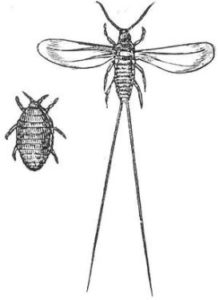
A female and male cochineal bug.

Professor Zohar Amar of Bar Ilan University researched the subject in depth and concluded that tola’at shani is similar to the cochineal insect, famous for producing the red dye carmine (E120) which is extensively used in the food industry. After a round-the-world search, it turned out that a cochineal-like insect is found in Israel as well, and grows on oak trees.

While the cochineal insect is native to South America (where most of the carmine is still produced), its Mediterranean cousin is the oak-dwelling kermes insect. Indeed, kermes was used across the Mediterranean world for millennia, being particularly prized in Greek, Roman, and medieval society. It is best known for its ability to dye wool extremely well. Jerusalem’s Temple Institute was convinced of the professor’s findings, and has begun harvesting the bugs and their red dye in order to produce authentic priestly vestments, as outlined in the Torah.

In light of this, a genuine red string “kabbalah” bracelet—with the protective powers mentioned in the Zohar—would undoubtedly have to be made of wool dyed with kermes red. And according to the Zohar, it probably shouldn’t be worn on the left wrist at all, but instead on the right leg, the body part which the Zohar (II, 148a) states that shani corresponds to.

Imitating Pagans

Judaism is very sensitive about not imitating the ways of the pagans, or darkei Emori. One example of this, as we wrote in the past, is kapparot, which the Ramban (among others) called an idolatrous practice. The Tosefta (Shabbat, ch. 7) has a list of practices that are considered darkei Emori, and one of them is “tying a red string on one’s finger”. So, already two millennia ago it seems there were Jews tying red strings on their body, and the Tosefta (which is essentially equivalent to the Mishnah) forbids it.

The Hindu kalava looks suspiciously similar to the “kabbalah” red string.

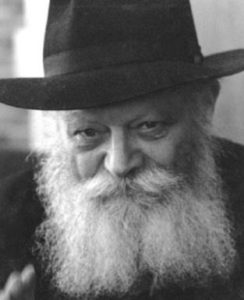
In fact, Hinduism has a custom to wear a red string called kalava around one’s wrist in order to ward off evil. This is precisely what The Kabbalah Centre claims their red string accomplishes. Based on this alone it would be best to avoid wearing such a red string. The Lubavitcher Rebbe was one of the recent authorities who stated that the red string should not be worn due to darkei Emori. Factoring in that the red string has no basis in the Zohar or any traditional Jewish mystical text is all the more reason to stay away from this practice.


The above is an excerpt from Garments of Light, Volume Two. Get the book here

Is the Lubavitcher Rebbe Mashiach?

The Lubavitcher Rebbe (Photo Credit: Shlomo Vishinsky and Zev Markowitz/ chaiartgallery.com)

Today is the third of Tammuz, the yahrzeit of Rabbi Menachem Mendel Schneerson, better known as the Lubavitcher Rebbe. There is no doubt that the Rebbe was among the greatest sages of the last century (if not of all time). From the moment he took up the leadership of Chabad, the Rebbe began to make waves in the Jewish world, and quickly transformed Lubavitch into an international powerhouse. Today, Chabad finds itself in 81 countries, operating 3500 institutions.

The Rebbe himself inspired countless souls, both Jewish and non-Jewish. One of the latter was Congresswoman Shirley Chisholm (the first black woman in Congress). When Chisholm was first elected to the House of Representatives, she met fierce opposition and outright racism. Shortly after, she received a call from the Rebbe, who quelled her concerns and offered her advice on how to make the most of her situation. Chisholm went on to create programs that benefited millions of poor people, including the expansion of food stamps across the US. At her retirement breakfast, she said: “If poor babies have milk and poor children have food, it’s because this rabbi in Crown Heights had vision.”

With such vision, along with tremendous wisdom, righteousness, and charisma, it isn’t very surprising that a messianic movement would develop around the Rebbe. Despite the fact that he passed away in 1994, many within the Chabad movement continue to believe that he is Mashiach. Is there substance to this belief?

Mashiach Resurrected

One of the major arguments used by the so-called Mashichistim is a verse in the Talmud (Sanhedrin 98b) that states Mashiach can come from “among the living” or from “among the dead”. The Talmud states that if Mashiach is of the living, it would certainly be Rabbi Yehuda haNasi (who was also called, simply, Rebbi), the great compiler of the Mishnah; if of the dead, it would be the Biblical Daniel. Within Chabad, this passage is used to support the fact that despite the Rebbe’s passing, he may still return to be the messiah.

However, other texts state that Mashiach cannot be from the dead. For example, Midrash Rabbah (on Genesis 49:18) writes how Jacob saw a vision of Samson—who had the potential to be Mashiach—but when Jacob saw Samson’s death, he was saddened that Samson wouldn’t be the messiah and said, “I await Your salvation, Hashem!”

Some believe the Rebbe is not really dead (besides, if Mashiach is from “among the dead”, the Talmud already told us it would be Daniel!) but he is only “concealed”. Multiple Jewish sources state that Mashiach will come, then disappear for a certain amount of time, and then return again. For example, Midrash Rabbah (on Numbers 11:3), writes:

Just like the first redeemer, Moses, revealed himself to the Jews and then concealed himself… similarly, the final redeemer will reveal himself, then conceal himself… and then return and reveal himself again.

Thus, the Rebbe is said to only be “hidden”, and will imminently return. Of course, this isn’t very different from the Christian belief in Jesus’ eventual “second coming” (although it should be noted that Christians believe Jesus actually died, and was not simply “hidden”). Christians have been waiting eagerly for two millennia—much like some in Chabad have been waiting eagerly for over two decades.

In reality, when ancient Jewish sources speak of Mashiach’s concealment and return, they do not mean that Mashiach will disappear for millennia, or even decades. The Midrash cited above itself says that Moses was hidden from the Israelites for three months, and Mashiach would be hidden for only 45 days (though there are other opinions). And so, the potential for the Rebbe being Mashiach appears to have long expired.

The Rebbe on Being Mashiach

One of the things that the Rebbe was adamant about was studying and following the teachings of the Rambam. The Rambam makes it clear who Mashiach is: a Jewish leader who, among other things, successfully reunites the entire nation in Israel (ending the exile), defeats the nation’s enemies, and rebuilds the Temple in Jerusalem. Only one who has successfully accomplished these tasks can be titled “Mashiach”. The Rambam writes that if a person was on his way to fulfilling these, but died in the process, he is clearly not the messiah. The Rambam brings Shimon bar Kochva as an example. Although Bar Kochva was able to push the Romans out of Israel, reclaim the Temple Mount and start rebuilding the Temple, and was even proclaimed the messiah by Rabbi Akiva, he died and his messianic potential died with him.

Although the Rebbe did hint to himself possibly being the messiah in some of his talks (and his followers use those encoded statements as proof), he also said in one of his talks that one is only confirmed to be Mashiach when the Third Temple is built. Obviously, since the Rebbe did not build the Third Temple in his lifetime, he cannot be the messiah. If it turns out that the Rebbe does return somehow in the future, and accomplishes all the messianic tasks, then and only then can he be titled “Mashiach”. To do so now is premature and naïve, if not altogether wrong.

In fact, the Rebbe publicly made clear that he is not Mashiach. In his monumental biography of the Rebbe, Joseph Telushkin devotes a chapter to this question, and writes:

In 1965, Rabbi Avraham Parizh, an elder Chasid who had been with the movement from the time of the Fifth Rebbe, printed letters stating: “With great joy, we can inform you that King Messiah, for whom we have waited so many years, is already among us. He is the holy Lubavitcher Rebbe, Rabbi Menachem Mendel Schneerson, the King Messiah. His address is 770 Eastern Parkway, Brooklyn, New York. He does not need us to choose him since God has chosen him.” Rabbi Parizh printed up many of these letters and started handing them out in Israel. According to one account, Parizh also distributed these letters by dropping them out of a helicopter.

When the Rebbe learned of the letter, he instructed his secretariat to immediately dispatch a telegram to Parizh, dated June 24, 1965: “We were shocked by the letter [you wrote and handed out] and ask that you immediately cease distributing it. Gather and send to the secretariat all copies of the letter, every last one, and please confirm immediately that you have fulfilled this instruction.” Chasidim tell how Parizh spent several weeks scrounging around the streets of Tel Aviv looking for every such sheet he could find…

In 1991, Rabbi Aharon Dov Halprin, the editor of Chabad’s Israeli magazine, Kfar Chabad, wanted to print an article explaining why the Rebbe was worthy of being considered the presumed Messiah. When the Rebbe learned of this he responded sharply, “If you, God forbid, [plan to write] anything even remotely similar, it is preferable that you shut down the periodical completely.”

In an urgent audience to which the Rebbe summoned Chabad activist Rabbi Tuvia Peles, the Rebbe rebuked those who were making Messianic claims about him, saying, “They are taking a knife to my heart” and “they are tearing off parts of me.”

… Some months later, and shortly before the Rebbe’s stroke, the Alaska-based shliach, Rabbi Yosef Greenberg (author of Y’mei Bereishit), brought a letter to be given to the Rebbe in which he referred to him as “King Messiah”. Later that same day, Rabbi Groner told Greenberg that the Rebbe had looked at the letter, thrown it down in frustration, and then wrote on it, “Tell him that when the Moshiach comes, I will give him the letter.”

An even more definitive statement of the Rebbe on this same issue occurred at around the same time. An Israeli journalist, Sarah Davidowitz of the Kol Ha’ir newspaper, approached the Rebbe and said, “We appreciate you very much, we want to see you in Israel; you said soon you will be in Israel, so when will you come?” The Rebbe responded: “That depends on the Moshiach, not on me.” The journalist persisted, “You are the Moshiach!,” to which the Rebbe responded: “I am not”.

In light of this, to call the Rebbe “Mashiach” is highly inappropriate, and against his own wishes. More dangerously, it risks turning Chabad into a religion of its own. After all, Christianity developed in the very same way; in its first decades, it was nearly indistinguishable from Judaism, and was followed almost entirely by Jews. It took a couple of centuries before the divide between Judaism and Christianity was complete, and by that point, Jesus had become a God-like figure.

The same may very well happen with the Rebbe and Chabad in coming decades. Already, there are elements within Chabad who have taken to equating the Rebbe with some kind of god on Earth. Many in Chabad still write letters to the Rebbe, adorn their homes with countless images and elaborate paintings of him, and read out the Rebbe’s letters at important public events (while everyone is asked to rise in honour of the Rebbe’s “presence”, of course). It isn’t uncommon to see children saluting the Rebbe’s empty chair at 770, while worshippers ecstatically chant “long live our master, teacher, and rabbi, the king Mashiach” (see video here). If Chabad’s leaders do not rein in such activity soon, there is little doubt Lubavitch will morph into a religion of its own. And for the Rebbe—who worked so tirelessly to unite all Jews—that would be a most devastating legacy.


For a more detailed analysis of the Rebbe’s messianism, please see here