Tag Archives: Rabbi Akiva

The Origins and Kabbalah of Kaddish

This week’s parasha begins with the passing of Sarah, the first Matriarch. We read how Abraham “eulogized Sarah and bewailed her” (Genesis 23:2). Today, the ritual most associated with Jewish death and mourning is undoubtedly the recitation of Kaddish. This has become one of those quintessentially Jewish things that all Jews—regardless of background, denomination, or religious level—tend to be very careful about. It is quite common to see people who otherwise never come to the synagogue to show up regularly when a parent or spouse dies, only to never be seen again as soon as the mourning period is over. Kaddish has become so prevalent that it has gone mainstream, featured in film and on TV (as in Rocky III and in the popular Rugrats cartoon), on stage (in Angels in America and Leonard Bernstein’s Symphony no. 3), and in literature (with bestselling novels like Kaddish in Dublin, and Kaddish For an Unborn Child).


Sylvester Stallone, as Rocky Balboa, recites Kaddish for his beloved coach and mentor. 

And yet, the origins of Kaddish are entirely clouded in mystery. It isn’t mentioned in the Tanakh, nor is there any discussion of reciting Kaddish for the dead in the Mishnah or Talmud. Even in the Rambam’s monumental Jewish legal code, the Mishneh Torah—just over 800 years old—there is no discussion of a Mourner’s Kaddish. Where did it come from?

Praying for Redemption

The Talmud refers to Kaddish in a number of places (such as Berakhot 3a, for example), though not in association with mourning the dead. Around the same time, we see a prayer very similar to Kaddish in the New Testament (Matthew 6:9-13), which has since become known as the “Lord’s Prayer” among Christians. This suggests that Kaddish existed before the schism between Judaism and Christianity, and this is one reason scholars date the composition of Kaddish to the late Second Temple era.

Many believe that it was composed in response to Roman persecution. The text of the Kaddish makes it clear from the very beginning that it is a request for God to speedily bring about His great salvation. It certainly makes sense that such a prayer would be composed in those difficult Roman times. In fact, the first words of Kaddish are based on Ezekiel 38:23, in the midst of the Prophet’s description of the End of Days (the famous “Gog u’Magog”), where God says v’itgadalti v’itkadashti. The Sages hoped the travails they were struggling through were the last “birth pangs” of the End Times.

In Why We Pray What We Pray, Barry Freundel argues that Kaddish was originally recited at the end of a lecture or a Torah learning session—as continues to be done today. It likely came at a time when public Torah learning or preaching was forbidden, as we know was the case in the time of Rabbi Akiva. So, the Sages ended their secret learning sessions with a prayer hoping that the Redemption would soon come, and they would once more be able to safely preach in public.

If that’s the case, how did Kaddish become associated with mourning the dead?

The Mourner’s Kaddish

Freundel points out that the earliest connection between Kaddish and the souls of the dead is from the Heikhalot texts. These are the most ancient works of Jewish mystical literature, going as far back as the early post-Second Temple era. (Scholars date the earliest texts to the 3rd century CE). One of these texts reads:

In the future, the Holy One, blessed be He, will reveal the depths of Torah to Israel… and David will recite a song before God, and the righteous will respond after him: “Amen, yehe sheme rabba mevorach l’olam u’l’olmei olmaya itbarach” from the midst of the Garden of Eden. And the sinners of Israel will answer “Amen” from Gehinnom.

Immediately, God says to the angels: “Who are these that answer ‘Amen’ from Gehinnom?” [The angels] say before Him: “Master of the Universe, these are the sinners of Israel who, even though they are in great distress, they strengthen themselves and say ‘Amen’ before You.” Immediately, God says to the angels: “Open for them the gates of the Garden of Eden, so that they can come and sing before Me…”

The Heikhalot connect Kaddish (specifically its central verse, “May His great Name be blessed forever and for all eternity…”) to a Heavenly prayer that will be recited at the End of Days, when the souls in Gehinnom will finally have reprieve. We can already start to see how this might relate to mourning, or spiritually assisting, the recently deceased.

This is related to another well-known story that is by far the most-oft used as the origin of Kaddish. In this narrative, a certain great sage—usually Rabbi Akiva, but sometimes Rabbi Yochanan ben Zakkai—sees a person covered in ash and struggling with piles of lumber. The poor person explains that he is actually dead, and his eternal punishment (reminiscent of popular Greek mythology) is to forever gather wood, only to be burned in the flames of that wood, and to repeat it all over again. The Sage asks if there is anything he could do to help, to which the dead man replies that if only his son would say a particular prayer, he would be relieved of his eternal torment.

The nature of that prayer varies from one story to the next. In some, it is the Shema, in others it is Barchu, and in others it is a reading of the Haftarah (see, for example, Kallah Rabbati 2, Machzor Vitry 144, Zohar Hadash on Acharei Mot, and Tanna d’Vei Eliyahu Zuta 17). It is only in later versions of the story that the prayer the son must say is Kaddish. Whatever the case, between the Heikhalot texts, and these Midrashic accounts, we now have a firm connection linking Kaddish with the deceased.

I believe there is one more significant (yet overlooked) source to point out:

The most important part of the Kaddish is undoubtedly the verse yehe sheme rabba mevorach l’olam u’l’olmei olmaya. As we saw in the Heikhalot above, this is the part that especially arouses God’s mercy. The Talmud (Berakhot 3a) agrees when it says essentially the same thing about the entire congregation reciting aloud “yehe sheme hagadol mevorach”. These special words are based on several Scriptural verses, such as Psalm 113:2 and Daniel 2:20. It also appears in Job 1:21.

Here, Job suffers the death of all of his children. Upon hearing the tragic news, he famously says: “…naked I came out of my mother’s womb, and naked shall I return; the Lord giveth, and the Lord taketh away; blessed be the name of the Lord.” In Hebrew it reads: Adonai natan, v’Adonai lakach, yehi shem Adonai mevorach. The parallel is striking. The first person in history to recite the great “yehe sheme rabba” upon the death of a family member is none other than Job. In some way, Job may be the originator of the Mourner’s Kaddish.

Birth of a Custom

Officially, the earliest known mention of reciting Kaddish for the dead is Sefer HaRokeach, by Rabbi Elazar of Worms (c. 1176-1238). Shortly after, his student Rabbi Itzchak of Vienna (1200-1270) writes in his Ohr Zarua that Ashkenazim have a custom to recite Kaddish upon the dead. He explicitly states that Tzarfati Jews (and as an extension, Sephardic Jews) do not have such a custom.

That much is already clear from the Rambam (Rabbi Moshe ben Maimon, 1135-1204), the greatest of Sephardic sages in his day, who makes no mention of a Mourner’s Kaddish anywhere in his comprehensive Mishneh Torah. (The Rambam does speak about the regular Kaddish, unrelated to the dead, which is recited throughout the daily prayers.) We see that in his time, Kaddish was still a strictly Ashkenazi practice. Why is it that Ashkenazi Jews in particular began to say Kaddish for the dead?

Most scholars believe the answer lies within the Crusades. The First Crusade (1095-1099) was a massive disaster for Europe’s Ashkenazi Jews. While the Crusades were meant to free the Holy Land from Muslim domination, many local Christians argued that there was no need to fight the heathen all the way in the Holy Land when there were so many local Jewish “heathens” among them. The result is what is referred to as “the Rhineland massacres”, described by some as “the First Holocaust”. Countless Jews were slaughtered.
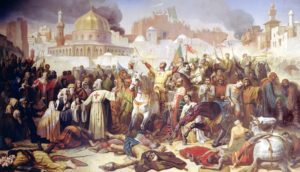
‘Taking of Jerusalem by the Crusaders, 15th July 1099’ by Émile Signol

Like in the times of Roman persecution a millennium earlier, the Ashkenazi Sages sought comfort in the words of Kaddish, beseeching the coming of God’s Final Redemption, and at the same time seeking to honour the poor souls of the murdered. It therefore isn’t surprising that Rabbi Elazar of Worms is the first to speak of Kaddish for the dead, as his hometown of Worms (along with the town of Speyer) was among the first to be attacked, in May of 1096.

It is important to remember that Rabbi Elazar was a member of the Hasidei Ashkenaz, the “German Pietist” movement known for its mysticism and asceticism (not to be confused with the much later Hasidic movement). The Hasidei Ashkenaz would have been particularly well-versed in Heikhalot and Midrashim. Everything points to this group as being the true originators of reciting Kaddish for the dead.

The practice spread from there. Indeed, there was a great deal of Jewish migration in those turbulent times. For example, one of the greatest Ashkenazi sages, Rabbeinu Asher (c. 1250-1327), was born in Cologne, Germany, but fled persecution and settled in Toledo, Spain. His renowned sons, Rabbi Yakov ben Asher (Ba’al HaTurim, c. 1269-1343), and Rabbi Yehudah ben Asher (c. 1270-1349) continued to lead the Sephardic Jewish community of Toledo. And it was there in Toledo that was born one of the greatest of Sephardi sages, Rabbi Yosef Karo (1488-1575), author of the Shulchan Arukh, still the primary code of Jewish law.

In the Shulchan Arukh we are only told to recite Kaddish once at a funeral, following the burial (Yoreh De’ah 376:4). It is in the gloss to the Shulchan Arukh by the Ashkenazi Rama (Rabbi Moshe Isserles, 1530-1572) where we find that it is customary to continue reciting Kaddish for twelve months, though only for a parent, based on Midrashim that speak of reciting Kaddish for a father. The reasoning for the latter is that, since it is a father’s obligation to teach his son Torah, by reciting Kaddish the son demonstrates that the father had fulfilled the mitzvah, and left behind a proper Jewish legacy.

It is quite amazing to see that as late as 500 years ago, Mourner’s Kaddish was still defined in very narrow terms, and described as more of a custom (especially for Ashkenazim) based on Midrash than an absolute halachic necessity. How did it transform into a supreme Jewish prayer?

Enter the Arizal

As with many other Jewish practices we find so common today, it looks like it was the influence of the Arizal (Rabbi Isaac Luria, 1534-1572), history’s foremost Kabbalist, that made the Mourner’s Kaddish so universal, and so essential. Fittingly, he was the perfect candidate for the job, being the product of an Ashkenazi father and a Sephardi mother, and ending his life as the leader of the Sephardi sages of Tzfat.

The Arizal discussed the mysteries of Kaddish at great length. Like most of his teachings, they were put to paper by his primary disciple, Rabbi Chaim Vital (1543-1620). The latter devotes a dozen dense pages to Kaddish in Sha’ar HaKavanot. He first explains the various forms of Kaddish recited during the regular prayer services. In brief, we find that Kaddish is recited between the major prayer sections because each part of the prayer is associated with a different mystical universe, and a different Heavenly Palace, and Kaddish facilitates the migration from one world to the next.

Recall that Kabbalah describes Creation in four universes or dimensions: Asiyah, Yetzirah, Beriah, and Atzilut. The four sections of prayer correspond to the four ascending universes: the morning blessings and the first prayers up until Hodu correspond to Asiyah; the Pesukei d’Zimrah corresponds to Yetzirah; the Shema and its blessings parallel Beriah; and the climax of the prayer, the Amidah, is Atzilut, the level of pure Divine Emanation. For this reason, the Amidah is recited in complete silence and stillness, for at the level of Atzilut, one is entirely unified with God.

The Arizal delves in depth into the individual letters and gematrias of Kaddish, its words and phrases, and how they correspond to various names of God and Heavenly Palaces. He relays the proper meditations to have in mind when reciting the different types of Kaddish, at different stages of prayer. To simplify, the Arizal teaches that Kaddish helps us move ever higher from one world to the next, and more cosmically, serves to elevate the entire universe into higher dimensions. We can already see how this would be related to assisting the dead, spiritually escorting the soul of the deceased higher and higher through the Heavenly realms.

More intriguingly, Rabbi Vital writes that Kaddish is meant to prepare the soul for the Resurrection of the Dead. He goes on to cite his master in saying that Kaddish should be recited every single day, including Shabbat and holidays, for an entire year following the passing of a parent. He says that Kaddish not only helps to free a soul from Gehinnom, but more importantly to help it attain Gan Eden. It elevates all souls, even righteous ones. This is why one should say Kaddish for a righteous person just as much as for a wicked person, and this is why it should be said even on Shabbat (when souls in Gehinnom are given rest). Rabbi Vital then says how the Arizal would also say Kaddish every year on the anniversary of his father’s death, which is now the norm as well.

Ironically, while Kaddish began as an Ashkenazi custom, Rabbi Vital writes that the Arizal made sure to recite Kaddish according to the Sephardi text!

Repairing the World

Another interesting point that Rabbi Vital explains is why Kaddish is in Aramaic, and not Hebrew like the rest of the prayers. He reminds us the words of the Zohar that both Hebrew and Aramaic are written with the exact same letters because these are the Divine Letters of Creation, but Hebrew comes from the side of purity and holiness, while Aramaic is from the “other side” of impurity and darkness. Hebrew is the language of the angels, while Aramaic is the language of the impure spirits. The angels speak Hebrew, but do not understand Aramaic, while their antagonists speak Aramaic, and do not understand Hebrew. When we learn Torah and Mishnah, in Hebrew, we please the angels who take our words up to Heaven. When we learn Talmud and Zohar, in Aramaic, we destroy those dark spirits who cannot stand the fact that a person is using their tongue for words of light and holiness.

The same applies to our prayers. The bulk of our prayers are in holy Hebrew, the language of angels. Kaddish is in Aramaic because it is meant to elevate us, and the universe around us, into higher dimensions. In this vital task, we cannot risk elevating the impure spirits along with us, contaminating the upper worlds. Thus, by saying it in Aramaic, we push away the impure spirits who are unable to withstand us using their language in purity. Those evil forces are driven away, and we can ascend and rectify in complete purity.

This, in brief, is the tremendous power of Kaddish. This is why we recite it so many times over the course of the day. And this is why every Jew is so mysteriously drawn to this prayer and ritual, possibly above all others. Deep inside the soul of every Jew—regardless of background, denomination, or religious level—is a yearning to repair the world, to destroy the impure, to uplift the universe, and to recite loudly: “May His great Name be blessed forever and for all eternity…”
An Honest Look at the Talmud

Earlier this week we discussed the necessity of the Talmud, and of an oral tradition in general, to Judaism. We presented an overview of the Talmud, and a brief description of its thousands of pages. And we admitted that, yes, there are some questionable verses in the Talmud (very few when considering the vastness of it). Here, we want to go through some of these, particularly those that are most popular on anti-Semitic websites and publications.

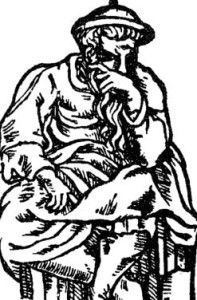
An illustration of Rabbi Akiva from the Mantua Haggadah of 1568

By far the most common is that the Talmud is racist or advocates for the destruction of gentiles. This is based on several anecdotes comparing non-Jews to animals, or the dictum of Rabbi Shimon bar Yochai that “the best of gentiles should be killed”. First of all, we have to be aware of the linguistic style of the Talmud, which often uses strong hyperbole that is not to be taken literally (more on this below). More importantly, we have to remember that these statements were made in a time where Jews were experiencing a tremendous amount of horrible persecution. Rabbi Shimon’s teacher, Rabbi Akiva was tortured to death by being flayed with iron combs. This is a man who never hurt anyone, who raised the status of women, sought to abolish servitude, preached that the most important law is “to love your fellow as yourself”, and taught that all men are made in God’s image (Avot 3:14). For no crime of his own, he was grotesquely slaughtered by the Romans. Rabbi Shimon himself had to hide from the Romans in a cave for 13 years with his son, subsisting off of nothing but carobs. The Jews in Sassanid Persia didn’t fare too much better. So, the anger and resentment of the Sages to their gentile oppressors sometimes come out in the pages of Talmud. Yet, the same Talmud insists “Before the throne of the Creator there is no difference between Jews and gentiles.” (TY Rosh Hashanah 57a). Moreover, a non-Jew who is righteous, and occupies himself with law and spirituality, is likened to a kohen gadol, the high priest (Bava Kamma 38a).

In fact, the contempt that the Sages sometimes had for gentiles is not simply because they were not Jewish, for we see that the Sages had the same contempt, if not more so, for certain other Jews! The Talmud (Pesachim 49b) warns never to marry an ‘am ha’aretz, an unlearned or non-religious Jew, and even compares such Jews to beasts. In the same way that gentiles are sometimes compared to animals, and in the same way Rabbi Shimon said they should “be killed”, Rabbi Shmuel said that the ‘am ha’aretz should be “torn like a fish”! Why such harsh words for other Jews? Because they, too, do not occupy themselves with moral development, with personal growth, or with the law. Therefore, they are more likely to be drawn to sin and immorality. After all, the very purpose of man in this world “is to perfect himself”, as Rabbi Akiva taught (Tanchuma on Tazria 5), and how can one do so without study? Still, the Sages conclude (Avot d’Rabbi Natan, ch. 16) that

A man should not say, “Love the pupils of the wise but hate the ‘am ha’aretẓ,” but one should love all, and hate only the heretics, the apostates, and informers, following David, who said: “Those that hate You, O Lord, I hate” [Psalms 139:21]

Rabbi Akiva is a particularly interesting case, because he was an ‘am ha’aretz himself in the first forty years of his life. Of this time, he says how much he used to hate the learned Jews, with all of their laws and apparent moral superiority, and that he wished to “maul the scholar like a donkey”. Rabbi Akiva’s students asked why he said “like a donkey” and not “like a dog”, to which Akiva replied that while a dog’s bite hurts, a donkey’s bite totally crushes the bones! We can learn a lot from Rabbi Akiva: it is easy to hate those you do not understand. Once Akiva entered the realm of the Law, he saw how beautiful and holy the religious world is. It is fitting that Rabbi Akiva, who had lived in both worlds, insisted so much on loving your fellow. And loving them means helping them find God and live a holy, righteous life, which is why Rabbi Shmuel bar Nachmani (the same one who said that the ‘am ha’aretz should be devoured like a fish) stated that:

He who teaches Torah to his neighbour’s son will be privileged to sit in the Heavenly Academy, for it is written, “If you will cause [Israel] to repent, then will I bring you again, and you shall stand before me…” [Jeremiah 15:19] And he who teaches Torah to the son of an ‘am ha’aretz, even if the Holy One, blessed be He, pronounces a decree against him, He annuls it for his sake, as it is written, “… and if you shall take forth the precious from the vile, you shall be as My mouth…” [Bava Metzia 85a]

Promiscuity in the Talmud

Another horrible accusation levelled against the rabbis of the Talmud is that they were (God forbid) promiscuous and allowed all sorts of sexual indecency. Anyone who makes such a claim clearly knows nothing of the Sages, who were exceedingly modest and chaste. They taught in multiple places how important it is to guard one’s eyes, even suggesting that looking at so much as a woman’s pinky finger is inappropriate (Berakhot 24a). Sexual intercourse should be done only at night or in the dark, and in complete privacy—so much so that some sages would even get rid of any flies in the room! (Niddah 17a) Most would avoid touching their private parts at all times, even while urinating (Niddah 13a). The following page goes so far as to suggest that one who only fantasizes and gives himself an erection should be excommunicated. The Sages cautioned against excessive intercourse, spoke vehemently against wasting seed, and taught that “there is a small organ in a man—if he starves it, it is satisfied; if he satisfies it, it remains starved.” (Sukkah 52b)

Anti-Semitic and Anti-Talmudic websites like to bring up the case of Elazar ben Durdya, of whom the Talmud states “there was not a prostitute in the world” that he did not sleep with (Avodah Zarah 17a). Taking things out of context, what these sites fail to bring up is that the Talmud, of course, does not at all condone Elazar’s actions. In fact, the passage ends with Elazar realizing his terribly sinful ways, and literally dying from shame.

Another disgusting accusation is that the Talmud permits pederasty (God forbid). In reality, what the passage in question (Sanhedrin 54b) is discussing is when the death penalty for pederasty should be applied, and at which age a child is aware of sexuality. Nowhere does it say that such a grotesque act is permitted. The Sages are debating a sensitive issue of when a death penalty should be used. Shmuel insists that any child over the age of three is capable of accurately “throwing guilt” upon another, and this would be valid grounds for a death penalty. Elsewhere, the Talmud states that not only do pederasts deserve to be stoned to death, but they “delay the coming of the Messiah” (Niddah 13b).

The Talmud is similarly accused of allowing a three year old girl to be married. This is also not the whole picture. A father is allowed to arrange a marriage for his daughter, but “it is forbidden for one to marry off his daughter when she is small, until she grows up and says ‘this is the one I want to marry.’” (Kiddushin 41a) Indeed, we don’t see a single case of any rabbi in the Talmud marrying a minor, or marrying off their underage daughter. Related discussions appear in a number of other pages of the Talmud. In one of these (Yevamot 60b), Rabbi Shimon bar Yochai states that a girl who was converted to Judaism before three years of age is permitted to marry a kohen, although kohanim are generally forbidden from marrying converts. This, too, has been twisted as if Rabbi Shimon allowed a kohen to marry a three-year old. He did not say this at all, rather stating that a girl under three who is converted to Judaism (presumably by her parents, considering her young age) is actually not considered a convert but likened to a Jew from birth. Once again we see the importance of proper context.

Science in the Talmud

Last week we already addressed that scientific and medical statements in the Talmud are not based on the Torah, and are simply a reflection of the contemporary knowledge of that time period. As we noted, just a few hundred years after the Talmud’s completion, Rav Sherira Gaon already stated that its medical advice should not be followed, nor should its (sometimes very strange) healing concoctions be made. The Rambam (Moreh Nevuchim III, 14) expanded this to include the sciences, particularly astronomy and mathematics, which had come a long way by the time of the Rambam (Rabbi Moshe ben Maimon, 1135-1204). The Rambam did not state that the Sages are necessarily wrong on scientific matters—for indeed we see that they are often quite precise—nonetheless:

You must not expect that everything our Sages say respecting astronomical matters should agree with observation, for mathematics were not fully developed in those days: and their statements were not based on the authority of the Prophets, but on the knowledge which they either themselves possessed or derived from contemporary men of science.

Some scientific statements of the Talmud which have been proven wrong include: The earth’s crust is 1000 cubits thick (Sukkot 53b)—today we have mines that go down four kilometres, which is well over 5000 cubits at least! Lions, bears, and elephants have a gestation period of three years (Bekhorot 8a)—while the Talmud is right by previously stating that cows have a nine-month gestation period, lions actually have gestation of 110 days, bears of 95-220 days depending on the species, and elephants of 22 months.

On the other hand, the Talmud is accurate, for example, when describing the water cycle (Ta’anit 9a), with Rabbi Eliezer explaining that water evaporates from the seas, condenses into clouds, and rains back down. It is also surprisingly close when calculating the number of stars in the universe (Berakhot 32b), with God declaring:

… twelve constellations have I created in the firmament, and for each constellation I have created thirty hosts, and for each host I have created thirty legions, and for each legion I have created thirty cohorts, and for each cohort I have created thirty maniples, and for each maniple I have created thirty camps, and to each camp I have attached three hundred and sixty-five thousands of myriads of stars, corresponding to the days of the solar year, and all of them I have created for your sake.

Doing the math brings one to 1018 stars. This number was hard to fathom in Talmudic times, and even more recently, too (I personally own a book published in the 1930s which states that scientists estimate there are about a million stars in the universe), yet today scientists calculate similar numbers, with one estimate at 1019 stars.

History in the Talmud

When it comes to historical facts the Talmud, like most ancient books, is not always accurate. Historical knowledge was extremely limited in those days. There was no archaeology, no linguistics, and no historical studies departments; neither were there printing presses or books to easily preserve or disseminate information. This was a time of fragile and expensive scrolls, typically reserved for Holy Scriptures.

All in all, the Talmud doesn’t speak too much of history. Some of its reckonings of kings and dynasties are certainly off, and this was recognized even before modern scholarship. For example, Abarbanel (1437-1508) writes of the Talmud’s commentaries on the chronology in Daniel that “the commentators spoke falsely because they did not know the history of the monarchies” (Ma’ayanei HaYeshua 11:4).

The Talmud has also been criticised for exaggerating historical events. In one place (Gittin 57b), for instance, the Talmud suggests that as many as four hundred or four thousand myriads (or forty million) Jews were killed by the Romans in Beitar. This is obviously impossible, and there is no doubt the rabbis knew that. It is possible they did not use the word “myriads” to literally refer to 10,000 (as is usually accepted) but simply to mean “a great many”, just as the word is commonly used in English.

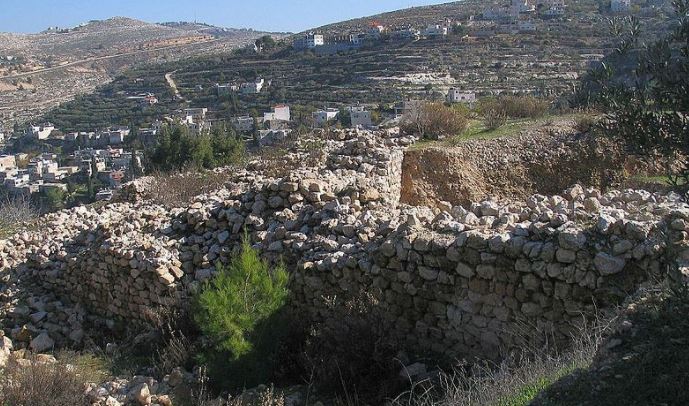
Archaeological remains of the Beitar fortress.

Either way, as already demonstrated the Talmud is known to use highly exaggerated language as a figure of speech. It is not be taken literally. This is all the more true for the stories of Rabbah Bar Bar Chanah, which are ridiculed for their embellishment. Bar Bar Chanah’s own contemporaries knew it, too, with Rabbi Shimon ben Lakish even refusing to take his helping hand while nearly drowning in the Jordan River! (Yoma 9b) Nonetheless, the Talmud preserves his tall tales probably because they carry deeper metaphorical meanings.

Having said that, there are times when the Talmud is extremely precise in its historical facts. For example, it records (Avodah Zarah 9a) the historical eras leading up to the destruction of the Second Temple:

…Greece ruled for one hundred and eighty years during the existence of the Temple, the Hasmonean rule lasted one hundred and three years during Temple times, the House of Herod ruled one hundred and three years. Henceforth, one should go on counting the years as from the destruction of the Temple. Thus we see that [Roman rule over the Temple] was two hundred and six years…

We know from historical sources that Alexander conquered Israel around 331 BCE. The Maccabees threw off the yoke of the Greeks around 160 BCE, and Simon Maccabee officially began the Hasmonean dynasty in 142 BCE. That comes out to between 171 and 189 years of Greek rule, depending on where one draws the endpoint, right in line with the Talmud’s 180 years. The Hasmoneans went on to rule until 37 BCE, when Herod took over—that’s 105 years, compared to the Talmud’s 103 years. And the Temple was destroyed in 70 CE, making Herodian rule over the Temple last about 107 years. We also know that Rome recognized the Hasmonean Jewish state around 139 BCE, taking a keen interest in the Holy Land thereafter, and continuing to be involved in its affairs until officially taking over in 63 BCE. They still permitted the Hasmoneans and Herodians to “rule” in their place until 92 CE. Altogether, the Romans loomed over Jerusalem’s Temple for about 209 years; the Talmud states 206 years. Considering that historians themselves are not completely sure of the exact years, the Talmud’s count is incredibly precise.

Understanding the Talmud

Lastly, it is important never to forget that the Talmud is not the code of Jewish law, and that Judaism is far, far more than just the Talmud. There are literally thousands of other holy texts. Jews do not just study Talmud, and even centuries ago, a Jew who focused solely on Talmud was sometimes disparagingly called a hamor d’matnitin, “Mishnaic donkey”. The Talmud itself states (Kiddushin 30a) that one should spend a third of their time studying Tanakh, a third studying Mishnah (and Jewish law), and a third studying Gemara (and additional commentary). The Arizal prescribes a study routine that begins with the weekly parasha from the Five Books of Moses, then progresses to the Nevi’im (Prophets) and Ketuvim, then to Talmud, and finally to Kabbalah (see Sha’ar HaMitzvot on Va’etchanan). He also states emphatically that one who does not study all aspects of Judaism has not properly fulfilled the mitzvah of Torah study.

A Torah scroll in its Sephardic-style protective case, with crown.

Those who claim that Jews have replaced the Tanakh with the Talmud are entirely mistaken: When Jews gather in the synagogue, we do not take out the Talmud from the Holy Ark, but a scroll of Torah. It is this Torah which is so carefully transcribed by hand, which is adorned with a crown to signify its unceasing authority, and before which every Jew rises. After the Torah reading, we further read the Haftarah, a selection from the Prophets. At no point is there a public reading of Talmud. As explained previously, the Talmud is there to help us understand the Tanakh, and bring it to life.

Ultimately, one has to remember that the Talmud is a continuing part of the evolution of Judaism. We wrote before how we were never meant to blindly follow the Torah literally, but rather to study it, develop it, grow together with it, and extract its deeper truths. The same is true of the Talmud—the “Oral” Torah—and of all others subjects within Judaism, including Midrash, Kabbalah, and Halacha. Judaism is constantly evolving and improving, and that’s the whole point.

For more debunking of lies and myths about the Talmud, click here.

Things You Didn’t Know About the Talmud

Judaism is famously built upon an “oral tradition”, or Oral Torah, that goes along with the Written Torah. The primary body of the Oral Torah is the Talmud. At the end of this week’s parasha, Mishpatim, the Torah states:

And Hashem said to Moses: “Ascend to Me on the mountain and be there, and I will give you the Tablets of Stone, and the Torah, and the mitzvah that I have written, that you may teach them…

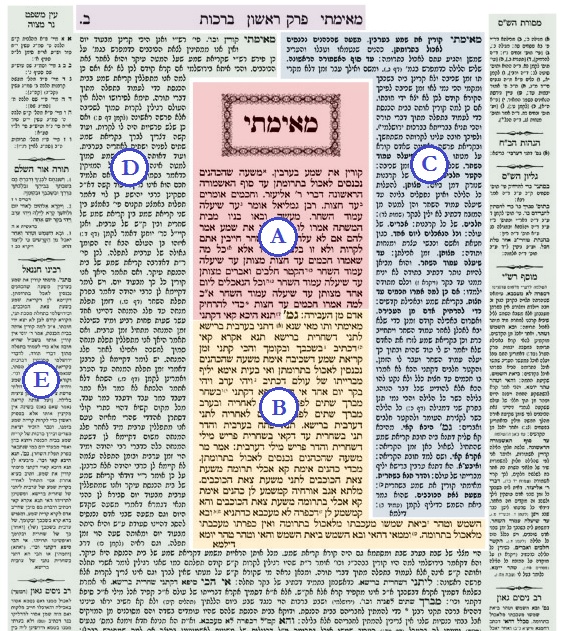
The Talmud (Berakhot 5a) comments on this that the “Tablets” refers to the Ten Commandments, the “Torah” refers to the Five Books of Moses, the “mitzvah” is the Mishnah, “that I have written” are the books of the Prophets and Holy Writings, and “that you may teach them” is the Talmud. The Mishnah is the major corpus of ancient Jewish oral law, and the Talmud, or Gemara, is essentially a commentary on the Mishnah, with a deeper exposition and derivation of its laws. Today, the Mishnah is printed together with the corresponding Gemara, along with multiple super-commentaries laid out all around the page, and this whole is typically referred to as “Talmud”.

Anatomy of a page of Talmud: (A) Mishnah, (B) Gemara, (C) Commentary of Rashi, Rabbi Shlomo Itzchaki, 1040-1105, (D) Tosfot, a series of commentators following Rashi, (E) various additional commentaries around the edge of the page.

In the past, we’ve written how many have rejected the Talmud, starting with the ancient Sadducees, later the Karaites (whom some consider to be the spiritual descendants of the Sadducees), as well as the Samaritans, and many modern-day Jews whether secular or Reform. Such groups claim that either there was never such a thing as an “oral tradition” or “oral law”, or that the tradition is entirely man-made with no divine basis. Meanwhile, even in the Orthodox Jewish world there are those who are not quite sure what the Talmud truly is, and how its teachings should be regarded. It is therefore essential to explore the origins, development, importance, and necessity of the Talmud.

An Oral Torah

There are many ways to prove that there must be an oral tradition or Oral Torah. From the very beginning, we read in the Written Torah how God forged a covenant with Abraham, which passed down to Isaac, then Jacob, and so on. There is no mention of the patriarchs having any written text. These were oral teachings being passed down from one generation to the next.

Later, the Written Torah was given through the hand of Moses, yet many of its precepts are unclear. Numerous others do not seem to be relevant for all generations, and others still appear quite distasteful if taken literally. We have already written in the past that God did not intend for us to simply observe Torah law blindly and unquestioningly. (See ‘Do Jews Really Follow the Torah?’ in Garments of Light.) Rather, we are meant to toil in its words and extract its true meanings, evolve with it, and bring the Torah itself to life. The Torah is not a reference manual that sits on a shelf. It is likened to a living, breathing entity; a “tree of life for those who grasp it” (Proverbs 3:18).

Indeed, this is what Joshua commanded the nation: “This Torah shall not leave your mouth, and you shall meditate upon it day and night, so that you may observe to do like all that is written within it” (Joshua 1:8). Joshua did not say that we must literally observe all that is written in it (et kol hakatuv bo), but rather k’khol hakatuv bo, “like all that is written”, or similar to what is written there. We are not meant to simply memorize its laws and live by them, but rather to continuously discuss and debate the Torah, and meditate upon it day and night to derive fresh lessons from it.

Similarly, Exodus 34:27 states that “God said to Moses: ‘Write for yourself these words, for according to these words I have made a covenant with you and with Israel.’” Firstly, God told Moses to write the Torah for yourself, and would later remind that lo b’shamayim hi, the Torah “is not in Heaven” (Deuteronomy 30:12). It was given to us, for us to dwell upon and develop. Secondly, while the words above are translated as “according to these words”, the Hebrew is al pi hadevarim, literally “on the mouth”, which the Talmud says is a clear allusion to the Torah sh’be’al peh, the Oral Torah, literally “the Torah that is on the mouth”.

The Mishnah

2000-year old tefillin discovered in Qumran

It is evident that by the start of the Common Era, Jews living in the Holy Land observed a wide array of customs and laws which were not explicitly mentioned in the Torah, or at least not explained in the Torah. For example, tefillin was quite common, and they have been found in the Qumran caves alongside the Dead Sea Scrolls (produced by a fringe Jewish group, likely the Essenes) and are even mentioned in the New Testament. Yet, while the Torah mentions binding something upon one’s arm and between one’s eyes four times, it does not say what these things are or what they look like. Naturally, the Sadducees (like the Karaites) did not wear tefillin, and understood the verses metaphorically. At the same time, though, the Sadducees (and the Karaites and Samaritans) did have mezuzot. Paradoxically, they took one verse in the passage literally (Deuteronomy 6:9), but the adjoining verse in the same passage (Deuteronomy 6:8) metaphorically!

This is just one example of many. The reality is that an oral tradition outside of the Written Law is absolutely vital to Judaism. Indeed, most of those anti-oral law groups still do have oral traditions and customs of their own, just not to the same extent and authority of the Talmud.

Regardless, after the massive devastation wrought by the Romans upon Israel during the 1st and 2nd centuries CE, many rabbis felt that the Oral Torah must be written down or else it might be lost. After the Bar Kochva Revolt (132-136 CE), the Talmud suggests there were less than a dozen genuine rabbis left in Israel. Judaism had to be rebuilt from the ashes. Shortly after, as soon as an opportunity presented itself, Rabbi Yehuda haNasi (who was very wealthy and well-connected) was able to put the Oral Torah into writing, likely with the assistance of fellow rabbis. The result is what is known as the Mishnah, and it was completed by about 200 CE.

The Mishnah is organized into six orders, which are further divided up into tractates. Zera’im (“Seeds”) is the first order, with 11 tractates mainly concerned with agricultural laws; followed by Mo’ed (holidays) with 12 tractates discussing Shabbat and festivals; Nashim (“Women”) with 7 tractates focusing on marriage; Nezikin (“Damages”) with 10 tractates of judicial and tort laws; Kodashim (holy things) with 11 tractates on ritual laws and offerings; and Tehorot (purities) with 12 tractates on cleanliness and ritual purity.

The root of the word “Mishnah” means to repeat, as it had been learned by recitation and repetition to commit the law to memory. Some have pointed out that Rabbi Yehuda haNasi may have used earlier Mishnahs compiled by Rabbi Akiva and one of his five remaining students, Rabbi Meir, who lived in the most difficult times of Roman persecution. Considering the circumstances of its composition, the Mishnah was written in short, terse language, with little to no explanation. It essentially presents only a set of laws, usually with multiple opinions on how each law should be fulfilled. To explain how the laws were derived from the Written Torah, and which opinions should be given precedence, another layer of text was necessary.

The Gemara

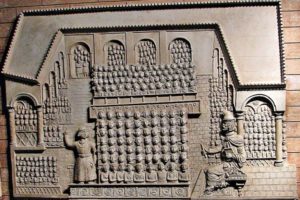
Rav Ashi teaching at the Sura Academy – a depiction from the Diaspora Museum in Tel Aviv

Gemara, from the Aramaic gamar, “to study” (like the Hebrew talmud), is that text which makes sense of the Mishnah. It was composed over the next three centuries, in two locations. Rabbis in the Holy Land produced the Talmud Yerushalmi, also known as the Jerusalem or Palestinian Talmud, while the Sages residing in Persia (centred in the former Babylonian territories) produced the Talmud Bavli, or the Babylonian Talmud. The Yerushalmi was unable to be completed as the persecutions in Israel reached their peak and the scholars could no longer continue their work. The Bavli was completed around 500, and its final composition is attributed to Ravina (Rav Avina bar Rav Huna), who concluded the process started by Rav Ashi (c. 352-427 CE) two generations earlier.

While incomplete, the Yerushalmi also has much more information on the agricultural laws, which were pertinent to those still living in Israel. In Persia, and for the majority of Jews living in the Diaspora, those agricultural laws were no longer relevant, so the Bavli does not have Gemaras on these Mishnaic tractates. Because the Yerushalmi was incomplete, and because it also discussed laws no longer necessary for most Jews, and because the Yerushalmi community was disbanded, it was ultimately the Talmud Bavli that became the dominant Gemara for the Jewish world. To this day, the Yerushalmi is generally only studied by those who already have a wide grasp of the Bavli.

The Talmud is far more than just an exposition on the Mishnah. It has both halachic (legal) and aggadic (literary or allegorical) aspects; contains discussions on ethics, history, mythology, prophecy, and mysticism; and speaks of other nations and religions, science, philosophy, economics, and just about everything else. It is a massive repository of wisdom, with a total of 2,711 double-sided pages (which is why the tractates are cited with a page number and side, for example Berakhot 2a or Shabbat 32b). This typically translates to about 6,200 normal pages in standard print format.

Placing the Talmud

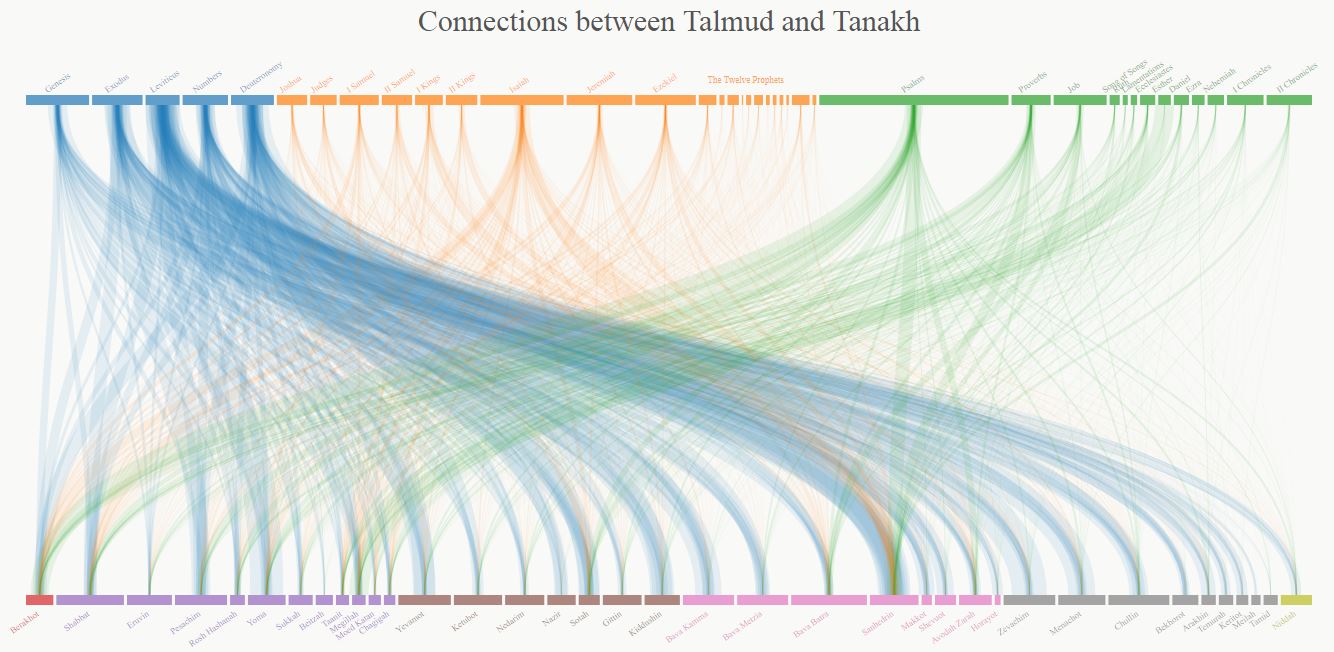
With so much information, it is easy to see why the Talmud went on to take such priority in Judaism. The Written Torah (the Tanakh as a whole) is quite short in comparison, and can be learned more quickly. It is important to remember that the Talmud did not replace the Tanakh, as many wrongly claim. The following graphic beautifully illustrates all of the Talmud’s citations to the Tanakh, and how the two are inseparable:

(Credit: Sefaria.org) It is said of the Vilna Gaon (Rabbi Eliyahu Kramer, 1720-1797) that past a certain age he only studied Tanakh, as he knew how to derive all of Judaism, including all of the Talmud, from it.

Indeed, it is difficult to properly grasp the entire Tanakh (which has its own host of apparent contradictions and perplexing passages) without the commentary of the Talmud. Once again, it is the Talmud that brings the Tanakh to life.

Partly because of this, Jews have been falsely accused in the past of abandoning Scripture in favour of the Talmud. This was a popular accusation among Christians in Europe. It is not without a grain of truth, for Ashkenazi Jews did tend to focus on Talmudic studies and less on other aspects of Judaism, Tanakh included. Meanwhile, the Sephardic Jewish world was known to be a bit better-rounded, incorporating more Scriptural, halachic, and philosophical study. Sephardic communities also tended to be more interested in mysticism, producing the bulk of early Kabbalistic literature. Ashkenazi communities eventually followed suit.

Ironically, so did many Christian groups, which eagerly embraced Jewish mysticism. Christian Knorr von Rosenroth (1636-1689) translated portions of the Zohar and Arizal into Latin, publishing the best-selling Kabbalah Denudata. Long before him, the Renaissance philosopher Pico della Mirandola (1463-1494), one of Michelangelo’s teachers, styled himself a “Christian Kabbalist”, as did the renowned scholar Johann Reuchlin (1455-1522). Meanwhile, Isaac Newton’s copy of the Zohar can be still found at Cambridge University. It is all the more ironic because Kabbalah itself is based on Talmudic principles, as derived from the Tanakh. For example, the central Kabbalistic concept of the Ten Sefirot is first mentioned in the Talmudic tractate of Chagigah (see page 12a), which also outlines the structure of the Heavenly realms. The Talmud is first to speak of the mystical study of Ma’aseh Beresheet (“Mysteries of Creation”) and Ma’aseh Merkavah (“Mysteries of the Divine Chariot”), of Sefer Yetzirah, of spiritual ascent, of how angels operate, and the mechanics of souls.

Having said all that, the Talmud is far from easy to navigate. While it contains vast riches of profound wisdom and divine information, it also has much that appears superfluous and sometimes outright boring. In fact, the Talmud (Sanhedrin 24a) itself admits that it is not called Talmud Bavli because it was composed in Babylon (since it really wasn’t) but because it is so mebulbal, “confused”, the root of Bavli, or Babel.

Of course, the Written Torah, too, at times appears superfluous, boring, or confused. The Midrash (another component of the Oral Torah) explains why: had the Torah been given in the correct order, with clear language, then anyone who read it would be “able to raise the dead and work miracles” (see Midrash Tehillim 3). The Torah—both Written and Oral—is put together in such a way that mastering it requires a lifetime of study, contemplation, and meditation. One must, as the sage Ben Bag Bag said (Avot 5:21), “turn it and turn it, for everything is in it; see through it, grow old with it, do not budge from it, for there is nothing better than it.”

Defending the Talmud

There is one more accusation commonly directed at the Talmud. This is that the Talmud contains racist or xenophobic language, or perhaps immoral directives, or that it has many flaws and inaccuracies, or that it contains demonology and sorcery. Putting aside deliberate mistranslations and lies (which the internet is full of), the truth is that, taken out of context, certain rare passages in the vastness of the Talmud may be read that way. Again, the same is true for the Written Torah itself, where Scripture also speaks of demons and sorcery, has occasional xenophobic overtones, apparent contradictions, or directives that we today recognize as immoral.

First of all, it is important that things are kept in their historical and textual context. Secondly, it is just as important to remember that the Talmud is not the code of Jewish law. (That would be the Shulchan Arukh, and others.) The Talmud presents many opinions, including non-Jewish sayings of various Roman figures, Greek philosophers, and Persian magi. Just because there is a certain strange statement in the Talmud does not mean that its origin is Jewish, and certainly does not mean that Jews necessarily subscribe to it. Even on matters of Jewish law and custom, multiple opinions are presented, most of which are ultimately rejected. The Talmud’s debates are like a transcript of a search for truth. False ideas will be encountered along the way. The Talmud presents them to us so that we can be aware of them, and learn from them.
And yes, there are certain things in the Talmud—which are not based on the Torah itself—that may have become outdated and disproven. This is particularly the case with the Talmud’s scientific and medical knowledge. While much of this has incredibly stood the test of time and has been confirmed correct by modern science, there are others which we know today are inaccurate. This isn’t a new revelation. Long ago, Rav Sherira Gaon (c. 906-1006) stated that the Talmudic sages were not doctors, nor were they deriving medical remedies from the Torah. They were simply giving advice that was current at the time. The Rambam held the same (including Talmudic astronomy and mathematics under this category, see Moreh Nevuchim III, 14), as well as the Magen Avraham (Rabbi Avraham Gombiner, c. 1635-1682, on Orach Chaim 173:1) and Rav Shimshon Raphael Hirsch. One of the major medieval commentaries on the Talmud, Tosfot, admits that nature changes over time, which is why the Talmud’s science and medicine may not be accurate anymore. Nonetheless, there are those who maintain that we simply do not understand the Talmud properly—and this is probably true as well.

Whatever the case, the Talmud is an inseparable part of the Torah, and an integral aspect of Judaism. Possibly the greatest proof of its significance and divine nature is that it has kept the Jewish people alive and flourishing throughout the difficult centuries, while those who rejected the Oral Torah have mostly faded away. The Talmud remains among the most enigmatic texts of all time, and perhaps it is this mystique that brings some people to fear it. Thankfully, knowledge of the Talmud is growing around the world, and more people than ever before are taking an interest in, and benefitting from, its ancient wisdom.

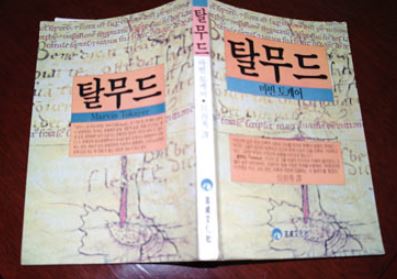
A bestselling Korean book about the Talmud. Fascination with the Talmud is particularly strong in the Far East. A Japanese book subtitled “Secrets of the Talmud Scriptures” (written by Rabbi Marvin Tokayer in 1971) sold over half a million copies in that country, and was soon exported to China and South Korea. More recently, a Korean reverend founded the “Shema Education Institute” and published a six-volume set of “Korean Talmud”, with plans to translate it into Chinese and Hindi. A simplified “Talmud” digest book became a bestseller, leading Korea’s ambassador to Israel to declare in 2011 that every Korean home has one. With the Winter Olympics coming up in Korea, it is appropriate to mention that Korean star speed skater Lee Kyou-Hyuk said several years ago: “I read the Talmud every time I am going through a hard time. It helps to calm my mind.”